Curated Topic Hub
97 public documentaries科学・宇宙
Physics, mathematics, evolution, complexity & energy frontiers

Your Brain Is Not a Computer: The Real Limits of Biohacks
David Eagleman frames plasticity as the brain's defining feature, yet he resists simple self-improvement scripts. His lectures contrast biological brains with computers and describe competing internal drives as a team of rivals. Creativity books promise hot showers and pink rooms; Eagleman points to deeper constraints. Sensory substitution research shows plasticity's practical reach, while Richard Davidson's remarks on children remind us that resilience varies.

The Particle Hiding Under a Mine
The axion was proposed to solve a subtle inconsistency in fundamental forces, then became a dark matter candidate. Underground labs suppress cosmic noise, but uranium and thorium decay into radon and complicate the search, while ADMX tunes a radio-like cavity and hybrid magnonics and neutron-star research widen the field. The 2019 signal remains interesting, not definitive.

Leonard Susskind: The Universe Isn't Made of Points
MIT's lecture frames QFT as an interpretive problem before it is a formalism. Susskind talks about programming a quantum field theory, Ash distinguishes point particles from strings, and Jaimungal points to foundations. The written record names the next step: extend QFT from Minkowski spacetime to curved spacetime, while quantum gravity remains unresolved.

The 85 Percent Problem: Dark Matter or Broken Gravity?
Neil deGrasse Tyson frames the problem as measurement of collective gravity, not a verdict on dark matter. PBS Space Time and Don Lincoln stress that dark matter is inferred only through gravity and that galactic details matter. MOND and dark energy references widen the dispute: either add unseen mass, revise gravity, or confront acceleration on cosmic scales.

The Big Bang Wasn't the Beginning. Here's What the Evidence Says
The dossier tracks how cosmic inflation moved from a fix for Big Bang puzzles to a probe of evidence. MIT lecture material, Lawrence Krauss on impossible accelerators, and Ethan Siegel on a pre Big Bang epoch sit beside Arvin Ash's caution that the Big Bang model leaves origins unexplained. The literature confirms inflation as exponential early expansion while leaving cause and testability open.

The Universe Is Speeding Up: How Astronomers Found Dark Energy
Charles Bailyn confirms logarithmic magnitudes while Alex Filippenko's supernova teams turn expansion history into data. Katie Mack links E=mc2 to cosmic energy budgets, Daniel Whiteson explains redshift, and the literature states that dark energy drives accelerating expansion. Two clean-energy acts use the word acceleration for terrestrial transitions, exposing a category drift in the dossier.

Where Does Information Go When It Falls Into a Black Hole?
Brian Cox treats the smallest sensible distance as a practical limit, then ties it to information stored on a surface. Avi Loeb names the Schwarzschild radius; Crash Course and Kurzgesagt describe the horizon as a boundary hiding a singularity. PBS Space Time and BBC Earth Science frame the same edge as a contested site of gravity research.
Why Your Clock Runs Slower Than Mine
The dossier follows time dilation from velocity to gravity. Minutephysics gives the moving-clock readings, Science Simplified links escape velocity to the gravitational equation, and Jim Al-Khalili insists the slowing is real. Lee Smolin and Thomas White frame the unresolved join between general relativity and quantum mechanics, while religious commentary marks a separate interpretive tension. The written references confirm actual clock differences and a proposed biological link.
Einstein Didn't Know the Geometry: How Curved Space Became Gravity
Jason Lotay notes that Riemannian geometry and general relativity grew almost in parallel; Sean Carroll recalls Einstein learning differential geometry from papers; CodeParade and minutephysics show straight lines on curved two-dimensional shells. The written record places non-Euclidean geometry beside Euclidean axioms and Grassmann's extension theory, making curvature a mathematical and physical problem at once.

Sean Carroll: Why Quantum Weirdness Refuses to Stay Small
Lex Fridman asks Sean Carroll to define entanglement as a foundational quantum idea. PBS Space Time reaches back to Schrödinger, while a 2025 Nobel report and Arvin Ash trace tunneling and classical failure. Jim Al-Khalili tests duration through attention, and Aperture asks viewers to imagine nothing. The written record supplies definitions, teleportation context, and Scarani's first-encounter account for simple explanations.

The Choice Was Never Yours: Sapolsky's Case Against Free Will
Sapolsky's determinism is a causal claim: biology, environment, and history shape every decision before awareness arrives. The dossier sets his Stanford and Big Think arguments beside Alex O'Connor's commentary and reference works on free will, asking what blame, praise, and moral responsibility become if the case holds. The speakers disagree less about evidence than about what follows.
Your Brain Is a Metabolic Monster
The dossier follows a simple question: what did the human brain cost, and who paid? Barrett's conversation, Ganguli's AI comparison, and CARTA's gene-regulation talk frame a brain built by constraint. Cunnane and Kuzawa supply the metabolic accounting: fat, feast-famine cycles, life history, and the body's energy budget. The result is a set of bills, not one origin story.

Darwin Was Right About Natural Selection. We Still Get It Wrong.
Paul Nurse calls natural selection biology's most beautiful idea; Yale uses Scottish partridges to open group selection; Crash Course asks how organisms stay alive. Sprouts supplies Darwin's 1831 voyage, while Lotuseaters and Hank Green push selection into politics and cosmic questions. Gregory's review and the misconceptions list show why classroom examples and public analogies need careful boundaries.

Why Anything Exists: The Universe's Missing Antimatter
Arvin Ash and minutephysics lay out the symmetry problem: decays should mirror, but C and CP violation allow differences. Don Lincoln admits the asymmetry is unexplained; Veritasium notes Standard Model CP violation falls short by many orders. New Scientist points to neutrinos, while Kolb's baryogenesis entry frames the search as early-universe physics with a measured baryon excess.

Carlo Rovelli Says Space Is Not There
Rovelli's name now travels through podcasts, lectures, and devotional YouTube as shorthand for one branch of quantum gravity. The excerpts show the theory as a set of tools applied to general relativity, a relational account of quantum properties, and a competitor to string theory. The written record keeps that competition precise: loop quantum gravity is one quantum gravity program among others, not the only one.
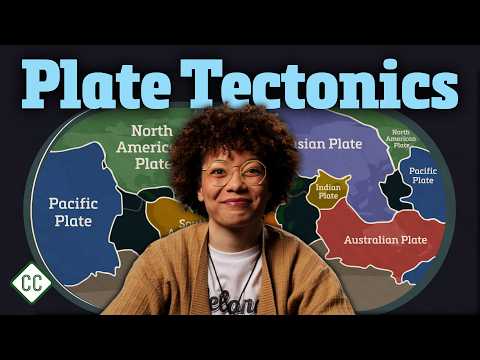
Why Earth Never Boils Over: The Hidden Machinery That Keeps a Planet Alive
Plate tectonics is a geology lesson with planetary consequences. CrashCourse locates most quakes and eruptions in the Ring of Fire; SciShow links volcanic carbon dioxide to long-term climate stability. The written record places plate motion over 3 to 4 billion years and ties it to Earth system science. Kurzgesagt and Sara Seager widen the frame: planetary stability and independent life depend on conditions we are still learning to read.

The Bit That Measured Uncertainty, and the AI Named Claude
Shannon's heirs do not treat information as a metaphor. 3Blue1Brown counts Wordle entropy in bits; Oxford Mathematics confronts a code gap; MIT links Gibbs paradox to Shannon entropy. Computerphile stresses that real strings are not random. Gary Explains traces Anthropic's Claude name to Shannon, while another MIT lecture recalls a Shannon controversy. The IEEE Shannon Award confirms the field still measures his influence.

The Beast Machine in Your Skull
Anil Seth treats consciousness as embodied prediction, not a software upgrade. The dossier sets his beast-machine papers beside his public examples: cochlear implants, Frankenstein and Ex Machina, the red-car illusion, and a drawing of circles and oblongs. Seth keeps returning to interiority and control, while transhumanist claims test how far that account can stretch into engineered minds.

Your TV Static Is Hiding the Big Bang
Charles Bailyn frames the cosmic microwave background through Type Ia supernova constraints on expansion and acceleration. Other speakers begin with analog television static, then narrow toward photon energies and early-universe measurements. The written record adds the Cold Spot and formal anisotropy studies, which keep the anomalies empirical rather than anecdotal and make foreground contamination a central check. The dossier tests where pedagogy stops and evidence begins.

What If Dark Matter Is Just Black Holes?
PBS Space Time and David Kaiser frame primordial black holes as a serious dark matter candidate, while the literature supplies peer-reviewed cases and a definition of the early-universe mechanism. The Martin Rees podcast excerpt asks what advice to give young people, a human detour that shows scientific questions passing between generations. Star Trek and Atlantic clips show popular culture and personal memory entering the same conversation.

Can You Hear a Black Hole Collide?
Janna Levin describes black hole collisions as mallets on a drum, while LIGO's two distant labs cut local noise before claiming a signal. Neutron stars are almost perfect spheres, so their gravitational-wave signatures are faint and hard to isolate. The written record confirms that mergers radiate energy as gravitational waves, tightening the link between theory, detectors, and observed light.

The Sixth Mass Extinction: The Evidence Is Stranger Than You Think
CrashCourse traces extinction through beaver dams, eroded banks, and warmer water. Second Thought and PBS Eons supply deep time and fossil gaps, while PBS Space Time explains stellar thresholds. Species Documenting AGI and Chill Dude Explains push the argument toward monocrops, AI, and survival; the written record supports an ongoing human-driven Holocene extinction and a K-Pg benchmark of 75 percent species loss.

The Extinction Mirror: What Neanderthals Reveal About Our Future
The dossier sets cave life and burial evidence beside modern warnings about human extinction. Neanderthals disappeared around 40,000 years ago, and hypotheses include violence, disease, and competition with modern humans. The speakers do not settle the cause; they show how extinction stories mix evidence, inference, and present-day anxiety.

Time Crystals Are Real, But What Can They Actually Do?
Time crystals are a real phase of quantum matter, not a movie device for rewinding events. The spoken clips show how popular culture primes the imagination while Yale's lecture, PBS Space Time, and Al-Khalili frame the actual quantum rules. Peer-reviewed work on Floquet and tesseract time crystals ties the idea to laboratory and quantum-computer experiments.

Feynman's Real Lesson: Science Builds Models, Not Truth
The dossier treats Feynman's curiosity as a working method, not a personality trait. Bill Nye questions whether algebra creates scientific allegiance, Leonard Susskind recalls Feynman's visual intuition, Stephen Wolfram links branching minds to quantum interpretation, and critics show the teaching icon becoming a brand and a contested committee story. The Quotable Feynman and Gross's Scientific Sublime frame that curiosity as disciplined doubt and public myth.

Decoherence: Why Quantum Weirdness Vanishes the Moment We Look
PBS Space Time frames decoherence as the reason quantum effects do not show up at familiar scales. Brian Cox treats quantum mechanics as the root description of reality, while Steve Girvin's course foregrounds errors and correction. The written references sharpen the point: decoherence is information loss to an environment, and many worlds keeps the wave function without collapse.

Your Brain Decides Before You Do: The Free Will Illusion
Libet's readiness potential gave the free will debate a measurable clock: brain activity can precede reported intention. Sapolsky and Pinker press deterministic and neurophysiological readings, while Carroll separates physical law from clockwork metaphor and the School of Life frames the older philosophical split. The excerpts disagree less about data than about what counts as freedom.

Your Brain Wakes Before Your Body
REM atonia keeps the body still while the mind runs. Huberman describes divorcing emotion from experience; sleep paralysis patients wake conscious but paralyzed, often with hallucinations. Big Think links REM access to human function, while RBD shows what happens when atonia fails. The clinical literature separates isolated paralysis from nightmare disorder, but the first person account remains the evidence.

Your Body Knows More Than You Think
The dossier follows six conversations that approach the body as an active input to emotion and health. Tor Wager's interview frame, Emily Nagoski's accelerator model, Keith Diaz's fatigue distinction, and warnings about plastics and sweeteners all point to the same question: how do internal signals become feelings and decisions? The literature calls that traffic interoception and links it to constructed emotion.

Six Degrees: Stanley Milgram's Small-World Problem
The small-world phenomenon usually arrives as a fact about six degrees, but these excerpts show networks as social machinery: a brotherhood, a professional shortcut, a political target, an ESL coffee break, a kindness campaign, and an Epstein file fight. Milgram's experiments and graph theory give the term its shape. The speakers reveal why the claim is useful, slippery, and often loaded.

Lucid Dreams Feel Real: Science Is Still Catching Up
Brain imaging gives dream research a measurable vocabulary, yet the spoken record keeps returning to first-person reports. Big Think describes dreams as representations or reenactments, Thomas Brophy asks what lucid practice can teach, and Stanford Medicine frames imaging through migraine treatment. The written record, from basic dream definitions to LaBerge, confirms that neurology and subjective experience remain separate instruments.

The Sleep Debt Delusion: What Creatine Can and Cannot Fix
Rhonda Patrick and Andrew Huberman describe mild sleep restriction as a performance problem. Thomas DeLauer cites pharmacology research linking sleep loss to worse mood and cognition, while Arianna Huffington and Andy Galpin connect the deficit to startup culture and late-night schedules. Recent studies test creatine and exercise as partial countermeasures; the evidence still points back to sleep itself.

The Brain's Secret Clock Runs on Uncertainty
Beau Lotto says every behavior reduces uncertainty. A meditation teacher says separating an urge weakens its hold. A neuroscience explainer says mechanism gives people flexibility over protocols. Dartmouth's panel frames perception as active, not passive. External work on chronoception, Eagleman, fMRI interval timing, and P300 spans adds measurement: the brain's sense of duration depends on attention, prediction, and the evidence it is processing.

The Million-Dollar Math Problem That Hides the Primes
Numberphile opens with a million dollar difficulty joke; Lex Fridman and Alex ask whether AI can move a central problem; Oxford Mathematics returns to Basel and zeta zeros. Written references frame the hypothesis as a statement about zeta zeros and prime distribution, while commentary warns that automated proof and viral claims are not the same. Two DOI-indexed papers push fresh approaches, but the speakers keep verification in view.

Does Information Survive a Black Hole? Sean Carroll's Event Horizon Problem
The event horizon is a boundary, not a place, yet the selected clips keep turning it into a storage problem. Sean Carroll notes that black hole information does not scale with volume; Veritasium says the singularity is a final moment in time. The Event Horizon Telescope gives the debate an image, while Rindler's coinage reminds viewers how recently the vocabulary arrived.
The Math You Can See, and the Pictures That Fool You
Sanderson treats visual intuition as a working tool: he rewrites bases, draws derivatives, and moves between algebra and geometry. Lex Fridman frames the same habit through meme review, while Eugenia Cheng warns that intuition can be manipulated. Berkley Hudson's 2013 article and a PULSCAR visualization paper show the method circulating beyond YouTube.
Complete Pillar Archive
More Science & Cosmos Documentaries (+61)
- Why Nature Never Gets Smooth: The Hidden Math of Roughness6 幕 · 6m 27s
- Your Gut Is a Bad Statistician6 幕 · 6m 25s
- Before Memory: The Hidden Forces Building a Human Brain6 幕 · 6m 29s
- Life May Have Begun in the Dark6 幕 · 7m 08s
- The Language Window: Why Your Brain Learns Fast, Then Stops6 幕 · 4m 52s
- Your Brain Is Guessing Right Now: The Science of Prediction6 幕 · 5m 18s
- What Killed the Giants? Hunting, Heat, and the Stories We Tell6 幕 · 5m 57s
- When the Self Goes Quiet: Psychedelics and the Default Mode Network6 幕 · 5m 06s
- Webb Looked Back in Time and Found the Impossible6 幕 · 7m 29s
- Dawkins Was Misread: What The Selfish Gene Really Meant6 幕 · 4m 34s
- The Network Where Averages Stop Working4 幕 · 4m 45s
- Most Mutations Do Nothing: The Random Force That Reshapes Life5 幕 · 5m 28s
- Predictable Numbers, Broken Secrets5 幕 · 4m 30s
- Terence Tao's Gut Check: Why Great Proofs Start Before Logic5 幕 · 5m 28s
- Sex Was Never Designed: Evolution's Messy Compromise6 幕 · 5m 49s
- The Octopus on MDMA: What a Distributed Mind Can Teach Us4 幕 · 4m 33s
- Will This Program Ever Stop? The Limit That Haunts Every Computer6 幕 · 6m 57s
- Can Cold Water Really Change Your Life?6 幕 · 6m 59s
- The Brain Is Stranger Than You Think6 幕 · 4m 46s
- Pressing Save: How Your Brain Writes, Loses, and Finds Memories6 幕 · 5m 28s
- Crows Make Tools. Humans Make AI. But Do We Know How to Use It?6 幕 · 5m 49s
- The Future Already Exists: Sean Carroll's Case for Block Time6 幕 · 7m 32s
- Your Brain Sees First, Asks Later6 幕 · 5m 54s
- ジャムサンドと証明機械6 幕 · 7m 07s
- Whale Fall: A Carcass, a Movie, and the Whale Hunter's Case6 幕 · 4m 20s
- The Book Has No Color Until You Look: Rovelli's Relational Universe5 幕 · 4m 45s
- Your Vote Is Secret. Can Math Prove It Was Counted?5 幕 · 4m 53s
- Five Paradoxes That Still Break Common Sense5 幕 · 6m 24s
- The Hand That Isn't There: Why Amputees Still Feel Pain5 幕 · 3m 59s
- Feynman's Atomic Bet: Build a Computer Out of Quantum Weirdness6 幕 · 7m 47s
- Your Mind Is a Theater: Bernard Baars and the Global Workspace6 幕 · 6m 31s
- Deja Vu Is a Glitch in Your Story6 幕 · 7m 55s
- We Can Hear Whale Song. We Still Can't Read It.6 幕 · 6m 35s
- 23 Strangers, One Shared Birthday: The Odds That Break Your Brain6 幕 · 5m 20s
- The Consciousness Switch: Can We Find What Turns Experience On?5 幕 · 5m 26s
- Shake a Box of Magnets and Order Appears on Its Own4 幕 · 3m 03s
- AI Is Writing Math Proofs No Human Can Check. Now What?6 幕 · 5m 50s
- Earth Won the Cosmic Lottery. Did Life Have to Be This Rare?6 幕 · 7m 52s
- Four Colors Are Enough. Can Humans Prove It?4 幕 · 4m 40s
- The Catholic Priest Who Predicted the Big Bang6 幕 · 6m 15s
- The Face That Feels Like a Stranger: Inside Capgras Delusion6 幕 · 5m 01s
- The Man Who Could Only Say 'Tan': How the Brain Maps Language6 幕 · 9m 08s
- The Universe Is Fine-Tuned. Your Chatbot Is Too.6 幕 · 6m 17s
- Simple Rules, Impossible Minds5 幕 · 4m 24s
- The 'Me' Network in Your Brain Won't Shut Up6 幕 · 4m 38s
- Reality Is Mathematics in Motion: Who Is the Observer?6 幕 · 5m 46s
- When Oxygen Was Poison: Earth's First Mass Extinction6 幕 · 7m 19s
- The Brain Cells That Made Everyone Oversell Empathy6 幕 · 5m 41s
- Your Genes Have Switches: The Hidden Code of Aging5 幕 · 6m 29s
- The Grid Inside Everything6 幕 · 4m 54s
- One Small Clip, One Giant Mess6 幕 · 5m 27s
- Your Brain Is Not What You Think6 幕 · 6m 17s
- Darwin Was in Agony. Then the Fossils Started Exploding.5 幕 · 4m 37s
- The Voice in Your Head Is Not the Whole Story6 幕 · 5m 08s
- Is Spooky Action Real? The Experiment That Tests Quantum Entanglement6 幕 · 7m 01s
- Is Earth Running a Thermostat? The Gaia Hypothesis on Trial6 幕 · 7m 41s
- The Phantom in the Mirror: Why Absence Still Feels Present4 幕 · 3m 42s
- Junk DNA: The Code We Almost Threw Away4 幕 · 5m 01s
- Time Is a Thermodynamic Accident: Rovelli's Clue to Why It Flows6 幕 · 5m 50s
- The Ghost Particle Has Weight. The Universe May Never Be the Same6 幕 · 7m 18s
- Who Gets to Rewrite the Origin Story?4 幕 · 4m 07s