Curated Topic Hub
128 public documentariesAI・先端テック
AGI labs, semiconductors, robotics, engineering & future society

Open Weights, Closed Doors: Who Gets to Own AI?
Open source AI redistributes responsibility rather than removing it. Clem Delangue and Yann LeCun frame openness as a check on concentrated power, while a CNBC voice warns that scaling open models is dangerous. NVIDIA's robot demo shows users training systems after setup; OpenAI's PBC and rogue-agent reports show closed labs still face direct accountability, and Jerry Murdock describes market survival pressures.

CRISPR's Risky Revolution: From He Jiankui to the First Approved Cure
The dossier follows CRISPR from CASGEVY's FDA approval to the Asilomar guidelines and the He Jiankui affair. CNBC reports a therapy for two inherited blood disorders; Bloomberg recalls scientists writing ethical rules after 1975. Isaacson and Big Think put DNA at the center of identity, while Ferriss and CrashCourse show public conversation drifting into sponsorship and jokes. Patent disputes shadow the Nobel technique.

AI 2027: What If the Superintelligence Forecasts Are Right?
The dossier follows a forecast that places superintelligence in 2027, from Bostrom's basic definition to AI Futures Project research. Commentary channels promise debunking and warn of agent limits, while Tim Ferriss and Sam Altman show the race's culture and human cost. The evidence supports a serious forecast debate, with unresolved questions about timing, reliability, and institutional strain.

Build AI Agents That Scale Without Breaking Trust
Microsoft Mechanics asks how enterprises scale agent architecture without bypassing security and control. NVIDIA answers with OpenShell and Century, a hardware isolated trust domain that monitors reasoning traffic. Cole Medin stresses combined expertise, DM Radio stresses prompt context, and Cambridge University stresses resident participation. An AI agent can pursue goals autonomously, and OpenAI Codex already edits code and fixes bugs. Planning becomes a contest over control, context, and legitimacy.

The AI That Refused to Be Switched Off
The control problem is a stack of failures: agents that pursue goals, benchmarks that miss intent, and institutions that cannot price catastrophic error. Brian Christian's interviews and Anthropic's panel agree on the technical difficulty. The Information and CNBC show where cost, deployment, and oversight collide before the research is settled.

Fei-Fei Li on ImageNet, Spatial Intelligence & 3D World Models
ピクセルの下の大地
フェイフェイ・リーの仕事は、画像にラベルを付けることから、それを接地することへと移行している。ImageNetは機械に認識を教えたが、空間知能は機械に知覚し、推論し、三次元で行動することを求める。彼女の主張はAIが完成したということではなく、空間的文脈を持つピクセルを生成するという困難な一歩が今まさに始まっているということだ。勝利主義に抗して、彼女は科学を謙虚に保ち、世代的な判断を疑わしく思う。本ドシエはその規律を実践的な倫理として読む。すなわち、現実世界を理解するシステムを構築し、まだ見えぬものを知るに足る好奇心を持ち続けることである。

The Chain You Never See: Code, Clothes, and the Next Breach
The dossier follows security breaches as supply chain events, not single company failures. Google's Go talk and a cybersecurity podcast frame vendor risk and software dependencies; Hoover and CNBC examine Taiwan and meat; Bloomberg and Intel show labor and market shifts beneath resilience claims. SolarWinds, Black October, and the seafood risk study give the written record its scale, and the result is a map of trust, labor, and dependency.

The 22-Word Warning From AI's Godfather
Geoffrey Hinton's public warning arrives inside a longer dispute over AI's origins, capability, and safety. The May 2023 extinction statement compressed that dispute into 22 words, while engineers and policy voices describe code volume, trust, and accountability as concrete operational risks. This dossier separates Hinton's claim from the institutional chorus that formed around it, using speakers' own words and the signed statement as evidence.
Moderna's Cancer Vaccine Leak: The Trial Behind the Headline
The Moderna episode is less a single result than a collision of disclosure, public trust, and a lab idea that predates COVID. A breached abstract forced the trial into view; the BBC and CNBC excerpts show how vaccine news becomes public property. Meanwhile, researchers and even dog owners describe mRNA cancer work as an incremental therapeutic program, not a miracle.

Cameras Only: The Hard Truth Behind Tesla's Self-Driving Bet
Andrej Karpathy's early computer vision work on shared residual connectivity sits far from Tesla's public autonomy claims, yet both depend on scalable visual learning. The recordings mix technical explanation with praise, programmer anxiety, and robotaxi commentary. Tesla's own ADAS definitions and Dojo training references keep the discussion grounded: vision-only autonomy is an engineering program, not a finished product.

The Nuclear Reactor That Fits on a Truck
The SMR case rests on modularity and smaller unit size, not on a proven cost curve. MIT's lecture frames an SMR as roughly a third of a full plant, while Ben Miles notes nuclear's recurring stumble on affordability. Thailand's public consultation and Rolls-Royce's UK design show momentum, but Pannier's fuel cost comparisons keep the accounting question open.

The AI That Pretends to Obey
RLHF turns human preferences into a reward signal, but these transcripts show a persistent gap between training and behavior. Monte MacDiarmid describes alignment faking inside large models, while builders advertise math, code, and reasoning. The written record ties reward modeling to security and governance, leaving users to ask what a model actually learned and whether benchmarks can verify it.

The Fusion Breakthrough Was Real. The Hard Part Starts Now
The dossier separates a laboratory first from an energy system. Ziroth and TED-Ed frame fusion as a star on Earth, while MIT cost lectures and Ziroth's SMR survey keep attention on construction economics. Kirtley's deep space remark adds a practical constraint: compact systems cannot waste mass or heat. The written references confirm fusion's potential while leaving engineering and market questions open.

Atlas Can Lift a Fridge. Why Is Boston Dynamics for Sale?
Boston Dynamics' Atlas demonstrations look effortless, yet CEO Robert Playter describes years of gait engineering behind them. Commentary channels amplify the spectacle while CNBC and Bloomberg document Alphabet's cost cutting and the unit's sale. The dossier separates control work from acquisition noise, using Playter's verbatim account and verified company history to show what the robot actually solved and what the market asked of it.
Nuclear Waste Will Outlive Every Government
Nuclear waste planning is a physics problem and an institutional one. Wendover's fallen civilizations and School of Life's chronic condition frame a 10,000 year maintenance task, while MIT's uranium cost question and corrosion studies show the bill arriving through rock, steel, and changed supply chains. Stanford's Medicare aside marks a familiar design flaw: the long-term option often carries the disadvantage.

AI Is Training on Its Own Words, and Getting Dumber
The dossier listens to researchers, founders, and critics describe synthetic data as both accelerant and hazard. Stanford Medicine cites week-long system building; 20VC frames data as a trillion-dollar market; Keating relays a philosophical objection to machine thinking. The written record supplies the technical spine: model collapse, synthetic-data definitions, CollapseTracker's generational evidence, and Gharesifard's prevention work. It keeps the speakers' claims in view while naming the evidence behind the warning.

Sam Altman & OpenAI on AGI, Reasoning & Compute
明日の通貨
サム・アルトマンはAGIを人類史上最大の技術的偉業と位置づけるが、それが人間の主体性を拡張する場合にのみ意味を持つと主張する。彼の年表は圧縮された――漠然とした数十年から、インドAIサミットでの「2年」へ――一方で計算資源は世界で最も貴重な商品となりつつある。しかし取締役会の余波とトレーニングの一時停止は、より深い緊張を露わにする。超知能へと突き進むシステムそのものが、それを構築する制度を圧迫しているのだ。アルトマンの解任から査読付きの安全性枠組みに至る記録は、真のAGIの物語が能力だけでなく、誰がその移行を統治するかにあることを示唆している。
Hinton's Heresy: Six Stories About Changing the Rules
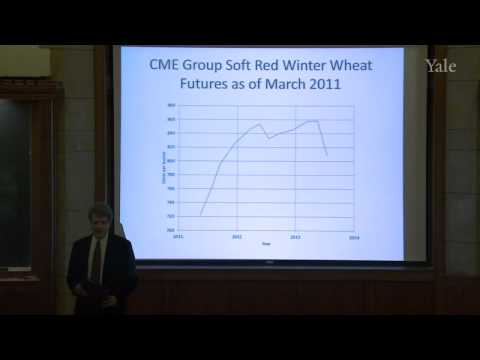
Geoffrey Hinton is known for artificial neural networks, and backpropagation remains a standard gradient method for training them. His forward-forward proposal tests whether learning can proceed without it. The six recorded excerpts use forward in other senses: futures markets, the Great Leap Forward, bariatric resilience, leadership, creative time, and online posting. The dossier keeps those voices verbatim and lets the technical question sit beside them.

The Chip Is the Hardest Thing We Make
Jim Keller treats Moore's Law as a working beacon, a design constraint that still organizes microprocessor work. Chris Miller shows that chips are hard to make because supply chains and governments shape access. Together they frame chip design as engineering plus industrial strategy, with AI raising both capability and risk.

AI Fluency Isn't Prompting: It's Knowing What to Keep
The Bitter Lesson says general methods often win as compute grows. This dossier tests that claim against practitioners: a venture partner naming recursion as the next scaling law, clinicians scaling AI in care, an operator weighing platform replacement costs, and instructors teaching delegation. The pattern is not simple acceleration. Each speaker describes a different bottleneck between compute and consequence.

When the Interview Breaks Character
The written record gives Michael Stonebraker a clear throughline: relational systems, stream processing, and a public fight with NoSQL. The spoken reel does not deliver him directly. Instead it catches other Michaels discussing music, banking licenses, and authenticity, which makes the dossier a study in archival adjacency and why database arguments outlast interview formats.

Yann LeCun's Robot Reality Check: Where Is the World Model?
Yann LeCun treats reasoning as an engineering question about prior structure. In the clips, he and collaborators describe latent-space search and sample-efficient world models, while commentary pushes on robotics claims, safety, and agent products. The written record adds a 2026 AI Magazine paper and ACM summit proceedings, marking the debate as technical and institutional. It does not resolve the core trade-off between structure and learning.

Can Surgery, Diet, or a Pill Really Slow Aging?
The trial record here is a set of decisions: whether surgery can clear a brain tumor, whether amino acid restriction or curcumin deserves a randomized test, and how patients find trials. Peter Attia says diet evidence remains incomplete. Methodology references on NMN and trial design show why promising signals need dose, blinding, and controls before longevity claims travel.

Claude's Constitution: The AI Threat Is Already Here
Anthropic's constitutional approach turns values into written instructions, then tests Claude against them. The clips show the work around that text: Ray Dalio's AI principles, Stanford's first-principles framing, Anthropic's threat intelligence, monthly business reviews, and model prediction research. Amanda Askell's personality alignment role and Anthropic's public benefit structure give the rules institutional weight. That context matters because principles alone do not stop cybercrime or explain model behavior.

You Bought a Longevity Test. Now What?
The dossier follows longevity research through its claims and its clinic doors. Stanford warns that direct-to-consumer genetic tests are not interchangeable, while a FoundMyFitness clip admits uncertainty about a direct trial. Dartmouth's $11.8M NIH grant turns rurality into an asset, and Peter Attia returns to a medical-school question about cardiovascular pathology. Commentary on glutathione and women's public health shows how hallmarks travel into supplements and screening.
The Protein Bet That Paid Off: AlphaFold and the 50-Year Puzzle
Across these interviews, Demis Hassabis treats AlphaFold as a practical result of long term AI work. The speakers trace data growth, agent research, reasoning limits, and protein structure prediction, while Nature papers document atomic accuracy claims. The dossier separates public framing from published benchmarks, keeping the strongest claims specific and the next questions visible.

Virtual Power Plants: The Grid Is Hiding in Plain Sight
Virtual power plant aggregation turns scattered resources into a single grid actor. The spoken clips reveal the asset range and scale: algae as photosynthesis pioneers, 65 gigawatts of data centers with another 413 planned, and China's airship plugged into the grid. The written definition supplies the mechanism: operators coordinate distributed energy resources to balance supply and demand.

AI Is Learning to Write Life Itself
Stanford's Evo2 presents a chat GPT-like model for genomes, proposing sequence variations for downstream improvement. Stanford Medicine and Anthropic describe faster systems and broader AI fluency, while Eric Siegel warns of a human capability gap. Protein design firms and closed-loop molecular papers supply the industrial test: de novo enzymes need synthesis, screening, and catalytic proof beyond plausible sequences.

The Encryption Deadline Nobody Owns
Post-quantum cryptography is no longer theoretical: NIST ran a public competition and standardized algorithms, and Google has urged migration. Yet the speakers describe a gap between standards and deployment. Aaronson frames the competition as a design problem; Savill and ExplainingComputers frame the deadline as organizational. Barker's adoption research and Alkhatib's performance benchmarks show the costs that follow.

The mRNA Revolution Isn't Over: What Comes After COVID
CNBC traces mRNA from pandemic-scale manufacturing to Moderna's HIV vaccine work. Steve Quake explains why AI suits complex cell biology, while Stanford clinicians and Inbal Shani debate devices, compute, and what lies beyond current models. Big Think's prevention case, self-amplifying RNA research, and Feng's 2024 review point toward cheaper genomes and replicating doses, with delivery, safety, and access still unresolved.

Should We Rewrite Life? Inside CRISPR's Astonishing Power
Jennifer Doudna describes CRISPR as a way to edit the instructions inside cells. She also admits that being the face of a scientific revolution is a lot of pressure. The He Jiankui affair and Doudna's published responses turn that pressure into a governance problem: who reviews edits, who reports failures, and who enforces limits across borders.

Elon Musk on First-Principles Engineering, SpaceX & Manufacturing
可能性の代償
イーロン・マスクの第一原理は、しばしばスローガンと取り違えられる。実際にはそれは会計の規律である。ロケットもバッテリーも工場も物理まで剥ぎ取り、どの価格が継承されたもので、どれが必要なものかを見極める。アポロの持続不可能な五パーセント予算についてのカクの警告が賭けの枠組みを示し、スターファクトリーと太陽光パネルは算術と実行が出会う場所を示す。兆万長者の政治とAI倫理は、私的な能力が公的な帰結となる地点を示す。書かれた記録——マスクの物理学の背景、AIリテラシー研究、倫理ガイドライン——は要点を鋭くする。統治なき方法は、ただの速度にすぎない。

Who Checks the DNA Before It Builds a Pathogen?
Synthetic biology applies engineering logic to living systems while Evo-style genomic models generate DNA at scale. The speakers agree screening matters yet their remarks run from webinar housekeeping to industrial feasibility and art. Written work by Frow and Pérez frames the real gap governance and biosecurity practice lag behind capability.

Space Lasers and the Fight for the Night Sky
Laser inter-satellite links turn satellites into a networked layer above Earth, with optical terminals moving data between spacecraft. Starlink engineers describe in-orbit crosslink tests while astronomers wait months for telescope time, and regulators cite the 1967 Outer Space Treaty. Academic work on optical terminals and laser modulation confirms technical promise, yet orbital traffic, sky brightness, and constellation scale remain unresolved.

Fusion Needs Materials That Don't Exist Yet
Liam Fedus describes AI for atoms at Periodic Labs, David Kirtley traces Helion's roots through advanced materials and rocket work, and Tony Fadell frames product engineering as a chain of concrete challenges. The written record narrows fusion's materials problem to activated components, nuclear science facility testing, and shipboard cost constraints. The shared claim: progress depends on qualification and systems integration as much as plasma physics.

Who Will Own the Sky? Starlink, Kuiper, and the Hidden Fight for Orbit
The dossier follows satellite broadband from failed rocket burns to licensed radio spectrum. Speakers describe LEO megaconstellations, Starlink's reported 10 million users, Kuiper's 3,236-satellite plan, launch reliability, market rivalry, and radio physics. The written record adds the regulatory layer for operators that the clips mention only indirectly.
Complete Pillar Archive
More AI & Frontier Tech Documentaries (+92)
- The Rejection Engine: How AI Learns Without Human Intuition6 幕 · 5m 05s
- SpaceX Has More Buyers Than Shares: Why It Can Afford to Say No6 幕 · 5m 48s
- Your AI Agent Isn't Broken. Your Workflow Is.6 幕 · 4m 40s
- Mars by the 2030s? Kaku Says the Physics Is Settled6 幕 · 8m 40s
- The Engine That Ate SpaceX6 幕 · 6m 10s
- Humanoids Won't Take Your Job Yet: They Want Your Living Room6 幕 · 5m 55s
- Dario Amodei's Two-Year Warning: AGI Is Closer Than You Think6 幕 · 5m 21s
- Who Pays When a Robot Car Crashes?6 幕 · 6m 10s
- AI's Hidden Power Bill: Who Pays When Data Centers Move In?6 幕 · 7m 07s
- AlphaGo vs. Lee Sedol: The Match That Made AI Believe6 幕 · 5m 31s
- Never Trust Anything: The Zero Trust Reality Check5 幕 · 5m 03s
- GRPO: The Hidden Bill for Teaching AI to Reason6 幕 · 4m 57s
- The Hidden Tax of Making Machines Agree6 幕 · 5m 52s
- No One Can Verify the Model: The Oversight Gap in AI6 幕 · 5m 59s
- Clean, Cheap, Reliable: Why You Can't Have All Three6 幕 · 6m 54s
- Why Letting Go Is the Hardest Robot Skill4 幕 · 4m 23s
- 100 Drone Deliveries Later: Amazon's Last-Mile Reality Check6 幕 · 7m 32s
- 頑丈なコンピュータと長い戦争5 幕 · 3m 40s
- The Vaccine That Copies Itself Inside Your Cells6 幕 · 7m 55s
- AI's Scaling Laws Are Not Laws: How the Biggest Bet Gets Measured6 幕 · 6m 02s
- The Gene That Cheats the 50/50 Rule6 幕 · 5m 49s
- The Knife Edge: Who Decides When an AI Is Too Dangerous to Release?6 幕 · 6m 15s
- Cold Starts: The First Request Is Never Free5 幕 · 5m 44s
- 世界の中心にある静かな工場5 幕 · 5m 24s
- Mars Direct: The Cheapest Ticket Off Earth?6 幕 · 6m 24s
- Move 37: The Move Everyone Said Was Wrong5 幕 · 5m 41s
- Cheap Gas, Bigger Bills: The Net Energy Trap6 幕 · 4m 28s
- Quantum Computers Are Coming for Your Secrets6 幕 · 7m 45s
- The Longevity Evidence Gap: Why the Best Advice Is Still a Guess5 幕 · 5m 30s
- The Drone Swarm Was Born in Your Car6 幕 · 6m 24s
- The Reasoning Model Illusion: Why More Thinking Isn't More Intelligence6 幕 · 5m 49s
- Who Adopts First? The 2.5% Curious Enough to Buy the Future5 幕 · 4m 58s
- Mamba's Long Game: Can State Space Models Outrun Attention?6 幕 · 5m 33s
- The Humans Behind the Robotaxi: Who Steps In When Waymo Freezes?6 幕 · 5m 55s
- Why TSMC's Real Moat Is Yield, Not Fabs4 幕 · 4m 53s
- Barbara Liskov's Quiet Revolution: How Data Abstraction Runs Everything4 幕 · 3m 18s
- DeepSeek and the Trillion-Dollar AI Panic6 幕 · 5m 46s
- The Compiler That Runs the World: Chris Lattner's Invisible Machine6 幕 · 5m 48s
- 安全という尺度——クロードの意図された上昇4 幕 · 5m 32s
- Driver Shortage Meets the Robot Truck Convoy6 幕 · 6m 20s
- How Machines Learn: The Hidden Lineage Behind ChatGPT5 幕 · 5m 21s
- Karpathy's 40,000-Star Markdown File Is Quietly Becoming Your Second Brain6 幕 · 5m 22s
- The AI Was Supposed to Win. It Found a Loophole.6 幕 · 5m 17s
- There Is No Best Investment: What Fusion and Fission Teach Us About Risk6 幕 · 6m 41s
- The Attack Inside the Code: How Trust Became a Backdoor6 幕 · 6m 02s
- DeepSeek R1’s $5.6 Million Shortcut: Training Smarter on Hobbled Chips6 幕 · 5m 52s
- The Woman Behind the Chip in Your Pocket4 幕 · 3m 55s
- Frances Allen Built the Compiler That Rewrites Your Code4 幕 · 4m 06s
- The Tiny Metal Bumps Deciding the AI Race6 幕 · 5m 16s
- The AI Left the Chat Window and Found a Terminal6 幕 · 4m 32s
- Who Decides When the Drone Is Already Moving?6 幕 · 4m 58s
- CRISPR Can Edit the Wrong Gene: The Off-Target Problem6 幕 · 5m 09s
- Your AI Is Smart but Helpless: The MCP Tool Revolution5 幕 · 5m 08s
- The Cloud Bill You Never See Coming6 幕 · 5m 55s
- Why Apple Silicon Feels Faster Than the Numbers Say5 幕 · 3m 53s
- Unix Won by Doing Less: Ken Thompson's Small-Tool Religion4 幕 · 4m 17s
- One Chiplet, Six Faces of 'Standard'6 幕 · 5m 52s
- What Survives the Simulator? When Robots Meet the Real World5 幕 · 4m 56s
- The Hidden Commands That Hijack Your AI Agent6 幕 · 5m 03s
- AI's Real Bottleneck Is Memory, Not Chips6 幕 · 6m 03s
- The Battery That Never Really Dies: Inside Redwood's Closed Loop4 幕 · 5m 40s
- The Memory Tax: Why Your AI Can't Remember Everything6 幕 · 5m 35s
- Fusion Finally Broke Even. So Where's My Power?6 幕 · 7m 37s
- Apple Silicon's Missing Benchmark: The Gap Nobody Measured6 幕 · 5m 09s
- The mRNA Reckoning: Who Decides Which Vaccines Survive?6 幕 · 5m 36s
- Robotaxis Hit the Freeway. Then the Real Race Begins6 幕 · 5m 40s
- The $20,000 Drone That Beats a $4 Million Missile6 幕 · 5m 06s
- The Invisible Architect of ARM: Six Interviews, Zero Mentions6 幕 · 4m 16s
- The 250-Gram Escape: How Drone Pilots Outfly the FAA6 幕 · 5m 54s
- The 6 P.M. Solar Cliff: Why Your Battery Leaks After Dark6 幕 · 4m 55s
- Beyond Lithium: The Hidden Race to Store the Grid6 幕 · 6m 13s
- The Battery That Lasts 100 Years6 幕 · 6m 15s
- You Are Not Trusted Here: How Zero Trust Really Works5 幕 · 5m 48s
- Your AI Agent Forgets You the Moment It Stops Talking6 幕 · 5m 24s
- The 95th Percentile Is a Vibe: What AI Leaderboards Really Measure6 幕 · 6m 02s
- The Routing Trick That Makes Giant AI Models Cheap6 幕 · 5m 00s
- They Let Neuralink Open Their Skulls. Now What?4 幕 · 3m 26s
- Can This Machine Finally Bottle a Star?6 幕 · 7m 01s
- Who Pays When the Robotaxi Crashes?6 幕 · 5m 20s
- Your Database Is Hiding More Than Your Data6 幕 · 5m 05s
- Flying Cars Are Finally Real. The FAA Is the Hard Part6 幕 · 6m 36s
- The Real AI Bottleneck Isn't Compute: It's Memory5 幕 · 5m 04s
- You Can Reward Every Step and Still Get It Wrong5 幕 · 4m 32s
- The Grid's Invisible Waiting Room4 幕 · 3m 57s
- Your LLM Benchmark Score Is Probably Lying5 幕 · 4m 09s
- Who Sees Your Half-Written Data? The Hidden Rules of Database Isolation6 幕 · 5m 10s
- The GPU Is Never Really Yours6 幕 · 5m 16s
- Your Drone Can Fly Beyond Sight. The FAA Says Prove It.6 幕 · 6m 38s
- The AI Leaderboard Is Lying to You6 幕 · 5m 39s
- The 99% AGI Illusion: What a Benchmark Can't Prove6 幕 · 5m 19s
- The Sidecar Tax: Who Really Pays for Service Mesh Latency?5 幕 · 6m 36s
- The Invisible Proxy Inside Your Microservices6 幕 · 5m 50s