Curated Sub-Topic Tag
#半導体・計算基盤
Verified primary-voice documentaries on 半導体・計算基盤, or enter a sharper question below to cut a new film live from 200M+ spoken records.

The Chip Is the Hardest Thing We Make
Jim Keller treats Moore's Law as a working beacon, a design constraint that still organizes microprocessor work. Chris Miller shows that chips are hard to make because supply chains and governments shape access. Together they frame chip design as engineering plus industrial strategy, with AI raising both capability and risk.

The Pentagon Wants Silicon Valley Back
The dossier traces a reversal: Silicon Valley began as a defense research center, drifted from Washington, and now returns through contracts, semiconductors, and new Pentagon offices. Speakers describe the Defense Innovation Unit, RTX, and early stage bridge building. Organizational culture remains the unresolved variable, especially where commercial timelines meet military procurement, and the speakers disagree less about history than about how fast the relationship should move.

AI's Hidden Power Bill: Who Pays When Data Centers Move In?
The dossier follows power demand from a Berlin conference stage to a Minnesota town of about 4,000, where Google plans a data center. CNBC separates bulk-system regulation from smaller utilities, while Just Have a Think challenges claims that decarbonisation is impossibly difficult. The bunker upgrade and Booz Allen pitch show two scales of response: personal hardware and mission-ready software.

Four Colors Are Enough. Can Humans Prove It?
Numberphile states the four color theorem as a simple map-coloring claim. MIT OpenCourseWare places map coloring inside graph theory. Oxford's Jason Lotay raises the computer proof and proposals to avoid computers. The written record confirms the theorem, the easier five color result, and recent peer-reviewed attempts at computer-free proofs. The dispute concerns what counts as a satisfying proof.

The Reasoning Model Illusion: Why More Thinking Isn't More Intelligence
The dossier tracks reasoning language models, systems trained for multi-step tasks, as builders and skeptics test their limits. Jensen Huang ties the boom to energy constraints. IndyDevDan credits prompt chaining, while Apple's complexity test and Eli the Computer Guy raise failure and security questions. The written record defines the models but leaves process reward models as an open training question.

Why TSMC's Real Moat Is Yield, Not Fabs
The MIT lecture fixes the physical threshold: features must be large enough not to shrink during wafer ramp. Morris Chang's biographer names yield ramp and cost control as TSMC's strongest asset. Anastasi In Tech says tools are insufficient without thousands of steps in sync. CNBC adds the market test: fierce competition for finite capacity and leverage. Verified references define the wafer and confirm TSMC's contract manufacturing role.

The Tiny Metal Bumps Deciding the AI Race
CNBC's clean room visit and soda-can analogy make advanced packaging the visible constraint. David Shapiro and enterprise AI commentary widen the bottleneck from CoWoS to human adoption, power, and governance, while chiplet research, AI server energy studies, and business-AI expertise literature confirm that hardware supply alone cannot explain delayed AI value. The speakers disagree on where scarcity sits, but not on scarcity itself.

Why Apple Silicon Feels Faster Than the Numbers Say
Apple Silicon's unified memory cuts duplication between CPU and GPU, as Better Stack and Dave's Garage explain. The benefit has limits: Dave's Garage notes contention can cut effective bandwidth during mixed workloads. Level1Techs and Linus Tech Tips show rivals and Nvidia pushing shared-memory designs, while Bloomberg frames memory cost as an Apple financial variable. M5 and M6 references place the argument in Apple's ongoing silicon cadence.
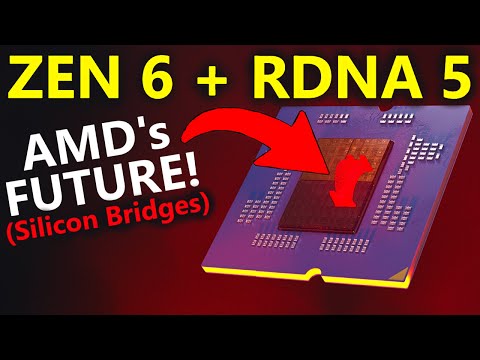
One Chiplet, Six Faces of 'Standard'
Moore's Law Is Dead says its Zen 6 leak covered chiplet layout, die sizes, and likely nodes, while UCIe papers define an open chiplet ecosystem and a gem5 model. Ben Felix's suitability rule, YaleCourses' review standards, and John Savill's subnet note show standards as scoped minimums, not promises. The dossier contrasts proprietary silicon claims with an open interconnect specification and the many uses of 'standard.'

Apple Silicon's Missing Benchmark: The Gap Nobody Measured
The excerpts do not stage one clean benchmark. They show an ecosystem comparison: Apple Watch sizing, Nvidia's RTX Spark, Rust Linux on M1 and M2, external storage for LLMs, and big.LITTLE architecture. The written record anchors Apple silicon as an ARM-based SoC family, plus peer-reviewed M1 versus Intel and MPS, CUDA, and CPU studies. It keeps the speakers' own claims in front and the technical references as checks.

The Real AI Bottleneck Isn't Compute: It's Memory
The bottleneck is a hierarchy as much as a single number: HBM feeds bandwidth-hungry processors while GPUs idle when data arrives late. Speakers treat HBM as an immature stack and a commercial lever, from custom NVHBM bandwidth gains to 64 GB per second accounting. Micron and HBM literature confirm the trade-offs: response time, capacity, cost, and packaging all constrain throughput.

The GPU Is Never Really Yours
The acts move from Kubernetes availability promises to GPU sharing mechanics. Aperture supplies the idea of slicing time; sentdex and InfoQ show where GPU hours and data movement go; Cloud With Raj notes release churn. The cited MIG partitioning paper matters because aggregate GPU power is unevenly divisible among partitions, while adaptive slicing research shows slicing carries error and print-time trade-offs.