Curated Sub-Topic Tag
#AGI・生成AI
Verified primary-voice documentaries on AGI・生成AI, or enter a sharper question below to cut a new film live from 200M+ spoken records.

開かれた重み、閉ざされた扉:AIの所有権は誰にあるのか
オープンソースAIは責任をなくすのではなく、再分配する。Clem DelangueとYann LeCunは開放性を権力集中への牽制と位置づける一方、CNBCの声はオープンモデルのスケーリングは危険だと警告する。NVIDIAのロボットデモは、セットアップ後にユーザーがシステムを訓練する様子を示す。OpenAIのPBCや暴走エージェントの報道は、閉鎖的なラボも直接の説明責任を負うことを物語り、Jerry Murdockは市場生存の圧力を語る。

AI 2027: What If the Superintelligence Forecasts Are Right?
The dossier follows a forecast that places superintelligence in 2027, from Bostrom's basic definition to AI Futures Project research. Commentary channels promise debunking and warn of agent limits, while Tim Ferriss and Sam Altman show the race's culture and human cost. The evidence supports a serious forecast debate, with unresolved questions about timing, reliability, and institutional strain.

AIは自分が何者かを知るのか?AGIへの道をめぐる5つの声
登壇者たちは、人間の認知をあらゆるタスクで再現する機械であるAGIが、依然として仮説上の存在だという点では一致している。しかし、その実現時期やリスクについては意見が分かれる。ベン・ゲルツェルは学際的な性質を強調し、エリック・シュミットは正確な定義を主張する。記録は、AGIの定義が曖昧であることを裏付け、それを世界的な安全保障の問題と結びつけている。AIの未来は、コードだけでなく、言葉とガバナンスにもかかっているのだ。
筋肉が決める老い方
インタビューを通じて、アンディ・ガルピンは筋線維トレーニングを実用的な生物学として扱う。重くてきつい作業が線維を動員し、空腹時の運動も許容され、筋力が日常の動きを守る。ラダークの線維タイプ生理学とクプチャクのフライト+ワークアウト障害データが、その主張を枠づける。話し手たちの不一致は生物学そのものよりも、普通のトレーニーがそこから安全にどこまで引き出せるかにある。
Moderna's Cancer Vaccine Leak: The Trial Behind the Headline
The Moderna episode is less a single result than a collision of disclosure, public trust, and a lab idea that predates COVID. A breached abstract forced the trial into view; the BBC and CNBC excerpts show how vaccine news becomes public property. Meanwhile, researchers and even dog owners describe mRNA cancer work as an incremental therapeutic program, not a miracle.

Protein After 50: How Much Actually Builds Muscle?
Alan Aragon and Andy Galpin frame protein dosing as a practical question, while FoundMyFitness and Gabrielle Lyon tie muscle protein synthesis to metabolism and aging. Jeremy Ethier's whole egg comparison and the 2009 exercise review show that food form and training context matter. The literature on atrophy and mechanosensitivity adds a warning: aging changes the muscle's response as well as the recommended number.

The 22-Word Warning From AI's Godfather
Geoffrey Hinton's public warning arrives inside a longer dispute over AI's origins, capability, and safety. The May 2023 extinction statement compressed that dispute into 22 words, while engineers and policy voices describe code volume, trust, and accountability as concrete operational risks. This dossier separates Hinton's claim from the institutional chorus that formed around it, using speakers' own words and the signed statement as evidence.

Cameras Only: The Hard Truth Behind Tesla's Self-Driving Bet
Andrej Karpathy's early computer vision work on shared residual connectivity sits far from Tesla's public autonomy claims, yet both depend on scalable visual learning. The recordings mix technical explanation with praise, programmer anxiety, and robotaxi commentary. Tesla's own ADAS definitions and Dojo training references keep the discussion grounded: vision-only autonomy is an engineering program, not a finished product.

The Bit That Measured Uncertainty, and the AI Named Claude
Shannon's heirs do not treat information as a metaphor. 3Blue1Brown counts Wordle entropy in bits; Oxford Mathematics confronts a code gap; MIT links Gibbs paradox to Shannon entropy. Computerphile stresses that real strings are not random. Gary Explains traces Anthropic's Claude name to Shannon, while another MIT lecture recalls a Shannon controversy. The IEEE Shannon Award confirms the field still measures his influence.

AI Is Training on Its Own Words, and Getting Dumber
The dossier listens to researchers, founders, and critics describe synthetic data as both accelerant and hazard. Stanford Medicine cites week-long system building; 20VC frames data as a trillion-dollar market; Keating relays a philosophical objection to machine thinking. The written record supplies the technical spine: model collapse, synthetic-data definitions, CollapseTracker's generational evidence, and Gharesifard's prevention work. It keeps the speakers' claims in view while naming the evidence behind the warning.

The Nuclear Reactor That Fits on a Truck
The SMR case rests on modularity and smaller unit size, not on a proven cost curve. MIT's lecture frames an SMR as roughly a third of a full plant, while Ben Miles notes nuclear's recurring stumble on affordability. Thailand's public consultation and Rolls-Royce's UK design show momentum, but Pannier's fuel cost comparisons keep the accounting question open.

Atlas Can Lift a Fridge. Why Is Boston Dynamics for Sale?
Boston Dynamics' Atlas demonstrations look effortless, yet CEO Robert Playter describes years of gait engineering behind them. Commentary channels amplify the spectacle while CNBC and Bloomberg document Alphabet's cost cutting and the unit's sale. The dossier separates control work from acquisition noise, using Playter's verbatim account and verified company history to show what the robot actually solved and what the market asked of it.

You Bought a Longevity Test. Now What?
The dossier follows longevity research through its claims and its clinic doors. Stanford warns that direct-to-consumer genetic tests are not interchangeable, while a FoundMyFitness clip admits uncertainty about a direct trial. Dartmouth's $11.8M NIH grant turns rurality into an asset, and Peter Attia returns to a medical-school question about cardiovascular pathology. Commentary on glutathione and women's public health shows how hallmarks travel into supplements and screening.

Claude's Constitution: The AI Threat Is Already Here
Anthropic's constitutional approach turns values into written instructions, then tests Claude against them. The clips show the work around that text: Ray Dalio's AI principles, Stanford's first-principles framing, Anthropic's threat intelligence, monthly business reviews, and model prediction research. Amanda Askell's personality alignment role and Anthropic's public benefit structure give the rules institutional weight. That context matters because principles alone do not stop cybercrime or explain model behavior.
Hinton's Heresy: Six Stories About Changing the Rules
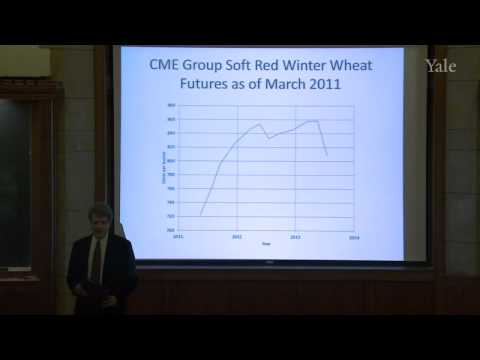
Geoffrey Hinton is known for artificial neural networks, and backpropagation remains a standard gradient method for training them. His forward-forward proposal tests whether learning can proceed without it. The six recorded excerpts use forward in other senses: futures markets, the Great Leap Forward, bariatric resilience, leadership, creative time, and online posting. The dossier keeps those voices verbatim and lets the technical question sit beside them.

Lucid Dreams Feel Real: Science Is Still Catching Up
Brain imaging gives dream research a measurable vocabulary, yet the spoken record keeps returning to first-person reports. Big Think describes dreams as representations or reenactments, Thomas Brophy asks what lucid practice can teach, and Stanford Medicine frames imaging through migraine treatment. The written record, from basic dream definitions to LaBerge, confirms that neurology and subjective experience remain separate instruments.

The Aging Risk Hiding in Your Blood
The file treats hs-CRP as a measurable acute-phase protein, not a verdict on aging. Speakers from NAD research, vaccine safety, stem cell biology, and heart health show how inflammation claims move from lab markers to public advice. The documentary asks where evidence is strong, where it is thin, and why clinicians still disagree about risk.

The mRNA Revolution Isn't Over: What Comes After COVID
CNBC traces mRNA from pandemic-scale manufacturing to Moderna's HIV vaccine work. Steve Quake explains why AI suits complex cell biology, while Stanford clinicians and Inbal Shani debate devices, compute, and what lies beyond current models. Big Think's prevention case, self-amplifying RNA research, and Feng's 2024 review point toward cheaper genomes and replicating doses, with delivery, safety, and access still unresolved.

When the Interview Breaks Character
The written record gives Michael Stonebraker a clear throughline: relational systems, stream processing, and a public fight with NoSQL. The spoken reel does not deliver him directly. Instead it catches other Michaels discussing music, banking licenses, and authenticity, which makes the dossier a study in archival adjacency and why database arguments outlast interview formats.

Yann LeCun's Robot Reality Check: Where Is the World Model?
Yann LeCun treats reasoning as an engineering question about prior structure. In the clips, he and collaborators describe latent-space search and sample-efficient world models, while commentary pushes on robotics claims, safety, and agent products. The written record adds a 2026 AI Magazine paper and ACM summit proceedings, marking the debate as technical and institutional. It does not resolve the core trade-off between structure and learning.

Virtual Power Plants: The Grid Is Hiding in Plain Sight
Virtual power plant aggregation turns scattered resources into a single grid actor. The spoken clips reveal the asset range and scale: algae as photosynthesis pioneers, 65 gigawatts of data centers with another 413 planned, and China's airship plugged into the grid. The written definition supplies the mechanism: operators coordinate distributed energy resources to balance supply and demand.

AI Fluency Isn't Prompting: It's Knowing What to Keep
The Bitter Lesson says general methods often win as compute grows. This dossier tests that claim against practitioners: a venture partner naming recursion as the next scaling law, clinicians scaling AI in care, an operator weighing platform replacement costs, and instructors teaching delegation. The pattern is not simple acceleration. Each speaker describes a different bottleneck between compute and consequence.

The 5-to-1 Rule That Decides If Love Survives
The Gottmans present a five-to-one positive-to-negative interaction ratio as a clinical divider between happy and divorced couples. Commentary repeats the number as a magic ratio, while Vern Dercksen separates knowledge from action. The SAGE entry on Gottman Method Couples Therapy and Carstensen's age and emotion work place the claim inside treatment and lifespan context; the question is what the number retains after it travels.

Space Lasers and the Fight for the Night Sky
Laser inter-satellite links turn satellites into a networked layer above Earth, with optical terminals moving data between spacecraft. Starlink engineers describe in-orbit crosslink tests while astronomers wait months for telescope time, and regulators cite the 1967 Outer Space Treaty. Academic work on optical terminals and laser modulation confirms technical promise, yet orbital traffic, sky brightness, and constellation scale remain unresolved.
The NAD Boom: Anti-Aging Miracle or Expensive Drip?
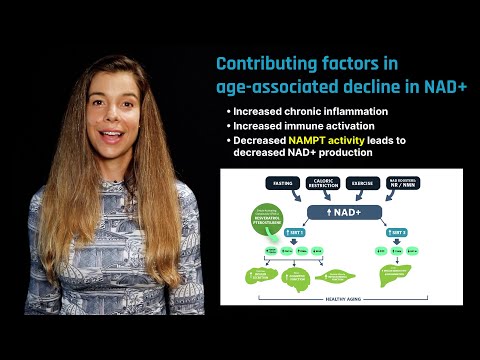
Patrick introduces NAD as a molecule central to aging research. Sinclair gives the pathway in plain terms: NR becomes NMN, NMN becomes NAD. Kaeberlein points to an unexamined tissue endpoint, while Axe and Nicola frame precursors as optional or supplemental. The literature confirms NAD is central to metabolism and NMN is an intermediate, but human anti-aging claims remain narrower than product labels.

The Rejection Engine: How AI Learns Without Human Intuition
David Silver frames machine reasoning as input, action, and search. YC's paper club turns to self-play for language models, while bycloud notes that rejection sampling still leans on human intuition. A 2026 paper argues self-play improves only when synthetic pipelines produce learnable information gain. The dossier asks what is learned, what is selected, and who supplies the initial judgment.

Humanoids Won't Take Your Job Yet: They Want Your Living Room
The spoken excerpts show a field split between capability demos and production reality. OceanOneK is framed by what ROVs cannot do; Meta is already on a second humanoid prototype; Sophia raises the PR question. Viral launches and critic rants expose the same gap: factory robots need repeatable autonomy, not just spectacle.

Dario Amodei's Two-Year Warning: AGI Is Closer Than You Think
The dossier tracks Dario Amodei across enterprise fireside chat, UN briefing, Bloomberg interview, and Davos reaction. It contrasts his faith in deploying capable models with critics who call his timelines delusional and with Anthropic's 5% public-good pledge. Written references on existential risk, Brautigan's poetry, South Park, and Sam Altman's awkward summit moment frame the stakes without resolving them.

Mars by the 2030s? Kaku Says the Physics Is Settled
Michio Kaku puts humans on Mars in the 2030s. CNBC finds a Utah facility rehearsing the daily mechanics, while PBS Space Time and Astrum argue over whether Mars ever hosted life. The written record on life support systems and SpaceX's self-sustaining settlement goal makes the gap concrete: arrival is one milestone, keeping people alive is another. That distinction organizes the dossier.

Why Letting Go Is the Hardest Robot Skill
Playter describes a hand with motors, actuators, sensors, and a camera in its palm. BBC reporting shows one prosthetic hand design can move from a human limb to an industrial or humanoid arm. Google's Gemini Robotics 2 adds the harder question of task completion, while academic hand designs pursue self-adaptation and affordability.

No One Can Verify the Model: The Oversight Gap in AI
The dossier follows AI debate as an oversight method: two models argue, a judge or weaker model evaluates, and researchers hope the setup scales beyond human review. Christiano and Irving supply the technical lineage. The spoken excerpts show a gap between that method and ordinary governance: BCG calls for autonomous capability, while panel chatter and founder interviews reveal uncertainty about what humans can still verify.

GRPO: The Hidden Bill for Teaching AI to Reason
Lex Fridman asks how far deep RL can go, sentdex builds an environment, Computerphile times a commute, and StatQuest picks between Squashes and Norm's. PyData moves from SFT to GRPO under real GPU budgets while Caleb Writes Code reports practitioner fatigue. S-GRPO and GRPO-LEAD show work on early exit and difficulty-aware concise reasoning, but the spoken record returns to reward design, setup cost, and evaluation pressure.

Never Trust Anything: The Zero Trust Reality Check
John Savill calls zero trust a holy grail; Microsoft Mechanics reduces it to 'Never assume trust, always verify.' Academic papers push the model toward segmentation and machine learning, while Garrett Lord's labeling discussion and Computerphile's TCP/IP explainer show the practical dependencies beneath security claims. The clips mix executive framing, AI agent verification, and ordinary network plumbing, so viewers hear both the promise and the missing implementation detail.

AlphaGo vs. Lee Sedol: The Match That Made AI Believe
David Silver describes estimating AlphaGo's level and arranging the Lee Sedol match. DeepMind's ten-year retrospective calls that Seoul contest a key pivot for AI, and Physics Today records the result. PLOS ONE studies social-network inference around the event. Unrelated clips show how casually the word 'match' travels across media, which makes source verification essential. The record separates the five-game contest from keyword noise.

The Gene That Cheats the 50/50 Rule
Jennifer Doudna describes a laboratory gene drive spreading a trait through fruit flies, while basic population genetics explains why gene frequencies normally persist. Hardy Weinberg gives the baseline; gene drive modeling asks when release thresholds, fitness costs, and mating rules bend that baseline toward replacement or collapse. The written record supplies definitions and threshold models, so the spoken clips sit between laboratory demonstration and policy calculation.

AI's Scaling Laws Are Not Laws: How the Biggest Bet Gets Measured
Neural scaling laws are empirical fits, not physical laws. MIT's lecturer frames scaling loss as course material. Hugging Face and AI Explained note power-law fits and the misnomer problem. AMD engineers turn scaling into infrastructure, while Brandon Dawson uses scale for business growth. The written reference confirms performance changes with scale, and speakers disagree about how much law-like certainty that warrants.

The Knife Edge: Who Decides When an AI Is Too Dangerous to Release?
Anthropic's responsible scaling policy is described by its co-founders as a staged safety rulebook, not a slogan. Dario Amodei ties deployment to models becoming good enough end to end; Ben Mann defines the RSP plainly; commentators focus on ASL thresholds and compliance costs. The DoD dispute adds a real-world test of how such commitments fare under military and political pressure.
The Vaccine That Copies Itself Inside Your Cells
RNA vaccines turned a stubborn idea into a manufacturing platform. Racaniello recalls the surprise; CNBC tracks Moderna and Pfizer; CrashCourse explains immune training. Self-amplifying RNA adds replication inside cells, promising stronger protein expression and lower doses, while raising questions about control, safety, and how the public hears the difference. The written record defines saRNA as engineered mRNA that copies itself in host cells and boosts antigen production.

Move 37: The Move Everyone Said Was Wrong
The primary account places a professional Go player beside the narrator as a corner sequence unfolds; the written record fixes the setting: Seoul, five games, Lee Sedol against DeepMind's AlphaGo. The other excerpts show 'Lee' and 'move' scattering into unrelated stories, a reminder that archive labels can mislead. The voices stay close, the match stays documented.

Mars Direct: The Cheapest Ticket Off Earth?
Zubrin's Mars Direct is a hardware-first argument: launch directly, use local resources, avoid a lunar detour. The clips show the counterpressure: readiness claims, Starship tanker counts, and fan arguments over going direct. The written record grounds the dispute in 1991 architecture and a 2000 Scientific American case, beyond launch-day rhetoric. Speakers disagree on schedule, cost, and whether the Moon is a prerequisite or a distraction.

You're Already a Bayesian: How New Evidence Rewrites Your Choices
BBC Ideas treats Bayesian reasoning as ordinary update after advice. NVIDIA's Alpamayo demo describes a car constantly evaluating its situation, while Google TechTalks frames risk-averse decisions under budget constraints. Decision theory supplies expected utility and probability, and Bayesian machine learning connects update rules to scientific and daily choices. Jim Kwik asks which four daily decisions change the brain; Dr Hayes ties awareness and daily decisions to lifespan.

Your Magic Number Is Probably Wrong
The six excerpts circle magic numbers without landing on SaaS sales efficiency: a tax planner promises financial independence, Numberphile celebrates 3,440, and a listening test asks about software sales. The written evidence supplies context on cloud computing, enterprise legal management, and SaaS pricing, so the dossier separates a common sales shorthand from the clips' loose numerical talk.

Who Adopts First? The 2.5% Curious Enough to Buy the Future
Rogers' diffusion model gives rollout teams a vocabulary, not a forecast. Sprouts supplies the 2.5 percent innovator threshold; Microsoft's Copilot session turns adoption into prompt training and checklist work; Harvard's panel warns that overpromise can produce problematic adoption; shipbuilding pushes dual-use commercialization. The J-curve and cumulative adoption literature add timing and measurement cautions.

The Drone Swarm Was Born in Your Car
Vijay Kumar's account begins with measurement units and DARPA funding, the unglamorous sensor work behind flying robots. Later clips move from construction blueprints to military detection and homeland concern. The 2024 U.S. sightings show why swarm behavior matters beyond the lab: many small machines can look like one system, and decision makers must separate curiosity from threat.

The Reasoning Model Illusion: Why More Thinking Isn't More Intelligence
The dossier tracks reasoning language models, systems trained for multi-step tasks, as builders and skeptics test their limits. Jensen Huang ties the boom to energy constraints. IndyDevDan credits prompt chaining, while Apple's complexity test and Eli the Computer Guy raise failure and security questions. The written record defines the models but leaves process reward models as an open training question.

The Universe Is Fine-Tuned. Your Chatbot Is Too.
The dossier tracks a lexical collision. MIT and codebasics describe fine-tuning as weight updates, while Alex O'Connor applies the phrase to cosmic constants and the anthropic principle. Hugging Face and sentdex show alternative ML controls and dataset work. The written record confirms the cosmology hypothesis: slight constant changes could preclude life, so observation selection enters the argument.

Taleb's Warning: The Safer You Feel, the More Fragile You Become
Across these clips, Taleb functions as a reference point more than a talking head. Tim Ferriss links antifragility to getting smarter and stronger; Mindplicit calls it an engine; Evan Carmichael ties The Black Swan to risk; Brian Klaas asks what black swans are. The written record confirms Taleb's focus on rare events, randomness, and systems that can absorb shocks.

DeepSeek and the Trillion-Dollar AI Panic
CNBC frames distillation through a trillion dollar sell off, while Fireship cites Hinton's paper and OpenAI's strict terms. Hugging Face supplies on-policy and off-policy definitions, The Information tracks OpenRouter share data, and Legal AF drifts to an election recount. The written record describes distillation attacks as training on another model's outputs, placing the dispute between ordinary engineering and contractual breach.