Curated Topic Hub
111 public documentaries哲学・思考法
Stoicism, existential meaning, decision models & lifelong reading

The Infinite Loop That Makes Cooperation Possible
MIT's lecture treats common knowledge as an assumption that needs precise definition, while Steven Pinker supplies the recursive test: I know that you know, and so on. Freakonomics adds evolutionary coordination, and Diamandis and Graylin call a US China race a stag hunt. The written record links these claims to coordination games, higher order beliefs, and trust.

The Zombie Trolley Problem: What Makes Matter Feel Like Anything?
David Chalmers's hard problem asks why physical processing comes with subjective experience. Big Think clips show experts still lack a widely accepted answer, while Annaka Harris presses on how non-conscious matter yields felt experience from the inside. Joe Bart cautions that philosophical schools can persuade by exposure. A Bloomberg segment on Japan's women managers and a Blackmore introduction sit beside the core debate, reminding viewers that documentary context can drift.

Your Self Is a Construction: What Meditation Reveals About the Brain
Compassion meditation turns a private practice into a measurable question: what changes in attention, mood, and the sense of a bounded self? Goleman describes beginners meeting loving-kindness; Suzuki reports lower stress and depressive symptoms; Davidson and Huberman frame the research; SciShow Psych links nonduality to weakened network rivalry. The literature on empathy and compassion gives the biological context.

The Prisoner's Dilemma Has a Loophole: Play Again
The prisoner's dilemma is a compact machine for showing how rational self-interest can produce mutual loss. YaleCourses notes that prior communication often fails to secure cooperation, while Carnegie Mellon's interrogation example and Vsauce2's snitching analysis make betrayal dominant. Diamandis counters that the world is multi-turn, and repeated-game research asks whether uncertainty, asymmetry, and reputation can make cooperation rational.

Your Mind Is the Hidden Market Risk
The dossier follows bias from Tali Sharot’s future imagining to MIT’s expected utility lotteries and Dr. Dicle’s portfolio warning. Psychology’s definition of bias as systematic deviation supplies the through-line. The speakers disagree less about bias existing than about where to place doubt: in forecasts, in models, or in the stories psychics tell.

Seneca on the Shortness of Life & Time
セネカ『人生の短さについて』
『人生の短さについて』は、ローマのストア派哲学者セネカが紀元49年頃、義父パウリヌスに宛てて書いた道徳的エッセイである。哲学者は時間の本質について多くのストア派の原理を提示する。すなわち、6つの独立した声を通じて、この私的な編集は語られた証言と書かれた参照を一つの途切れない糸に紡ぎ出す。
Chained in the Dark: Why We Call Shadows Wisdom
The School of Life shows prisoners who mistake phantoms for reality and take pride in shadow talk. YaleCourses ties that image to Plato's Republic and to dark hollows where people misread reality, while Storyline English adds careful, patient thinking. Philosophies for Life drifts toward networking advice and dice-like acceptance, a useful test of how the allegory survives translation.

Ikigai Is Not a Venn Diagram
Ikigai travels from Han-era Japan into resumes, market failure, and Okinawan longevity lore. The speakers disagree about whether purpose is a daily practice, a hierarchy to climb, or a risk when framed as obligation. Academic work on ikigai and purpose in life adds clinical caution and evidence from ageing Japan, where smartphones now mediate daily purpose. The dossier keeps their verbatim words central.
Escape the Board: First Principles from Human Chess to Microchips
First principles work starts by naming constraints and assumptions. Ryan Hall treats fighting as human chess; Michael Levin describes biological hardware solving without fixed assumptions; Jim Keller rebuilds from processor fundamentals. Gusto's blank canvas, Stanford's AI panel, and Alan Kazdin's adolescent negotiation show the same method across domains, while TRIZ and industrial problem-solving literature formalize the pattern.

The Emperor Who Wrote Meditations for No One
The speakers disagree less about facts than about emphasis. Daily Stoic says Marcus did not want the job of emperor; Philosophies for Life places the Meditations among autobiographical writings from his rule; Vox Stoica and Unsolicited Advice treat the book as a compact Stoic system that branches into other philosophy. The Oxford World's Classics edition anchors those claims in a stable academic text.
Naval Ravikant on Wealth & Happiness
足るを知るというレバレッジ
ポッドキャストや評論で繰り返されるナヴァル・ラヴィカントの哲学は、富を「許可なきレバレッジ」——コードやメディアのように、誰の承認も求めずに判断力を増幅させる道具——として捉え、幸福を「物の蓄積」ではなく「欲望の不在」として位置づける。語られた断片は実践的な道筋を示す。すなわち、固有の知識を築き、正和のゲームをプレイし、地位ではなく時間を買うために金を使うこと。一方、書き残された記録はこれを富と幸福に関する学術研究の文脈に置き、ある閾値を超えれば金は幸福にほとんど寄与しないことを確認する。総合すれば、規律ある人生像が浮かぶ——レバレッジで罠から逃れ、自由で足ることを実践する。

Deep Sleep, Still Watching: The Witness Consciousness Question
The dossier sets Advaita Vedanta's witness against modern sleep protocols and internet uses of deep sleep. Swami Sarvapriyananda frames consciousness through Hindu philosophy; Andrew Huberman offers NSDR for mental and physical vigor; Acharya Prashant asks who observes the ego. The written record places Advaita within Vedanta and ISKCON within Gaudiya Vaishnavism, keeping institutional claims distinct.

Hannah Arendt and the People No Country Will Protect
Hannah Arendt makes statelessness a test of human rights: a person stripped of citizenship loses the political standing that makes rights enforceable. The panel excerpts point to group disadvantage, rule-of-law work, and advocacy institutions, while the Arendt lecture describes subjectivity extinguished on both sides of totalitarian violence. Jus soli supplies a legal contrast: birthplace can grant nationality, but only where a state chooses to protect it.

Good Enough: Why Perfect Choices Are a Trap
Satisficing sits between formal expected utility and everyday judgment. The MIT lecture computes lotteries; Barnaby Marsh warns that prior outcomes may fail in new contexts; Patrick Collison describes structured doubt and bias accounting. The literature defines satisficing as stopping at an acceptable threshold, not maximizing, which reframes the clips as evidence of bounded rationality rather than failed optimization.

Want to Be Happy? Aristotle Says Practice Being Good
Aristotle's Nicomachean Ethics treats flourishing as the aim, virtue as trained habit, and justice as both character and political standard. The speakers disagree about emphasis: popular guides stress balance and compassion; Yale lectures press natural right and the urban citizen's way of life. The written record confirms the text's ten-book structure without settling the tension.
Stop Taking It Personally: The Strange Practice of Calm
Seneca's dialogue with Serenus treats anxiety as a practical problem of judgment, friendship, and daily habit. The recorded voices extend that frame: Kornfield urges less personal grievance, Kagge finds perspective in walking and looking up, while Glebova and Takai test identity and control. Modern references on death anxiety and the inner critic show why calm requires both philosophical argument and repeated practice.

Heraclitus Saw the Hidden Harmony in Every System
Peter Boyd asks how connected leadership operates at system scale. Stephen Wolfram describes minds inside a branching universe, while Web Dev Cody shows a queue breaking a multi-tenant platform. Andrew Hui's study of Heraclitus and Cavalcante's Palintropic Cosmology supply written frames for hidden order, but the spoken evidence keeps the focus on practical systems and their failure points.

Why Stoics Drink Water but Never Refuse Wine
Pigliucci places assent inside a broader Stoic curriculum: logic, ethics, and daily practice. Irvine and other speakers describe a philosophy that tells people what to do, not just what to think. The written record agrees that Stoicism began as a practical guide to eudaimonia and moral improvement, yet the excerpts show how easily practical discipline can slide into self-help shorthand.

Master Yourself First, Then the World Changes
The dossier places Laozi's Tao Te Ching beside contemporary claims about self-mastery. Tim Ferriss uses Nelson Mandela's early temper to show discipline under pressure; Vusi Thembekwayo and Shi Heng Yi frame mastery as a leadership and practice problem. The written record confirms the Tao Te Ching as a foundational Taoist text and self-cultivation as an indexed scholarly theme, while the podcast excerpts remain the primary evidence.

Who Turned Self-Care Into a Market? Foucault, Chronic Illness, and the Wellness Economy
Foucault's care of the self was a practice of ethical formation. The clips show self-care split between clinical management, domestic routines, and mountain retreats. Stanford's chronic-condition advice stresses medication, behavior, and social contact; lifestyle creators stress mood, atmosphere, and camera-ready rituals. The speakers do not share one definition, and that gap is the story. The result is a dossier about discipline, illness, and consumer habit.

Who Gets to Decide How You Think?
This dossier tracks six speakers testing what critical thinking means when an argument fails. Peterson returns to the Communist Manifesto; Krauss calls faith the enemy of science; Sarkar admits using AI to think about thinking. Written references define formal fallacy as invalid structure and false dilemma as a premise that limits options. The speakers agree on scrutiny but split over doctrine, conformity, tools, or trust.

Justice or Pleasure? Why the Social Contract Is Breaking
The dossier sets Epicurus's justice as mutual advantage beside Rawls, Rousseau, Locke, and present-day contract talk. Speakers describe institutions captured, sovereignty made absolute, and a Gen Z student willing to make the beast bleed. The written record on Epicurean pleasure and justice sharpens the trade-off: useful agreement versus coercive power, with friendship and fear as the measure.

The Stag Hunt Trap: Why Safe Choices Cost You Everything
Yale's repeated-games lecture says cooperation may hold in period one even when period two collapses. MIT turns to stag hunt as a finitely repeated case. Diamandis names the stag hunt analogy in AI competition, while hunting videos and an Ellen reunion supply the phrase's ordinary noise. The literature frames stag hunt as coordination on an ambitious payoff versus a safer fallback, with a Malagasy health-system study as applied evidence.

Trust Me, I'm Lying: Why Credibility Is Up for Sale
Jeffrey Hancock updates deception research after the pandemic, Erik Clemons becomes a recurring first guest on trust and bridging divides, and Toby Mathis and John Strohmeyer describe an illegal trust tax scheme spread through social media. Bloomberg asks how social capital earns market trust, while Dinis Guarda and Nilesh Solanki apply timeless concepts to AI ethics. Confucian li, ritual propriety, supplies an older social grammar for these claims.

Einstein's God Was the Universe Itself
Spinoza's 'God or Nature' is a metaphysical claim, not a slogan. The clips move from Wilson's paleolithic emotions and god-like technology to Stannard's search, Protestant and Mormon disputes over revelation, and Kaku's account of Einstein's Spinoza. The written record, from Ethics to Lloyd and Roth, keeps the contrast between immanent nature and a deity who intervenes.

Your Focus Is Going Extinct. Buddhism Saw It Coming
The witnesses split between clinical measurement and contemplative practice. Goleman calls focused attention endangered and says meditation offers answers; Headspace frames mindfulness as an end-to-end mental health platform; Mumford asks where stabilization ends and meditation begins. Buddhist sources describe bhavana and jhana, while clinical literature defines mindfulness as moment-by-moment awareness. The dossier tracks that translation and its costs.

The Scapegoat Is Never Random
Foucault's power-knowledge names a loop: power relies on knowledge and puts it to use. The dossier hears that loop in a Yale lecture on scapegoats, MIT's open-access conversation, and Robert Greene's laws of psychology. It also hears the counterclaim: knowledge can protect LGBTQ youth or become unfair leverage.

The Winners You See, the Graves You Don't
Emil Michael treats failure as innovation's price of entry. Gina Gotthilf's red-dot story shows the accounting problem: survivors return with holes, and we study the holes instead of the lost planes. Mark Manson calls survivorship bias a faulty assumption we all carry, while peer-reviewed work finds it in attrition, regional decline, and reverse market selection.
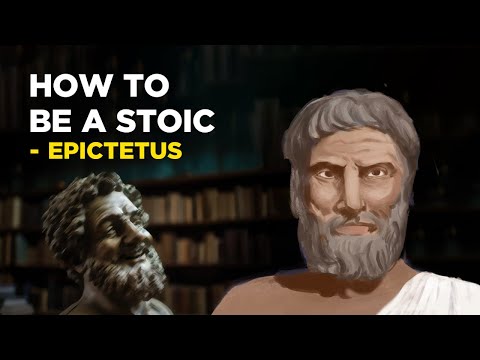
The Cheapest Thing You'll Ever Sell Is Your Will
Epictetus keeps returning to insults because they expose a transaction: an insult offers a chance to trade your will for a reaction. Massimo Pigliucci names the case directly, Daily Stoic adds mortality, and modern commentary turns the lesson into self-help. The written record on Stoic silencing and Epictetus's theology frames the same tension: the price is set by judgment rather than the insult.

The Freedom Delusion: Spinoza Saw the Strings
The six acts move from AI promises and movie programming to a TEDx rights claim, messy parenting, national universality, and Spinoza's ocean. Spinoza's Ethics treats freedom as rational understanding of affect, not exemption from cause. The dossier tests whether that claim survives classrooms, screens, and political speech, using Carriero on the primary affects and scholarship on freedom as rationality.
Who Sold You Purpose? Inside Japan's Meaning Industry
Ikigai arrives in the dossier as tradition, marketing, policy language, and personal practice. YaleCourses supplies the historical claim; Craig Mod supplies the walking method; Felix Prehn, Fact Quickie, The Straits Times, and Kings and Generals show purpose attached to debt, useless gadgets, diplomacy, and war. Logotherapy and organizational research sharpen the question: meaning can guide work, but institutions can also repackage it until burnout remains.

Nietzsche's Most Dangerous Question: Is Your Morality Just Resentment?
YaleCourses places Nietzsche with Freud and Weber at the twentieth century's threshold, while Philosophy Vibe and Lex Fridman spell out master and slave morality. The lecture and commentary agree that moral language can conceal power, resentment, and rebranded weakness. Nietzsche's philology and 1844 to 1900 biography anchor the dossier; Darwin remains the inquiry's pressure test, not a quoted claim in these excerpts.

Condemned to Be Free: The Choice That Makes Meaning
Existentialism was a mid twentieth century French and German movement, not a single doctrine. Sartre turns blank-slate freedom into a moral demand: not choosing is still a choice. Camus shares the absurdity problem, while Sartre's biography grounds the argument in Left Bank cafes. The Yale lecture adds the hard rule, and the School of Life portrait adds the body that lived it.
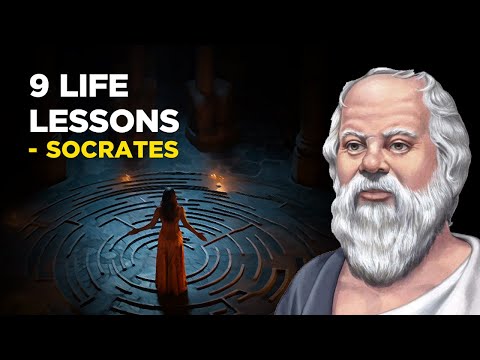
Socrates Refused to Shut Up. It Cost Him Everything.
Socrates left no writing. Plato's Apology dramatizes his defense against charges of impiety and corrupting the youth, while Aristophanes and Xenophon add competing portraits. The Yale lecture locates the examined life in a continual struggle to clarify thinking and remove contradiction; Alain de Botton calls the unexamined life more painful. Modern quotation often turns that trial claim into self-help.

One Box or Two? The Paradox That Splits Decision Theory
Newcomb's problem asks one player to choose one box or both while a predictor has already acted and the player weighs that claim. Veritasium quotes Nozick on the even split; MIT's lecture frames such choices as interactive decision theory. The written record confirms the puzzle's academic lineage through Hoefer's 2019 paper, while popular retellings risk turning a precise dilemma into an infinite-loop slogan.

The Waiter Who Lied to Himself: Sartre's Bad Faith Meets the Accusation Economy
Sartre's 1943 account of mauvaise foi describes self-deception, yet the clips show bad faith as an accusation traded in elections, wars, and online feuds. The School of Life supplies the waiter example; Sly Boy, Bad Faith, Professor Dave, PBS, and The Vanguard show the phrase at work. Being and Nothingness and The Sartre Dictionary anchor the definition while the speakers stretch it toward public blame.
Complete Pillar Archive
More Philosophy & Mental Models Documentaries (+75)
- Popper's Open Society Is a Skill, Not a Slogan4 幕 · 3m 55s
- The Wanting Trap: Why Dopamine Chases What It Doesn't Enjoy6 幕 · 5m 49s
- If You Upload Your Mind, Who Wakes Up in the Computer?6 幕 · 7m 35s
- Epicurus: Pleasure Is Not What You Think6 幕 · 6m 14s
- The Slave Who Taught Rome How to Be Free6 幕 · 6m 47s
- Why You Know Better and Still Do Worse6 幕 · 6m 17s
- You Become What You Repeatedly Do6 幕 · 6m 36s
- How Dangerous Is Thinking on Autopilot? Arendt's Warning6 幕 · 6m 16s
- The Trolley Problem Is About Guilt, Not Math6 幕 · 6m 52s
- Heidegger’s ‘They’: The Crowd That Lives Your Life for You6 幕 · 7m 47s
- You Can't Just Be Good: Confucius and the Art of Remaking Yourself6 幕 · 6m 25s
- 未完成のカリキュラム6 幕 · 6m 04s
- 領土の前にある地図6 幕 · 5m 45s
- 終わらない本棚の図書館4 幕 · 3m 21s
- 皇帝の私的な戦い5 幕 · 4m 57s
- Marcuse Saw It Coming: Technology Is Making Us One-Dimensional6 幕 · 7m 32s
- The Invisible Ring Test: Would You Stay Just If No One Could See You?5 幕 · 7m 44s
- To Be Cringe Is to Be Free6 幕 · 6m 40s
- The Body Scan That Calms Pain6 幕 · 5m 51s
- Happiness Is Not a Feeling: Aristotle’s Radical Answer6 幕 · 6m 51s
- Who Gets to Decide Who's Mad?6 幕 · 8m 30s
- Anger Is Not Power: Seneca's Cure for the Rage Trap6 幕 · 6m 07s
- Schopenhauer's Quiet Rebellion: Why Morality Begins With Feeling, Not Rules6 幕 · 7m 25s
- You're Already a Bayesian: How New Evidence Rewrites Your Choices6 幕 · 6m 07s
- How Knowledge Actually Grows: Beyond the Scientific Method6 幕 · 5m 59s
- The Choice Was Never Yours: Adorno’s Culture Industry6 幕 · 6m 07s
- Occam's Razor Can't Pick Your AI Model6 幕 · 4m 52s
- Would You Live This Life Again, Forever?6 幕 · 5m 29s
- 静寂は騒音の底にある6 幕 · 5m 27s
- What the Tibetan Book of the Dead Gets Right About Being Alive6 幕 · 5m 53s
- Can Bare Attention Loosen Emotional Pain?5 幕 · 4m 38s
- The Kindness Practice That Rewires Your Brain6 幕 · 5m 35s
- Think, or Be an Object: Beauvoir and the Second Sex5 幕 · 4m 48s
- Why Smart People Still Make Bad Decisions6 幕 · 7m 13s
- Afraid of Death? Epicurus Has a Strange Cure6 幕 · 5m 31s
- Kierkegaard's Dizziness of Freedom: Why More Choices Make You Anxious4 幕 · 4m 36s
- 最後の自由——フランクルの静かな革命6 幕 · 5m 23s
- Are We Living in a Simulation? The Brain, the Doubt, and the Glitch in the Proof6 幕 · 5m 24s
- Taleb's Warning: The Safer You Feel, the More Fragile You Become6 幕 · 5m 38s
- Stop Trying So Hard: The Neuroscience of Effortless Action4 幕 · 3m 51s
- The Commons Doesn't Have to Collapse: The Rules That Keep Shared Resources Alive4 幕 · 4m 59s
- Stop Pushing So Hard: Laozi's Case for Effortless Action6 幕 · 7m 18s
- Yalom's Warning: The Fear of Death Is Shrinking Your Life6 幕 · 5m 18s
- You Are Not Your First Thought4 幕 · 5m 40s
- エピクテトスとストア哲学による不安の制御6 幕 · 6m 31s
- But I Wore the Juice: Why Confidence Is Not Competence4 幕 · 4m 17s
- The Self Is Not Fixed: Your Brain Can Rewrite the Story6 幕 · 7m 50s
- Okinawa's Ikigai Is Belonging, Not a Career Diagram4 幕 · 4m 32s
- You Play the Role. You Don't Own the Outcome4 幕 · 5m 48s
- The Letdown Machine: Schopenhauer and the Dopamine Gap6 幕 · 5m 18s
- Your Brain Is a Shortcut Machine. That Is the Problem.5 幕 · 5m 58s
- You Are Not Your Thoughts: Mindfulness Beyond the Cushion4 幕 · 4m 34s
- Keep Asking Why: The Socratic Habit That Exposes Bad Thinking6 幕 · 6m 19s
- The Force That Makes You Keep Going: Spinoza's Conatus5 幕 · 5m 45s
- Confucius Said Family First. Then What?4 幕 · 5m 24s
- Storks Don't Deliver Babies: How Clever Data Lies to You6 幕 · 7m 35s
- The Casino Is Not the World: Why Clean Models Fail6 幕 · 7m 01s
- Chronic Pain Is a Protector Gone Wrong: Can a Body Scan Retrain It?5 幕 · 7m 00s
- Kierkegaard's Impossible Leap: What Faith Looks Like When Logic Fails4 幕 · 3m 37s
- Stoicism Is Everywhere. What Is It Hiding?6 幕 · 6m 09s
- Sisyphus Cheated Death Twice. Camus Made Him a Hero.4 幕 · 4m 13s
- The Tao of Enough: What Water Knows That the Boardroom Forgot6 幕 · 5m 51s
- Can You Afford to Walk Away? Diogenes and the Hidden Price of Freedom6 幕 · 5m 18s
- AI Keeps Saying 'Paradigm Shift.' Kuhn Would Ask Harder Questions4 幕 · 3m 25s
- 選ばざる運命を愛せよ4 幕 · 5m 28s
- The Family Harmony Trap4 幕 · 3m 10s
- The Fluency Shift: Train Your Brain to Stop Translating5 幕 · 4m 21s
- The Chinese Room Still Has No Idea What It's Saying4 幕 · 3m 40s
- What Cook Ding Knew About Real Skill6 幕 · 5m 53s
- What Is Actually Under Your Control? Epictetus and Ilhan Omar's Citizenship Fight6 幕 · 5m 38s
- You Don't See the World, Your Body Does6 幕 · 5m 34s
- You Can't Step Into the Same River Twice6 幕 · 6m 55s
- Breathing In Suffering: Tonglen and the Price of Compassion6 幕 · 5m 00s
- Can Compassion Be Trained Like a Muscle?5 幕 · 5m 04s
- Zhuangzi's Empty Boat: Why Anger Needs Someone to Blame5 幕 · 4m 24s