Curated Sub-Topic Tag
#メンタルモデル
Verified primary-voice documentaries on メンタルモデル, or enter a sharper question below to cut a new film live from 200M+ spoken records.

Your Mind Is the Hidden Market Risk
The dossier follows bias from Tali Sharot’s future imagining to MIT’s expected utility lotteries and Dr. Dicle’s portfolio warning. Psychology’s definition of bias as systematic deviation supplies the through-line. The speakers disagree less about bias existing than about where to place doubt: in forecasts, in models, or in the stories psychics tell.

8:15 A.M.: The 43 Seconds That Changed Hiroshima
The five spoken excerpts agree on the date, time, and sequence: Little Boy at 8:15 a.m. on 6 August 1945, Nagasaki three days later. They split on emphasis, from Truman's decision to radiation sickness and survivor Eizo Nomura. The written record anchors the dates and Truman's statement, while the voices show how the bombing is narrated as both ending and aftermath.

Charlie Munger's Checklist for Seeing What Others Miss
The archive treats mental models as a working discipline. Ferriss asks Thorp where useful models come from; Gurley names operators who use them; Butterfield recalls Slack's launch; Duhigg describes the stories that focus attention. The commentary warns that one lens can become a stethoscope with only one setting. Across six clips, the model is less an answer than a procedure for checking decisions, attention, and product judgment.
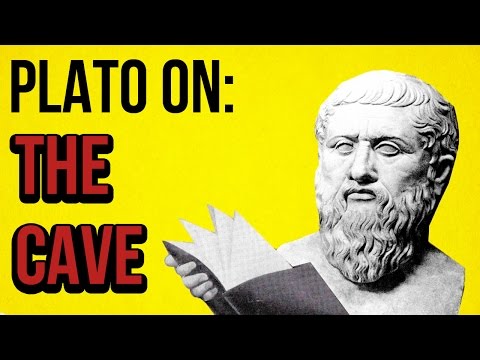
Chained in the Dark: Why We Call Shadows Wisdom
The School of Life shows prisoners who mistake phantoms for reality and take pride in shadow talk. YaleCourses ties that image to Plato's Republic and to dark hollows where people misread reality, while Storyline English adds careful, patient thinking. Philosophies for Life drifts toward networking advice and dice-like acceptance, a useful test of how the allegory survives translation.

Oppenheimer's Decision Machine Is Still Running
The record shows Oppenheimer leading Los Alamos inside a vast defense portfolio, not a single secret project. An MIT lecture stresses thousands of military projects; Gary Klein describes accumulating damage; later commentators turn the Manhattan Project into an AI analogy and a mortality story. Peer-reviewed accounts confirm his directorship, while the film and biography sustain public myth. The dossier separates managerial scale from moral consequence.

Good Enough: Why Perfect Choices Are a Trap
Satisficing sits between formal expected utility and everyday judgment. The MIT lecture computes lotteries; Barnaby Marsh warns that prior outcomes may fail in new contexts; Patrick Collison describes structured doubt and bias accounting. The literature defines satisficing as stopping at an acceptable threshold, not maximizing, which reframes the clips as evidence of bounded rationality rather than failed optimization.

Heraclitus Saw the Hidden Harmony in Every System
Peter Boyd asks how connected leadership operates at system scale. Stephen Wolfram describes minds inside a branching universe, while Web Dev Cody shows a queue breaking a multi-tenant platform. Andrew Hui's study of Heraclitus and Cavalcante's Palintropic Cosmology supply written frames for hidden order, but the spoken evidence keeps the focus on practical systems and their failure points.

Who Gets to Decide How You Think?
This dossier tracks six speakers testing what critical thinking means when an argument fails. Peterson returns to the Communist Manifesto; Krauss calls faith the enemy of science; Sarkar admits using AI to think about thinking. Written references define formal fallacy as invalid structure and false dilemma as a premise that limits options. The speakers agree on scrutiny but split over doctrine, conformity, tools, or trust.

One Box or Two? The Paradox That Splits Decision Theory
Newcomb's problem asks one player to choose one box or both while a predictor has already acted and the player weighs that claim. Veritasium quotes Nozick on the even split; MIT's lecture frames such choices as interactive decision theory. The written record confirms the puzzle's academic lineage through Hoefer's 2019 paper, while popular retellings risk turning a precise dilemma into an infinite-loop slogan.

Charlie Munger's Inversion Playbook: Think Backwards, Choose Better
Charlie Munger's inversion habit works as a career filter: avoid obvious folly, repeat durable ideas, and let time do work that trading cannot. The clips mix tribute, market noise, and blunt judgments, while the written record places him inside value investing's longer lineage. Viewers hear a practical method, not a personality cult.

Epicurus: Pleasure Is Not What You Think
The dossier follows Epicurus from ancient pleasure theory into modern wellbeing research. Micael Dahlen and Arthur Brooks separate lasting happiness from immediate gratification, while Alex O'Connor and Philosophies for Life explain static pleasure, aponia, and peace of mind. The written evidence adds hedonic welfare and friendship scholarship, yet the speakers disagree about how far pleasure, ritual, and measurement can guide a good life.
How Dangerous Is Thinking on Autopilot? Arendt's Warning
Arendt's phrase is often reduced to a mood. The Yale lecture makes it severe: totalitarianism extinguishes subjectivity on both sides of the crime, while Psyphos asks how ordinary people are recruited into war. The English-drill excerpts collide with that seriousness, repeating speak without thinking as a fluency goal, so the dossier keeps the distinction between unbanistered judgment and unthinking automation.

Happiness Is Not a Feeling: Aristotle’s Radical Answer
Aristotle's ethics begin with a question about ends: what activity is happiness for? The speakers move from eudaimonia as flourishing to contemplation as its fullest exercise, while Nicomachean Ethics frames the inquiry around the good at which action aims. The dossier keeps the tension between ordinary well-being and intellectual activity in view.

You're Already a Bayesian: How New Evidence Rewrites Your Choices
BBC Ideas treats Bayesian reasoning as ordinary update after advice. NVIDIA's Alpamayo demo describes a car constantly evaluating its situation, while Google TechTalks frames risk-averse decisions under budget constraints. Decision theory supplies expected utility and probability, and Bayesian machine learning connects update rules to scientific and daily choices. Jim Kwik asks which four daily decisions change the brain; Dr Hayes ties awareness and daily decisions to lifespan.

Think, or Be an Object: Beauvoir and the Second Sex
YaleCourses gives the philosophical hinge: Descartes's cogito and the thinking subject. The written references place The Second Sex in 1949 and identify its treatment of women across society and history. The remaining clips concern Epstein reporting, conditionals, a second brain, and sex therapy; they are misfiled tape, useful only as a contrast to Beauvoir's argument.
Why Smart People Still Make Bad Decisions
Across a Yale Politics lecture, popular Aristotle explainers, and a CFO decision talk, phronesis emerges as practical judgment trained by character and circumstance. The written record agrees: phronesis concerns action, and practical reason asks how to act. Ursula Coope and I Xuan Chong sharpen the stakes: ethical virtue and political expertise condition wise judgment, while the finance segment shows decision processes under constraints.

Who Decides When the Drone Is Already Moving?
The excerpts describe autonomy as a bundle of sensing, planning, and action, not a single switch. Kai-Fu Lee names the control problem in weapons; McKinsey names novel risk; drone research and LAWS definitions show how quickly those abstractions meet battlefield hardware. Helsing and academic drone papers supply the concrete setting: perception, navigation, and strike choices compressed into milliseconds.

Keep Asking Why: The Socratic Habit That Exposes Bad Thinking
The Socratic method appears here as a law school drill, a business heuristic, and a public shield. Finkelstein credits it with quick thinking; Study Hall says Socrates pressed students toward their own conclusions; Warren Smith and Charlie Morgan treat it as a critical thinking tool. The written record stresses questioning and clarification, not slogans.