Curated Sub-Topic Tag
#進化生物学
Verified primary-voice documentaries on 進化生物学, or enter a sharper question below to cut a new film live from 200M+ spoken records.
Your Brain Is a Metabolic Monster
The dossier follows a simple question: what did the human brain cost, and who paid? Barrett's conversation, Ganguli's AI comparison, and CARTA's gene-regulation talk frame a brain built by constraint. Cunnane and Kuzawa supply the metabolic accounting: fat, feast-famine cycles, life history, and the body's energy budget. The result is a set of bills, not one origin story.

Darwin Was Right About Natural Selection. We Still Get It Wrong.
Paul Nurse calls natural selection biology's most beautiful idea; Yale uses Scottish partridges to open group selection; Crash Course asks how organisms stay alive. Sprouts supplies Darwin's 1831 voyage, while Lotuseaters and Hank Green push selection into politics and cosmic questions. Gregory's review and the misconceptions list show why classroom examples and public analogies need careful boundaries.

The Choice Was Never Yours: Sapolsky's Case Against Free Will
Sapolsky's determinism is a causal claim: biology, environment, and history shape every decision before awareness arrives. The dossier sets his Stanford and Big Think arguments beside Alex O'Connor's commentary and reference works on free will, asking what blame, praise, and moral responsibility become if the case holds. The speakers disagree less about evidence than about what follows.
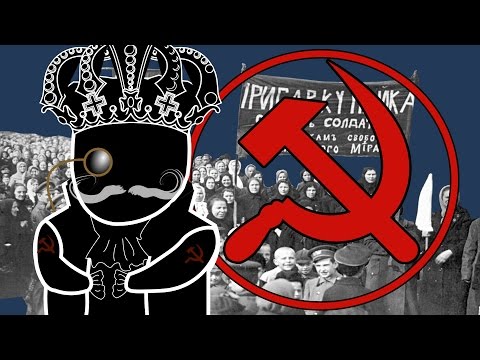
Bread Lines and the Tsar: How Russia Broke Twice in 1917
The dossier treats bread shortages as a pressure gauge, not a single cause. Fox shows the tsar's sacred authority, Sorokin records ordinary diary keeping under collapse, Dynastic Profiles ties earlier famine to 1917, and Snyder and The Great War trace how war, elite support, and revolutionary application broke the empire.

Should We Rewrite Life? Inside CRISPR's Astonishing Power
Jennifer Doudna describes CRISPR as a way to edit the instructions inside cells. She also admits that being the face of a scientific revolution is a lot of pressure. The He Jiankui affair and Doudna's published responses turn that pressure into a governance problem: who reviews edits, who reports failures, and who enforces limits across borders.

Who Checks the DNA Before It Builds a Pathogen?
Synthetic biology applies engineering logic to living systems while Evo-style genomic models generate DNA at scale. The speakers agree screening matters yet their remarks run from webinar housekeeping to industrial feasibility and art. Written work by Frow and Pérez frames the real gap governance and biosecurity practice lag behind capability.

Dawkins Was Misread: What The Selfish Gene Really Meant
The dossier follows a phrase that escaped its book: Dawkins's gene-centered argument describes differential survival among alleles, while the verified literature separates that model from selfish genetic elements and from moral readings of 'selfish.' Across six acts, critics press causation, readers report resonance, and Paul Griffiths asks for narrow definitions. The misconception lives where public shorthand meets technical precision.
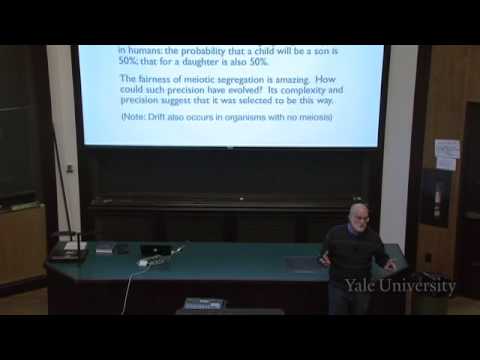
Most Mutations Do Nothing: The Random Force That Reshapes Life
The dossier starts with a Yale lecture that names neutral evolution outright, then tests that frame against CrashCourse mutation spectacle, a fire salamander population losing its gene pool, Dave Asprey's cancer aside, and Drew Durnil's continental drift clip. Verified references keep Kimura's 1968 neutral theory and the chance definition of genetic drift at the center. The result is a clear contrast between classroom vocabulary and popular analogy.

Sex Was Never Designed: Evolution's Messy Compromise
Yale's childbirth lecture, MIT's battle-of-the-sexes talk, and Crash Course's slang make reproduction a practical problem before it is a theory. The written record places sexual reproduction in a shared eukaryotic ancestry, while AI commentators extend the same language to machines that reproduce without human control. The dossier tracks gamete mechanics, parental bodies, and fears of uncontrolled copying.

Nietzsche's Most Dangerous Question: Is Your Morality Just Resentment?
YaleCourses places Nietzsche with Freud and Weber at the twentieth century's threshold, while Philosophy Vibe and Lex Fridman spell out master and slave morality. The lecture and commentary agree that moral language can conceal power, resentment, and rebranded weakness. Nietzsche's philology and 1844 to 1900 biography anchor the dossier; Darwin remains the inquiry's pressure test, not a quoted claim in these excerpts.

The Hidden Models That Shape Reality
Five uses of model and cycle drive the dossier: AI world models at Dartmouth, carbon-cycle equations at Oxford, comparative model advantages at a16z, GitHub's development lifecycle, and lunar nodes at Astrum. Social cycle theory cautions against equating recurrence with progress, while biogeochemical cycle research grounds Oxford's lecture. The shared vocabulary hides a scale problem: software models, planetary cycles, and social revolutions do not move at the same tempo.
Lenin's Revolution Was Never Inevitable
The dossier sets Yale's lecture on Leninism beside documentary accounts of 1917, John Doyle's comparison of revolutions, Matt Walsh's claim about 1905, and Banijay's view of Lenin after defeat. Written references establish Lenin's founding role and the Bolshevik Party's formation. The speakers agree on chronology and Lenin's centrality, then split over whether 1905 taught strategy, humiliation, or organizational survival.
When Bread Broke the Tsar: Petrograd, February 1917
This dossier follows Petrograd's bread rationing into the February Revolution without reducing 1917 to a single cause. Speakers describe revolution as process, wartime draft notices, soldiers' wives, and tsarist sacred authority; Mandel and Burdzhalov supply factory-level and sequence evidence from the capital. It keeps the speakers' verbatim claims as the evidentiary core while noting where the written record complicates simple causal stories.

Your Genes Have Switches: The Hidden Code of Aging
The speakers explain epigenetics as the control layer above DNA: gene expression can change without the sequence changing. Physionic supplies the mechanism, FoundMyFitness and NutritionFacts.org connect it to biological age and lifestyle, BBC News describes editing switches, and AsapSCIENCE exposes an inheritance paradox. The written references confirm the definition while leaving precise causal claims about clocks and complex traits unresolved.

Cheap Books Broke the World: The Gutenberg Warning for AI
Six commentators use Gutenberg as shorthand for sudden reproduction shocks. Business Motiversity cites roughly 10 million books before cheap printing; Hoover Institution says regulators should relax because this movie has played before. The written record supplies the mechanism: movable type, pressure and ink, and the social transformations that followed. The dossier separates historical evidence from analogy, asking where printing's consequences actually fit AI.

Junk DNA: The Code We Almost Threw Away
PBS Eons frames the junk DNA question as an unfinished decades long inquiry, while CNBC starts from cells and chromosomes and the Infographics Show notes that noncoding sequences can still shape biology. The written record sharpens the dispute: junk DNA means no known function, noncoding DNA may be transcribed or regulatory, and ENCODE critics argue over what function should mean.