Curated Sub-Topic Tag
#科学的方法
Verified primary-voice documentaries on 科学的方法, or enter a sharper question below to cut a new film live from 200M+ spoken records.

The Particle Hiding Under a Mine
The axion was proposed to solve a subtle inconsistency in fundamental forces, then became a dark matter candidate. Underground labs suppress cosmic noise, but uranium and thorium decay into radon and complicate the search, while ADMX tunes a radio-like cavity and hybrid magnonics and neutron-star research widen the field. The 2019 signal remains interesting, not definitive.
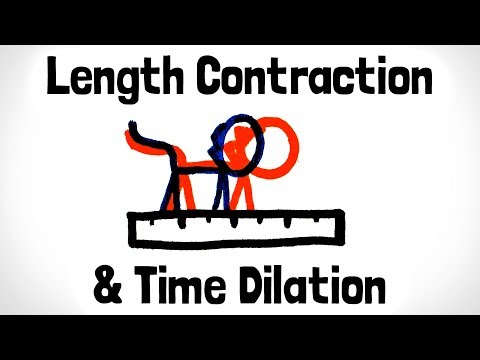
Why Your Clock Runs Slower Than Mine
The dossier follows time dilation from velocity to gravity. Minutephysics gives the moving-clock readings, Science Simplified links escape velocity to the gravitational equation, and Jim Al-Khalili insists the slowing is real. Lee Smolin and Thomas White frame the unresolved join between general relativity and quantum mechanics, while religious commentary marks a separate interpretive tension. The written references confirm actual clock differences and a proposed biological link.

The Million-Dollar Math Problem That Hides the Primes
Numberphile opens with a million dollar difficulty joke; Lex Fridman and Alex ask whether AI can move a central problem; Oxford Mathematics returns to Basel and zeta zeros. Written references frame the hypothesis as a statement about zeta zeros and prime distribution, while commentary warns that automated proof and viral claims are not the same. Two DOI-indexed papers push fresh approaches, but the speakers keep verification in view.

Popper's Open Society Is a Skill, Not a Slogan
Popper's critical rationalism treats knowledge as public and provisional: claims must be tested, not certified by authority. The course feedback, MIT lecture, All-In exchange, and critical care panel show that same test recurring in classrooms, markets, software, and hospitals. Alamuti's indexed work supplies the philosophical spine; the speakers supply the friction. Open society depends on institutions that permit correction without pretending to final truth.

The Brain Is Stranger Than You Think
The dossier places split-brain syndrome beside broader claims about consciousness. Bill Nye points to species differences in calculation, while a French case and brain-wave models press the same question from other angles. The written record defines callosal disconnection and the hard problem, and speakers disagree over whether brain tissue, synchrony, or materialism explains subjective experience.

How Knowledge Actually Grows: Beyond the Scientific Method
Epistemology is the theory of knowledge, but these excerpts show the phrase doing different work. Tim Ferriss asks for definitions. David Deutsch and Naval Ravikant treat it as how knowledge grows. A philosophy primer says it concerns theory and practice. Zettelkasten turns knowledge into standardized building blocks. Galileo's tide debates show public knowledge forming through argument. The written record adds limits, social epistemology, Irele, and Piaget.

Earth Won the Cosmic Lottery. Did Life Have to Be This Rare?
Dorion Sagan's reference entry frames Gaia as a question about Earth's coupled air, water, and rock. The spoken clips split that question: Kurzgesagt shows orbital luck destabilizing a planet, while Rare Earth advocates stress fussy requirements for life. Sara Seager adds the empirical test, since independent life elsewhere would transform the argument.

Are We Living in a Simulation? The Brain, the Doubt, and the Glitch in the Proof
The dossier tests the simulation hypothesis against perception science, Descartes' doubt, and claims about ancient texts. Donald Hoffman agrees we do not see truth but disputes a programmer behind appearances. The written literature defines simulation broadly and notes unresolved debate, while the speakers separate lived perception from metaphysical proof.

Is Spooky Action Real? The Experiment That Tests Quantum Entanglement
Quantum entanglement means a group's joint state resists independent description, and nonlocality means measurement statistics resist local hidden variables. David Kaiser's cosmic Bell test, Oxford gravity proposals, and cavity feedback experiments turn that claim into hardware. Duarte's Fundamentals of Quantum Entanglement indexes the experiments; the speakers show why correlations count as evidence.
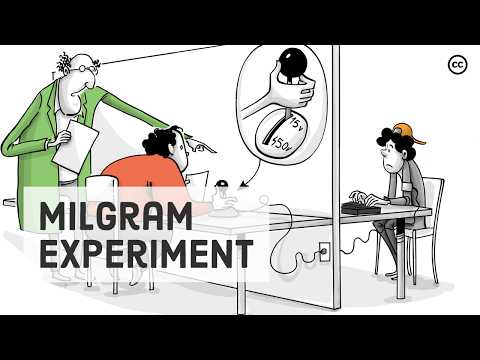
Would You Turn the Dial to 450 Volts?
Excerpts begin with Sprouts' blunt question about ordinary people and electric shocks, then move through National Geographic's Asch-to-Milgram link, the Savage Narrator's 1961 date, and the AtZ Show's account of personal pressure. Verified references place Stanley Milgram's controversial obedience experiments at Yale in the early 1960s. A Hacker News discussion of Obedience to Authority shows the study remains a live argument about method, ethics, and explanation.

AI Keeps Saying 'Paradigm Shift.' Kuhn Would Ask Harder Questions
In 1962 Thomas Kuhn defined paradigm shifts as fundamental changes in a discipline's basic concepts and practices. The excerpts show that phrase traveling: Karpathy-inspired Claude workflows, McKinsey's agentic banking operations, Streamlit courses for generative AI, and Philip Goff's panpsychism question. Werner Kuhn's linked geographic data paper and a JAMA review show the term gaining reach as its scientific meaning stretches.
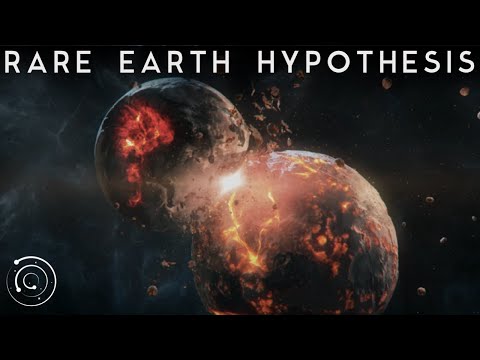
Is Earth Running a Thermostat? The Gaia Hypothesis on Trial
The clips pull in opposite directions: Rare Earth argues that life needs unusually perfect conditions, while Earth-history commentary describes living things moderating temperature and carbon dioxide. Gaia and CLAW research formalizes that feedback claim, and Callicott links it to Leopold's land ethic. The unresolved question is how much regulation is real, and how much is retrospective narrative.

Time Is a Thermodynamic Accident: Rovelli's Clue to Why It Flows
Alex O'Connor introduces Rovelli as a physicist who treats time as a problem, not a backdrop. Arvin Ash points to thermodynamics as the force behind time's one-way appearance. Rovelli's 1991 paper and Martinetti's Unruh effect work give that intuition a technical spine, while the popular clips show how easily time anomalies become entertainment. The result is a documentary dossier about a hypothesis, not a verdict.

The Cave Experiments the Tape Left Out
The clips circle Robbers Cave: Sprouts dates the 1954 boys' camp, Smarter While You Sleep says it shaped control, and The Savage Narrator lists it as experiment nine. Some Guy Who Knows Stuff says educated professionals perfected suffering. The query asks about Nathaniel Kleitman's cave circadian study, but the tape moves from Robbers Cave to a Spanish cave anecdote and cave fish genetics. Written references name Kleitman only as sleep research's father.
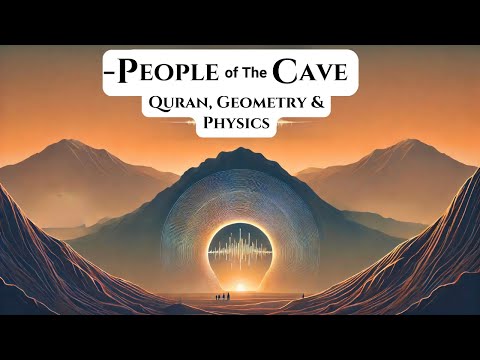
The Scientist Who Slept in a Cave
Kleitman's laboratory made sleep a physiological problem, and his Sleep and Wakefulness gave the field its modern footing. The clips show cave sleep as prescription, shelter, tactical plan, and dream setting. The written record grounds the physiology; the speakers expose how a research ideal drifts into advice and myth. That movement is the documentary's real subject: how laboratory findings become household instructions and sacred stories.