Curated Sub-Topic Tag
#物理学・宇宙
Verified primary-voice documentaries on 物理学・宇宙, or enter a sharper question below to cut a new film live from 200M+ spoken records.

情報はブラックホールに落ちたらどこへ行くのか
コックスは最小の距離を実用的な限界とみなし、それを表面に蓄えられる情報と結びつける。アヴィ・ローブはシュヴァルツシルト半径という名前を与える。Crash CourseとKurzgesagtは地平線を、特異点を隠す境界として描く。PBS Space TimeとBBC Earth Scienceは同じ境界を、重力研究の争点として位置づける。

重力の85%は謎のまま:暗黒物質か、それとも重力の書き換えか
ニール・ドグラース・タイソンは、この問題を暗黒物質の存在を決める審判ではなく、集合的な重力の測定として捉えている。PBSスペースタイムとドン・リンカーンは、暗黒物質が重力を通じてしか推測できず、銀河の詳細が重要だと強調する。MONDや暗黒エネルギーの言及は論争を広げる。見えない質量を加えるか、重力を修正するか、宇宙規模の加速と向き合うか、そのどれかだ。

宇宙は加速している:天文学者はこうして暗黒エネルギーを発見した
チャールズ・ベイリンは対数等級を確認し、アレックス・フィリペンコの超新星チームは膨張の歴史をデータに変えた。ケイティ・マックはE=mc2を宇宙のエネルギー収支に結びつけ、ダニエル・ホワイトソンは赤方偏移を説明する。文献は暗黒エネルギーが加速膨張を駆動すると述べている。一方、二つのクリーンエネルギー法は地球規模の転換に「加速」という言葉を使い、この資料集にカテゴリーのずれが生じている。

Leonard Susskind: The Universe Isn't Made of Points
MIT's lecture frames QFT as an interpretive problem before it is a formalism. Susskind talks about programming a quantum field theory, Ash distinguishes point particles from strings, and Jaimungal points to foundations. The written record names the next step: extend QFT from Minkowski spacetime to curved spacetime, while quantum gravity remains unresolved.
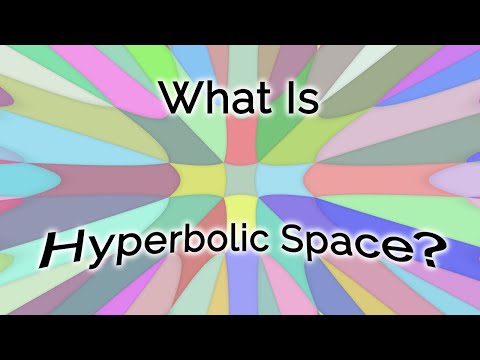
Einstein Didn't Know the Geometry: How Curved Space Became Gravity
Jason Lotay notes that Riemannian geometry and general relativity grew almost in parallel; Sean Carroll recalls Einstein learning differential geometry from papers; CodeParade and minutephysics show straight lines on curved two-dimensional shells. The written record places non-Euclidean geometry beside Euclidean axioms and Grassmann's extension theory, making curvature a mathematical and physical problem at once.
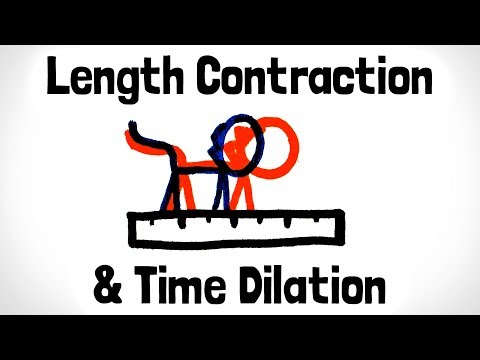
Why Your Clock Runs Slower Than Mine
The dossier follows time dilation from velocity to gravity. Minutephysics gives the moving-clock readings, Science Simplified links escape velocity to the gravitational equation, and Jim Al-Khalili insists the slowing is real. Lee Smolin and Thomas White frame the unresolved join between general relativity and quantum mechanics, while religious commentary marks a separate interpretive tension. The written references confirm actual clock differences and a proposed biological link.

Why Anything Exists: The Universe's Missing Antimatter
Arvin Ash and minutephysics lay out the symmetry problem: decays should mirror, but C and CP violation allow differences. Don Lincoln admits the asymmetry is unexplained; Veritasium notes Standard Model CP violation falls short by many orders. New Scientist points to neutrinos, while Kolb's baryogenesis entry frames the search as early-universe physics with a measured baryon excess.

Sean Carroll: Why Quantum Weirdness Refuses to Stay Small
Lex Fridman asks Sean Carroll to define entanglement as a foundational quantum idea. PBS Space Time reaches back to Schrödinger, while a 2025 Nobel report and Arvin Ash trace tunneling and classical failure. Jim Al-Khalili tests duration through attention, and Aperture asks viewers to imagine nothing. The written record supplies definitions, teleportation context, and Scarani's first-encounter account for simple explanations.

Carlo Rovelli Says Space Is Not There
Rovelli's name now travels through podcasts, lectures, and devotional YouTube as shorthand for one branch of quantum gravity. The excerpts show the theory as a set of tools applied to general relativity, a relational account of quantum properties, and a competitor to string theory. The written record keeps that competition precise: loop quantum gravity is one quantum gravity program among others, not the only one.

Can You Hear a Black Hole Collide?
Janna Levin describes black hole collisions as mallets on a drum, while LIGO's two distant labs cut local noise before claiming a signal. Neutron stars are almost perfect spheres, so their gravitational-wave signatures are faint and hard to isolate. The written record confirms that mergers radiate energy as gravitational waves, tightening the link between theory, detectors, and observed light.

What If Dark Matter Is Just Black Holes?
PBS Space Time and David Kaiser frame primordial black holes as a serious dark matter candidate, while the literature supplies peer-reviewed cases and a definition of the early-universe mechanism. The Martin Rees podcast excerpt asks what advice to give young people, a human detour that shows scientific questions passing between generations. Star Trek and Atlantic clips show popular culture and personal memory entering the same conversation.

Your TV Static Is Hiding the Big Bang
Charles Bailyn frames the cosmic microwave background through Type Ia supernova constraints on expansion and acceleration. Other speakers begin with analog television static, then narrow toward photon energies and early-universe measurements. The written record adds the Cold Spot and formal anisotropy studies, which keep the anomalies empirical rather than anecdotal and make foreground contamination a central check. The dossier tests where pedagogy stops and evidence begins.

The Sixth Mass Extinction: The Evidence Is Stranger Than You Think
CrashCourse traces extinction through beaver dams, eroded banks, and warmer water. Second Thought and PBS Eons supply deep time and fossil gaps, while PBS Space Time explains stellar thresholds. Species Documenting AGI and Chill Dude Explains push the argument toward monocrops, AI, and survival; the written record supports an ongoing human-driven Holocene extinction and a K-Pg benchmark of 75 percent species loss.

The Extinction Mirror: What Neanderthals Reveal About Our Future
The dossier sets cave life and burial evidence beside modern warnings about human extinction. Neanderthals disappeared around 40,000 years ago, and hypotheses include violence, disease, and competition with modern humans. The speakers do not settle the cause; they show how extinction stories mix evidence, inference, and present-day anxiety.

Feynman's Real Lesson: Science Builds Models, Not Truth
The dossier treats Feynman's curiosity as a working method, not a personality trait. Bill Nye questions whether algebra creates scientific allegiance, Leonard Susskind recalls Feynman's visual intuition, Stephen Wolfram links branching minds to quantum interpretation, and critics show the teaching icon becoming a brand and a contested committee story. The Quotable Feynman and Gross's Scientific Sublime frame that curiosity as disciplined doubt and public myth.

Six Degrees: Stanley Milgram's Small-World Problem
The small-world phenomenon usually arrives as a fact about six degrees, but these excerpts show networks as social machinery: a brotherhood, a professional shortcut, a political target, an ESL coffee break, a kindness campaign, and an Epstein file fight. Milgram's experiments and graph theory give the term its shape. The speakers reveal why the claim is useful, slippery, and often loaded.

Does Information Survive a Black Hole? Sean Carroll's Event Horizon Problem
The event horizon is a boundary, not a place, yet the selected clips keep turning it into a storage problem. Sean Carroll notes that black hole information does not scale with volume; Veritasium says the singularity is a final moment in time. The Event Horizon Telescope gives the debate an image, while Rindler's coinage reminds viewers how recently the vocabulary arrived.

Time Crystals Are Real, But What Can They Actually Do?
Time crystals are a real phase of quantum matter, not a movie device for rewinding events. The spoken clips show how popular culture primes the imagination while Yale's lecture, PBS Space Time, and Al-Khalili frame the actual quantum rules. Peer-reviewed work on Floquet and tesseract time crystals ties the idea to laboratory and quantum-computer experiments.

Decoherence: Why Quantum Weirdness Vanishes the Moment We Look
PBS Space Time frames decoherence as the reason quantum effects do not show up at familiar scales. Brian Cox treats quantum mechanics as the root description of reality, while Steve Girvin's course foregrounds errors and correction. The written references sharpen the point: decoherence is information loss to an environment, and many worlds keeps the wave function without collapse.

The Encryption Deadline Nobody Owns
Post-quantum cryptography is no longer theoretical: NIST ran a public competition and standardized algorithms, and Google has urged migration. Yet the speakers describe a gap between standards and deployment. Aaronson frames the competition as a design problem; Savill and ExplainingComputers frame the deadline as organizational. Barker's adoption research and Alkhatib's performance benchmarks show the costs that follow.

Life May Have Begun in the Dark
The acts trace a shift from sunlight to chemistry as the condition for life, with the literature separating vent ecology from the wider deep sea. YaleCourses and SEA place origins at a charged mineral surface or deep vent, while Sleepy Science Channel states the broader rule and BBC Earth Science finds vent minerals on Mars. Mental Floss dates the human discovery to 1977, and CrashCourse keeps the uncertainty visible.

Why Nature Never Gets Smooth: The Hidden Math of Roughness
The dossier separates mathematical self-similarity from nature's approximate version. A diffusion solution, a snowflake curve, and a coastline's persistent roughness show where exact repetition breaks down. Written references define self-similarity and fractals while speakers test those terms against finite shapes, statistical patterns, biological conflict, and one dinner-table rejection of genius, leaving a precise, bounded account of a large idea.

Einstein's God Was the Universe Itself
Spinoza's 'God or Nature' is a metaphysical claim, not a slogan. The clips move from Wilson's paleolithic emotions and god-like technology to Stannard's search, Protestant and Mormon disputes over revelation, and Kaku's account of Einstein's Spinoza. The written record, from Ethics to Lloyd and Roth, keeps the contrast between immanent nature and a deity who intervenes.

The Network Where Averages Stop Working
Barabási describes a network whose degree distribution departs from Poisson and follows a power law. MIT's scaling lecture warns that a power law does not appear automatically when you scale one architecture. The literature adds a sharper caution: some biological networks labeled scale-free may be neither power-law nor scale-free. The dossier tests when the math names a real structure and when it becomes a slogan.
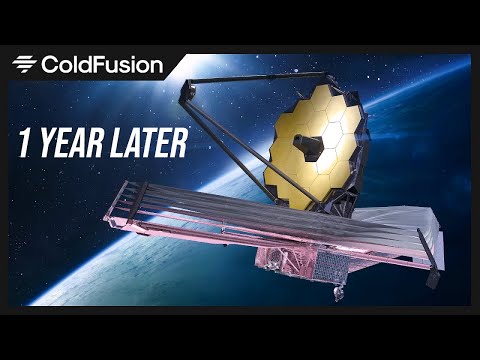
Webb Looked Back in Time and Found the Impossible
Webb's First Deep Field gave viewers a picture; Maisie's Galaxy at redshift 11.4 gave researchers a date, roughly 390 million years after the Big Bang. ColdFusion frames the instrument's public arrival, while SciShow Space explains distance as time. The Hacker News thread about too many early galaxies marks the real tension: Webb is pressing formation models while cataloging objects.

The Language Window: Why Your Brain Learns Fast, Then Stops
Critical periods are maturational windows when the nervous system is unusually responsive to environmental input. Jarvis extends the frame to the whole brain; Arlotta describes plasticity during such windows; Newport's work anchors language acquisition in that biology. The documentary separates animal imprinting, human speech learning, and classroom rhetoric about critical thinking, asking which claims survive evidence and which merely borrow scientific authority.

Predictable Numbers, Broken Secrets
The dossier follows randomness from classroom code to security infrastructure. Caleb Curry and Tim Corey show how programmers invoke random values, Lucas Kesan frames prime generation as conference material, and Numberphile cites NIST guidance while Chilluminati recounts the 2024 PuTTY signature flaw. The written references define RNGs and hardware generators, making clear that prediction resistance is the security requirement.
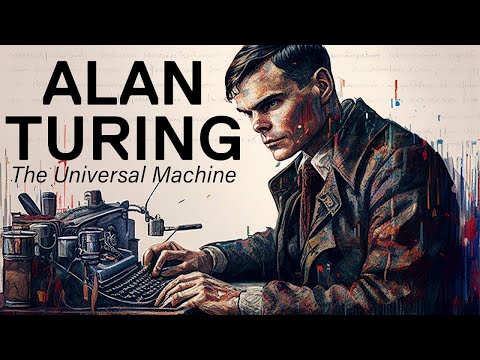
Will This Program Ever Stop? The Limit That Haunts Every Computer
Turing's 1936 machine gives the halting problem its clean shape: a program and an input, then a yes or no that no algorithm can always supply. The clips move from that proof to FRACTRAN, Turing-complete conversion, Bletchley output, and the Turing test, where the same limit meets real research ambition. The written record confirms the core definition and adds Busy Beaver and a 2024 time-travelling Turing machine paper as current extensions.

Crows Make Tools. Humans Make AI. But Do We Know How to Use It?
Six speakers describe human tool adoption: AI skills, Apple Intelligence routines, battery adaptation, Perplexity research, everyday AI, and menu-driven cover letters. The crow literature supplies a sharper benchmark. New Caledonian crows make hooks, select sticks, and sequence tools for food. Set together, the material asks where intelligence resides: in the tool, the user, or the learned procedure.

Can Cold Water Really Change Your Life?
Koenig's 2023 Cell work shows temperature-responsive RNA editing in octopus and squid, a biological response to cold. The spoken acts move from Rhonda Patrick's neuroendocrine and fat-browning claims to William Davis's warnings about cold-water plunge cardiac death. The dossier keeps those scales separate: cephalopod adaptation is evidence about cold biology, not a human immersion protocol.
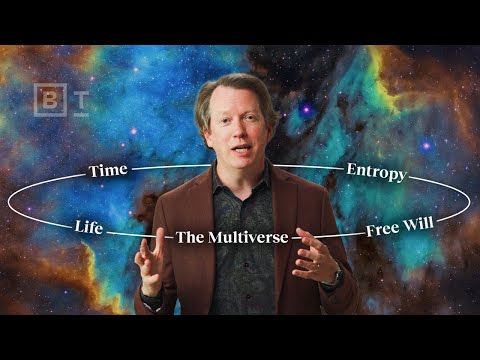
The Future Already Exists: Sean Carroll's Case for Block Time
Sean Carroll treats all times as equally real, and PBS Space Time ties that block-universe view to quantum symmetries and reversed time. The philosophy literature keeps presentism and the growing block as live rivals. The CNBC antitrust clip is a search-term false lead, useful only as a reminder that Time Warner can pull unrelated material into a time documentary.
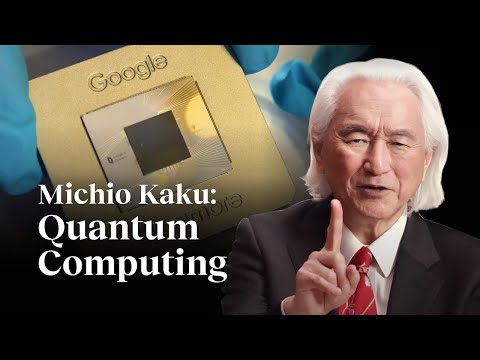
Feynman's Atomic Bet: Build a Computer Out of Quantum Weirdness
Quantum electrodynamics describes how light and matter interact, and Feynman's diagrams made that theory usable. The speakers disagree less about the physics than about intuition: Yale's lecture calls it hard to follow, while Kaku and Wolfram extend Feynman's vision toward quantum computing. The archival voice keeps the motive simple: fun, even when the result wins a Nobel Prize.

The Book Has No Color Until You Look: Rovelli's Relational Universe
The dossier follows Rovelli's claim that quantum properties are not intrinsic or absolute but relational. Theodore Spyropoulos states the position plainly; Michel Bitbol and Chiara Marletto place it among rival interpretations; Curt Jaimungal and Alex O'Connor test what shared scientific reality can mean if states depend on relations. The written record anchors the 1996 paper and later indexed work.
Quantum Computers Are Coming for Your Secrets
PBS Space Time links useful quantum computing to a quantum internet, Jim Al-Khalili cautions that entanglement speculation outruns expertise, and Cool Worlds explains ensemble superpositions. ByteMonk and Unveiled describe early gains and classical limits, while written sources add Q-Day's theoretical timing and post-quantum cryptography's unproven status. The dossier keeps speakers' claims central and separates demonstrated limits from projected threats, including Waterloo's error mitigation work.

The Catholic Priest Who Predicted the Big Bang
Cosmic inflation describes an early exponential expansion, not the Big Bang's origin story. Primordial fluctuations, density variations in that early universe, are the leading explanation for structure. The speakers split between textbook caution, cosmological evidence, and popular narration: Arvin Ash separates expansion from origins, Cool Worlds and Sleepy Science trace quantum seeds, and Perlmutter asks how strong the evidence really is.
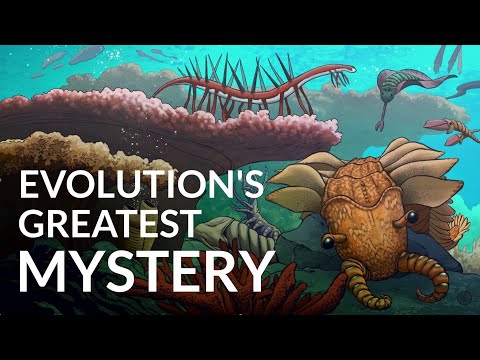
Darwin Was in Agony. Then the Fossils Started Exploding.
The dossier separates a 538.8 million year old evolutionary radiation from the word explosion. Fossil first appearances, oxygen and ecology hypotheses, and one unrelated news clip about a fire at CFB Wainwright show how evidence travels across contexts. The speakers agree that complex animals appear suddenly in the record; they disagree about what cause the record can actually prove.

The Voice in Your Head Is Not the Whole Story
Across six clips, default mode network means different things: idle brain activity, a task system, and the mind's self-referential background. Rahul Jandial links it to dreams; Mike Dee links it to shower insights; self-driving tutorials use network in a technical sense. Neuroscience literature defines the DMN as a large-scale brain network, while the spoken excerpts show the term migrating into everyday self-improvement talk.

Is Spooky Action Real? The Experiment That Tests Quantum Entanglement
Quantum entanglement means a group's joint state resists independent description, and nonlocality means measurement statistics resist local hidden variables. David Kaiser's cosmic Bell test, Oxford gravity proposals, and cavity feedback experiments turn that claim into hardware. Duarte's Fundamentals of Quantum Entanglement indexes the experiments; the speakers show why correlations count as evidence.

The Pyramids Weren't Built the Way You Think
The dossier treats pyramid construction as an engineering problem, not a mystery. Speakers range from an AI trained on 5,000 years of Egyptian text to a physics professor explaining failure, while WIRED and SLICE History point to later temples and elaborate corridors. Engineering's written definition, systematic application under constraints, frames the evidence.

Who Gets to Rewrite the Origin Story?
The dossier sets viral genomic claims, rejected mother-civilization narratives, African-origin evidence, and evidence-based product talk beside the archaea literature. The through line is provenance: who owns an inference, how a tree is drawn, and when a tool's false-discovery rate matters. Eukaryotes emerge within Archaea, making the two-domain system a practical frame rather than a simple three-domain story.