Curated Sub-Topic Tag
#エネルギー・気候
Verified primary-voice documentaries on エネルギー・気候, or enter a sharper question below to cut a new film live from 200M+ spoken records.

宇宙は加速している:天文学者はこうして暗黒エネルギーを発見した
チャールズ・ベイリンは対数等級を確認し、アレックス・フィリペンコの超新星チームは膨張の歴史をデータに変えた。ケイティ・マックはE=mc2を宇宙のエネルギー収支に結びつけ、ダニエル・ホワイトソンは赤方偏移を説明する。文献は暗黒エネルギーが加速膨張を駆動すると述べている。一方、二つのクリーンエネルギー法は地球規模の転換に「加速」という言葉を使い、この資料集にカテゴリーのずれが生じている。

Grit Isn't Enough: Why Your Surroundings Decide Your Success
Angela Duckworth's grit research pairs perseverance with passion for long-term goals, but these excerpts keep returning to situation. A Finding Mastery clip notes a post-2010 happiness shift; Matt Abrahams says changing the situation can beat persevering; Duckworth points to Philadelphia's running clubs and calls virtue and success situational. Her book and the psychological definition agree that grit is real, while the speakers question when resolve becomes a trap.

The Chain You Never See: Code, Clothes, and the Next Breach
The dossier follows security breaches as supply chain events, not single company failures. Google's Go talk and a cybersecurity podcast frame vendor risk and software dependencies; Hoover and CNBC examine Taiwan and meat; Bloomberg and Intel show labor and market shifts beneath resilience claims. SolarWinds, Black October, and the seafood risk study give the written record its scale, and the result is a map of trust, labor, and dependency.

The World Is Moving: Who Gets Left Behind?
Parag Khanna connects warming to migration and food geography; Ray Dalio ties bear markets to interest-rate shifts; historians and marine biologists supply cases from Poland, the Dead Sea Scrolls, the open sea, and sea otters. Written evidence on Venice and Mediterranean altimetry sharpens the distinction between long-run sea-level records and the political or financial rates that force decisions.

What Killed the Giants? Hunting, Heat, and the Stories We Tell
North 02 frames the Late Pleistocene as a 72 percent megafauna loss with lasting environmental effects. The climate debate clips show how easily evidence gets displaced by argument, from dragon's blood trees to energy policy. Peer-reviewed work by Christopher Johnson and a 2015 abrupt warming study narrow the hunting versus climate question without closing it.

Clean, Cheap, Reliable: Why You Can't Have All Three
The spoken record presents decarbonization as a management problem, not a slogan: MIT's thermal network plan names implementation staff, COP31 weighs security and affordability, Dartmouth reviews offshore wind, McKinsey warns of uncertainty. Switzerland's 2030 and 2050 targets and Singapore's MAS show how policy and finance turn trilemma choices into deadlines and rules.

AI's Hidden Power Bill: Who Pays When Data Centers Move In?
The dossier follows power demand from a Berlin conference stage to a Minnesota town of about 4,000, where Google plans a data center. CNBC separates bulk-system regulation from smaller utilities, while Just Have a Think challenges claims that decarbonisation is impossibly difficult. The bunker upgrade and Booz Allen pitch show two scales of response: personal hardware and mission-ready software.

1973: The Embargo That Turned Oil Into a Weapon
Bloomberg Originals dates Saudi commercial oil to Dammam Well No. 7 in 1938. PolyMatter recalls Nixon's 55 mph limit after the 1973 OAPEC embargo, while Investing Simplified says oil spikes always reversed. Karen Young and Two Bit da Vinci count missing barrels and thin spare capacity around Hormuz, and Fatih Birol asks for a lasting solution. The written record confirms the 1973 embargo and 1970s shortages.

Cheap Gas, Bigger Bills: The Net Energy Trap
EROI and net energy gain give the dossier its measuring stick: usable energy returned versus energy invested. The speakers move from that accounting into public claims about cheap gas, building leakiness, downhill driving, and seismic monitoring, while the written references supply formal definitions and case studies. The result is a clear look at how technical ratios become arguments about bills, reliability, and research priorities.

The Attack Inside the Code: How Trust Became a Backdoor
SolarWinds made software dependencies a national security story, and the speakers show the same pattern at several scales: npm packages, Ledger firmware, open source infrastructure, and truck cargo. The verified literature defines supply chains as components, tools, and processes, and notes that attackers target the least secure element. The dossier keeps the claims concrete, from CNBC's breach reporting to InfoQ's warning that free tools are not free for the world.

You're Not Lazy: How Friction Designs Your Habits
Wendy Wood puts friction at the center of repetition: distance, time, and effort decide what returns. Commentary creators translate that into redesign advice, from reducing good-habit friction to setting friction against sabotage habits. BJ Fogg's persuasive computing and emotion work supply the design lineage: behavior is shaped by environments and prompts, not willpower alone.

Why You Crash at 3 P.M.: The Chaos Started at Breakfast
Chatterjee and Unwin frame blood sugar as a daily energy issue. Doctor Alex and ZOE describe the sharp spike, insulin response, and crash. Asprey adds liver glycogen as backup fuel, while Mike Dee names the morning sugar rush that precedes the slump. Reactive hypoglycemia literature gives the pattern a clinical name.

The Grid Inside Everything
The inquiry asks about place cells and grid cells in navigation. The spoken clips use 'cells' and 'grid' for Taiwan ambiguity, Teotihuacán walls, and battery storage, while the references define entorhinal grid cells and hippocampal place cells. A 2024 paper argues place cells are memories arranged in a grid and grid cells are non-spatial.

Your Brain Is Not What You Think
The spoken clips circle brain cells from sleep loss to neuron counts, but the written evidence narrows to navigation. Place cells fire in specific locations, spatial memory supports route planning, and grid cells depend on head-direction signals. The parietal cortex adds spatial functions, leaving a clear editorial gap between catchy cell talk and mapping circuitry. The result is a dossier where vivid commentary and precise circuit evidence sit side by side.
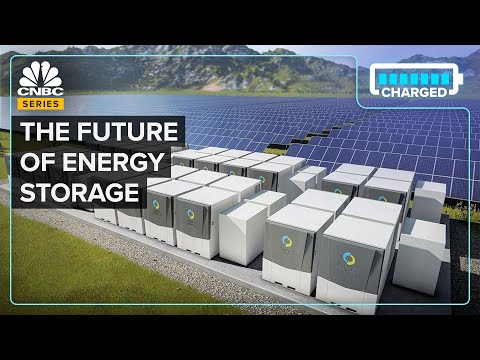
Beyond Lithium: The Hidden Race to Store the Grid
Storage is not one technology. CNBC hears flow batteries and periodic-table cost tests; Aspen and Undecided track LFP growth and limits; Ziroth and Just Have a Think explain pumped hydro and gravity. Capacity payment research by Milstein and Willems asks whether markets pay for availability, price caps, and reliability without overpaying.

The Battery That Never Really Dies: Inside Redwood's Closed Loop
The battery chain is projected to grow more than 30 percent annually to 2030, reaching $400 billion. Speakers argue recycling can reduce pressure on reserves, while Redwood's 100 gigawatt-hour target shows closed-loop manufacturing moving from paper to plants. Academic work on hydrometallurgical recycling and closed-loop processes supplies technical evidence, though plant-level performance remains unproven.

Fusion Finally Broke Even. So Where's My Power?
ColdFusion opens with energy as the resource that moves everything, while David Kirtley adds a deep-space rule: waste nothing. CNBC ties fusion research to bomb history, Ziroth marks the 2022 laser ignition result, Ben Miles describes microwave drilling for geothermal heat, and Google Research explains quantum resource estimation. Together they show why tokamak net energy is a systems claim spanning reactors, lasers, history, and heat.

The Battery That Lasts 100 Years
The cost question splits into chemistry, installation, and scale. LFP cells offer thermal stability and long life but low energy density; Rondo's heat bricks promise cheap storage if funding becomes hardware. Home battery videos show the unglamorous work of isolators, gateways, and data access. Academic and practitioner sources agree solar-plus-storage economics depend on scheduling and falling battery prices, not one cell type.

The 6 P.M. Solar Cliff: Why Your Battery Leaks After Dark
The speakers come from workbenches and backup setups: ideal diodes, Jackery sizing, EcoFlow unboxing, and off-grid limits. The duck curve literature explains why those small choices meet a system problem: solar output falls before evening demand peaks. Batteries can shift supply, but capacity, dispatch, and economics decide whether the shift pays.

Willpower Is Overrated: Design the Environment Instead
Across five commentary clips, the same instruction recurs: design the environment so unwanted habits require more friction and desired ones need less. James Clear supplies the rule, while Evan Carmichael and Kim Foster describe the relief of fewer daily decisions. Academic work on environmental design and habitation gives the idea a longer design history, though the clips rarely test it or measure it.
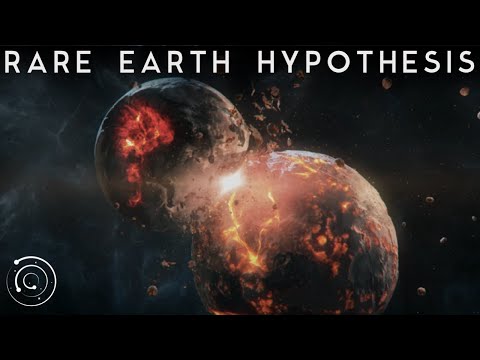
Is Earth Running a Thermostat? The Gaia Hypothesis on Trial
The clips pull in opposite directions: Rare Earth argues that life needs unusually perfect conditions, while Earth-history commentary describes living things moderating temperature and carbon dioxide. Gaia and CLAW research formalizes that feedback claim, and Callicott links it to Leopold's land ethic. The unresolved question is how much regulation is real, and how much is retrospective narrative.

送電網の見えない待合室
ボトルネックは送電網だ。連系待ち行列が許認可を何年単位の待合室に変えている。CNBCは待ち行列の遅れをAI需要と州ごとのルールに結びつけ、PJMの経験とアスペンでの問いは技術的・政治的な層を浮き彫りにする。上院の許認可改革と学術研究は、プロセスの設計が誰がつながり、誰が待ち、誰が払うかを決めることを示している。