Curated Sub-Topic Tag
#Ethics & Free Will
Verified primary-voice documentaries on Ethics & Free Will, or enter a sharper question below to cut a new film live from 200M+ spoken records.

The Choice Was Never Yours: Sapolsky's Case Against Free Will
Sapolsky's determinism is a causal claim: biology, environment, and history shape every decision before awareness arrives. The dossier sets his Stanford and Big Think arguments beside Alex O'Connor's commentary and reference works on free will, asking what blame, praise, and moral responsibility become if the case holds. The speakers disagree less about evidence than about what follows.
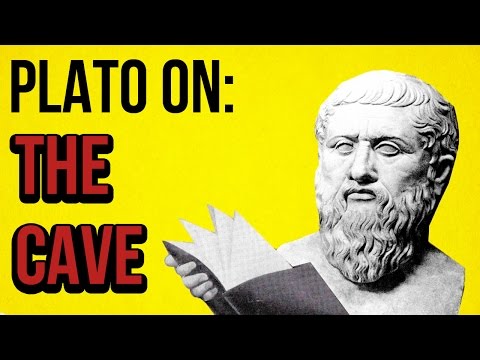
Chained in the Dark: Why We Call Shadows Wisdom
The School of Life shows prisoners who mistake phantoms for reality and take pride in shadow talk. YaleCourses ties that image to Plato's Republic and to dark hollows where people misread reality, while Storyline English adds careful, patient thinking. Philosophies for Life drifts toward networking advice and dice-like acceptance, a useful test of how the allegory survives translation.

Your Brain Decides Before You Do: The Free Will Illusion
Libet's readiness potential gave the free will debate a measurable clock: brain activity can precede reported intention. Sapolsky and Pinker press deterministic and neurophysiological readings, while Carroll separates physical law from clockwork metaphor and the School of Life frames the older philosophical split. The excerpts disagree less about data than about what counts as freedom.

Should We Rewrite Life? Inside CRISPR's Astonishing Power
Jennifer Doudna describes CRISPR as a way to edit the instructions inside cells. She also admits that being the face of a scientific revolution is a lot of pressure. The He Jiankui affair and Doudna's published responses turn that pressure into a governance problem: who reviews edits, who reports failures, and who enforces limits across borders.

Want to Be Happy? Aristotle Says Practice Being Good
Aristotle's Nicomachean Ethics treats flourishing as the aim, virtue as trained habit, and justice as both character and political standard. The speakers disagree about emphasis: popular guides stress balance and compassion; Yale lectures press natural right and the urban citizen's way of life. The written record confirms the text's ten-book structure without settling the tension.
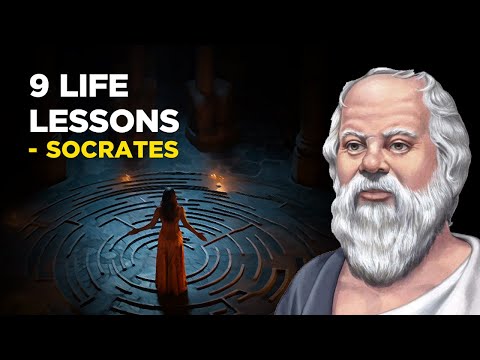
Socrates Refused to Shut Up. It Cost Him Everything.
Socrates left no writing. Plato's Apology dramatizes his defense against charges of impiety and corrupting the youth, while Aristophanes and Xenophon add competing portraits. The Yale lecture locates the examined life in a continual struggle to clarify thinking and remove contradiction; Alain de Botton calls the unexamined life more painful. Modern quotation often turns that trial claim into self-help.

Nietzsche's Most Dangerous Question: Is Your Morality Just Resentment?
YaleCourses places Nietzsche with Freud and Weber at the twentieth century's threshold, while Philosophy Vibe and Lex Fridman spell out master and slave morality. The lecture and commentary agree that moral language can conceal power, resentment, and rebranded weakness. Nietzsche's philology and 1844 to 1900 biography anchor the dossier; Darwin remains the inquiry's pressure test, not a quoted claim in these excerpts.
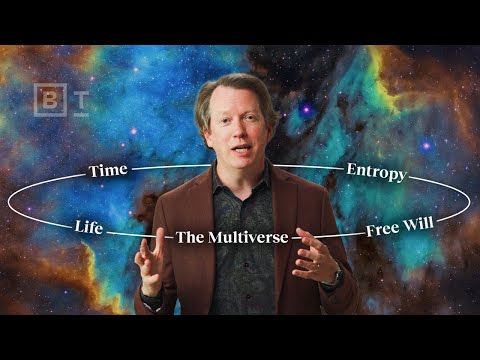
The Future Already Exists: Sean Carroll's Case for Block Time
Sean Carroll treats all times as equally real, and PBS Space Time ties that block-universe view to quantum symmetries and reversed time. The philosophy literature keeps presentism and the growing block as live rivals. The CNBC antitrust clip is a search-term false lead, useful only as a reminder that Time Warner can pull unrelated material into a time documentary.

The Trolley Problem Is About Guilt, Not Math
Yale's lecture moves from Kant to the trolley case while Aperture and Philosophy Vibe press the distinction between killing and letting die. Vsauce shows how ordinary distraction can mimic the dilemma and Alex O'Connor tests it against Hitler and sponsored nutrition. The trolley problem survives because the lever exposes competing intuitions not because it resolves them.

Why You Know Better and Still Do Worse
Yale's lecture sets the problem with procrastination, while Meghan O'Gieblyn and Martin Seligman supply the Greek term akrasia. Jason Graystone's trading floor turns weakness into a visible behavioral test, and Philosophies for Life restates Aristotle's rule of reason. The written references define akrasia and place Aristotle, Socrates, and Alfred Mele in a long debate over whether knowledge can fail action.

You Can't Just Be Good: Confucius and the Art of Remaking Yourself
The dossier follows a Confucian claim: ethical standing is built through cultivated habits, not inherited nature or abstract dilemmas. Michael Puett insists self-acceptance is the wrong aim; Aristotle's eudaimonia and the Confucian Junzi both depend on repeated practice. The self-driving trolley excerpts test whether rule-based ethics can capture that slower work of character, or whether they leave cultivation outside the frame.

You Become What You Repeatedly Do
YaleCourses states the central claim plainly: virtue is cultivated by cultivating habits. Philosophy Vibe connects that practice to a thing's telos, while Alex O'Connor asks what a virtuous person is and Philosophies for Life lists vices on either side of the mean. The Nicomachean Ethics and contemporary virtue ethics scholarship frame these spoken excerpts as a working account of character, not a rulebook.
Schopenhauer's Quiet Rebellion: Why Morality Begins With Feeling, Not Rules
Schopenhauer's ethics begin with suffering shared across creatures, not with rules or duties. Lex Fridman and James Doty describe compassion as recognition of another's pain, while Jonny Thomson notes Schopenhauer's break from Kantian duty. The commentaries add a sharper claim: compassion interrupts the restless Will and becomes a practical rebellion against ordinary self-interest.

The Invisible Ring Test: Would You Stay Just If No One Could See You?
Glaucon’s ring turns justice into a test of hidden motive: would a just person stay just with no reputation at stake? YaleCourses states the challenge plainly, TED-Ed shows Magnesia writing persuasion into law, and Cornel West separates public love from Plato’s due. The dossier contrasts those arguments with commentary noise and Plato’s account of reason managing drive and instinct.

Happiness Is Not a Feeling: Aristotle’s Radical Answer
Aristotle's ethics begin with a question about ends: what activity is happiness for? The speakers move from eudaimonia as flourishing to contemplation as its fullest exercise, while Nicomachean Ethics frames the inquiry around the good at which action aims. The dossier keeps the tension between ordinary well-being and intellectual activity in view.

How Knowledge Actually Grows: Beyond the Scientific Method
Epistemology is the theory of knowledge, but these excerpts show the phrase doing different work. Tim Ferriss asks for definitions. David Deutsch and Naval Ravikant treat it as how knowledge grows. A philosophy primer says it concerns theory and practice. Zettelkasten turns knowledge into standardized building blocks. Galileo's tide debates show public knowledge forming through argument. The written record adds limits, social epistemology, Irele, and Piaget.
Why Smart People Still Make Bad Decisions
Across a Yale Politics lecture, popular Aristotle explainers, and a CFO decision talk, phronesis emerges as practical judgment trained by character and circumstance. The written record agrees: phronesis concerns action, and practical reason asks how to act. Ursula Coope and I Xuan Chong sharpen the stakes: ethical virtue and political expertise condition wise judgment, while the finance segment shows decision processes under constraints.

Why Facts Don't Win Arguments: Aristotle's Persuasion Playbook
Aristotle's Rhetoric still explains why speakers win attention through character, emotion, and argument. Francesca Psychology shows how outlandish narratives seize control, while The School of Life calls audience influence by non-logical factors maddening. Philosophies for Life and The People Profiles frame Rhetoric as enduring craft, and Sobczak's study of Zelensky plus legal-rhetoric scholarship confirm ethos and pathos as working tools, not decorations.

Driver Shortage Meets the Robot Truck Convoy
The dossier follows autonomous truck platooning from drop lots to federal waivers and Tesla cost claims. Steve Viscelli describes human driven trucks meeting autonomous units at transfer yards, while CNBC and Aurora show continuous freight movement. Peer reviewed platooning requirements add a standards layer, and regulations, driver shortages, and per mile economics remain the real test sites.

You Play the Role. You Don't Own the Outcome
Epictetus grounds duty in social roles, yet the four excerpts show role ethics under pressure: household labor, professional AI ethics, a legislative conflict hearing, and a Stoic dice metaphor. Reference works confirm role ethics derives morality from community relationships. The speakers keep returning to one practical question: what belongs to my role, and what belongs to forces beyond my control?

The Family Harmony Trap
Four clips treat family harmony as something managed by money, publicity, estate plans, and even a game chapter. Confucian family instructions supply a stricter grammar of roles, duties, and conduct taught by patriarchs. The speakers do not cite Confucius directly; their claims about continuity and smiles expose what ethical family language does under pressure. That pressure includes inheritance, audience demand, and the wish to end conflict on cue.