Curated Sub-Topic Tag
#Stoicism
Verified primary-voice documentaries on Stoicism, or enter a sharper question below to cut a new film live from 200M+ spoken records.

The Emperor Who Wrote Meditations for No One
The speakers disagree less about facts than about emphasis. Daily Stoic says Marcus did not want the job of emperor; Philosophies for Life places the Meditations among autobiographical writings from his rule; Vox Stoica and Unsolicited Advice treat the book as a compact Stoic system that branches into other philosophy. The Oxford World's Classics edition anchors those claims in a stable academic text.

Hannah Arendt and the People No Country Will Protect
Hannah Arendt makes statelessness a test of human rights: a person stripped of citizenship loses the political standing that makes rights enforceable. The panel excerpts point to group disadvantage, rule-of-law work, and advocacy institutions, while the Arendt lecture describes subjectivity extinguished on both sides of totalitarian violence. Jus soli supplies a legal contrast: birthplace can grant nationality, but only where a state chooses to protect it.

Why Stoics Drink Water but Never Refuse Wine
Pigliucci places assent inside a broader Stoic curriculum: logic, ethics, and daily practice. Irvine and other speakers describe a philosophy that tells people what to do, not just what to think. The written record agrees that Stoicism began as a practical guide to eudaimonia and moral improvement, yet the excerpts show how easily practical discipline can slide into self-help shorthand.

Justice or Pleasure? Why the Social Contract Is Breaking
The dossier sets Epicurus's justice as mutual advantage beside Rawls, Rousseau, Locke, and present-day contract talk. Speakers describe institutions captured, sovereignty made absolute, and a Gen Z student willing to make the beast bleed. The written record on Epicurean pleasure and justice sharpens the trade-off: useful agreement versus coercive power, with friendship and fear as the measure.
Stop Taking It Personally: The Strange Practice of Calm
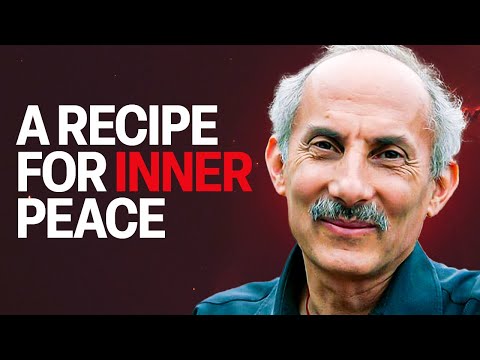
Seneca's dialogue with Serenus treats anxiety as a practical problem of judgment, friendship, and daily habit. The recorded voices extend that frame: Kornfield urges less personal grievance, Kagge finds perspective in walking and looking up, while Glebova and Takai test identity and control. Modern references on death anxiety and the inner critic show why calm requires both philosophical argument and repeated practice.

Who Turned Self-Care Into a Market? Foucault, Chronic Illness, and the Wellness Economy
Foucault's care of the self was a practice of ethical formation. The clips show self-care split between clinical management, domestic routines, and mountain retreats. Stanford's chronic-condition advice stresses medication, behavior, and social contact; lifestyle creators stress mood, atmosphere, and camera-ready rituals. The speakers do not share one definition, and that gap is the story. The result is a dossier about discipline, illness, and consumer habit.

Master Yourself First, Then the World Changes
The dossier places Laozi's Tao Te Ching beside contemporary claims about self-mastery. Tim Ferriss uses Nelson Mandela's early temper to show discipline under pressure; Vusi Thembekwayo and Shi Heng Yi frame mastery as a leadership and practice problem. The written record confirms the Tao Te Ching as a foundational Taoist text and self-cultivation as an indexed scholarly theme, while the podcast excerpts remain the primary evidence.

Trust Me, I'm Lying: Why Credibility Is Up for Sale
Jeffrey Hancock updates deception research after the pandemic, Erik Clemons becomes a recurring first guest on trust and bridging divides, and Toby Mathis and John Strohmeyer describe an illegal trust tax scheme spread through social media. Bloomberg asks how social capital earns market trust, while Dinis Guarda and Nilesh Solanki apply timeless concepts to AI ethics. Confucian li, ritual propriety, supplies an older social grammar for these claims.

The Stag Hunt Trap: Why Safe Choices Cost You Everything
Yale's repeated-games lecture says cooperation may hold in period one even when period two collapses. MIT turns to stag hunt as a finitely repeated case. Diamandis names the stag hunt analogy in AI competition, while hunting videos and an Ellen reunion supply the phrase's ordinary noise. The literature frames stag hunt as coordination on an ambitious payoff versus a safer fallback, with a Malagasy health-system study as applied evidence.

The Winners You See, the Graves You Don't
Emil Michael treats failure as innovation's price of entry. Gina Gotthilf's red-dot story shows the accounting problem: survivors return with holes, and we study the holes instead of the lost planes. Mark Manson calls survivorship bias a faulty assumption we all carry, while peer-reviewed work finds it in attrition, regional decline, and reverse market selection.
The Cheapest Thing You'll Ever Sell Is Your Will
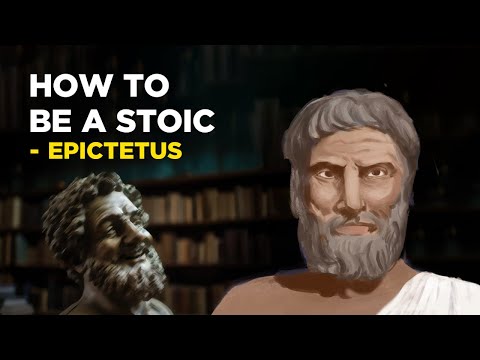
Epictetus keeps returning to insults because they expose a transaction: an insult offers a chance to trade your will for a reaction. Massimo Pigliucci names the case directly, Daily Stoic adds mortality, and modern commentary turns the lesson into self-help. The written record on Stoic silencing and Epictetus's theology frames the same tension: the price is set by judgment rather than the insult.

The Freedom Delusion: Spinoza Saw the Strings
The six acts move from AI promises and movie programming to a TEDx rights claim, messy parenting, national universality, and Spinoza's ocean. Spinoza's Ethics treats freedom as rational understanding of affect, not exemption from cause. The dossier tests whether that claim survives classrooms, screens, and political speech, using Carriero on the primary affects and scholarship on freedom as rationality.

Heidegger’s ‘They’: The Crowd That Lives Your Life for You
Yale's lecture defines Das Man as the anonymous crowd: everyone and no one. Popular explanations translate Heidegger's inexistence and absorbed daily life into advice about authenticity, while reference entries place him in phenomenology and existentialism. The dossier keeps those uses separate enough to hear what each speaker actually claims, including production talk and fiction.

The Slave Who Taught Rome How to Be Free
Epictetus begins Book 4 with a hard definition: freedom is living as you will, subject to no compulsion. He was born enslaved, and Roman slavery shaped the society around him; the clips test that claim across self-mastery, American liberty, Richmond memory work, a raffle, and Russian repression. The dossier keeps the ancient argument near modern uses and misuses.

Who Gets to Decide Who's Mad?
Foucault's History of Madness treats insanity as a category formed by laws, institutions, and medical authority. The Yale lecture's scapegoat material extends that question to who bears signs a community marks as dangerous. Derrida's 1963 reply presses the book's philosophical limits, while later speakers use madness for tournaments, microbes, and corn mazes, showing how the word travels far from Foucault's archive.

The Body Scan That Calms Pain
Body scan appears in clinical pain care, sleep advice, Pilates instruction, and stress research as a portable attention exercise. Stanford pairs it with progressive relaxation and yoga nidra; Chatterjee and Epel call it simple; Schubiner treats chronic pain as mind-body. MBPM and mindfulness research give clinical context, but the excerpts leave dose, teacher training, trauma sensitivity, and scope unresolved.

Anger Is Not Power: Seneca's Cure for the Rage Trap
Seneca's Of Anger opens with prevention: do not become angry. Modern commentaries translate that counsel into ten rules, practical philosophy, and English lessons, while Tim Ferriss describes Stoicism as a lifeboat in dark places. The trigger research complicates the picture: correction and accountability can provoke anger before reflection. Thorsteinsson's study of Roman Stoicism and Eliot's 1927 essay remind us that Seneca's reception is long and contested.

Marcuse Saw It Coming: Technology Is Making Us One-Dimensional
Marcuse's One-Dimensional Man describes advanced industrial society turning technology into a system that narrows dissent. The clips supply ordinary evidence: Ferrucci's whatever-it-takes AI engineering, Ant-Man's shrinking gadget, a haptic glove, drone privacy disputes. Read together, they show technique as practical tool and social frame, with users improvising inside rules they rarely set. The dossier tracks where critical theory meets everyday technical practice without resolving the gap.

Occam's Razor Can't Pick Your AI Model
Occam's razor recommends explanations built from the smallest possible set of elements, while model selection asks for the best candidate under a performance criterion. The speakers show that criterion is rarely clean: Nishan studies graph-aided federated selection, Mashrabov distrusts benchmarks, and Tim ties local performance to hardware. Azure's launch language concedes the field moved in a year. Simplicity is an aim, not an algorithm.

Can Bare Attention Loosen Emotional Pain?
The dossier sets vipassana's observing stance beside clinical and trauma-informed accounts. Susan Cain enters through Tim Ferriss's introduction; Matthew Lederman, Therapy in a Nutshell, Rachel Zoffness, Faye Morrison, and BriannaPlayz supply fragments about emotional pain, tension, and access. Buddhist samatha-vipassanā and meditation references clarify attention training, while Sedgwick's work on observing pain and collateral emotion warns that observation is never socially neutral.

Stop Pushing So Hard: Laozi's Case for Effortless Action
Wu wei is not passivity in these clips. It is skilled absorption under pressure: a meeting critique, a study method, a sailor's trim, and a forced pause. The Laozi references and Slingerland's effortful-action scholarship keep the claim grounded: non-doing is disciplined action, not an excuse to stop. A Bloomberg clip about London startups shares only the name Wei, a search-result drift worth flagging.

The Commons Doesn't Have to Collapse: The Rules That Keep Shared Resources Alive
Ostrom's commons research treats governance as rules people build, monitor, and enforce, not as a single state or market fix. The excerpts move from local honesty norms to official definitions and AI risk, while the references point to polycentric arrangements and reformulated commons. The dossier asks which principles survive when resources and technologies cross scales.
You Are Not Your First Thought
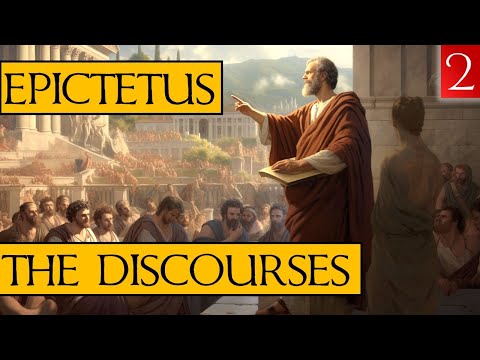
The dossier follows assent from Epictetus's Discourses to modern decisions. Vox Stoica's narration stresses withholding judgment; Layne Norton describes a body signaling recovery; Philosophies for Life says greatness is tested; Product School asks where human judgment sits in agentic workflows. Braicovich's account of critical assent and repetition supplies the written anchor, while the speakers show training as feedback, delay, and after-action review.

You Play the Role. You Don't Own the Outcome
Epictetus grounds duty in social roles, yet the four excerpts show role ethics under pressure: household labor, professional AI ethics, a legislative conflict hearing, and a Stoic dice metaphor. Reference works confirm role ethics derives morality from community relationships. The speakers keep returning to one practical question: what belongs to my role, and what belongs to forces beyond my control?

Your Brain Is a Shortcut Machine. That Is the Problem.
Tversky and Kahneman's 1974 paper turned everyday shortcuts into a research program. Veritasium describes heuristics as brain limits; Ben Felix shows representativeness shaping market forecasts; finance and comedy commentaries trace the same errors through investing and public judgment. The written record confirms the basics: heuristics are fast, useful, and sometimes predictably wrong. That gap between useful rule and predictable error is the documentary's argument.
The Force That Makes You Keep Going: Spinoza's Conatus
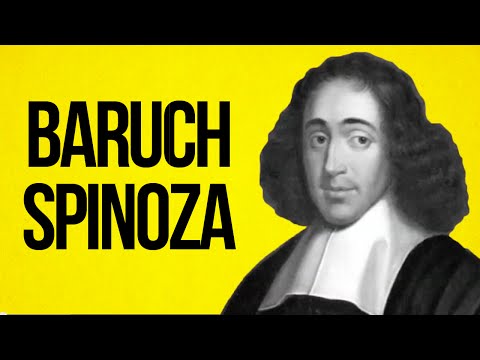
Spinoza's conatus names a thing's innate inclination to persevere and enhance itself, grounded in Ethics and clarified by modern reference works. The spoken acts split between cosmic persistence and everyday striving, with gold and productivity as test cases. This dossier follows that drift from Latin treatise to self-help, keeping speakers' words as evidence.
Chronic Pain Is a Protector Gone Wrong: Can a Body Scan Retrain It?
Schubiner argues chronic pain research is changing clinical practice, while Therapy in a Nutshell frames recovery as replacing threat messages with safety. The fentanyl and Anzio excerpts show pain and fear share brain circuitry, and the psychic clip warns against overreading bodily quivers. Trials of body scan for neck and back pain supply cautious clinical evidence.

Confucius Said Family First. Then What?
Confucian filial piety is less a single doctrine than a set of family practices: xiao, or family reverence, shapes conduct toward parents and elders, while li extends that conduct into public life. Herbert Fingarette’s “sacred as secular” frames the tradition without forcing a religious label. Min Jin Lee names the lived cost in sacrifice and honor; the Classic of Filial Piety supplies the textual backbone.

The Casino Is Not the World: Why Clean Models Fail
Taleb's ludic fallacy describes mistaking dice-and-chess uncertainty for open-world risk. The excerpts show adjacent errors: sunk costs, redistribution, primary energy, and free will. Each speaker exposes a model's edge, while Kovic's gambler's fallacy work and Black Swan evidence sharpen the warning: simplified odds can travel badly when rare events and hidden dependencies dominate, and risk judgments inherit the rules of whatever game supplied the odds.

Kierkegaard's Impossible Leap: What Faith Looks Like When Logic Fails
Kierkegaard's leap of faith is not a generic slogan: Philosophy Vibe describes faith persisting against impossibility through a double movement. The Voice UK athlete names difference and lack, a bakery segment offers uplift, and a TEDx talk notes that gods err. The dossier tracks how a theological wager becomes everyday encouragement, and what gets lost when it does.

Stoicism Is Everywhere. What Is It Hiding?
CBT combines cognitive psychology with behaviorism; Stoicism stresses daily self-discipline and moral improvement. Donald Robertson directly links Stoic exercises to CBT, and a peer-reviewed 2026 study tracks living well from Stoicism to modern psychology. The speakers keep the argument human: Oprah separates feeling from action, a critic rejects modern Stoicism, and dating and man-child clips supply blunt cultural tests.

Can You Afford to Walk Away? Diogenes and the Hidden Price of Freedom
Diogenes of Sinope founded Cynicism around a hard claim: freedom begins when desire shrinks and self-sufficiency grows. The speakers test that claim against Moscow vlogs, garden fences, bad bosses, Machiavelli, and rallies for rugged individualism. Their words expose a gap between wanting less and still needing money, land, and other people. The written record confirms Diogenes as Cynicism's founder, not a mascot for rude withdrawal.

The Fluency Shift: Train Your Brain to Stop Translating
The clips are English drills, not meditation lessons, yet they keep returning to repetition, shorter sentences, and naming thoughts. Academic sources place Vipassana labeling beside Ganhwa Seon and Won-Buddhist practice, while Geller traces the label as a scholarly object. The dossier asks whether vocal repetition clarifies attention or merely replaces one script with another.

What Cook Ding Knew About Real Skill
The clips treat cooking as a learnable hard skill, a frugal habit, and a source of idiom. Zhuangzi's Cook Ding asks what happens when technique becomes perception. Guo Xiang's revision and recent scholarship on embodied skill and emotion make that question concrete, while the speakers' plain claims keep it grounded in kitchens, budgets, and daily practice. Their voices supply the test cases.

The Chinese Room Still Has No Idea What It's Saying
The Chinese room argument holds that executing a program cannot produce mind, understanding, or consciousness, however human-like the output. Searle's thought experiment separates syntax from semantics, and the philosophical zombie thought experiment presses a related question about experience without inner life. The clips here circle rooms, symbols, and staged arguments, but none settles whether arrangement alone yields comprehension.

What Is Actually Under Your Control? Epictetus and Ilhan Omar's Citizenship Fight
The dossier places Epictetus’s Enchiridion, preserved through Arrian and Stoic teaching, beside a contemporary fight over Ilhan Omar’s father’s naturalization. One act treats philosophy as daily practice after exile; others question records, dates, and birthright citizenship. The speakers do not settle the legal question, but their verbatim claims show citizenship becoming a test of memory, paperwork, and political will.

You Don't See the World, Your Body Does
The speakers circle perception from different angles: Mercy Wiredu's school-day fatigue, a meditation practice begun at eighteen, a philosophy of perception syllabus, and a samurai talk about understanding philosophy through the body. Against these fragments, Merleau-Ponty's Phenomenology of Perception makes a precise claim: meaning is constituted in lived bodily experience, not added after the fact.
You Can't Step Into the Same River Twice
Heraclitus of Ephesus gave change a river and a word: logos. The excerpts move from Kim Foster's psychological reframing and Cal Newport's fluid metaphor to Fisk's Mississippi maps, a beaver reading flow, the Colorado drought, and shifting British river names. The written record places Heraclitus among pre-Socratic cosmologists; palintropic cosmology and Ioannidis's logos pathway show why the river remains a precise tool for ordering change.

Zhuangzi's Empty Boat: Why Anger Needs Someone to Blame
Zhuangzi's empty boat is a test of anger: if a drifting boat strikes you and no pilot is aboard, rage has no target. The clips show empty boats as evidence, accident scenes, and metaphors for anger's hollow triggers. The dossier keeps the parable beside real salvage inventories, Seneca's account of anger, and migration scholarship.