Curated Sub-Topic Tag
#Self-Education & Books
Verified primary-voice documentaries on Self-Education & Books, or enter a sharper question below to cut a new film live from 200M+ spoken records.

The Sleep You Skip Is the Memory You Lose
The dossier follows one practical question: when does sleep turn practice into durable memory? Huberman warns that missed sleep washes out learning; Walker probes deprivation after initial acquisition; Pardi and the literature frame consolidation as stabilization, not passive rest. The commentary on chunking and attention marks a boundary: sleep supports memory, but it does not replace noticing and focus.

Mark Leslie's Startup Learning Curve: The Plan Never Survives the Airport
Mark Leslie's sales learning curve frames early revenue as discovery, not quota coverage. The spoken excerpts echo that discipline: Leslie Kaelbling wants a feasible high-level plan, Mark Rober asks what to make next, Matthias Wandel describes a steep CNC climb, and Mark Zuckerberg defends fast cycles. Academic work on forgetting and outsourcing reinforces the point: curves persist after launch.

Dawkins Was Misread: What The Selfish Gene Really Meant
The dossier follows a phrase that escaped its book: Dawkins's gene-centered argument describes differential survival among alleles, while the verified literature separates that model from selfish genetic elements and from moral readings of 'selfish.' Across six acts, critics press causation, readers report resonance, and Paul Griffiths asks for narrow definitions. The misconception lives where public shorthand meets technical precision.

GRPO: The Hidden Bill for Teaching AI to Reason
Lex Fridman asks how far deep RL can go, sentdex builds an environment, Computerphile times a commute, and StatQuest picks between Squashes and Norm's. PyData moves from SFT to GRPO under real GPU budgets while Caleb Writes Code reports practitioner fatigue. S-GRPO and GRPO-LEAD show work on early exit and difficulty-aware concise reasoning, but the spoken record returns to reward design, setup cost, and evaluation pressure.

We Can Hear Whale Song. We Still Can't Read It.
Whales communicate through varied sounds, and scientific literature treats song as a loose term rather than a fixed category. The clips pull in two directions: one sees culture as public learning and accountability inside teams, another sees whale decoding as an early data problem. A computer-security intro and a James Whale film clip appear through keyword collisions, so the dossier separates acoustic evidence from retrieval noise.
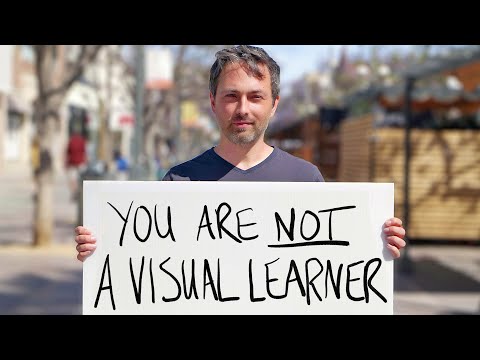
The Learning Styles Myth: Why the Evidence Never Caught On
Veritasium punctures the matching idea with perfect pitch and map learning. Classroom vendors and English teachers still repeat three main styles, while Zoho describes thirty students with different learning styles. Newton and Blasie document why the myth survives despite weak evidence. The dossier contrasts cheerful taxonomy with experimental findings, showing how terminology circulates faster than proof and how multisensory teaching gets confused with individual matching.

The Struggle That Makes Learning Stick
David Epstein treats spacing as a desirable difficulty, while Tim Ferriss and Jessica Lahey place effort inside cognitive and physical development. Joe Liemandt rejects the term, exposing a gap between academic definition and school practice. Commentary on learning difficulties and exam accommodations shows why effort and access must be argued together. The dossier listens for where the method survives the label.