Curated Topic Hub
Health & Biology
Hypertrophy, sleep architecture, longevity & human physiology

The Quiet Arithmetic of Staying Alive
The longevity conversation around vitamin D and omega-3s is less a hunt for a miracle capsule than a study in compounding restraint. Rhonda Patrick's excitement over a graph and Physionic's caution about nuance belong together: trials hint at slower aging, not immortality. Ergothioneine and multivitamin memory claims widen the frame, reminding us that food patterns, exercise, and baseline deficiency matter. DO-HEALTH lends the written record its sober spine. The practical worldview is unglamorous—correct what is missing, test rather than guess, and let small biological negotiations accumulate.
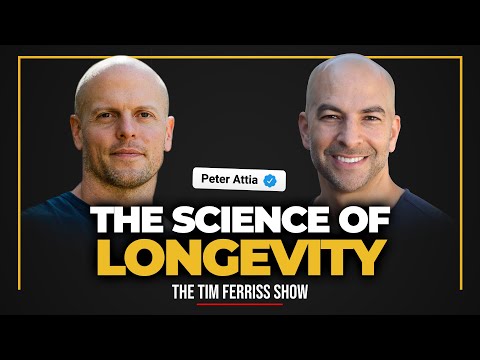
Rehearsing the Last Decade
Peter Attia's longevity project, heard through Ferriss's cave, a Google talk, and a fitness podcast, treats aging as a problem of capability and risk rather than vanity. Exercise is the practical spine: a repeated stress that rehearses the demands of late life. Yet the dossier also holds friction—early mentorship, accidental death, and critics fact-checking popular longevity books—so the worldview is neither fountain nor formula. It is disciplined uncertainty: train the body, interrogate the evidence, and keep the promise honest.

The Last Rep Before the Silence
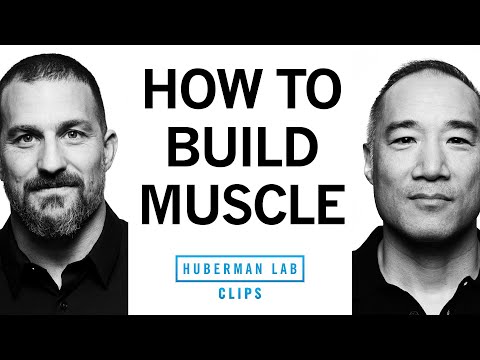
Strength training is not a slogan about burning fat or beating cardio; it is a practice of progressive overload, measured effort, recovery, and honest limits. The spoken excerpts move from fasting and fitness definitions to newbie reassurance and daily-task confidence, while the literature narrows the claim: muscle strength responds to load, intent, and proximity to failure, but not to magic arithmetic. Training to failure is a tool, not a religion. The science asks for patience, clear dosage, individual self-knowledge, and humility.

The Man Who Measures Mortality
Bryan Johnson’s longevity project is less a single protocol than a wager: that measurement, repetition, and public accountability can make mortality negotiable. His five habits and 130 grams of protein sit beside warnings that biology resists command, and his own caution that uncontrolled drugs need protocols. Critics ask whether avoiding death is the highest good; defenders answer with dashboards, not sermons. The dossier’s tension is practical and philosophical: biomarkers can clarify risk, but they cannot decide what a life is for.
The Molecule and the Mortality Clause
Sinclair frames aging as a disease-like process of lost cellular information, not an unbreakable clock. The spoken record pushes from podcast welcome to glaucoma, from a possible 120-year ceiling to Lex Fridman's question about non-existence. The written record supplies mechanism—declining NAD+, disrupted nuclear-mitochondrial communication, autophagy, sirtuin-activating compounds—but not proof that NMN or resveratrol extends human life. PastNoise's synthesis: longevity is plastic enough to study, commercial enough to distort, and existential enough that evidence and meaning must travel together.
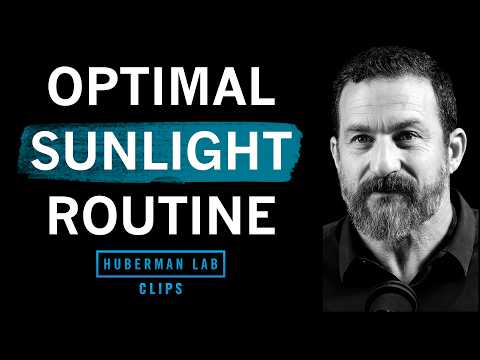
The First Light You Owe Yourself
Huberman's protocol sounds like optimization—sunlight in the eyes, blue light as ally, evening dimness—but the clips reveal a simpler claim: the body keeps time through light, and mental health, physical health, and performance all inherit that rhythm. Rachelle's objection is not cynicism; it is the practical test of any protocol that assumes a flexible morning. Research on morning light and circadian phase advance supports the mechanism while leaving the social question open: biology is universal, but mornings are not.

The Spotlight You Carry
Huberman’s conversations frame social anxiety as a nervous system and attention problem, not a character flaw: arousal rises, attention turns inward, and ordinary gestures become monitored performances. Nick Epley’s perspective and the Big Think playbook point outward—toward giving attention, preparing lightly, and testing feared judgments. Tim Ferriss’s folded questions show how a small object can steady a restless mind. Meanwhile, social media’s attention economy feeds comparison, making the practice of directed attention both more urgent and more difficult.

The Quiet Mineral and the Sleep That Follows
Magnesium arrives in the conversation wearing two faces: a bedtime ally and an overpromised mineral. Huberman is openly bullish before sleep, then cautions that many already get enough; a doctor calls it no magic fix; the indexed literature asks which preparation is correct. The dossier’s worldview is practical and humane: supplements belong inside sleep, diet, digestion, training, and commerce—not above them. The work is to listen closely, measure honestly, and refuse both blind enthusiasm and cynical dismissal.

The Night Is a Training Partner
Huberman’s clips keep returning to a plain fact: sleep, stress, light, and relaxation are not soft adjuncts to training but the conditions under which the endocrine system does its quiet work. The young men chasing testosterone online often miss that sleep apnea, chronic arousal, and chaotic light can distort the signal before any supplement or prescription enters. The literature on relaxation and testosterone deficiency in sleep apnea supports a humbler protocol: train the nervous system, protect the night, then measure.

The Quiet Hours Between Meals
Intermittent fasting is less a diet than a rhythm—a deliberate pause that lets the body repair what daily eating leaves unattended. The spoken voices here, from clinicians to longevity researchers, converge on autophagy as the mechanism, while the written record grounds it in spermidine, gene expression, and lifespan studies. Yet the evidence is often indirect, drawn from mice and markers, not from decades of human lives. The honest takeaway: fasting is a plausible lever for healthspan, not a proven elixir.

The Quiet Fuel of Memory
Creatine is not merely a muscle supplement; it is a metabolic substrate for the brain's most demanding work. Across the documentary acts, researchers and clinicians converge on a quiet truth: creatine supports cognition, especially when energy demands spike—during sleep deprivation, aging, or the slow erosion of memory. Yet the evidence is nuanced, dose-dependent, and often more promising in older adults than the young. The written record confirms this, while the spoken excerpts reveal a deeper human story: memory is not just recall, but the vitality of a life still fully lived.

Water, Light, and the Body's Quiet Ledger
Across these clips, Huberman's routines look less like optimization than maintenance: exercise, hydration, electrolytes, caffeine, bright morning light, faith. The written record widens the frame: immune function and mucociliary clearance both depend on movement and hydration, though neither is a miracle cure. The through-line is a disciplined ordinary day—small signals repeated until the body can trust them—rather than one biohack rescuing an undisciplined life; health becomes a practice of returning, not a state achieved. The details are modest; the consistency is the medicine.

The Oxygen Debt We Owe Ourselves
VO2 max is not just a number for athletes; it is a vital sign of how efficiently the body converts air into life. The conversation around zone 2 cardio and high-intensity intervals reveals a practical path: most of us are far from our ceiling, and the first gains come from simply moving more. Yet the science also warns against reducing longevity to a single metric. The real work is building a sustainable practice that respects both the heart's need for gentle volume and its appetite for occasional challenge.

The Architecture of Muscle
Hypertrophy is not a single event but a cascade: mechanical tension under stretch, metabolic stress, and the body's repair response. The spoken excerpts reveal a consensus that stimulus—not exhaustion—drives growth, while the literature maps the molecular machinery of overload. Yet tensions persist between strength and size, between time-efficient protocols and recovery, and between popular claims and nuanced evidence. Together, they frame muscle as a dynamic tissue, responsive to precise signals and essential for longevity.

The Effortful Molecule
Dopamine is less a reward than a signal that effort is worth making. When it fires after genuine striving, it reinforces the very persistence that built it. But when it spikes without effort—through a phone at dawn or a shortcut to stimulation—the same system learns to expect ease, and focus erodes. The neuroscience of the basal ganglia and the reward circuit converges on a simple, humane prescription: earn your dopamine, and you earn your drive.
Muscle protein synthesis longevity
Exercise or working out is physical activity that enhances or maintains fitness and overall health. It is performed for various reasons, including weight loss or maintenance, to aid growth and improve strength, develop muscles and the cardi Across 4 independent voices, this private cut brings spoken testimony and written reference into a single uninterrupted thread.
Improve memory fast science
The term in-memory processing is used for two different things:In computer science, in-memory processing, also called compute-in-memory (CIM) or processing-in-memory (PIM), is a computer architecture in which data operations are available d Across 6 independent voices, this private cut brings spoken testimony and written reference into a single uninterrupted thread.

Cortisol stress response documentary
Early childhood is a critical period in a child's life that includes ages from birth to five years old. Psychological stress is an inevitable part of life. Human beings can experience stress from an early age. Although stress is a factor fo Across 6 independent voices, this private cut brings spoken testimony and written reference into a single uninterrupted thread.

The Clock We Carry
Sleep is not an isolated collapse but a timed negotiation: a circadian oscillation near twenty-four hours, a sleep drive that accumulates, and the day's light, meals, movement, and stress pressing upon both. The speakers converge on a practical claim—regularity is physiology, not moral decoration—while the literature names what happens when timing fails: circadian rhythm sleep-wake disorders, misalignment, and metabolic cost. The documentary's deeper argument is humane: to sleep well is to live in better time with the world, and to treat rhythm as a form of care rather than a personal virtue.