PastNoise
Health & Biology·6 acts·6m 17s·2/6 primary·5 references

The Last Rep Before the SilenceDorian Yates High-Intensity Training & Conditioning Routine · Training to Failure, Recovery & Hypertrophy Clips

What failure teaches the body—and what the evidence refuses to promise.

Fasting, Strength, and the Honest Uncertainty

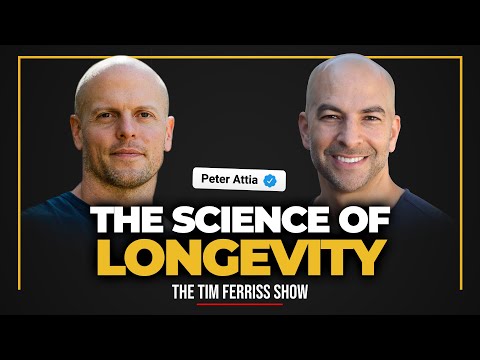
ACT I · Tim Ferriss · 6m 17s

Fasting, Strength, and the Honest Uncertainty

have you changed your mind or had

00:00 / 06:17
0%
ACT IPRIMARYTim Ferriss · Jun 21, 2021
Original Source (00:05)

Fasting, Strength, and the Honest Uncertainty

Attia and Ferriss let uncertainty stay in the room. Strength becomes a hedge against fasting's costs, not a slogan.

Click any timestamp to jump directly

30-Second Quick Reference · Verified Takeaways

6 acts · 5 references · Last Verified Nov 21, 2026
  • 01Training to failure means momentary muscular failure—the point where force can no longer move the load—not pain, strain, or moral exhaustion.
  • 02Low-load and high-load resistance training can both build strength and size, but the practical recipe changes with load, reps, and effort.
  • 03Muscular strength matters for health and daily tasks; it is a capacity earned through progressive resistance, not a byproduct of calorie arithmetic.
  • 04The one-pound-of-muscle-burns-50-to-100-calories promise is a seductive simplification; resting metabolism shifts, but not enough to replace training.
“Strength begins where certainty ends: the last clean repetition is a question asked with the whole body.”

Core Synthesis

Strength training is not a slogan about burning fat or beating cardio; it is a practice of progressive overload, measured effort, recovery, and honest limits. The spoken excerpts move from fasting and fitness definitions to newbie reassurance and daily-task confidence, while the literature narrows the claim: muscle strength responds to load, intent, and proximity to failure, but not to magic arithmetic. Training to failure is a tool, not a religion. The science asks for patience, clear dosage, individual self-knowledge, and humility.

Key Insights Worth Keeping

01

Training to failure means momentary muscular failure—the point where force can no longer move the load—not pain, strain, or moral exhaustion.

02

Low-load and high-load resistance training can both build strength and size, but the practical recipe changes with load, reps, and effort.

03

Muscular strength matters for health and daily tasks; it is a capacity earned through progressive resistance, not a byproduct of calorie arithmetic.

04

The one-pound-of-muscle-burns-50-to-100-calories promise is a seductive simplification; resting metabolism shifts, but not enough to replace training.

05

Fitness is a family of adaptations—strength, endurance, hypertrophy—so this-or-that questions often hide the need for clear goals.

01

The Last Honest Rep

Pavel Tsatsouline and Andrew Huberman begin by admitting that fitness is not one thing but several: strength, endurance, hypertrophy. That clarity matters because failure gets romanticized. The literature is clinical: training to failure is momentary muscular failure, the point where the neuromuscular system cannot produce adequate force. It is not a badge of suffering. The useful question is dose—how close to that edge, how often, and for what adaptation—because the body adapts to repeated demands, not to heroic vocabulary.

Failure is a measurable boundary, not a mood or moral badge.
02

Loads, Claims, Calories

The Infographics Show frames the gym as a series of false binaries—barbells or dumbbells, muscle size or strength—while the Institute of Human Anatomy punctures the fat-melting arithmetic. One pound of muscle may alter resting metabolism, but the 50-to-100-calorie promise is too tidy. The 2017 meta-analysis finds low- and high-load resistance training can both produce strength and hypertrophy; the variables are effort, volume, and proximity to failure. Tim Ferriss and Peter Attia's fasting conversation belongs here too: strength is a reserve to protect, not a calorie trick.

Muscle is metabolic tissue, not a magic furnace for calories.
03

Practice for Daily Life

Chatelaine's newbie editor and Exercise For Health's full-body programme speak to a quieter motive: carrying groceries, climbing stairs, staying capable. The Sports Medicine review on muscular strength treats it as a health asset, not vanity. Science of Strength Training supplies the unglamorous structure: progressive overload, recovery, and technique. For beginners, failure is best kept at arm's length—a diagnostic tool, not a daily target—because confidence grows through repeatable competence. The point is not to conquer the body but to keep it available for life.

Strength is stored capability for ordinary life, built through repeatable practice.

Where Voices Converge

  • • Strength training improves physical strength through progressive resistance, whether with weights, bodyweight, isometrics, or plyometrics.
  • • Training to failure is a defined neuromuscular endpoint and a dosing tool, not a requirement for every session.

Nuance & Unresolved Tension

  • • Failure is often marketed as courage, but the evidence treats it as a variable to manage against recovery and technique.
  • • Low-load and high-load training can both work, so best-load claims usually conceal differences in effort, volume, and goal.

Continue the Inquiry

Complete Timestamped Bilingual Transcript

Full 6-Act Spoken Transcript Archive

Click any timestamp to jump
ACT I · Tim Ferriss · 00:05 – 01:16

Fasting, Strength, and the Honest Uncertainty

ACT II · Huberman Lab Clips · 00:02 – 00:48

Fitness Is Many Things, Not One

ACT III · Chatelaine Magazine · 00:02 – 00:46

A Newbie Enters the Weight Room

ACT IV · Exercise For Health · 00:00 – 01:05

Carrying Groceries Is Real Strength Training

ACT V · The Infographics Show · 00:00 – 01:35

Barbells or Dumbbells: The False Binaries

ACT VI · Institute of Human Anatomy · 00:00 – 00:56

One Pound of Muscle, Many Promises

Key Questions & Reference Guide

Frequently Asked Questions

What are the core takeaways on Dorian Yates High-Intensity Training & Conditioning Routine?

Strength training is not a slogan about burning fat or beating cardio; it is a practice of progressive overload, measured effort, recovery, and honest limits. The spoken excerpts move from fasting and fitness definitions to newbie reassurance and daily-task confidence, while the literature narrows the claim: muscle strength responds to load, intent, and proximity to failure, but not to magic arithmetic. Training to failure is a tool, not a religion. The science asks for patience, clear dosage, individual self-knowledge, and humility. Key insights include: Training to failure means momentary muscular failure—the point where force can no longer move the load—not pain, strain, or moral exhaustion. Low-load and high-load resistance training can both build strength and size, but the practical recipe changes with load, reps, and effort.

Which primary podcasts, lectures, and speakers are featured in this Dorian Yates High-Intensity Training & Conditioning Routine screening?

This screening stitches 6 continuous acts featuring voices from Tim Ferriss, Huberman Lab Clips, Chatelaine Magazine, Exercise For Health, The Infographics Show. Every act separates primary voices from commentary and links directly to the original timestamp.

Where do experts agree and disagree on Dorian Yates High-Intensity Training & Conditioning Routine?

Convergence: Strength training improves physical strength through progressive resistance, whether with weights, bodyweight, isometrics, or plyometrics. Open tension: Failure is often marketed as courage, but the evidence treats it as a variable to manage against recovery and technique.

Does this Dorian Yates High-Intensity Training & Conditioning Routine page include a searchable timestamped transcript and citations?

Yes. Open the Interactive Transcript tab to click any sentence and jump directly to that exact second in the video, export Obsidian/Notion reading notes, and verify 5 cross-referenced scholarly or encyclopedic citations including "Strength training".

Further Screenings in This Collection

Health & Biology →
The Quiet Arithmetic of Staying Alive
Health & Biology7m 01s

The Quiet Arithmetic of Staying Alive

The longevity conversation around vitamin D and omega-3s is less a hunt for a miracle capsule than a study in compounding restraint. Rhonda Patrick's excitement over a graph and Physionic's caution about nuance belong together: trials hint at slower aging, not immortality. Ergothioneine and multivitamin memory claims widen the frame, reminding us that food patterns, exercise, and baseline deficiency matter. DO-HEALTH lends the written record its sober spine. The practical worldview is unglamorous—correct what is missing, test rather than guess, and let small biological negotiations accumulate.

6 acts2 primary5 references
Rehearsing the Last Decade
Health & Biology4m 34s

Rehearsing the Last Decade

Peter Attia's longevity project, heard through Ferriss's cave, a Google talk, and a fitness podcast, treats aging as a problem of capability and risk rather than vanity. Exercise is the practical spine: a repeated stress that rehearses the demands of late life. Yet the dossier also holds friction—early mentorship, accidental death, and critics fact-checking popular longevity books—so the worldview is neither fountain nor formula. It is disciplined uncertainty: train the body, interrogate the evidence, and keep the promise honest.

4 acts3 primary5 references
The Clock We Carry
Health & Biology6m 28s

The Clock We Carry

Sleep is not an isolated collapse but a timed negotiation: a circadian oscillation near twenty-four hours, a sleep drive that accumulates, and the day's light, meals, movement, and stress pressing upon both. The speakers converge on a practical claim—regularity is physiology, not moral decoration—while the literature names what happens when timing fails: circadian rhythm sleep-wake disorders, misalignment, and metabolic cost. The documentary's deeper argument is humane: to sleep well is to live in better time with the world, and to treat rhythm as a form of care rather than a personal virtue.

6 acts4 primary5 references