Curated Topic Hub
Philosophy
Enduring hard seasons, clarity, Stoicism & timeless first principles
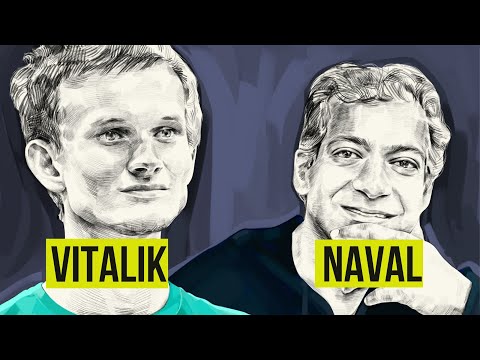
The Caveat and the Compass
Naval Ravikant’s documentary presence is less a sermon than a caution: begin with a disclaimer, distrust the clean ending, and notice how wishful thinking spends your hours. Across the Ferriss caveat, the Knowledge Project’s cosmic dead end, and the motivational clip’s warning about time, he keeps returning agency to the reader. The written record—AngelList’s startup ecology, the Thiel Fellowship’s early bet, Scott Adams’s self-improvement commentary—frames that agency as institutional and personal: build leverage, choose your games, and inspect the spectacle.

The Unfinished Curriculum
Across Buffett and Munger’s unscripted annual meetings, mentorship across generations, and field seminars that pair sophomores with elders, lifelong learning appears as a practical ethic rather than a slogan. Munger’s example—reading widely, arguing plainly, revising judgments—joins the written record of his life and Berkshire’s culture. The sources converge on a simple discipline: stay teachable, seek younger teachers, and let evidence overrule ego. The tension is equally clear: conviction without curiosity hardens into ideology. It is less a triumph of memory than a habit of attention.

The Map Before the Territory
Across these conversations, mental models emerge less as clever frameworks than as the invisible architecture of perception. Bill Gurley asks which models repay repeated use; Stewart Butterfield shows a model tested at Slack’s launch; Ed Thorp treats models as instruments for decisions under uncertainty; Charles Duhigg links focus to deliberate construction of attention. Cognitive science and Laing's psychiatry remind us that minds are modeling engines, and that models can clarify or distort. The practical task is not collecting models but auditing and rebuilding them.
The Library Without a Finished Shelf
Naval Ravikant's reading life, as glimpsed across these acts, is not a list to memorize but a discipline of choosing what compounds. The Ferriss preface warns against borrowed authority; Holiday's banned-books talk shows how fear distorts the shelf; the Knowledge Project turns reading toward decision-making and purpose. Even Daniel Greene's squatting aside reminds us that enthusiasm is embodied and particular. The written record—Scott Adams, Stuyvesant, AngelList lessons—frames a pragmatist's canon: books as tools for judgment, not badges of taste.

The Stillness Beneath the Noise
Meditation is not a retreat from consciousness but a refinement of it. Huberman and Harris frame it as attentional training that reveals the constructed nature of self, while Seppälä grounds it in the cost of mind-wandering. Blackmore and Pollan push further, questioning who is even watching. Chopra and the consciousness documentary return us to stillness as a doorway—not an escape—where inquiry into purpose and awareness becomes a practical, daily act.

The Last Freedom: Frankl's Quiet Revolution
Viktor Frankl's logotherapy reframes human existence around the search for meaning, not pleasure or power. His concentration-camp testimony and clinical method show that even in extreme suffering, the freedom to choose one's attitude remains. The spoken excerpts—from Peterson's reference to Frankl's book to the 'intention technique'—reveal how this idea has migrated from trauma wards to self-help stages. Yet the popularization risks flattening a hard-won philosophy into a slogan. The written record insists on something sterner: meaning is found in responsibility, not in comfort.

The Stranger Who Signs Your Name
Jung's shadow is the unconscious portion of personality that falls outside the ego's self-image, so it returns as reaction, projection, and quiet coercion. The spoken acts trace this from the shock of not being in control to the discomfort of admitting an inner boundary has blurred. The written record, from Jung's dynamic Self to the shadow's resistance and projection, even a literature study of persona and shadow, confirms the same drama: wholeness begins when we stop outsourcing our darkness. What looks terrifying is often unowned life asking for citizenship.

Marcus Aurelius Stoic adversity
Marcus Tullius Cicero was a Roman statesman, lawyer, scholar, philosopher, orator, and writer who tried to uphold optimate principles during the political crises of the Roman Republic that led to the establishment of the Roman Empire. The e Across 5 independent voices, this private cut brings spoken testimony and written reference into a single uninterrupted thread.
Seneca On Shortness of Life
De Brevitate Vitae is a moral essay written by Seneca the Younger, a Roman Stoic philosopher, sometime around the year 49 AD, to his father-in-law Paulinus. The philosopher brings up many Stoic principles on the nature of time, namely that Across 6 independent voices, this private cut brings spoken testimony and written reference into a single uninterrupted thread.

The Warm Signal in the Noisy Brain
PastNoise hears compassion meditation as a meeting point: Lex Fridman’s cross-disciplinary frame, SciShow’s caution about stress studies, David Bayer’s body-first healing, Susan Blackmore’s porous self, and one soft instruction to let someone walk beside you. The literature agrees that meditation trains attention and can change brain activity, while the Criterion-minded caution of Mind the Hype warns against overclaiming. Compassion-focused therapy adds the crucial turn: kindness is a skill aimed at suffering, not a mood. The dossier’s view is practical and unsentimental—practice reshapes relationship, and relationship makes practice survivable.
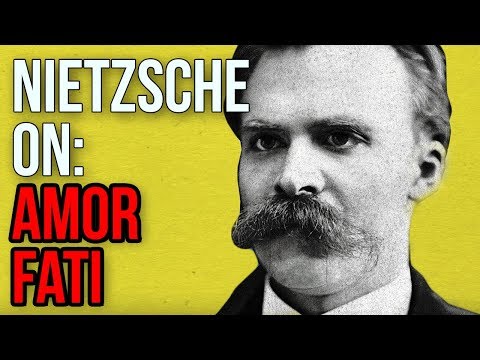
Love the Fate You Did Not Choose
Amor fati begins where resentment ends. Nietzsche’s phrase—love of one’s fate—does not deny pain, failure, or the machine that may displace us; it asks us to stop warring with necessity and to make even adversity material for affirmation. The spoken excerpts circle this same demand: say yes to life, accept everything, resist the identity crash by choosing love over anger. The written record adds the sobering context: a philosopher shaped by Schopenhauer and pessimism, aware that memory and mortality press on every yes.

Epictetus Stoicism philosophy
Epictetus was a Greek Stoic philosopher. He was born into slavery at Hierapolis, Phrygia and lived in Rome until his banishment, after which he spent the rest of his life in Nicopolis in northwestern Greece. Across 6 independent voices, this private cut brings spoken testimony and written reference into a single uninterrupted thread.

Federer and the Grace Between Attempts
VYBO's offhand promise—'This mindset gives you resilience'—sounds simple until perfectionism enters. The literature on elite coaching, multicultural leadership, and binary thinking shows that resilience is not a trait one downloads; it is an emotional practice of recovering from discrepancy. Federer's calm is instructive not because he never misses, but because the miss does not become the whole story. The work is to keep perfectionism as a standard, not a verdict; that distinction changes how we coach, lead, and recover.