Curated Topic Hub
History & Conflict
Empires, structural collapse, diplomacy & enduring lessons

The Quiet Fall: Rome's Long Transformation
The fall of Rome is less a single event than a centuries-long transformation, a process of political fragmentation, religious realignment, and economic contraction that reshaped the Mediterranean world. The sources reveal a tension between dramatic narratives of collapse and the quieter, systemic changes that historians now emphasize. From shrinking animals to shifting dioceses, the evidence points to a gradual unraveling that challenges our appetite for clean endings.

The Ballot and the Chain
The war's origins are not a mystery of mood but a record of intent: Southern leaders seceded to preserve and extend slavery, and the political system kept trying to postpone that fact through territorial votes and fragile compromises. OverSimplified's New Mexico and Utah moment exposes the evasion; Yale's election-of-1860 frame shows the rupture. Historians overwhelmingly agree, while global observers and military students reveal how a local slaveholders' republic became a world event. Memory then turned causation into a battlefield of its own.

The Athenian Question: Democracy's First Argument
Ancient Greece was never a single story but a contest of city-states, each with its own answer to the question of power. Athens invented a radical answer—citizens assembling to decide—while Sparta answered with discipline and hierarchy. The sources show that democracy was not a gift but a fragile, contested experiment, repeatedly overthrown and modified. What survives is not a blueprint but a habit of argument about who belongs and who decides.

The Road That Wasn't a Road
The Silk Road was never a single road but a shifting web of land and sea routes that moved goods, ideas, and armies from the second century BCE to the fifteenth. Its history shows globalization is ancient, driven by demand and improvisation rather than central planning. Modern echoes—from China's desert rerouting to digital trade platforms—reveal the same pattern: connectivity creates hubs, and hubs create power. The story is less about silk than about the human urge to bridge distance.
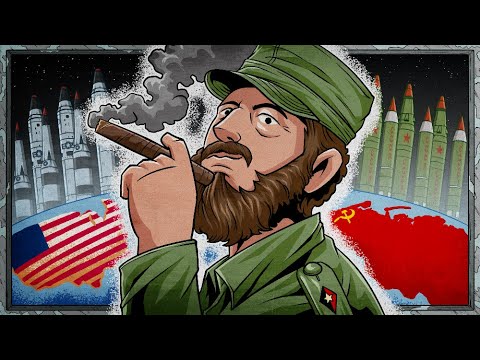
Thirteen Days at the Edge of the World
The Cuban Missile Crisis was not a chess match between serene statesmen but a thirteen-day collision of signals, fear, and performance. A lone Cuban soldier at the Bay of Pigs, a civil-defense turtle, couriers carrying spy-plane film, and a simulator’s casual cruelty all show how brinkmanship pushes ordinary life to the edge. The written record agrees: coercive diplomacy can work, yet only when leaders convert brinkmanship into disaster avoidance. The myth of clean control is the danger.

The City That Broke the Weather
The spoken record keeps returning to Stalingrad not as a single battle but as a threshold: the moment Hitler’s gamble on speed met an army and a population willing to endure. The documentary voices agree on the phrase “major turning point,” but the written record asks us to be precise. A turn is not a finish. Stalingrad exposed supply lines, propaganda, and the arrogance of expecting collapse; it converted the war into attrition, and attrition into a moral and logistical reckoning.

The Corsican Who Ate the Revolution
The French Revolution did not simply cause Napoleon; it armed him with the vocabulary of merit, the chaos of opportunity, and a nation desperate for order. He was its most gifted student, then its most elegant betrayer. The spoken record—from Josephine's Martinique birth to the Senate's imperial proposal—traces a man who learned revolution's grammar only to write his own coronation. The written scholarship confirms it: Bonaparte was both the Revolution's legacy and its liquidation.

The Key in the Storm: Franklin's Electric Life
Franklin's electricity story is less a solitary flash than a method: ask a practical question, publish the test, and build a public benefit. Podcast voices reach for his biographies as toolkits for self-improvement, while the historical record shows an international network of experimenters and a man who turned lightning into civic infrastructure. The popular shorthand—'father of electricity'—keeps the myth lively but hides the collaboration, the showmanship, and the patient paperwork. The useful Franklin is not the discoverer of a force but the citizen who made curiosity public.

Industrial Revolution economic transformation
The Industrial Revolution, sometimes called the First Industrial Revolution in contrast to the subsequent Second Industrial Revolution, was a transitional period of the global economy toward more widespread, efficient and stable manufacturi Across 6 independent voices, this private cut brings spoken testimony and written reference into a single uninterrupted thread.