PastNoise
History & Conflict·5 acts·5m 00s·5 Perspectives·5 references

Thirteen Days at the Edge of the WorldCuban Missile Crisis & Cold War Nuclear Brinkmanship · Declassified History Talks, Primary Voices & Transcript

Brinkmanship is a performance of control, staged over ordinary lives and fragile signals.

Midnight at the Bay

ACT I · The Armchair Historian · 5m 00s

Midnight at the Bay

it is just after midnight in the bay of pigs

00:00 / 05:00
0%
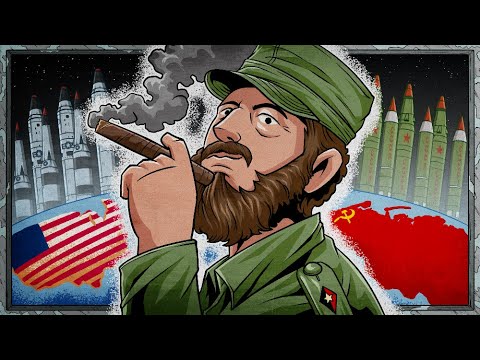
ACT ICOMMENTARYThe Armchair Historian · May 21, 2021
Original Source (00:03)

Midnight at the Bay

The Cuban soldier's isolation makes policy visceral: brinkmanship has a body count before any missile launches.

Click any timestamp to jump directly

30-Second Quick Reference · Verified Takeaways

5 acts · 5 references · Last Verified Nov 21, 2026
  • 01Brinkmanship is not strength in itself; it is a gamble that works only when both sides can still read signals and retreat.
  • 02The Cuban perspective restores the human cost: policy is enacted by soldiers crouched behind rocks, not only by men in Washington.
  • 03Civil-defense cartoons and simulator jokes reveal how publics are trained to metabolize nuclear fear as normal entertainment.
  • 04Spy-plane film and armed couriers show that intelligence is a fragile human relay, not an omniscient dashboard in a war room.
“Every brink is someone’s kitchen table, someone’s patrol, someone’s midnight.”

Core Synthesis

The Cuban Missile Crisis was not a chess match between serene statesmen but a thirteen-day collision of signals, fear, and performance. A lone Cuban soldier at the Bay of Pigs, a civil-defense turtle, couriers carrying spy-plane film, and a simulator’s casual cruelty all show how brinkmanship pushes ordinary life to the edge. The written record agrees: coercive diplomacy can work, yet only when leaders convert brinkmanship into disaster avoidance. The myth of clean control is the danger.

Key Insights Worth Keeping

01

Brinkmanship is not strength in itself; it is a gamble that works only when both sides can still read signals and retreat.

02

The Cuban perspective restores the human cost: policy is enacted by soldiers crouched behind rocks, not only by men in Washington.

03

Civil-defense cartoons and simulator jokes reveal how publics are trained to metabolize nuclear fear as normal entertainment.

04

Spy-plane film and armed couriers show that intelligence is a fragile human relay, not an omniscient dashboard in a war room.

05

Disaster avoidance, not victory, is the underrated skill: the crisis was survived by choosing off-ramps over applause lines.

01

The Soldier Behind the Rock

A lone Cuban soldier crouches after midnight at the Bay of Pigs, patrol mates dead around him, his position lit by an unseen flare. That image from the first act refuses the war-room abstraction. Brinkmanship, as the definition says, pushes dangerous events toward active conflict for advantage; here the advantage is theoretical and the cost is flesh. The Cuban perspective matters because it shows the crisis arriving first as terror, not as a negotiation table.

Policy reaches the human body before it ever reaches the archive.
02

Bert the Turtle’s Lesson

Then comes Bert the Turtle, singing a civil-defense jingle while children learn to duck beneath desks. The second act sounds absurd, but absurdity is the point: nuclear fear was domesticated into a cartoon, a rehearsal for annihilation that could be hummed. The BBC footage of armed couriers carrying spy-plane film adds the counter-image—an intelligence state moving in silence, its evidence physically guarded. Together they show a public trained to perform calm while secret institutions performed dread.

Civil-defense cheerfulness is a coping mechanism that makes terror feel habitable.
03

Signals, Couriers, Off-Ramps

The third act’s joke about a dying wife and the fourth act’s Cuban testimony pull the crisis down from strategy to intimacy. Coercive diplomacy may persuade, but it also gambles with people who never chose the table. The scholarly literature on behaviour modification and disaster avoidance offers the sober correction: brinkmanship becomes statesmanship only when leaders build off-ramps. Without that turn, the crisis is not a triumph of nerve but a near-miss that leaves everyone rehearsing the same dangerous performance.

Statesmanship is the art of building an exit before needing it.

Where Voices Converge

  • • Brinkmanship can create leverage, but only when signals remain legible and both sides retain a retreat.
  • • The crisis was survived through disaster avoidance, not through clean control or moral purity.

Nuance & Unresolved Tension

  • • The Cuban soldier and civil-defense turtle expose a mismatch: citizens rehearse survival while leaders rehearse resolve.
  • • The simulator joke and Cuban testimony challenge the heroic JFK narrative by foregrounding private grief and ideological damage.

Continue the Inquiry

Complete Timestamped Bilingual Transcript

Full 5-Act Spoken Transcript Archive

Click any timestamp to jump
ACT I · The Armchair Historian · 00:03 – 00:57

Midnight at the Bay

ACT II · DocuReal · 00:09 – 01:44

Bert the Turtle

ACT III · BBC Timestamp · 00:16 – 01:22

Film Into Evidence

ACT IV · DruuuWu · 13:40 – 14:20

Simulator's Cold Joke

ACT V · StevenCrowder · 1:38:51 – 1:39:36

Exiles Name the Damage

Key Questions & Reference Guide

Frequently Asked Questions

What are the core takeaways on Cuban Missile Crisis & Cold War Nuclear Brinkmanship?

The Cuban Missile Crisis was not a chess match between serene statesmen but a thirteen-day collision of signals, fear, and performance. A lone Cuban soldier at the Bay of Pigs, a civil-defense turtle, couriers carrying spy-plane film, and a simulator’s casual cruelty all show how brinkmanship pushes ordinary life to the edge. The written record agrees: coercive diplomacy can work, yet only when leaders convert brinkmanship into disaster avoidance. The myth of clean control is the danger. Key insights include: Brinkmanship is not strength in itself; it is a gamble that works only when both sides can still read signals and retreat. The Cuban perspective restores the human cost: policy is enacted by soldiers crouched behind rocks, not only by men in Washington.

Which primary podcasts, lectures, and speakers are featured in this Cuban Missile Crisis & Cold War Nuclear Brinkmanship screening?

This screening stitches 5 continuous acts featuring voices from The Armchair Historian, DocuReal, BBC Timestamp, DruuuWu, StevenCrowder. Every act separates primary voices from commentary and links directly to the original timestamp.

Where do experts agree and disagree on Cuban Missile Crisis & Cold War Nuclear Brinkmanship?

Convergence: Brinkmanship can create leverage, but only when signals remain legible and both sides retain a retreat. Open tension: The Cuban soldier and civil-defense turtle expose a mismatch: citizens rehearse survival while leaders rehearse resolve.

Does this Cuban Missile Crisis & Cold War Nuclear Brinkmanship page include a searchable timestamped transcript and citations?

Yes. Open the Interactive Transcript tab to click any sentence and jump directly to that exact second in the video, export Obsidian/Notion reading notes, and verify 5 cross-referenced scholarly or encyclopedic citations including "Brinkmanship".

Further Screenings in This Collection

History & Conflict →
The Quiet Fall: Rome's Long Transformation
History & Conflict8m 40s

The Quiet Fall: Rome's Long Transformation

The fall of Rome is less a single event than a centuries-long transformation, a process of political fragmentation, religious realignment, and economic contraction that reshaped the Mediterranean world. The sources reveal a tension between dramatic narratives of collapse and the quieter, systemic changes that historians now emphasize. From shrinking animals to shifting dioceses, the evidence points to a gradual unraveling that challenges our appetite for clean endings.

6 acts3 primary5 references
The Ballot and the Chain
History & Conflict8m 24s

The Ballot and the Chain

The war's origins are not a mystery of mood but a record of intent: Southern leaders seceded to preserve and extend slavery, and the political system kept trying to postpone that fact through territorial votes and fragile compromises. OverSimplified's New Mexico and Utah moment exposes the evasion; Yale's election-of-1860 frame shows the rupture. Historians overwhelmingly agree, while global observers and military students reveal how a local slaveholders' republic became a world event. Memory then turned causation into a battlefield of its own.

6 acts6 primary5 references
The Athenian Question: Democracy's First Argument
History & Conflict7m 24s

The Athenian Question: Democracy's First Argument

Ancient Greece was never a single story but a contest of city-states, each with its own answer to the question of power. Athens invented a radical answer—citizens assembling to decide—while Sparta answered with discipline and hierarchy. The sources show that democracy was not a gift but a fragile, contested experiment, repeatedly overthrown and modified. What survives is not a blueprint but a habit of argument about who belongs and who decides.

6 acts1 primary4 references