Curated Sub-Topic Tag
#Meditation & Consciousness
Verified primary-voice documentaries on Meditation & Consciousness, or enter a sharper question below to cut a new film live from 200M+ spoken records.

The Zombie Trolley Problem: What Makes Matter Feel Like Anything?
David Chalmers's hard problem asks why physical processing comes with subjective experience. Big Think clips show experts still lack a widely accepted answer, while Annaka Harris presses on how non-conscious matter yields felt experience from the inside. Joe Bart cautions that philosophical schools can persuade by exposure. A Bloomberg segment on Japan's women managers and a Blackmore introduction sit beside the core debate, reminding viewers that documentary context can drift.
Your Self Is a Construction: What Meditation Reveals About the Brain
Compassion meditation turns a private practice into a measurable question: what changes in attention, mood, and the sense of a bounded self? Goleman describes beginners meeting loving-kindness; Suzuki reports lower stress and depressive symptoms; Davidson and Huberman frame the research; SciShow Psych links nonduality to weakened network rivalry. The literature on empathy and compassion gives the biological context.

The Beast Machine in Your Skull
Anil Seth treats consciousness as embodied prediction, not a software upgrade. The dossier sets his beast-machine papers beside his public examples: cochlear implants, Frankenstein and Ex Machina, the red-car illusion, and a drawing of circles and oblongs. Seth keeps returning to interiority and control, while transhumanist claims test how far that account can stretch into engineered minds.

The Emperor Who Wrote Meditations for No One
The speakers disagree less about facts than about emphasis. Daily Stoic says Marcus did not want the job of emperor; Philosophies for Life places the Meditations among autobiographical writings from his rule; Vox Stoica and Unsolicited Advice treat the book as a compact Stoic system that branches into other philosophy. The Oxford World's Classics edition anchors those claims in a stable academic text.

Deep Sleep, Still Watching: The Witness Consciousness Question
The dossier sets Advaita Vedanta's witness against modern sleep protocols and internet uses of deep sleep. Swami Sarvapriyananda frames consciousness through Hindu philosophy; Andrew Huberman offers NSDR for mental and physical vigor; Acharya Prashant asks who observes the ego. The written record places Advaita within Vedanta and ISKCON within Gaudiya Vaishnavism, keeping institutional claims distinct.

Your Brain Is Guessing Right Now: The Science of Prediction
The dossier follows a single idea across labs, podcasts, and philosophy: the brain is a prediction engine, not a passive recorder. Stanford's 7T MRI work maps neural function while Sam Harris, Lisa Feldman Barrett, John Vervaeke, and Karl Friston describe Bayesian models, active inference, and surprise reduction. The written record on predictive coding and free energy grounds the conversation, leaving open how prediction becomes conscious experience.

Where Hours Vanish: The Real Psychology of Flow
In these clips, Csikszentmihalyi defines flow as a scientific state, while Brooks and Kotler extend the argument into boredom, attention, and historical language. The written record confirms his role in positive psychology, yet the commentary often turns flow into a productivity promise. The dossier keeps the speakers' claims visible and separates research from motivational shorthand.

Your Focus Is Going Extinct. Buddhism Saw It Coming
The witnesses split between clinical measurement and contemplative practice. Goleman calls focused attention endangered and says meditation offers answers; Headspace frames mindfulness as an end-to-end mental health platform; Mumford asks where stabilization ends and meditation begins. Buddhist sources describe bhavana and jhana, while clinical literature defines mindfulness as moment-by-moment awareness. The dossier tracks that translation and its costs.

The Brain Is Stranger Than You Think
The dossier places split-brain syndrome beside broader claims about consciousness. Bill Nye points to species differences in calculation, while a French case and brain-wave models press the same question from other angles. The written record defines callosal disconnection and the hard problem, and speakers disagree over whether brain tissue, synchrony, or materialism explains subjective experience.
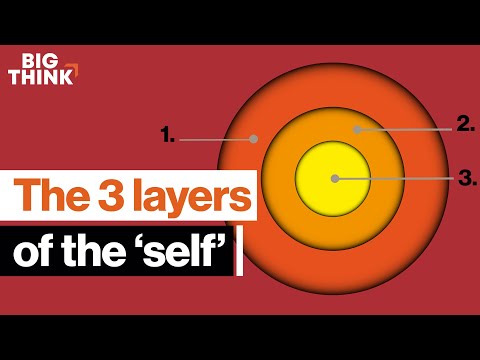
The Self Is a Story You Were Taught to Tell
Narrative identity theory says people build a self by integrating experience into an evolving internal story. The speakers test that claim from different angles: Sam Harris roots the ego in early fear, Nadeen asks how much of a life was chosen, Tim Fletcher traces shame to unmet needs, and a mistaken ICE detention shows how official labels can override a person's own account.

Your Mind Is a Theater: Bernard Baars and the Global Workspace
Global workspace theory, introduced by Bernard Baars in 1988, treats consciousness as information broadcast across a cognitive architecture. Philip Goff places it beside IIT under specific philosophical assumptions. Arvin Ash notes that researchers still lack a settled definition of consciousness. Alex Gómez-Marín values multiple theories while a peer-reviewed critique asks whether GWT's workspace really explains experience.

To Be Cringe Is to Be Free
Diogenes of Sinope gave Cynicism its sharpest public face. Speakers trace his bowl-throwing simplicity and the cosmopolitan phrase to a live argument: can a person owe loyalty to all humanity while respecting local life? CrashCourse names the tension directly, and Strabo reminds us that claims about distant peoples can mislead. The dossier keeps those voices in view without settling the quarrel.

The Consciousness Switch: Can We Find What Turns Experience On?
Propofol is clinically routine and mechanistically elusive. SciShow lists anesthesia hypotheses, including reduced neuronal signaling, while Matthew Johnson frames the hard problem as proving another person's experience. Sakai and Vuyk supply measurable markers such as blood concentration, bispectral index, and opioid choice. The dossier keeps those clinical facts beside Joscha Bach's emergent mechanisms and rare anesthesia awareness reports, where patients' own words test every theory.

What the Tibetan Book of the Dead Gets Right About Being Alive
Acts range from Craig Hamilton-Parker's natural stillness to Robert Waldinger's claim that impermanence relieves self-inflicted suffering. Aperture and Gigi Young explain the Tibetan Book of the Dead and etheric cord, while cult and refugee testimony shows doctrine under pressure. The written record agrees on anitya and Vajrayana roots, but speakers disagree about technique, authority, and what survives.

You Are Not Your Thoughts: Mindfulness Beyond the Cushion
Manoj Dias and Gelong Thubten describe meditation as a practical response to ordinary pressure, not a retreat from it. Their accounts of teaching, attention, and monastic training sit beside Buddhist claims that suffering and ethical living are social facts. Zawidzki and Cassaniti help frame the tension: mindfulness can ease fast modern life while also demanding clear-eyed work on how attention feels and functions.

What Is Actually Under Your Control? Epictetus and Ilhan Omar's Citizenship Fight
The dossier places Epictetus’s Enchiridion, preserved through Arrian and Stoic teaching, beside a contemporary fight over Ilhan Omar’s father’s naturalization. One act treats philosophy as daily practice after exile; others question records, dates, and birthright citizenship. The speakers do not settle the legal question, but their verbatim claims show citizenship becoming a test of memory, paperwork, and political will.

Breathing In Suffering: Tonglen and the Price of Compassion
Tonglen is defined as breathing in others' suffering and breathing out peace, yet the excerpts place compassion inside contested institutions: a sadistic guru, Tibetan exile politics, Chinese state claims, and meditation harm reports. Written references on Tara, diaspora compassion, and Tibetan Buddhist appeal sit beside the spoken claims. The dossier asks who controls transmission and what safeguards accompany it.