Curated Sub-Topic Tag
#Empires & Civilizations
Verified primary-voice documentaries on Empires & Civilizations, or enter a sharper question below to cut a new film live from 200M+ spoken records.

Did We Really Land on the Moon? Skeptics Face the Evidence
The dossier pairs Apollo 11's official record with suspicions about its press conferences, later lunar absence, and televised images. Dr. G reads anxiety in body language; Tom Lehrer sings of Wernher von Braun's expedience; National Geographic describes a ghostly broadcast; Shawn Ryan asks why nobody has returned. The record confirms the 1969 landing and shows broadcasters planned for an unpredictable event.

Vietnam: The War That Refused to Stay Forgotten
The excerpts move from the war's scope to its human cost: a Marine recalls checking bodies, reporters describe brutality, and McNamara's Fog of War frames retrospective lessons. The written record adds antiwar demonstrations and the First Indochina War's origins. Together they show how documentary evidence shifts between strategy, witness, and public dissent.

The Emperor Who Wrote Meditations for No One
The speakers disagree less about facts than about emphasis. Daily Stoic says Marcus did not want the job of emperor; Philosophies for Life places the Meditations among autobiographical writings from his rule; Vox Stoica and Unsolicited Advice treat the book as a compact Stoic system that branches into other philosophy. The Oxford World's Classics edition anchors those claims in a stable academic text.

Who Really Controls Money? The 230-Year Bank Fight
A Yale lecture starts with the postponed class and opens the Hamilton-Jefferson contest over what kind of nation America would be. A Lex debate clip notes that speakers embrace both men, which shows how the bank argument recruits rival instincts. The documentary pairs that cabinet fight with academic work on constitutional bank powers and modern central-bank reports from Switzerland, Ethiopia, and Washington.

The 21-Year-Old Sultan Who Broke Constantinople
Mehmed II arrived at the Theodosian walls on 5 April 1453, a 21-year-old sultan seeking proof. Speakers describe Constantinople as Christendom's largest city and the siege as a hinge in human history. The written record fixes the dates: a 53-day siege from 6 April to 29 May, with Giovanni Giustiniani commanding 700 defenders. The accounts converge on a young sultan, a storied capital, and a defense that failed.

Justinian Tried to Rebuild Rome. Then the Plague Arrived.
Justinian I ruled from 527 to 565 and pushed a renovatio imperii that was ambitious and only partly realized. The speakers place that push inside the eastern Mediterranean's dangerous corridors of empire, while Procopius records a pestilence that nearly annihilated humankind. Coins and maps show the empire's shifting reach under Anastasius, Justinian, and Heraclius. That gap between claim and capacity drives the dossier.

You Got the Promotion. So Why Do You Feel Like a Fraud?
The speakers treat imposter feelings as an occupational weather system: strivers want a bite of life, product people swim in opinions, and a newly promoted developer audits every meeting. Uslu and Addison frame the experience through psychology and institutional learning. Practical tips arrive after fear has been named, which keeps the remedy tethered to lived experience at work.
The Shipwreck That Explains the Bronze Age Collapse
The dossier reads Uluburun as a working cargo, not a symbol: Cemal Pulak's Oxford Handbook entry and N. Hirschfeld's study of Cypriot ceramics anchor the site in late fourteenth century trade. Around that evidence, speakers describe Hattusha's ruins, unresolved Sea Peoples names, and a Nordic Bronze Age beyond Mediterranean limits. The argument is archaeological: cargo lists and excavation contexts test grand collapse narratives.

Mao's Secret Olympics in a POW Camp
Mark Felton anchors this dossier in Mao's secret prisoner Olympics and the American-led United Nations response. The Armchair Historian supplies the amphibious landing texture; Mr. Beat tracks the bitter US-North Korea relationship. Written references confirm the 1950-53 conflict and Britain's 56,000 troops, while two stray Kings and Generals clips mark the archive's wider military drift.

They Beat the Red Army. Then Afghanistan Burned.
Operation Cyclone funded and armed the Afghan mujahideen from 1979 to 1992, and the Soviet-Afghan War ran from December 1979 to February 1989. Speakers trace the fighting, Pravda's invasion announcement, glasnost's revelations, and the heroin economy that outlasted Moscow's withdrawal. The record shows a war fought by Afghan fighters, framed by Cold War propaganda, and extended by networks the CIA helped open.

The Real Secret of Rome: Engineering That Kept Working
The clips admire Roman engineering at monumental scale: warehouses, tunnels, ramps, aqueducts. The written record shifts attention to operation: Valens supplied Constantinople, while Nîmes and Segovia show hydraulic systems built to last. Maintenance is the unglamorous condition behind that endurance, the labor that made public baths, latrines, and fountains reliable. The speakers praise scale; the evidence asks who cleaned, inspected, and repaired.

Rebuilding School From Zero: Japan's Gamble, New Orleans' Bet
Matt Candler's time-machine question and Corey DeAngelis's departmental fight show reform as institutional memory and turf. The Meiji case sharpens that: samurai elites wrote school rules, lost stipends, and became entrepreneurs or teachers. The Bedtime Historian names the Satsuma and Chosu coalition; the Meiji oligarchy reference confirms a domain clique. Education reform was state building with a payroll attached.

The Ditch That Broke Empires: Suez, Nasser, and the 1956 Gamble
Canal control is both a practical toll gate and a political test. Nasser's 1956 nationalization closed the waterway and exposed Britain's shrinking leverage, while the United States managed allies against the USSR. Builders and comedians widen the frame: the canal still carries 12 to 15 percent of trade, and the Ever Given showed how fast one grounding becomes global news.

The River That Made Pharaohs: How the Nile Built and Broke Egypt
Speakers move from the Nile as a green snake in hostile land to cats, Cleopatra's timeline, Old Kingdom collapse, Caesar's Alexandrian war, and the GERD dispute. The written record supplies the anchor: a 365-day civil calendar with three 120-day seasons and five epagomenal days, tied to a river 7,088 kilometers long. The calendar was administrative technology as much as astronomy.

The Janissaries: When the Sultan's Elite Army Became His Enemy
The six excerpts establish the Janissaries as an elite household force tied to the Ottoman throne, from the kul system to battlefield command. External scholarship supplies the missing hinge: Sultan Mahmud II abolished the corps in 1826, then feared a Janissary uprising. Together they show how an institution built for centralization became a political danger.

Friedman's Radical Bet: Let Money Float
Jennifer Burns describes Friedman's reaction to a dollar-centered trade system: convertibility into dollars had become the mechanism, so he proposed floating exchange rates. Commentary and reporting show the regime's costs and persistence, from short-term volatility to Yellen's matter-of-fact description of floating currencies and Murphy's link to the 1971 gold-standard break. The written record supplies the intellectual lineage: Friedman's case for flexible rates and later scholarship on developing countries.

Pearl Harbor: The Gamble That Woke America
Japan's leaders gambled on a surprise strike to cripple the Pacific Fleet, and American commanders read warnings too late. The speakers trace the raid from both cockpits, while the written record points to George C. Marshall and the intelligence system's missed signals. The result was a chain of assumptions, delays, and misread intent.

Useless Swords, Modern Empire: How Meiji Japan Reinvented Itself in a Generation
The Meiji Restoration ended strict social ranks and accelerated industrialization, as speakers note, but the record is not a single success story. Russia's push for warm-water ports collided with Japanese ambitions in Manchuria and Korea, while sword-bearing officers and immigrant nationalism show how modern institutions carried older symbols and anxieties. Modernization was rapid, contested, and usable for war.

The Suez Betrayal: Why Washington Chose Oil and the Dollar Over London
The Suez Crisis exposed how oil, sterling, and Cold War alliances forced Washington to choose between European partners and Arab states. Speakers here track the alliance logic, the oil shock, and the dollar's role, while references to 1970s energy shortages and the 1976 sterling crisis show how Suez set a template for later currency and fuel emergencies.

Paper Money Blues: Why Inflation Feels Like Bleeding the Market
The inquiry is Song dynasty paper money inflation, but the spoken excerpts circle the same mechanics in modern dress: a note is a promise, inflation measures its erosion, and money creation is contested. The written record supports the first point, describing paper money as a negotiable promissory note payable to bearer and noting Qing paper circulation beside copper and silver.
Suez, 1956: The Canal That Broke an Empire
Suez was a Middle East war and a Western alliance crisis. Washington prioritized Cold War coalition management, while London and Paris discovered that military action without American consent could be reversed. The records on British decline and the speakers' claims about weak allies and pre-emptive planning converge on one point. Suez made imperial dependence visible.

The Royal Road: How Persia Held an Empire Together
The Achaemenid Empire, founded in 550 BC, grew to roughly 5.5 million square kilometres, and the Royal Road shows how movement was governed, not merely conquered. The clips dwell on Persepolis, Plataea, and naval narrows, so the road dossier must read their battle talk against written evidence of imperial administration.

Free Bread and the Fleet That Fed Rome
The dossier follows Rome's grain dole from its urban pressure to its maritime machinery. Dynastic Profiles ties the Cura Annonae to a city of roughly a million; Invicta describes merchants, sailors, and agents watching grain logistics; Lex Fridman notes senators arriving with dependents. The written record confirms an imperial system procuring and distributing grain for Rome and later Constantinople.

The New Screen Panic Is 500 Years Old
The dossier sets Gutenberg's movable-type press beside Big Think's warning that screen effects take twenty years to know, Pawn Stars' broken relic, a heat-press repair guide, and Mari Kato's TikTok comparison. It asks what printing history can actually teach when every new machine arrives before evidence does, and when repair, decay, and recognition shape the story as much as invention.

Augustus Built a One-Man Machine. Caligula Got the Keys.
Augustus consolidated power through inheritance, military alliances, and public image, not a single act. The speakers trace Caligula's pedigree back to Mark Antony and Agrippa, describe Augustus as Caesar's measured son, and note the Republic's long wars before imperial rule. Coins, portraiture, and Augustan Cleopatra imagery show how that power was broadcast after Actium.

The Yom Kippur War Still Warns Us: Missiles, Oil, and Broken Supply Lines
Rabbi Levine says Judaism and positivity can sync despite anti-Semitism, oppression, and pogroms. RealLifeLore cites the 1973 Yom Kippur War in a border argument, while the verified record lists its battles and Israel's 16 October raid on Egyptian missile bases. Breaking Points and Geopolitical Economy Report then describe bleak U.S. missile production, Iranian oil exports, and Iranian resilience.

The 1930 Tariff That Helped Cause the Great Depression Is Back
Bloomberg, Pivot, Prof G Markets, CNBC, and TED-Ed treat the Smoot-Hawley Tariff as a live reference: a 90-day deadline, an unused Section 338 provision, and a cautionary chain of retaliation. The written record confirms the Tariff Act of 1930 was signed by Herbert Hoover on June 17, 1930, and named for Reed Smoot. Academic work on retaliation and protectionist politics backs the speakers' basic history while leaving current strategy contested.
Why Love Sometimes Feels Like a Trap: Attachment Theory Grows Up
The dossier follows attachment theory from nursery observations to adult romance. A Yale lecture describes long child studies; a psychology explainer credits Hazan and Shaver with extending the frame; BBC and interview clips show public arguments about anxious and avoidant behavior. Hazan's indexed papers on relationship loss and attachment inquiry anchor the adult claim.

The Bach Cello Suite That Erases the Listener
Michael Pollan describes merging with a recorded Bach cello suite during a guided psychedelic session. Joshua Roman opens a TED talk by playing the same prelude and calls it a lifelong performance staple. Yale's fugue lecture supplies the technical term voice, while Vsauce3 treats the suite as a comic sound test. The dossier asks how one unaccompanied score carries such different claims.

Munich 1938: A Country Sold Out Without a Shot
The Munich Agreement is usually told as a great-power bargain, but History Matters asks viewers to notice the victim's position: Czechoslovakia was neither at war nor invited. The SLICE clips confirm the date and later use of the Munich building; the Sky Sports item is unrelated. Together they keep appeasement defined as concession to an aggressive power, not as a tidy diplomatic ritual.

The Peace That Came Back as War
The dossier follows Versailles from Article 231 to occupation and hyperinflation, with speakers describing reparations as punishment, pressure, and a cause of later war. Alan Sharp's Versailles Settlement anchors the legal terms. A Bergen-Belsen survivor then shifts the frame to postwar German-Jewish reparations, where moral debt and survival testimony complicate any simple story of German resentment. The result is a dossier about legal blame, enforcement, and memory.

The Exam That Carved Names and Broke Hong Xiuquan
The imperial examination turns bureaucratic selection into a life-defining rite. Lex Fridman and Jeffrey Wasserstrom trace its early creation; Johnathan Bi treats it as a premodern equalizer; Niall Ferguson reads stone stelae as public memory; Bedtime & Historian notes Hong Xiuquan failed it. Written sources confirm the system's bureaucratic purpose, its export to Japan, and the job assignment problem.
How Jersey Nerds Built the Transistor and Nearly Lost the Future
The dossier treats the transistor as an institutional product, not a solitary flash. Jeri Ellsworth's 'bunch of nerds in 1947' and Fact Quickie's 1939 diode reference show layered research at Bell Labs; Lex Fridman's Murray Hill aside and the Xerox question widen the frame from device to ecosystem. Metzler's systems-integrator paper and Physics Today's chronology support that view.

Tulip Mania: The Bubble Story Misses the Real Market
Six clips show tulip mania functioning as a verbal shortcut: a bedtime history, a financial commentator, an MIT lecture, a Bitcoin analyst, and two Bloomberg segments. The written record complicates that shortcut. Anne Goldgar’s peer-reviewed correction says the classic bubble story is mostly wrong, while the economic-bubble definition keeps the core question of price versus intrinsic value in view.

The Water Clock That Couldn't Stop History
The acts do not agree on what a clock is: a court instrument, a pop beat, an alarm, a water level. Su Song's clepsydra gives the dossier a concrete center. Around it, speakers describe emperors, Jin pressure on the Song, land and people, and the odd afterlives of timekeeping in music and games. The result is a study of how technical authority gets remembered, misheard, and repurposed.

Too Much and Not Enough: Why the Ottoman Reforms Couldn't Save the Empire
The Tanzimat reforms began in 1839 as a serious attempt to remake Ottoman institutions, and the speakers treat that effort as both real and vulnerable. Debt, lost wars, naval defeat, and Greek independence narrowed the empire's options. Scholarship adds new institutions and contested civic identity, while the counterfactual voice asks how much foreign interference decided the outcome.

Could Savonarola Really Purify Florence?
The four spoken excerpts never mention Savonarola directly. They establish Florence's sacred center, Lorenzo's patronage machine, England's Reformation alignment, and the Dissenting congregations that produced social reformers. Read beside the San Marco references, those fragments show the civic, elite, and political pressures surrounding a Dominican moral campaign in Renaissance Florence. The dossier keeps the institutional context visible and lets the clips carry the evidentiary weight.

Berlin, 1989: One Sentence That Opened the Wall
The dossier follows the Berlin Wall from wartime rubble and Allied mistrust to the guarded concrete barrier that divided the city from 1961 to 1989. Speakers describe escape by car trunk, Soviet repression, and the choreography of a 1945 battlefield. The decisive turn is a press conference, where an unplanned answer sent East Berliners to the crossings.

The Transistor Came From a Monopoly. Then the Rules Changed.
Speakers agree that Bell Labs produced the transistor and a model of industrial research. The 1956 consent decree is the missing policy frame: it constrained AT&T's monopoly while widening patent access for competitors. The dossier separates invention from diffusion, showing how corporate research, patent licensing, and public benefit collided around one device and who controlled its commercial future.

The Codebreaker Who Saw Midway Coming
The selected clips rarely name Joseph Rochefort. They show Midway as aircraft counts, Japanese defensive gunnery, game memory, film dialogue, and a propaganda rights dispute. The written references supply the codebreaking thread: naval cryptanalysis helped place American carriers, while Mark Felton's primary segment turns to pilots held prisoner after the battle. That split, between signals intelligence and screen memory, is the dossier's central tension.
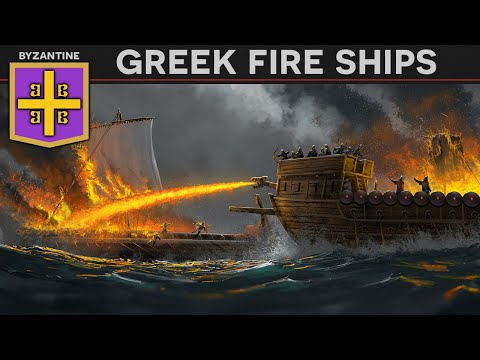
Greek Fire: The Flame That Saved Byzantium
Greek fire enters the record as a state secret and siege weapon: Invicta describes the 717 Umayyad advance, while popular clips stress secrecy and burn damage. Scholarship places the incendiary in Byzantine use from the seventh through fourteenth centuries, with John Pryor's dromon study and Michael Charles's peer-reviewed work anchoring technical claims. Speakers agree on fear and secrecy; they leave open how the mixture was made, delivered, and kept from outsiders.

Six Mayas, One Ancient Script: What the Name Hides
The dossier separates a name collision from a decipherment history: a Stanford student organizes neighborhood games, a psychologist reads Maya Kowalski, National Geographic describes abandoned Maya kingdoms, and three entertainment clips follow Maya Rudolph and Maya Angelou. Against those voices, the references place Maya script among the world's writing systems and note that Champollion and Young unlocked Egyptian scripts first.

Genghis Khan's Army Was Not a Horde
The meritocracy question is not settled by slogans. Syawish's family tree and the birth-date debate show how much of the story runs through kinship. HistoryExtra rejects the barbarian caricature, Bedtime & Historian shows disciplined maneuver, and National Geographic describes families following one leader across ethnic lines. The written record on the Mongol army supports organization, but not a clean modern meritocracy.

Color Is Not Decoration: The Hidden Hands Behind Every Frame
The Color Lab tests architectural lighting against well-being while Julio Torres turns color theory into comedy. Hugh Brownstone demonstrates three-point lighting; Aputure explains switching and color control for effects; a Kodachrome history links still and motion color. Formalist film theory and lighting manuals supply the written frame: color is technical control, industrial product, and emotional argument at once.

D-Day Weather Deception: The Forecast That Decides History
Public weather talk is built on models, alerts, and local certainty. The D-Day record shows planners using forecasts and false radio traffic as a naval screen for Normandy. Operations Taxable, Glimmer, and Big Drum make the contrast concrete: routine forecast confidence on one side, coordinated deception on the other. The speakers describe ordinary forecasts with high confidence, while the military files describe deception as an operational task.

D-Day's Missing Tanks and the Railway War Behind Overlord
The Normandy landings on June 6, 1944, were Operation Overlord's amphibious and airborne assault. Speakers here stress the less visible machinery: rail movement, invasion planning, and the DD tanks that failed or vanished on the beach. Bletchley Park records and military definitions frame D-Day as a scheduled attack, not a single heroic image.

2008 Repo Run: The Window Is Closing. Who Panics First?
The dossier sets Maryann's refusal to compare current selloffs with 2007 and 2008 against repo mechanics: secured short-term borrowing, usually backed by government securities, where collateral calls can force sales. A Real Estate Ninja clip opens the repo window; later acts drift into rallies, power laws, sports, and politics. The written references supply the missing market plumbing.

The Tet Offensive: How the News Tore Open a Credibility Gap
The first two clips set the factual scene: Lunar New Year festivities, a two day ceasefire, and a surprise offensive. Later clips shift to modern media criticism and visa coverage, exposing a gap between the inquiry and the supplied record. The dossier treats that gap as evidence of how coverage debates drift from Tet's specific reporting crisis.