PastNoise
Literature & Arts·5 acts·6m 35s·4/5 primary·2 citations·Cut from 14 live hits

The Bach Cello Suite That Erases the ListenerBach Cello Suite Voices · Primary Podcast Clips & Verified Transcript

A neuroscientist becomes the music, a cellist fears losing it, and a 130-decibel jet engine tests its power.

I Wasn't Listening. I Was the Music

ACT I · Andrew Huberman · 6m 35s

I Wasn't Listening. I Was the Music

And some people merge with the divinity or the universe or or love or other people.

00:00 / 06:35
0%
Highlights:
ACT IPRIMARYAndrew Huberman · Sep 28, 2026

I Wasn't Listening. I Was the Music

Pollan says he became the Bach cello suite the guide played.

Click any timestamp to jump directly

30-Second Quick Reference · Verified Takeaways

5 acts · 2 citations · Last Verified Nov 21, 2026
  • 01Pollan says a guide played a Bach unaccompanied cello suite, and he became the piece of music.
  • 02Joshua Roman identifies the prelude from Bach's First Suite as one of the pieces he has performed most in his life.
  • 03The Yale lecture uses voice for a contrapuntal line, noting fugues can be written for singers or instruments.
  • 04Vsauce3 uses Bach's Cello Suite No. 1 as relief after an intentionally annoying 4,000 hertz test tone.
“Michael Pollan says a guide's Bach cello recording became him during a psychedelic session.”

Core Synthesis

Michael Pollan describes merging with a recorded Bach cello suite during a guided psychedelic session. Joshua Roman opens a TED talk by playing the same prelude and calls it a lifelong performance staple. Yale's fugue lecture supplies the technical term voice, while Vsauce3 treats the suite as a comic sound test. The dossier asks how one unaccompanied score carries such different claims.

01

Pollan Merges With Music

Michael Pollan does not describe listening from a distance. He says the guide played an unaccompanied Bach cello suite, and he became the piece of music. The Cello Suites are six unaccompanied works, BWV 1007 to 1012, among the most performed solo cello compositions. His account puts subjective fusion beside a repertory fact: the same score can be both canonical object and experienced identity.

Pollan's claim is first-person, not a general theory of Bach.
02

Roman Plays The Prelude

Joshua Roman begins by playing the prelude from Bach's First Suite for solo cello and names it among the pieces he has performed most. The performance framing is concrete: a cellist says hello with a familiar opening. Where Pollan describes dissolution into the music, Roman presents disciplined repetition and public presentation. Both rely on the same prelude, but they make opposite kinds of authority claims.

Roman treats the prelude as practiced greeting, not mystical transport.
03

Fugue Lecture Defines Voice

The Yale lecture supplies a technical correction to casual talk about voices. In fugue, a voice is a contrapuntal line, and fugues can be written for actual voices or instruments. That definition matters because Bach's solo cello suite is not a fugue, yet listeners still speak of voices. Vsauce3 then reduces the suite to a pleasant sound sample after a 4,000 hertz tone, showing how the same music moves between analysis, joke, and devotion.

Voice means line in fugue, not always a human singer.

Where Voices Converge

  • • Pollan and Roman both focus on Bach's First Suite prelude, a work the reference identifies among the most performed solo cello compositions.
  • • Yale's fugue definition matches standard usage: a voice is a contrapuntal line, not necessarily a human singer.

Nuance & Unresolved Tension

  • • Pollan describes becoming the music, while Roman stresses practiced performance and public greeting.
  • • Vsauce3 treats the suite as a disposable sound sample, while Pollan and Roman treat it as identity and lifelong craft.

Explore Related Questions

Complete Timestamped Bilingual Transcript

Full 5-Act Spoken Transcript Archive

Click any timestamp to jump
ACT I · Andrew Huberman · 1:02:21 - 1:03:16

I Wasn't Listening. I Was the Music

ACT II · Huberman Lab Clips · 02:02 - 02:57

No Subject, No Object, Only Bach

ACT III · TED · 02:45 - 04:20

The Prelude He Almost Lost Forever

ACT IV · Vsauce3 · 14:40 - 16:15

Bach Versus a 130-Decibel Jet Engine

ACT V · YaleCourses · 02:30 - 04:05

A Fugue Is Voices, Even on Cello

Want sentence-level movie clips, connected-speech breakdowns, or daily spoken English drills instead of long-form interviews? Our sister tool WinkLingo is purpose-built for that workflow.

Key Questions & Reference Guide

Frequently Asked Questions

What are the core takeaways on Bach Cello Suite Voices?

Michael Pollan describes merging with a recorded Bach cello suite during a guided psychedelic session. Joshua Roman opens a TED talk by playing the same prelude and calls it a lifelong performance staple. Yale's fugue lecture supplies the technical term voice, while Vsauce3 treats the suite as a comic sound test. The dossier asks how one unaccompanied score carries such different claims. Key insights include: Pollan says a guide played a Bach unaccompanied cello suite, and he became the piece of music. Joshua Roman identifies the prelude from Bach's First Suite as one of the pieces he has performed most in his life.

Which primary podcasts, lectures, and speakers are featured in this Bach Cello Suite Voices screening?

This screening stitches 5 continuous acts featuring voices from Andrew Huberman, Huberman Lab Clips, TED, Vsauce3, YaleCourses. Every act separates primary voices from commentary and links directly to the original timestamp.

Where do experts agree and disagree on Bach Cello Suite Voices?

Convergence: Pollan and Roman both focus on Bach's First Suite prelude, a work the reference identifies among the most performed solo cello compositions. Open tension: Pollan describes becoming the music, while Roman stresses practiced performance and public greeting.

Does this Bach Cello Suite Voices page include a searchable timestamped transcript and citations?

Yes. Open the Interactive Transcript tab to click any sentence and jump directly to that exact second in the video, export Obsidian/Notion reading notes, and verify 2 cross-referenced scholarly or encyclopedic citations including "Cello Suites (Bach)".

More Documentaries in This Topic

Literature & Arts →
What Survives When the Writing Advice Fails
Literature & Arts7m 36s

What Survives When the Writing Advice Fails

Stephen King's On Writing makes craft advice personal: memoir, rules, and revision. The spoken excerpts show advice in use and in dispute. Anne Lamott reports two new stories; an IELTS teacher separates speech from writing; Gayle King disclaims therapy; Anthony Gramuglia attacks shallow representation. Together they ask which writing rules survive contact with practice, and who gets to enforce them.

6 acts2 primary4 citations
The Outline Comes First, the Muse Comes Later
Literature & Arts6m 58s

The Outline Comes First, the Muse Comes Later

Patterson treats outlines as scaffolding for speed, while a surreal-numbers memoir records the first-draft stall as physical fact. Cuneiform and draft-day clips widen the term draft until it means selection, prototype, and earliest script. The dossier separates preparation from panic and asks what actually makes a fast first draft possible.

6 acts3 primary4 citations
The Color You See Is a Story Your Brain Tells
Literature & Arts6m 47s

The Color You See Is a Story Your Brain Tells

MIT's lecture begins with lightness, then color. Beau Lotto says every behavior reduces uncertainty. Matisse's 1896 table and 1905 window show color shifting with context. Crash Course traces shared motifs across cultures, while Ed Cooke names the phenomenology of shade. Written references confirm color is relational, produced by cone activation, and synesthesia cross-wires senses. Together they argue perception is active, embodied, and historical, not a simple readout of matter.

6 acts5 primary2 citations
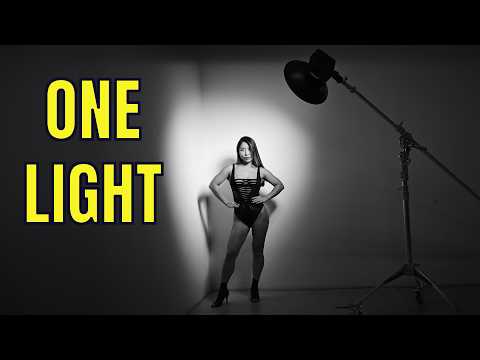
One Light Is a Lie: What Portraits Reveal About Shadows
Literature & Arts6m 22s

One Light Is a Lie: What Portraits Reveal About Shadows

Matt Granger tests a new flash through single light portraits. Hany Farid and Joel Simon explain why direction and exposure knowledge matter more than automatic settings. Luc Forsyth weighs compact interview key lights and cheap fixtures, while Five By Nine warns that concentrating all illumination from one source reshapes the room. The written references confirm that key light choice is both technical and compositional.

6 acts2 primary3 citations
The Hidden Architecture of Everything
Literature & Arts7m 55s

The Hidden Architecture of Everything

Keith Potter's Oxford Music Online entries give minimalism a scholarly frame, but the recorded speakers rarely use the word. They talk instead about green building certification, photographing models, N-tier naming, and TikTok system design. The dossier holds those concrete claims beside the written reference, letting the gap between aesthetic minimalism and architectural constraint stay visible.

6 acts2 primary2 citations
The Hero's Journey Is Your Story: Six Voices, One Myth
Literature & Arts5m 53s

The Hero's Journey Is Your Story: Six Voices, One Myth

Campbell's monomyth supplies a durable map, but these excerpts show that map under pressure. A TED-Ed myth, a FIFA match, a Stranger Things audition, Steven Pressfield's artist's journey, brand advice, and villain theory disagree about who owns the story. The written record confirms Campbell's influence while leaving open whether one template can hold every hero, and that tension drives the dossier.

6 acts2 primary4 citations