PastNoise
History & World·6 acts·7m 12s·2/6 primary·4 citations·Cut from 10,000 live hits · 2 ads stripped

The Shipwreck That Explains the Bronze Age CollapseUluburun Bronze Age Shipwreck Cargo · Primary Podcast Clips & Verified Transcript

A doomed cargo, mysterious Sea Peoples, and a world that vanished

Hattusha's Ruins Still Guard a Lost Empire

ACT I · Fall of Civilizations · 7m 12s

Hattusha's Ruins Still Guard a Lost Empire

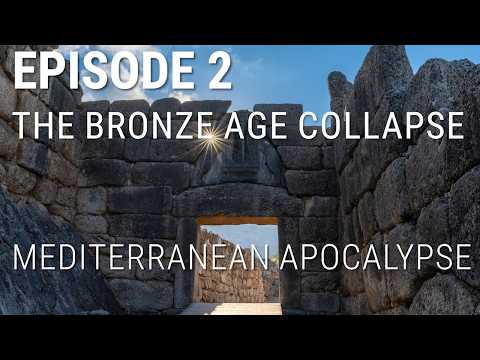
The ruins of the great city of Hattusha are an awe-inspiring sight.

00:00 / 07:12
0%
Highlights:
ACT IPRIMARYFall of Civilizations · Apr 8, 2020

Hattusha's Ruins Still Guard a Lost Empire

Fall of Civilizations grounds collapse in Hattusha's ruins above the Kizilirmak River.

Click any timestamp to jump directly

30-Second Quick Reference · Verified Takeaways

6 acts · 4 citations · Last Verified Nov 21, 2026
  • 01Fall of Civilizations locates Hattusha on a rocky outcrop above the Kizilirmak River, making the Hittite capital a physical anchor for collapse stories.
  • 02Kings and Generals stresses that Sea Peoples names such as Denyen, Sherden, and Peleset remain a historical mystery, not a settled ethnic list.
  • 03History Time places a mysterious Nordic Bronze Age far beyond Mediterranean limits, widening the map against which Uluburun cargo must be read.
  • 04Pulak and Hirschfeld give the wreck its concrete fields: late fourteenth century date, Cypriot ceramics, and an excavation record that lets cargo argue back.
“In the late 14th century BC, a ship sank south of Kaş with a cargo that maps Bronze Age trade.”

Core Synthesis

The dossier reads Uluburun as a working cargo, not a symbol: Cemal Pulak's Oxford Handbook entry and N. Hirschfeld's study of Cypriot ceramics anchor the site in late fourteenth century trade. Around that evidence, speakers describe Hattusha's ruins, unresolved Sea Peoples names, and a Nordic Bronze Age beyond Mediterranean limits. The argument is archaeological: cargo lists and excavation contexts test grand collapse narratives.

01

Hattusha and the Collapse

Fall of Civilizations opens with Hattusha's ruins on a rocky outcrop above the Kizilirmak River, giving collapse a fixed place. Kings and Generals then widens the frame to Sea Peoples names: Denyen, Sherden, Peleset. The Uluburun wreck, dated to the late fourteenth century BC and published by Cemal Pulak, does not solve those names. It supplies cargo, context, and a date against which claims can be tested.

Cargo gives collapse debate a firm date and physical place.
02

Nordic Limits and Evidence

History Time insists that a mysterious and unique culture held sway in the far north of Europe, beyond Mediterranean limits. The Cynical Historian frames the Bronze Age as changeable under archaeological evidence. Uluburun belongs to that evidentiary turn: N. Hirschfeld's study of its Cypriot ceramic cargo shows how pottery, not later legend, can trace routes and exchange.

Pottery cargo tests grand maps of Bronze Age sea exchange.
03

Ships, Cargo, and Claims

Pete Kelly's party boat aside, the useful question is how Bronze Age Greeks worked the sea. AlternateHistoryHub's what-if premise sharpens the stakes: remove collapse, and trade networks change. Uluburun and Cape Gelidonya resist easy counterfactuals. The wreck's cargo, including Cypriot ceramics, documents exchange in the late fourteenth century BC, while the site south of Kaş keeps interpretation tied to excavation, not speculation.

Excavation keeps counterfactuals tied to cargo and context, not wish.

Where Voices Converge

  • • The Bronze Age Mediterranean was connected enough that a single wreck can carry Cypriot ceramics and other goods across long routes.
  • • Hattusha and the Sea Peoples debate show that collapse stories need fixed places and named evidence, not only later labels.

Nuance & Unresolved Tension

  • • Speakers seek ethnic names for Sea Peoples, while the Uluburun cargo documents exchange without resolving those identities.
  • • AlternateHistoryHub's counterfactual removes collapse, but the wreck's dated cargo limits how freely trade networks can be rewritten.

Explore Related Questions

Complete Timestamped Bilingual Transcript

Full 6-Act Spoken Transcript Archive

Click any timestamp to jump
ACT I · Fall of Civilizations · 00:22 - 01:57

Hattusha's Ruins Still Guard a Lost Empire

ACT II · Kings and Generals · 05:28 - 07:03

Who Were the Sea Peoples, Really?

ACT III · History Time · 00:17 - 01:20

Gold-Clad God-Kings Beyond the North Wind

ACT IV · The Cynical Historian · 00:11 - 01:30

A Bronze Age Before Columbus?

ACT V · Pete Kelly · 00:00 - 00:56

A Party Boat at the Edge of History

ACT VI · AlternateHistoryHub · 00:00 - 00:44

Sea Raiders, Empty Cities, Forgotten Writing

Want sentence-level movie clips, connected-speech breakdowns, or daily spoken English drills instead of long-form interviews? Our sister tool WinkLingo is purpose-built for that workflow.

Key Questions & Reference Guide

Frequently Asked Questions

What are the core takeaways on Uluburun Bronze Age Shipwreck Cargo?

The dossier reads Uluburun as a working cargo, not a symbol: Cemal Pulak's Oxford Handbook entry and N. Hirschfeld's study of Cypriot ceramics anchor the site in late fourteenth century trade. Around that evidence, speakers describe Hattusha's ruins, unresolved Sea Peoples names, and a Nordic Bronze Age beyond Mediterranean limits. The argument is archaeological: cargo lists and excavation contexts test grand collapse narratives. Key insights include: Fall of Civilizations locates Hattusha on a rocky outcrop above the Kizilirmak River, making the Hittite capital a physical anchor for collapse stories. Kings and Generals stresses that Sea Peoples names such as Denyen, Sherden, and Peleset remain a historical mystery, not a settled ethnic list.

Which primary podcasts, lectures, and speakers are featured in this Uluburun Bronze Age Shipwreck Cargo screening?

This screening stitches 6 continuous acts featuring voices from Fall of Civilizations, Kings and Generals, History Time, The Cynical Historian, Pete Kelly. Every act separates primary voices from commentary and links directly to the original timestamp.

Where do experts agree and disagree on Uluburun Bronze Age Shipwreck Cargo?

Convergence: The Bronze Age Mediterranean was connected enough that a single wreck can carry Cypriot ceramics and other goods across long routes. Open tension: Speakers seek ethnic names for Sea Peoples, while the Uluburun cargo documents exchange without resolving those identities.

Does this Uluburun Bronze Age Shipwreck Cargo page include a searchable timestamped transcript and citations?

Yes. Open the Interactive Transcript tab to click any sentence and jump directly to that exact second in the video, export Obsidian/Notion reading notes, and verify 4 cross-referenced scholarly or encyclopedic citations including "Uluburun shipwreck".

More Documentaries in This Topic

History & World →
The Spy Feud That Paralyzed the CIA
History & World6m 41s

The Spy Feud That Paralyzed the CIA

The dossier tracks Cold War espionage through competing defector testimony, Berlin covert operations, ballistic missile submarine reconnaissance, and East German dissent. Speakers show intelligence work as bureaucratic, personal, politically explosive, and morally compromised. The written record frames espionage as a missing dimension of Cold War history, while the acts reveal how sources, institutions, and public memory collide under pressure.

6 acts3 primary4 citations
Did We Really Land on the Moon? Skeptics Face the Evidence
History & World6m 16s

Did We Really Land on the Moon? Skeptics Face the Evidence

The dossier pairs Apollo 11's official record with suspicions about its press conferences, later lunar absence, and televised images. Dr. G reads anxiety in body language; Tom Lehrer sings of Wernher von Braun's expedience; National Geographic describes a ghostly broadcast; Shawn Ryan asks why nobody has returned. The record confirms the 1969 landing and shows broadcasters planned for an unpredictable event.

6 acts2 primary5 citations
Rome Didn't Fall Overnight: The Empire That Broke Itself
History & World8m 40s

Rome Didn't Fall Overnight: The Empire That Broke Itself

The fall of Rome is less a single event than a centuries-long transformation, a process of political fragmentation, religious realignment, and economic contraction that reshaped the Mediterranean world. The sources reveal a tension between dramatic narratives of collapse and the quieter, systemic changes that historians now emphasize. From shrinking animals to shifting dioceses, the evidence points to a gradual unraveling that challenges our appetite for clean endings.

6 acts3 primary5 citations
Vietnam: The War That Refused to Stay Forgotten
History & World5m 57s

Vietnam: The War That Refused to Stay Forgotten

The excerpts move from the war's scope to its human cost: a Marine recalls checking bodies, reporters describe brutality, and McNamara's Fog of War frames retrospective lessons. The written record adds antiwar demonstrations and the First Indochina War's origins. Together they show how documentary evidence shifts between strategy, witness, and public dissent.

6 acts3 primary2 citations
Lincoln's Darkest Decisions: What Saving the Union Really Cost
History & World5m 58s

Lincoln's Darkest Decisions: What Saving the Union Really Cost

The dossier places Gallagher's lecture series at the center, then lets other speakers press Lincoln on emergency powers and racial politics. One clip notes his suspension of habeas corpus; another says he was anti-slavery but no abolitionist before the war. Comments on Grant, the penny, and western troops show how command and memory keep shifting.

6 acts2 primary2 citations
1940: Britain's Last Line Was the Sky
History & World7m 42s

1940: Britain's Last Line Was the Sky

The Battle of Britain was decided by an integrated air defense system: radar, command and control, and fighter squadrons. Imperial War Museums dates the campaign July to October 1940; History Hit frames it as a clash whose result was decided in the air. Modern commentary on Ukraine and air-defense technology shows the same contest between interception and civilian terror, not just aircraft counts.

6 acts2 primary4 citations