Curated Sub-Topic Tag
#Geopolitics & Diplomacy
Verified primary-voice documentaries on Geopolitics & Diplomacy, or enter a sharper question below to cut a new film live from 200M+ spoken records.

The Oil Wars America Never Needed
Eugene Gholz calls America’s oil wars largely unnecessary and ineffective, even as BBC and CNBC track price shocks and disrupted crude flows. Geopolitical Economy Report ties Middle East interventions to dollar dominance, while The Economist returns to the Carter Doctrine and oil’s flow. The 1973 embargo and a 2026 Hormuz closure show how energy chokepoints become financial and military problems.

The Fusion Breakthrough Was Real. The Hard Part Starts Now
The dossier separates a laboratory first from an energy system. Ziroth and TED-Ed frame fusion as a star on Earth, while MIT cost lectures and Ziroth's SMR survey keep attention on construction economics. Kirtley's deep space remark adds a practical constraint: compact systems cannot waste mass or heat. The written references confirm fusion's potential while leaving engineering and market questions open.
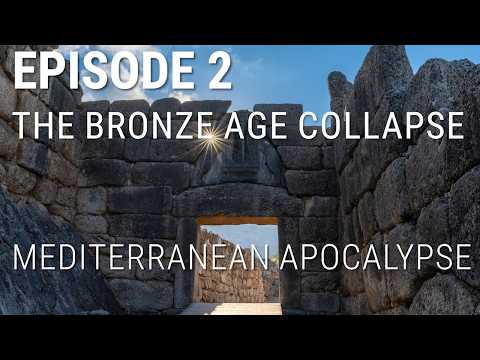
When the Bronze Age World Went Silent
The documentary follows collapse from Hattusha's rocky outcrop to Ugarit's trade networks and Mycenae's citadel, asking how routes failed. Speakers describe a fiercely competitive, mobile world; scholarship on Ugarit as a Bronze Age Hansa and Aegean collapse shows how interdependence turned local shocks into regional failure. The evidence is archaeological and textual, not a single invasion story, and trade routes are the connective tissue.
Nuclear Waste Will Outlive Every Government
Nuclear waste planning is a physics problem and an institutional one. Wendover's fallen civilizations and School of Life's chronic condition frame a 10,000 year maintenance task, while MIT's uranium cost question and corrosion studies show the bill arriving through rock, steel, and changed supply chains. Stanford's Medicare aside marks a familiar design flaw: the long-term option often carries the disadvantage.

Same Targets, Different War: The Middle East's Century of Fire
Mark Felton shows that WWII bombing linked Tel Aviv, Bahrain, and Dhahran before today's headlines. Kings and Generals and Nada Majdalani frame Gaza as a new ignition point, while Johnny Harris notes that Middle East is an arbitrary European label. Written histories of civilization and Jordanian border law show borders as layered institutions, not fixed lines.

The Biggest Risk Is You: Druckenmiller's Market Wake-Up Call
The dossier sets Druckenmiller's macro conviction beside McChrystal's warning that risk often comes from the team itself. Market clips isolate AI competitiveness, operational button-press errors, and an unresolved macro setup. Written evidence includes a Gary Druckenmiller academic record and Stanley Fischer's 1986 peer-reviewed macro-model paper, useful context for judging conviction against model limits.

The Core Stability Trap: Why Strong Glutes Aren't Enough
Jeremy Ethier frames the glutes as the body's support system, while Stuart McMillan tells Huberman that changing exercises mid-set helps him build core stability. A poll finds the core is where viewers feel weakest, and biomechanics research ties core stability to knee valgus during single-leg landing and to double-peak muscle activation in elite MMA striking. The finance clip is a terminology detour: it uses core to mean accounting fundamentals, not trunk control.

2008: When the Repo Trade Broke
The 2008 repo collapse was a run on secured short-term funding, but these six excerpts rarely name it. Boyle’s art-storage costs, Bloomberg’s bubble preconditions, and Real Estate Ninja’s repo-window explainer circle the mechanics: collateral, rollover, and sudden rate spikes. Graham Stephan, Prehn, and Solving the Money Problem show how market fear gets narrated through expensive stocks and politics instead.

The Canal That Fed Beijing: How China Moved a Nation by Water
The Grand Canal was infrastructure for moving grain, not a single monument. Speakers place it inside Sui state-building and modern water projects, while academic records trace the tribute system's partial revival and final collapse from 1865 to 1901. The Panama and parade clips show how canal control and state spectacle still frame China's power.

The Doomsday Paradox: Why Nuclear Deterrence Holds and How It Could Unravel
Annie Jacobsen calls nuclear war's absence an absurd paradox under mutual assured destruction. BBC reporting treats MAD as a shared Cold War vocabulary; CNBC finds the live tension in adversaries not knowing whether a U.S. president would strike first. Historical work on ABMs shows that defenses can destabilize the doctrine by blurring retaliation and first use.

The Trading Firm That Conquered India
The East India Company was a business that became a government in India. One commentary stresses consolidation and crown political agendas; another describes a century of land seizures, economic destruction, and racism before local revolt. Academic work on plant colonialism and the Encyclopaedia Iranica entry show how commercial records, natural history, and sovereignty were linked together.

The Taiwan Strait Is Already a War Rehearsal
The dossier follows the Taiwan Strait through six spoken fragments: Hoover Institution security, RealLifeLore on US submarines, a Geopolitical Economy Report peace quote, Economics Explained on headline sensitivity, BBC News on Chinese drills, and William C. Fox on uncertain escalation. References on the Fourth Taiwan Strait Crisis, cross-strait relations, and recent scholarship place those claims in a longer record of military signaling and economic exposure.

Twenty-One Miles of Water Between You and $200 Oil
The clips move from strike news to market hedging and late-night skepticism, while Helima Croft warns that Houthi involvement puts Red Sea security and $200 oil in play. The written record adds Malacca's spill history and Singapore's pragmatism, showing chokepoint risk is legal, naval, and commercial at once. That dual record keeps the documentary from reducing the crisis to a single headline or price tick.

The Bet Size That Decides Everything
No clip names Druckenmiller, but Barbara Armstrong, Mark Roussin, Jason Graystone, Felix Prehn, and Zubair Trabzada address the same variables: position size, risk limits, and reward. Roussin pairs sizing with valuation; Graystone ties it to process and reward to risk; Prehn warns against ignoring fundamentals. The Trading Mindwheel (2023) and Davanzo's 2026 Bitcoin paper place initial capital risk, position size, and potential reward inside formal risk frameworks.