PastNoise
History & World·6 acts·7m 07s·6 Perspectives·4 citations·Cut from 5,358 live hits

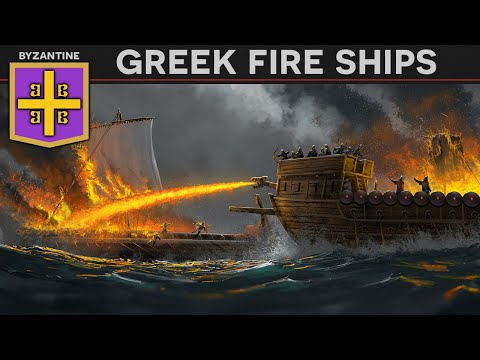
Greek Fire: The Flame That Saved ByzantiumByzantine Greek Fire Weapon · Primary Podcast Clips & Verified Transcript

A doomed capital, 15,000 defenders, and a secret weapon the Arab fleet could not survive

Constantinople 717: 100,000 Attack, 15,000 Defend

ACT I · Invicta · 7m 07s

Constantinople 717: 100,000 Attack, 15,000 Defend

In the year 717 AD, the Byzantine Empire was on the verge of collapse.

00:00 / 07:07
0%
Highlights:
ACT ICOMMENTARYInvicta · Apr 4, 2022

Constantinople 717: 100,000 Attack, 15,000 Defend

Invicta says the 717 Umayyad siege threatened Constantinople with over 100,000 men.

Click any timestamp to jump directly

30-Second Quick Reference · Verified Takeaways

6 acts · 4 citations · Last Verified Nov 21, 2026
  • 01Invicta sets the stakes at 717 AD: an Umayyad army over 100,000 strong threatens Constantinople after two decades of preparation.
  • 02MostAmazingTop10 frames Greek fire as a royal secret, listing outsiders, crown, princesses, and the weapon together as things never given away.
  • 03The Infographics Show notes that Roman weapons grew deadlier, then asks whether any blade can match fire that burns a person to death.
  • 04Forged in Fire clips drift from Greek fire into forge trouble and Greek mythology, showing how popular arms media often swaps recipe evidence for spectacle.
“In 717, an Umayyad force of over 100,000 men closed on Constantinople.”

Core Synthesis

Greek fire enters the record as a state secret and siege weapon: Invicta describes the 717 Umayyad advance, while popular clips stress secrecy and burn damage. Scholarship places the incendiary in Byzantine use from the seventh through fourteenth centuries, with John Pryor's dromon study and Michael Charles's peer-reviewed work anchoring technical claims. Speakers agree on fear and secrecy; they leave open how the mixture was made, delivered, and kept from outsiders.

01

The 717 Siege

Invicta opens with the year 717 and a Byzantine Empire near collapse, as an Umayyad force twenty years in the making closes on Constantinople with over 100,000 men. The scholarship supports the weapon's long service, placing Greek fire in Byzantine use from the seventh to the fourteenth centuries. John Pryor's study of the dromon supplies naval context, while the speakers keep attention on the siege's scale and dread.

The siege's scale frames Greek fire as a survival technology.
02

Secrecy and the Lost Recipe

MostAmazingTop10 treats Greek fire as a royal secret, grouping outsiders, crown, princesses, and the weapon in one warning. The written record agrees that the recipe was closely guarded by the state and has been lost to history. Michael Charles's peer-reviewed study asks what the weapon was, yet neither the clip nor the scholarship recovers a usable formula.

Secrecy survives in the record, but the formula does not.
03

Forge Clips and Weapon Myth

Forged in Fire supplies the dossier's most human footage: a maker heats a retention nut, cannot hammer it off, and moves on. Its second clip promises a weapon from Greek mythology, not Greek fire. The Infographics Show keeps the stakes bodily, contrasting the gladius with a weapon that can burn you to death. Popular arms media keeps the fear and drops the technical chain.

Popular clips preserve the fear while losing the delivery system.

Where Voices Converge

  • • Greek fire was a Byzantine incendiary used over centuries and feared for burning ships and men.
  • • The recipe was a state secret that outsiders were never meant to learn.

Nuance & Unresolved Tension

  • • Invicta's siege narrative and the forge clips operate at different scales: one explains imperial survival, the other chases workshop spectacle.
  • • The clips cite secrecy and burn damage but do not explain chemical composition, pressurization, or delivery.

Explore Related Questions

Complete Timestamped Bilingual Transcript

Full 6-Act Spoken Transcript Archive

Click any timestamp to jump
ACT I · Invicta · 00:01 - 01:36

Constantinople 717: 100,000 Attack, 15,000 Defend

ACT II · PBS NewsHour · 00:00 - 01:35

A Restored Byzantine Palace Reopens in Greece

ACT III · Forged in Fire · 02:00 - 02:42

Heating a Retention Nut to Hammer It Off

ACT IV · MostAmazingTop10 · 01:26 - 02:19

The Roman Scorpio: Ancient Sniper Crossbow

ACT V · The Infographics Show · 06:16 - 07:51

Greek Fire: The Ancient World's Napalm

ACT VI · Forged in Fire · 08:34 - 09:21

Forging Perseus's Sword for the First Time

Want sentence-level movie clips, connected-speech breakdowns, or daily spoken English drills instead of long-form interviews? Our sister tool WinkLingo is purpose-built for that workflow.

Key Questions & Reference Guide

Frequently Asked Questions

What are the core takeaways on Byzantine Greek Fire Weapon?

Greek fire enters the record as a state secret and siege weapon: Invicta describes the 717 Umayyad advance, while popular clips stress secrecy and burn damage. Scholarship places the incendiary in Byzantine use from the seventh through fourteenth centuries, with John Pryor's dromon study and Michael Charles's peer-reviewed work anchoring technical claims. Speakers agree on fear and secrecy; they leave open how the mixture was made, delivered, and kept from outsiders. Key insights include: Invicta sets the stakes at 717 AD: an Umayyad army over 100,000 strong threatens Constantinople after two decades of preparation. MostAmazingTop10 frames Greek fire as a royal secret, listing outsiders, crown, princesses, and the weapon together as things never given away.

Which primary podcasts, lectures, and speakers are featured in this Byzantine Greek Fire Weapon screening?

This screening stitches 6 continuous acts featuring voices from Invicta, PBS NewsHour, Forged in Fire, MostAmazingTop10, The Infographics Show. Every act separates primary voices from commentary and links directly to the original timestamp.

Where do experts agree and disagree on Byzantine Greek Fire Weapon?

Convergence: Greek fire was a Byzantine incendiary used over centuries and feared for burning ships and men. Open tension: Invicta's siege narrative and the forge clips operate at different scales: one explains imperial survival, the other chases workshop spectacle.

Does this Byzantine Greek Fire Weapon page include a searchable timestamped transcript and citations?

Yes. Open the Interactive Transcript tab to click any sentence and jump directly to that exact second in the video, export Obsidian/Notion reading notes, and verify 4 cross-referenced scholarly or encyclopedic citations including "Greek fire".

More Documentaries in This Topic

History & World →
The Spy Feud That Paralyzed the CIA
History & World6m 41s

The Spy Feud That Paralyzed the CIA

The dossier tracks Cold War espionage through competing defector testimony, Berlin covert operations, ballistic missile submarine reconnaissance, and East German dissent. Speakers show intelligence work as bureaucratic, personal, politically explosive, and morally compromised. The written record frames espionage as a missing dimension of Cold War history, while the acts reveal how sources, institutions, and public memory collide under pressure.

6 acts3 primary4 citations
Did We Really Land on the Moon? Skeptics Face the Evidence
History & World6m 16s

Did We Really Land on the Moon? Skeptics Face the Evidence

The dossier pairs Apollo 11's official record with suspicions about its press conferences, later lunar absence, and televised images. Dr. G reads anxiety in body language; Tom Lehrer sings of Wernher von Braun's expedience; National Geographic describes a ghostly broadcast; Shawn Ryan asks why nobody has returned. The record confirms the 1969 landing and shows broadcasters planned for an unpredictable event.

6 acts2 primary5 citations
Rome Didn't Fall Overnight: The Empire That Broke Itself
History & World8m 40s

Rome Didn't Fall Overnight: The Empire That Broke Itself

The fall of Rome is less a single event than a centuries-long transformation, a process of political fragmentation, religious realignment, and economic contraction that reshaped the Mediterranean world. The sources reveal a tension between dramatic narratives of collapse and the quieter, systemic changes that historians now emphasize. From shrinking animals to shifting dioceses, the evidence points to a gradual unraveling that challenges our appetite for clean endings.

6 acts3 primary5 citations
Vietnam: The War That Refused to Stay Forgotten
History & World5m 57s

Vietnam: The War That Refused to Stay Forgotten

The excerpts move from the war's scope to its human cost: a Marine recalls checking bodies, reporters describe brutality, and McNamara's Fog of War frames retrospective lessons. The written record adds antiwar demonstrations and the First Indochina War's origins. Together they show how documentary evidence shifts between strategy, witness, and public dissent.

6 acts3 primary2 citations
Lincoln's Darkest Decisions: What Saving the Union Really Cost
History & World5m 58s

Lincoln's Darkest Decisions: What Saving the Union Really Cost

The dossier places Gallagher's lecture series at the center, then lets other speakers press Lincoln on emergency powers and racial politics. One clip notes his suspension of habeas corpus; another says he was anti-slavery but no abolitionist before the war. Comments on Grant, the penny, and western troops show how command and memory keep shifting.

6 acts2 primary2 citations
1940: Britain's Last Line Was the Sky
History & World7m 42s

1940: Britain's Last Line Was the Sky

The Battle of Britain was decided by an integrated air defense system: radar, command and control, and fighter squadrons. Imperial War Museums dates the campaign July to October 1940; History Hit frames it as a clash whose result was decided in the air. Modern commentary on Ukraine and air-defense technology shows the same contest between interception and civilian terror, not just aircraft counts.

6 acts2 primary4 citations