Curated Sub-Topic Tag
#Relationships & Love
Verified primary-voice documentaries on Relationships & Love, or enter a sharper question below to cut a new film live from 200M+ spoken records.

Why We Cheat, and Why We Never Say What We Want
In these recordings Esther Perel reframes affairs as a crisis many people face, asking what couples can learn rather than only what must be condemned. Her clinical writing, including The State of Affairs, gives the conversation a documented spine. The excerpts also show her attention to language, criticism, and the commercial metaphors that can flatten marriage.

We Are Wired for Monogamy and Adultery
Perel's clips move from monogamy and adultery to criticism, embodiment, and relational repair. The written record, including Dialogue: imagining desire and Erotic fantasy reconsidered, treats desire as a live problem of fantasy and body rather than a settled rule. Distance and security appear as competing needs: people ask for closeness while protecting the space that keeps wanting alive.

The Divorce Predictor You Ignore: Contempt in Plain Sight
Gottman's divorce prediction work turns marital conflict into observable patterns: criticism, contempt, defensiveness, stonewalling, and the balance of positive to negative exchanges. The clips here range from child-first arguments and divorce-lawyer realism to medieval trial by combat, yet they keep returning to the same pressure point: self-interest versus long-term commitment. The written record supplies the empirical frame.
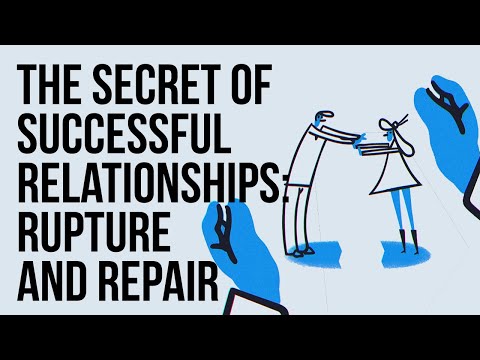
Every Parent Breaks Trust. Then What?
The School of Life frames relational trouble as rupture and repair, a psychotherapy commonplace. Dartmouth’s Holly Gaspar names secure attachment as the child’s primary need: safety, nurture, care. Winnicott’s developmental work and the Internal Family Systems model add context: early care and non-pathologizing self-understanding shape repair. The dossier keeps these claims close to the speakers’ own words and separates clinical principle from platform commentary.

The Sentence That Saves a Hard Conversation
Alisa Cohn starts with the promotion review sentence. Esther Perel and Tim Ferriss examine openings and repeated fights. Eric Weinstein points to unmapped conversational paths; a boundaries expert tells a blunt personal story; Katherine May borrows water for fluidity. Minei's 2024 work indexes difficult conversations and colleagues, boundary advice dates to the mid-1980s, and emotional dumping gained a name in the 2020s.

Your Gut Is a Bad Statistician
Bayes theorem gives a rule for inverting conditional probabilities, and the speakers treat it as practical belief updating. 3Blue1Brown anchors the idea in Kahneman and Tversky; Steven Pinker calls for calibrated confidence; Yale and MIT frame priors, evidence, and strategic equilibrium. Armstrong's 2023 study documents deviations in younger and older adults, while coding and statistics segments show the rule moving into classrooms and software.

Why the Closer You Get, the Faster They Run: The Anxious-Avoidant Trap
The School of Life frames anxious-avoidant love as a common arrangement rather than a rare mismatch. Across the acts, therapists describe pursuit, withdrawal, and suspense as learned patterns; attachment research tracks how these blueprints shape adult relationship satisfaction. The written record adds breadcrumbing and attachment categories, while the cycle itself remains a practical problem of predictable signals and unmet needs.

The 5-to-1 Rule That Decides If Love Survives
The Gottmans present a five-to-one positive-to-negative interaction ratio as a clinical divider between happy and divorced couples. Commentary repeats the number as a magic ratio, while Vern Dercksen separates knowledge from action. The SAGE entry on Gottman Method Couples Therapy and Carstensen's age and emotion work place the claim inside treatment and lifespan context; the question is what the number retains after it travels.

Stop Asking Love to Make You Feel Safe
Dr. Becky Kennedy treats attachment as a relationship pattern, not a parenting camp. Veronika Mark describes anxious attachment as chronic fear of abandonment and says security can be rebuilt. Code Your English, NYU Langone, and Dr. Scott Eilers add practical contrasts: attachment asks security from others, coping must start before boiling, and security sits on a behavioral spectrum rather than a binary label.

The First Need: Why a Child's Safety Echoes for Life
Holly Gaspar puts secure attachment first: safety, nurture, care. Yale's lecture then widens the frame to parental care, neglect, and conflict, while Harvard Law tracks pushback on child labor and the UN counts children released from armed conflict. Parental alienation and child abuse definitions sharpen the stakes: manipulation or maltreatment can sever the bond Gaspar describes.

The Emotional Bank Account: What Money Withdraws From a Marriage
The speakers talk about bank accounts literally: frozen joint funds, 99 cents, overdrafts, creditor locks. The written record adds Covey's metaphor of trust deposits and McBath's comparison of Covey with Freire's banking model. Together they show marriage as a place where legal, financial, and emotional accounts are debited by the same conflicts.

Loved but Never Sure: Inside the Anxious Attachment Loop
Across six clips, anxious attachment appears less as a diagnosis than as a rehearsal: the mind anticipates rejection, then recruits logic to explain away fear. The speakers show rumination in text threads, trauma bonds, and self-worth math, while anxiety research and attachment studies give the pattern a wider frame. Neuroscience enters obliquely, as threat anticipation and self-monitoring, but the lived detail remains the text message.

Why Some People Run From Love: Inside Avoidant Attachment
The School of Life frames fear of intimacy as a puzzle. Call Her Daddy, Therapy in a Nutshell, Young and Profiting, Francesca Psychology, and Sprouts describe avoidance as learned protection, often paired with anxious pursuit. Linda Cundy's 2018 academic work on attachment and defence against intimacy supports the clinical view: withdrawal regulates closeness, while adult attachment research tracks how these strategies persist and can change.
Why Love Sometimes Feels Like a Trap: Attachment Theory Grows Up
The dossier follows attachment theory from nursery observations to adult romance. A Yale lecture describes long child studies; a psychology explainer credits Hazan and Shaver with extending the frame; BBC and interview clips show public arguments about anxious and avoidant behavior. Hazan's indexed papers on relationship loss and attachment inquiry anchor the adult claim.
Can You Earn a Secure Attachment After a Wounded Childhood?
Holly Gaspar defines secure attachment as a child's first need: safety, nurture, care. Commentary clips turn the term into a goal, a style, and a stepping stone, while the literature separates adult attachment theory from discredited attachment therapy. Earned security appears in trauma treatment research, but the spoken excerpts rarely name the clinical work required.
Your Feelings Are Lying: What Couples Therapy Really Fixes
Emotionally focused therapy treats couples conflict as an attachment problem, not a debate to win. The School of Life notes therapy forces private matters into a room with a trained stranger; WIRED, Call Her Daddy, and parody clips test how easily that work becomes a joke. Guillory's DOI-indexed work and Hacker News discussion place the method in a longer conversation about love and repair.

The Texting Trap: Why Modern Dating Makes Us Anxious
Texting is now the default channel for meeting, flirting, and deciding whether to meet again. The speakers disagree about its costs: some treat texting as a relief from phone anxiety, while others describe app pressure, avoidance, and emotional detachment. Research on social anxiety and media affordances helps explain why the same message can feel efficient to one dater and corrosive to another.

Blurry Love, Racing Mind: The Situationship Anxiety Gap
Margaret Clark describes emotion and relationship research as largely separate, while Christina Aaliyah and podcast hosts describe situationships as a common source of confusion. Chen's 2020 anxiety study links ambiguity to negative affect, and Christensen's 2026 sociology review tracks ambiguous young adult relationships. The dossier asks how unclear romantic terms shape anxiety and what evidence can actually explain.

The Role You Play in Love: Attachment Styles, Decoded
Kegley notes that people take on a relationship role; Baum traces repeated patterns to attachment wounds; Gibson places styles on a continuum; and Young and Profiting extends attachment language to teams. Clinical references distinguish adult attachment theory from attachment disorder while grounding the Strange Situation in early caregiving.

You're Not a Monster: When OCD Turns Love Into Fear
A BBC speaker describes intrusive thoughts as evidence of insanity and disconnection. Therapy in a Nutshell separates intention from distress, Psych2Go shows an uninvited sexual thought on a bus, and comedy clips treat the phrase as impulse. ROCD literature centers partner-focused obsessions and compulsions, while Lewton's adolescent OCD work maps depressive and claustrum positions; the result is a gap between comic shorthand and clinical specificity.

John Gottman's Four Horsemen and Divorce
The phrase four horsemen travels through apocalypse talk, wrestling feuds, military lore, protest coverage, biblical history, and ETF marketing. Against that noise, Gottman's clinical four are specific: criticism, contempt, defensiveness, and stonewalling. The Cascade Model of Relational Dissolution treats these as negative behaviors that can erode relationships, while stonewalling names a refusal to communicate or cooperate. The speakers' uses are mostly metaphorical; the research is diagnostic.

Why Danger Feels Like Love: Trauma Bonding and the Brain
Therapy in a Nutshell describes borrowed regulation becoming internalized. Barrett explains why brains overpredict threat. Doty and the Harvard trauma expert link attachment injury to bonding problems, while Savannah Chrisley asks how partners can discuss trauma without trauma bonding. Attachment theory and CPTSD research supply the frame, but the speakers disagree on where repair begins. The clips pair clinical mechanisms with public confusion about the term.

Gottman Built a House for Love. These Six Clips Test It.
The dossier juxtaposes John Gottman's Sound Relationship House with clips that use relationship in data modeling, AI policy, and reality television. Gottman's clinical framework names trust, commitment, and maintenance; the speakers show how loosely the word travels. The gap is editorial, not accidental: context determines whether relationship means intimacy, schema, or spectacle. The speakers rarely address couples directly, yet their word choices show how a clinical term becomes technical shorthand.
Why Calm Feels Wrong: Disorganized Attachment and the Nervous System That Learned Chaos
Across six clips, disorganized attachment appears less as a label than as a survival pattern: fear without a stable strategy, guilt after leaving, and guarded distance. Therapy in a Nutshell describes borrowed regulation and rewiring; Dr. Josh Axe names the disorganized outcome; Mighty Pursuit links meshment to parental trauma. Liotti and Gumley connect disorganized attachment, dissociation, and mentalization in psychosis research.

The Apology You Never Learned: Why Some Relationships Never Heal
Apology is a practical repair mechanism. Chapman names apology languages; Burchard warns against character assassination; BBC segments test repair across royal and presidential ties. Cohen grounds apology in moral repair, while Sinha compares denial, apology, and promise. The dossier asks what each speaker thinks repair requires and where accountability remains unresolved.

Narcissism Has Two Faces. The Internet Sees One
Keith Campbell separates grandiosity from vulnerability. Ramani and Ager show diagnosis becoming public argument, while Therapy in a Nutshell describes reassurance seeking and codependency after trauma. Pincus and the narcissism literature keep both grandiosity and vulnerability in view, so the dossier asks how clinical language becomes moral judgment and how relationship patterns form around harm.

The Repair We Avoid: Why Conflict Gets Dodged and Love Goes Unfixed
Keith Rucker repairs a Monarch lathe clamp while Rinoa describes a first repair and shipping and electronics channels troubleshoot hardware. Clark Kegley then names avoidant self-reliance as a conflict pattern. Attachment theory, O'Donnell's couple study, Shirvani's conflict research, and couples therapy give the relational stakes: repair of broken bonds in couples requires careful diagnosing of emotion, conflict, and dependency, not only replacing parts.

Married, Still Lonely: Six Scenes From an Unequal Institution
Across six clips, marriage appears as both a promised cure for loneliness and a site where it persists. A Mormon makeover clip says surgery cannot fix unequal marriage; fertility and Ben Shapiro debates treat marriage as loneliness policy; porn and a dark Hollywood drama show avoidance and isolation inside couples. Peer-reviewed work on communication apprehension confirms that marital loneliness is relational, not merely demographic.

The Relationship House Has Six Strange Rooms
Julie Schwartz Gottman and John Gottman co-founded The Gottman Institute, whose clinical model is called the Sound Relationship House. The six clips never define that model. They show 'relationship' doing public work: a White House exit, a family confessional, a psychic reading, a press threat, film sound, and dance music. The dossier keeps the clinical reference in view while letting each speaker's context clash.