Curated Sub-Topic Tag
#Anxiety & Stress
Verified primary-voice documentaries on Anxiety & Stress, or enter a sharper question below to cut a new film live from 200M+ spoken records.

Willpower Isn't a Muscle: The Tiny Habits and Private Excuses That Decide If You Cave
Sylvia Tara presents self-control as trainable through small behavioral drills. Mike and Matty trace self-sabotage to beliefs formed inside a personal bubble. Mark Manson calls self-control an illusion, while Kentaro Fujita asks people to examine purpose and context. The written record adds locus of control, ego depletion, and habit research, leaving a practical question: which beliefs and routines actually change conduct?

Introverted, Not Broken: The Label That Changes How People See You
The dossier separates social anxiety disorder from introversion, then tests the difference against practical advice about attention, trust, and self-questioning. Janowsky's 2000 clinical sample found introversion over represented among social phobia patients, but the speakers show why a trait and a disorder should not be merged. Their voices also expose a policy edge: anxiety language can travel from therapy into policing.

Three Hours a Night and a Mattress in the Office
The clips set founder intensity beside health advice and small experiments. Y Combinator notes PhD founders built Google and Anthropic, while Nico Laqua says Corgi has no place for weekend takers. Bryan Johnson argues health and success can align; Maor Shlomo describes stepping back from building the biggest thing. Thrive Global and Nataly Kogan frame recovery as behavior change and emotional fitness, not indulgence.
The Market Panic That Outgrew Warren Buffett
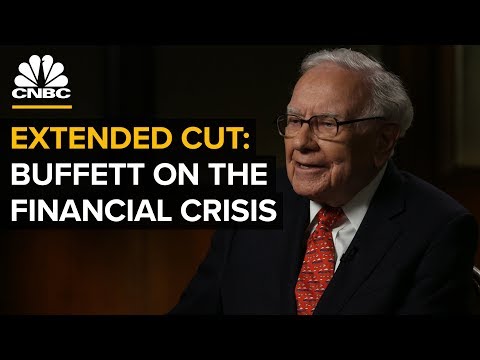
The CNBC clip gives Buffett's own metaphor for crisis: many tributaries feed the Missouri River. Bloomberg turns him into a Hall of Fame figure, while Founders and Tracy Britt Cool show the biography and school applications behind the legend. Tim Ferriss warns that one era's success may not fit this era. Graham, 2008 crisis histories, and Buffett indicator research supply the written frame.

Trust Is Built in Inches, Not Grand Gestures
The dossier tests a plain claim: trust grows when small commitments are made visible and kept. Tim Ferriss points to costly candor; Fareed Mosavat insists on real products, customers, and data. Around them, a language lesson, a hackathon welcome, an agentic commerce demo, and an intimacy clip show how promises become credible only when someone bears a cost or risk.

The Meaningful Work Trap: Why Saving the World Can Burn You Out
Meaningful work draws people toward nonprofits, yet the same mission can consume them. Jenny Santi hears weekly requests from would-be nonprofit workers; a former lawyer documents quitting; Cal Newport rebuilds summer around deep work. Compassion fatigue research and happiness at work studies show mission alone does not protect workers. Recovery requires structure, limits, and honest measurement.

The Step Is Too Big: Why Warnings Don't Change Us
Fear appeal is a familiar strategy for motivating action, yet the spoken material keeps returning to support, timing, and belief. Nichol Bradford cites distance from loved ones and limits of imagination; Lori Gottlieb and Andrew Huberman ask about subtle changes; Alan Cowden works on parenting without yelling. Tom Scott urges skepticism about language claims, Astghik Atanyan describes not perceiving a chronic diagnosis, and behavior change methods are framed as theory-based techniques.

Your Ex, Your Feed, and the Scoreboard in Your Head
The dossier follows six speakers through social media bans, public quitting, childhood reassurance, and Kahneman's remembering self. Their words show breakup stalking as a habit built from ordinary platforms: a search for proof, status, or relief. The evidence does not settle whether bans or exits help; it clarifies the loop of checking, comparing, and rehearsing a lost relationship.
Stop Taking It Personally: The Strange Practice of Calm
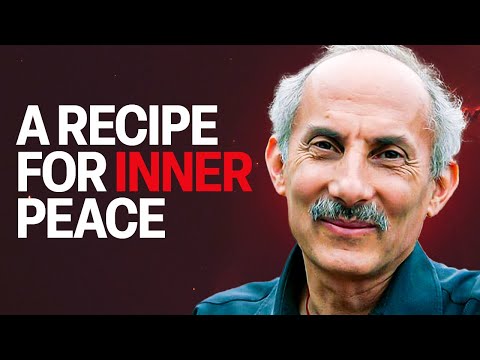
Seneca's dialogue with Serenus treats anxiety as a practical problem of judgment, friendship, and daily habit. The recorded voices extend that frame: Kornfield urges less personal grievance, Kagge finds perspective in walking and looking up, while Glebova and Takai test identity and control. Modern references on death anxiety and the inner critic show why calm requires both philosophical argument and repeated practice.

The Truth Disappears When Everyone Is Afraid to Speak
The dossier follows three primary voices: Scott Atlas on public health dissent, Rich Roll on postoperative starting over, and Saket Soni on disaster workers. Commentary from Harvey survivors, a wrestling clip dispute, and Vermont flood housing debates broadens the frame. Written references on religious trauma syndrome and trauma-informed teaching show that betrayal rarely ends with apology; trust returns through repeated, observable action.

The Adult Friendship Crisis Nobody Warns You About
Kim Foster compares adult friendship-making to dating, and Hank Green says it is extremely hard once school ties end. TED-Ed notes that friendships improve health and help people handle setbacks, while child-development research shows early relationships shape beliefs and values. Verified notes on cross-sex friendship and identical twins suggest context, proximity, and shared history matter as much as intention.

The Mind Is a Confident Liar
Kahneman and Amos Tversky mapped cognitive biases as systematic shortcuts in judgment, and the speakers here show those shortcuts moving through daily life. Tali Sharot asks viewers to imagine their future; a psychic reading illustrates subjective validation; mental-health commentary names overthinking. The documented research on heuristics and uncertainty anchors these examples, while Lex Fridman and The Knowledge Project frame biases as central to Kahneman's public account.

Who Sold You Purpose? Inside Japan's Meaning Industry
Ikigai arrives in the dossier as tradition, marketing, policy language, and personal practice. YaleCourses supplies the historical claim; Craig Mod supplies the walking method; Felix Prehn, Fact Quickie, The Straits Times, and Kings and Generals show purpose attached to debt, useless gadgets, diplomacy, and war. Logotherapy and organizational research sharpen the question: meaning can guide work, but institutions can also repackage it until burnout remains.

When the Body Freezes: Hidden States and the Clues We Miss
The dossier centers on Therapy in a Nutshell's polyvagal ladder: three nervous system states offered as practical tools for freeze and burnout. Around that clinical claim sit Porges's vagal paradox, vagal tone measurement, and the vagal brake. The quantum, string, and critical race theory clips are not evidence for polyvagal theory; they show how states and theory travel across very different classrooms.
Your Moral Certainty Rides an Elephant
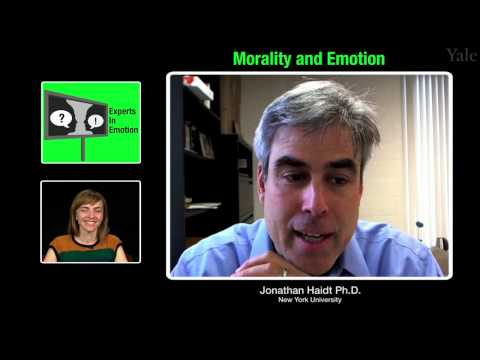
In The Righteous Mind and in these interviews, Jonathan Haidt treats moral judgment as fast intuition first and slow reasoning afterward. The rider and elephant image gives that split a working vocabulary. Tim Ferriss and Haidt connect moral homogeneity to political friction, while commentary clips show intuition used as both evidence and objection. The dossier follows Haidt's claims, the book's argument, and the academic work on moral dumbfounding and ideology.

When the Alarm Goes Off: Panic, Fear, and False Signals
Health commentary draws a line between panic attacks and anxiety attacks. Aviation and public-affairs clips show stress responses surfacing inside technical systems and ordinary conversation. The written record names the same physiology: acute stress, hyperarousal, and panic as a sudden fear that can overwhelm logical thinking. The dossier keeps those voices distinct and lets the evidence sit beside them.

The Octopus on MDMA: What a Distributed Mind Can Teach Us
Gül Dölen's octopus MDMA experiment opens a practical question: what changes when a nervous system is spread across a body? Popular science channels treat skin control and innate body signals as signs of intelligence. Academic work on Octopus tetricus, arm ultrastructure, and central integration keeps the claim precise: distributed does not mean divorced from central control.

Breakups Don't Break You: Your Self-Concept Does
The inquiry asks how to recover from a breakup, but the spoken record splits between intimate loss and operational recovery. HealthyGamerGG identifies a core mechanism; Huberman's clip shows recovery as preparation and aftercare; AI and travel segments expose outsourcing, accountability, and baseline data. The dossier keeps those voices distinct rather than forcing a single remedy.

The Finish Line Is a Mirage: Why Goals Can Leave You Empty
Goal setting theory says specific, challenging goals with action plans improve performance, and Edwin Locke's research explains why. The speakers show the costs: underestimating effort, chasing impractical sums, losing motivation, and feeling empty after achievement. Adam Alter's hamster wheel and Rose Han's million dollar target make the theory concrete. Udacity's warning about discouragement and Bullet Journal's question about emptiness sit beside the academic claim.

Why Small Stress Feels Unbearable: The Window Trauma Shrinks
Tiffany Steinwert frames pandemic fatigue as chronic stress, while therapy channels describe the window of tolerance as the range where arousal can be managed. The speakers disagree on method: somatic rituals, calming techniques, early exit, and widened coping skills. Psychotraumatology literature and indexed work on the window give the term clinical provenance without settling how it is taught.

The Perfect Sleep Score Is Keeping You Awake
BBC reporting gives the condition a name: orthosomnia, where tracker data outranks lived experience. Tim Ferriss opens with kava and supplements, Tamsen Fadal asks Dr. Chris Winter how sleep works when life interferes, and a hormone discussion drifts into FSH and egg maturation. The written record links wrist trackers, insomnia, and a new scale for measuring the problem.

PMDD Is Not Just PMS: How Hormones Rewire the Brain
PMDD sits where reproductive hormones, stress physiology, and brain networks meet. Kotler and Bach describe how imaging and representation reveal circuits; Berridge and FoundMyFitness point to reward, inflammation, and consciousness. The clinical evidence adds progesterone receptor modulation and HPA axis dysregulation across the reproductive lifecycle, leaving diagnosis and mechanism partly unsettled.

Married and Lonely: The Quiet Quitting Nobody Sees
Loneliness is a public-health statistic and a private habit between partners. Murthy's pandemic framing and Waldinger's data on declining social rituals establish the broader pattern. The marriage conversation turns on Oprah's claim that people quietly quit emotional disconnection, while midlife and attachment commentary show how withdrawal hardens into distance.

Why Panic Comes Back: What Makes Therapy Stick
CBT and ACT are often packaged as rival answers to anxiety, but the spoken material keeps returning to practical questions: what stops a panic attack, what happens after medication stops, and which therapy helps social anxiety. CBT supplies prediction testing and symptom tools. ACT enters as a comparator, while clinicians warn that anxiety itself may not disappear.

Afraid of Death? Epicurus Has a Strange Cure
The speakers treat death anxiety as a practical problem, not only a metaphysical one about oblivion. Scott Eilers names thanatophobia; Lex Fridman highlights its unsavory reactions; Epicurean commentary urges friendship and managed desire. Mitsis and Voorhoeve clarify Epicurus's claim that death is nothing to us, while the historical death scene tests whether pleasure and calm can survive the fear.

Kierkegaard's Dizziness of Freedom: Why More Choices Make You Anxious
Kierkegaard wrote under pseudonyms and left 22 books, though three still carry his name into general reading. Mark Manson reports that Kierkegaard's anxiety worsened over his life and that he called it the dizziness of freedom. Ted Chiang borrowed the phrase for a novella, while recent academic work examines it through Kierkegaard and Sartre.

Solitude Can Be a Sanctuary. Loneliness Is a Trap.
The speakers converge on a practical distinction: loneliness is involuntary isolation that hurts, while solitude can be chosen and restorative. TopHealth and Psyphos frame the split directly; Bloom and Chakraborty show how technology and attention intrude. Academic work on loneliness and solitude in education supports treating the terms as separate conditions with different outcomes. The dossier keeps the speakers' own words ahead of the synthesis.

The Marshmallow Test Was Never About Willpower
SciShow Psych says the challenge is 'probably not measuring willpower after all.' The original 1970 study used 32 children; later replication commentary asks how to read smaller effects once controls and larger samples enter. Popular memory treats a brief delay task as a life forecast, yet the written record is narrower, and the other clips stretch 'test' across urine screening, AI pilot trials, tool torture, and IELTS prep.

You Wouldn't Have Left the Cult Either: How the Mind Rewrites What It Did
Festinger's 1957 theory and 1962 Scientific American essay define dissonance as conflicting cognitions, and the clips show the term traveling from Schopenhauer commentary to Peterson, Saad, Cuban, and Franklin-effect explainers. The speakers agree that self-justification is a motivator; they diverge on whether awareness cures it or simply gives it a sharper vocabulary. The written sources keep the mechanism precise.

The Grief That Stays: Why We Don't Just Move On
Continuing bonds theory reframes grief as an ongoing relationship, not a clean break. UCTV describes a constant tug of war and reconnection with others; Dr Chloe Paidoussis says shared family grief deepens bonds. The literature supports lasting connection as common, while three excerpts apply bonds and continuing to poker, computer memory, and project work, not bereavement.
Yalom's Warning: The Fear of Death Is Shrinking Your Life
Yalom's Existential Psychotherapy treats death as one of four core givens, not a side symptom of pathology. The selected clips show death anxiety as ordinary fear, unsavory reaction, religious hunger, and unlabeled existential unrest. The written record supplies the clinical term thanatophobia while speakers trace how mortality fears enter medication, spiritual seeking, and daily coping.

The Texting Trap: Why Modern Dating Makes Us Anxious
Texting is now the default channel for meeting, flirting, and deciding whether to meet again. The speakers disagree about its costs: some treat texting as a relief from phone anxiety, while others describe app pressure, avoidance, and emotional detachment. Research on social anxiety and media affordances helps explain why the same message can feel efficient to one dater and corrosive to another.

Blurry Love, Racing Mind: The Situationship Anxiety Gap
Margaret Clark describes emotion and relationship research as largely separate, while Christina Aaliyah and podcast hosts describe situationships as a common source of confusion. Chen's 2020 anxiety study links ambiguity to negative affect, and Christensen's 2026 sociology review tracks ambiguous young adult relationships. The dossier asks how unclear romantic terms shape anxiety and what evidence can actually explain.

The Confidence You Can Actually Build
Bandura's self-efficacy theory treats belief in capacity as a mechanism. Mark Manson calls it coping self-efficacy; Knowspire traces the psychology; MIT describes training designs. The written record confirms Bandura's 1997 book and 2014 papers, while Stedman Graham and Evan Carmichael translate mastery into self-leadership and stored victories.

The Conversation You Can't Stop Replaying
The dossier listens for the gap between anticipatory worry and post-event replay. One speaker describes days of pre-event dread; another describes a shift toward going with the flow. Psychological literature defines rumination as sustained repetition of negative thoughts, while the remaining acts show public events where panic is managed or shattered by violence. That contrast matters for anyone who replays a social failure.

Afraid of Fear Itself: How Avoidance Shrinks Your World
The clips treat panic as comedy, breaking news, celebrity anecdote, and emergency call. Read together, they show a common sequence: sudden fear, then withdrawal from places that seem unsafe. Thyer's 1985 work on panic onset and phobic avoidance gives the clinical spine, while definitions of agoraphobia explain why escape routes matter, and the speakers' words keep those terms grounded in ordinary rooms, trains, workplaces, and live television.

What Actually Pulls You Out of Burnout?
The clips do not agree on a single recovery method. A lawyer describes recalibration after quitting; a coach talks about agency; learning and dream-work tapes offer broad steps. The written record is firmer: Siber's ACT and CFT model, Kendrick's four teacher-recovery steps, and nursing's health-protection language treat burnout recovery as structured care rather than a mood, while Twerski's psychiatry supplies clinical context.

Trust Isn't Built by Grand Gestures. It's Built by Tiny Kept Promises
These six acts converge on a practical claim: trust grows through predictable behavior, not dramatic reassurance. Psych2Go names the mechanics: reply when you said you would, keep small promises. The speakers extend that logic to self-trust, where microscopic commitments rebuild confidence. A Couple of Cuckoos stages arranged intimacy as negotiated promises; Consuelo Vanderbilt's marriage shows public vows can outrun private trust.

Self-Efficacy: The Belief That Can Save You or Make You Dangerous
Albert Bandura defined self-efficacy as belief in one's capacity to act toward specific goals. The speakers circle that idea through social attention, blood donation, life memory, hero narratives, self-esteem, and anxiety. The references place Bandura at Stanford and trace the concept into psychobiology and bibliometric review, while the dossier keeps the speakers' words central and tests where belief meets circumstance.

The Burnout Trap: Why You Go Numb at Work
The speakers describe burnout through ordinary scenes: homework stared at, heart palpitations, empathy worn thin, parental fatigue. WHO frames occupational burnout as chronic workplace stress that has not been managed; the Maslach inventory divides symptoms into exhaustion, depersonalization, and reduced accomplishment. Emergency nurses and Graham Walker show how those dimensions appear in high-pressure clinical work. The result is a portrait of stress that changes behavior, feeling, and work.
Panic Has a Physiology: Can HRV Biofeedback Teach Your Body to Calm Down?
HRV biofeedback promises clearer thinking under pressure by training awareness of bodily signals. The speakers describe panic as sweating, trembling, numbness, nausea, and memory loss, while Robbie and Inna Khazan frame HRV training as a performance tool. The evidence is narrower: one study found single-session training changed neural activity without reducing subjective anxiety, and another tested musicians. The gap between physiological control and felt relief is the story.

The Scandal Test: Who Deserves Your Trust?
The dossier tracks trust as the hinge between parasocial contact and influence. Speakers describe audience bonds with creators, negotiator listening, persistent identity systems, and institutional credibility; researchers define parasocial interaction as illusory intimacy and show scandal can fracture it. The practical throughline: trust is earned through consistency, converted into influence, and exposed when inconsistencies surface. That arc explains both durable persuasion and rapid reputational collapse.

The Third Friend Problem: Jealousy Nobody Wants to Admit
The clips treat jealousy as a social fact rather than a private flaw. A brunch guest cannot read the room; a drama asks who will change the friendship; commentators ask whether men or women own the problem. Christine Kieffer's work on adolescent girls, plus definitions of love triangles and romantic friendship, shows how third parties expose rank, intimacy, and exclusion.

Your Body Is Not Betraying You: How Exposure Rewires Panic
In these clips, clinicians describe exposure as a structured way to meet feared physical sensations. Research defines interoceptive exposure as exercises that deliberately bring on panic-like sensations. Evidence compares it with cognitive therapy and tests brief intense exercise as a delivery method. The task is to stay with the body's alarm long enough to learn something new.

Your Anxious Mind Is a Storyteller: How to Stop Believing Every Word
The clips mix CBT's reframing, ACT's defusion, yoga, and safety cues as anxiety tools. Peer-reviewed work ties defusion to body-image anxiety and psychological inflexibility, while ACT and CBT-I show broader evidence. The speakers keep technique and context separate: method matters, but dosage and setting decide what helps.