Curated Sub-Topic Tag
#Habits & Resilience
Verified primary-voice documentaries on Habits & Resilience, or enter a sharper question below to cut a new film live from 200M+ spoken records.

You Don't Need More Willpower: The 2-Minute Rule That Rewires Your Identity
These interviews show James Clear working from mechanics to meaning. Tim Ferriss asks about annual reviews, the Knowledge Project isolates the two-minute rule, and ZOE stresses obvious cues. Commentary clips add reward cautions and a brain myth. Identity formation research supports Clear's broader claim that repeated actions become self-definition, though the fragments also reveal how easily complex habit advice turns into slogans.

Grit Isn't Enough: Why Your Surroundings Decide Your Success
Angela Duckworth's grit research pairs perseverance with passion for long-term goals, but these excerpts keep returning to situation. A Finding Mastery clip notes a post-2010 happiness shift; Matt Abrahams says changing the situation can beat persevering; Duckworth points to Philadelphia's running clubs and calls virtue and success situational. Her book and the psychological definition agree that grit is real, while the speakers question when resolve becomes a trap.

Your Phone Is a Dopamine Slot Machine
Across six excerpts, Lembke and Huberman describe dopamine as a basic learning and motivation chemical; Kotler and Brooks trace how on-demand media and phones can pull attention into compulsive loops. Raza proposes curiosity as a practical exit, while Yousef challenges screen-time myths. Peer-reviewed work on behavioral and mobile phone addiction supports treating these habits as real, measurable patterns rather than private failures.

The Confidence to Start From Zero
Late career change is less a single decision than a negotiation with status, skill, and narrative. The School of Life names the party-talk shame of beginning near zero; Bryan Cranston counters with earned confidence and valuing talent. Career counseling research treats such transitions as story work, while career-error scholarship warns that mishandled change late in a career carries distinct costs.

Ship It, Then Figure It Out: Paul Graham's Startup Rule
The dossier follows Paul Graham's advice as it travels through Y Combinator: Garry Tan credits Graham for a shipping culture, Naval Ravikant describes habit-building as effort reduction, and Graham's own Turing test aside shows how founder lore mixes with AI ambition. The written record adds scale and caution, not a verdict. It asks which advice changes behavior and which merely selects founders already primed to ship.

You Got the Promotion. So Why Do You Feel Like a Fraud?
The speakers treat imposter feelings as an occupational weather system: strivers want a bite of life, product people swim in opinions, and a newly promoted developer audits every meeting. Uslu and Addison frame the experience through psychology and institutional learning. Practical tips arrive after fear has been named, which keeps the remedy tethered to lived experience at work.

Why Stoics Drink Water but Never Refuse Wine
Pigliucci places assent inside a broader Stoic curriculum: logic, ethics, and daily practice. Irvine and other speakers describe a philosophy that tells people what to do, not just what to think. The written record agrees that Stoicism began as a practical guide to eudaimonia and moral improvement, yet the excerpts show how easily practical discipline can slide into self-help shorthand.
You Can't Delete a Bad Habit. You Can Rewire It.
Charles Duhigg describes habit as cue, routine, reward, then insists the neural pattern never fully disappears. Commentary clips repeat the loop as a simple formula; Duhigg adds the harder point: change the routine while keeping the cue and reward. The Power of Habit supplies the same framework, with relapse as a design problem rather than a moral failure.

You Become What You Repeatedly Do
YaleCourses states the central claim plainly: virtue is cultivated by cultivating habits. Philosophy Vibe connects that practice to a thing's telos, while Alex O'Connor asks what a virtuous person is and Philosophies for Life lists vices on either side of the mean. The Nicomachean Ethics and contemporary virtue ethics scholarship frame these spoken excerpts as a working account of character, not a rulebook.

The Tiny Shifts That Rewire Your Life
Epley describes a fundamental social paradox: people need contact but often avoid it. The other acts turn that claim into practical advice about journaling, active recall, nine-minute routines, and leaving medicine. Developmental psychology and research on habit suggest transitions interrupt cues, so rebuilding behavior requires deliberate testing rather than passive rereading or private resolve.

The 66-Day Habit Myth: Why Motivation Fades Before Routine Sticks
The dossier follows speakers describing habit formation in practical terms: first-week urgency, convenience, progressive testing, and individual variation. Doctor Alex supplies the clearest transition claim, while Bryan Johnson and Chatterjee emphasize principles over one fixed schedule. Written references define habits as repeated routines and bad habits as negative patterns, leaving the popular 66-day figure as a question to test rather than a settled fact.

Read It Out Loud: The Habit Dyslexia Apps and Good Writers Share
Six short clips treat reading aloud as a practical tool, not a performance. Jennifer uses easy stories for grammar; YaleCourses lists assistive software; IELTS and motivation channels turn aloud reading into fluency drills. Francine Prose asks writing students to hear convoluted sentences. The references on prose, free verse, intonation, and Layne's read-aloud defense support this ordinary instruction.

You're Not Lazy: How Friction Designs Your Habits
Wendy Wood puts friction at the center of repetition: distance, time, and effort decide what returns. Commentary creators translate that into redesign advice, from reducing good-habit friction to setting friction against sabotage habits. BJ Fogg's persuasive computing and emotion work supply the design lineage: behavior is shaped by environments and prompts, not willpower alone.
But I Wore the Juice: Why Confidence Is Not Competence
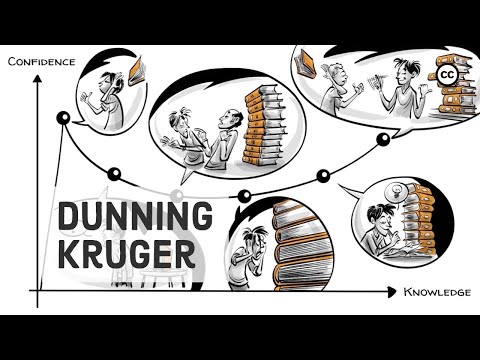
The Dunning-Kruger effect is not simple stupidity. Sprouts shows Arthur's lemon juice certainty, Tim Corey finds developers rebuilding trains, Be Smart puts a nonpilot at a 737's controls, and Apex Psychology asks for critics. The literature calls this miscalibration and illusory superiority; the spoken examples show confidence outrunning competence until feedback interrupts it. Metacognition is the missing gauge.

Your Morning Coffee Is Quietly Deciding Your Net Worth
The clips share a premise: small routines compound. Rose Han says consistency beats overnight risk; Smart Money Bro rejects 5 a.m. mythology; Kim Foster describes magnetism as effortlessness. Fogg's Design for Emotion and 1998 persuasive computing paper shift the question from aspiration to mechanism: anchor, ability, prompt, celebration, and measurable follow-through. The popular clips sell outcomes; the literature specifies design conditions and evaluation.

Never Miss Twice: The Habit Rule That Rebuilds Your Identity
The clips converge on a practical recovery rule: one lapse is information, two in a row becomes a pattern. Mike and Matty stress identity-based habits; Professor G turns Monday into a restart ritual; Travis Media treats developer practice as career infrastructure. The written record offers only oblique support, from near-miss auditing to Poirot's recurring cases, so the rule remains a working heuristic, not a lab finding.

The Tao of Enough: What Water Knows That the Boardroom Forgot
The dossier sets Lao Tzu's water image beside corporate water-risk language. COP31 and BCG treat water as a shared system, while Chatterjee and Watts show the Tao Te Ching operating as personal and political correction. The written references clarify water's material facts and De's ethical charge, leaving a real public tension between collective resilience, individual practice, and the text's caution against command.

Willpower Is Overrated: Design the Environment Instead
Across five commentary clips, the same instruction recurs: design the environment so unwanted habits require more friction and desired ones need less. James Clear supplies the rule, while Evan Carmichael and Kim Foster describe the relief of fewer daily decisions. Academic work on environmental design and habitation gives the idea a longer design history, though the clips rarely test it or measure it.

The Streak Is Broken. The Habit Isn't.
LeBron's broken streak frames the problem: a record can end while the work continues. A language learner credits one daily habit; a Kaizen explainer warns that perfection turns one missed day into quitting; Mr. Hayes sees big dreams beside broken routines. Beth Azar's 1995 PsycEXTRA entry calls prejudice a habit that can be broken, reinforcing that habits are learned patterns, not verdicts.