Curated Sub-Topic Tag
#Muscle & Strength
Verified primary-voice documentaries on Muscle & Strength, or enter a sharper question below to cut a new film live from 200M+ spoken records.
The Muscle Rules That Decide How You Age
Across these interviews, Andy Galpin treats muscle fiber training as practical biology: heavy, difficult work recruits fibers, fasted exercise can be tolerated, and strength protects ordinary movement. Radák's fiber-type physiology and Kupchak's flight-plus-workout damage data frame the claims. The speakers disagree less about biology than about how much mileage ordinary trainees can safely extract from it.

Protein After 50: How Much Actually Builds Muscle?
Alan Aragon and Andy Galpin frame protein dosing as a practical question, while FoundMyFitness and Gabrielle Lyon tie muscle protein synthesis to metabolism and aging. Jeremy Ethier's whole egg comparison and the 2009 exercise review show that food form and training context matter. The literature on atrophy and mechanosensitivity adds a warning: aging changes the muscle's response as well as the recommended number.

Why Endurance Athletes Need to Lift Heavy
The dossier follows strength work into endurance sport without promising a single formula. Ross Edgley and Nick Bare describe heavy, technical sessions, while Andrew Huberman, Andy Galpin, Peter Attia, and Christopher Sommer frame strength as a practice to test and revise. Verified reviews and trials link maximal strength work to running economy and endurance performance, not merely muscle size.

Plant Protein Builds Muscle, but It Needs a Higher Leucine Dose
Gabrielle Lyon and Andrew Huberman describe meals meeting a 'loosing threshold' for muscle protein synthesis, while Max Lugavere cites 25 grams for younger people. Stuart Phillips and Alan Aragon center leucine and branched-chain amino acids, and Jeremy Ethier notes plant powders often stimulate synthesis less than whey. A 2024 Sports paper shows completely plant-based diets can meet leucine needs when modeled to energy requirements.

Your Bones Are Not Fragile by Default
The dossier follows bone density from clinic language to training floor. Speakers disagree about starting points: Johnson asks about dad bod, Stanford links exercise to glucose and weight, Rehab Science cues full range motion, and Giangregorio asks how exercises are chosen. The LIFTMOR trial and osteopenia definitions clarify that load and impact matter most for people with low bone mass, while vegan and mind-body questions remain narrower.

Your Muscles Are Repairing More Than You Think
Resistance exercise pushes mTORC1 signaling toward hypertrophy, yet the same session can trigger autophagy through stress and oxidative signals. Guido Kroemer names exercise as an autophagy stimulus; Thomas DeLauer points to AMPK and ULK in muscle. High Intensity Health adds circadian timing, TopHealth ties muscle mass to aging systems, and David Hood's mitochondrial work frames exercise as a cellular maintenance signal.

The Protein Bet That Paid Off: AlphaFold and the 50-Year Puzzle
Across these interviews, Demis Hassabis treats AlphaFold as a practical result of long term AI work. The speakers trace data growth, agent research, reasoning limits, and protein structure prediction, while Nature papers document atomic accuracy claims. The dossier separates public framing from published benchmarks, keeping the strongest claims specific and the next questions visible.

Lonely, Not Broken: The Social Skills We Were Never Taught
Dartmouth panelists treat loneliness as a practical attention problem. The School of Life and Vickita Trivedi describe social skill as learned, visible, and often misjudged. Johann Hari ties connection to survival and cooperation. Peer reviewed work on loneliness, peer judgments, and social skills training suggests the stake is access: who can join, who gets read fairly, and what training can actually change.

The Sleep Debt Delusion: What Creatine Can and Cannot Fix
Rhonda Patrick and Andrew Huberman describe mild sleep restriction as a performance problem. Thomas DeLauer cites pharmacology research linking sleep loss to worse mood and cognition, while Arianna Huffington and Andy Galpin connect the deficit to startup culture and late-night schedules. Recent studies test creatine and exercise as partial countermeasures; the evidence still points back to sleep itself.

The Strength That Carries Over
The dossier pairs Tim Ferriss pressing Peter Attia on changed conclusions with Pavel Tsatsouline and Andrew Huberman on variety and plasticity, then tests those claims against consumer fitness advice. Literature on unilateral training and swimming strength work sharpens the question: specificity builds strength, but transfer depends on the task, limb, and sport. The written evidence keeps the focus on measured outcomes.

Protein Timing: What Actually Builds Muscle?
The supplement ranking in Jeremy Ethier's interview sets up a narrower question: how much protein after resistance training, and when? Alan Aragon and Andrew Huberman ask for an across-the-board post-training recommendation; Luc Van Loon notes muscle gain at low intakes and possible gains at higher ones. Peter Attia's lean-mass history and the 2013 timing meta-analysis keep the claim modest: total intake and distribution matter, timing is secondary.

What If Restricting Blood Builds More Muscle?
Sean Farrington frames blood flow through a ketchup metaphor, while Brad Schoenfeld supplies the BFR research: cuffs, light loads, and measured hypertrophy. Clinicians in the acts describe peripheral vascular disease exercises and circulation claims. The evidence supports controlled occlusion as a training method, with pressure, safety, and population limits doing the real work. TopHealth's 2019 dabbling and Norwitz's molecule talk show how broad the circulation conversation becomes.
Your Grip Is a Warning, Not a Workout
Shawn Baker, William Davis, Andrew Huberman, and fitness voices treat grip strength as a practical marker of muscle preservation. The literature is more specific: handgrip thresholds track all-cause, cancer, and cardiovascular mortality, while sarcopenia and strength data in older women sharpen the clinical question. The dossier separates correlation, measurement, and training advice. It keeps the speakers' claims audible while marking the evidence's limits.

Sauna for Your Brain? The Heat Shock Protein Claim
Across five interviews, Huberman, Patrick, Johnson, Ferriss, and Laukkanen describe sauna as a hormetic stressor that activates conserved chaperone proteins. Chatterjee connects that repair language to aging and immunity. The literature on heat shock proteins in brain tumors shows biological relevance, not proof that sauna prevents dementia. The dossier separates mechanism from marketing and keeps clinical caution visible.

The Core Stability Trap: Why Strong Glutes Aren't Enough
Jeremy Ethier frames the glutes as the body's support system, while Stuart McMillan tells Huberman that changing exercises mid-set helps him build core stability. A poll finds the core is where viewers feel weakest, and biomechanics research ties core stability to knee valgus during single-leg landing and to double-peak muscle activation in elite MMA striking. The finance clip is a terminology detour: it uses core to mean accounting fundamentals, not trunk control.
Back Pain Isn't a Broken Back: What Actually Heals It
The dossier follows a practical question: can strength training help chronic low back pain without provoking it? Speakers describe personal recovery, clinical integration, inflammation, Pilates, and interventional care. A 2022 network meta-analysis ranks Pilates, strength, core-based, and mind-body exercise among options; a 2021 JAMA Neurology trial separates motor-skill training from strength and flexibility work. The result is a practical dossier about dosage, tolerance, and clinical context.

The Muscle Gap: Why Strength Decides How You Age
The dossier follows a clinical thread: muscle mass declines from about age 35, and weakness tracks with independence, stroke, Alzheimer's risk, and premature death. Speakers differ in emphasis, from sauna and growth hormone to strength training and mitochondria, while current sarcopenia consensus stresses muscle health and function, not mass alone.

Feedback People Can Hear, Methods That Actually Stick
Michelle Tillis Lederman treats feedback as a delivery problem: the receiver must be able to accept it. MIT's test-time training and control papers broaden the term, showing feedforward adjustments can anticipate error while feedback corrects it. Across swimming, K-pop, pronunciation, and report cards, speakers use training methods differently and rarely share one procedure, so the dossier asks where method ends and feedback begins.

Creatine Helps, But Recovery Does the Heavy Lifting
The speakers treat recovery as a load-bearing part of training, not an afterthought: Candow's conversation frames high running and cycling hours as a context problem, while outside voices name sleep, stress, and scheduled recovery. The literature on nutrient timing and training adaptation supports that framing, though it does not settle how creatine, sleep, and strength work should be sequenced.

You're Not Just Losing Fat, You're Losing Muscle
Jeremy Ethier and The Infographics Show treat muscle retention as a dieting design problem: pick resistance training for strength, not calorie burn, and build the deficit deliberately. Dr. Kevin Joseph and Dr. Eric Berg add the clinical stakes, especially around protein and age. The 2017 Advances in Nutrition review and 2020 Nutrients sarcopenia paper support their emphasis on protein and exercise during weight loss.

The Practice Illusion: Why Fluent Drilling Fails
The docket opens with research under legal pressure, then moves from MIT's research-statement exercise to Aspen's AI panel and a job-interview drill. Faria Sana's 2021 study supports interleaved retrieval for science learning; varied-practice research describes frequent task changes. Blocked practice remains useful for initial accuracy, but the evidence favors mixing once learners can retrieve.
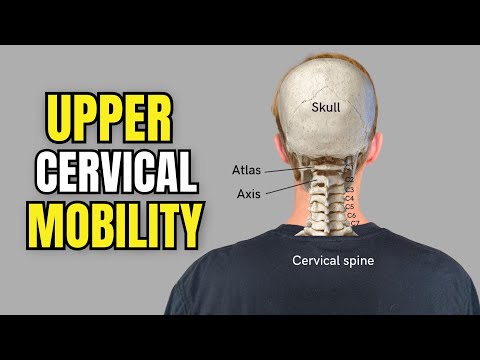
Stiffness Is Trainable: What Your Joints Need Beyond Stretching
Across six clips, neck and shoulder mobility drills meet Keith Baar's account of relaxin lowering tendon and ligament stiffness. Tim Ferriss frames tendon repair through loading, while Pilates and strength coaches sell joint mobility as daily practice. The literature adds caveats: acute stretching can affect range of motion and performance, long term static stretching may reduce muscle stiffness, and eccentric work and proprioception shape how tendons and joints tolerate load.

You Are Not Your First Thought
The dossier follows assent from Epictetus's Discourses to modern decisions. Vox Stoica's narration stresses withholding judgment; Layne Norton describes a body signaling recovery; Philosophies for Life says greatness is tested; Product School asks where human judgment sits in agentic workflows. Braicovich's account of critical assent and repetition supplies the written anchor, while the speakers show training as feedback, delay, and after-action review.

Lose Fat, Keep Muscle: The Diet Rules Most People Break
Jeremy Ethier starts with the wrong ways people diet. Mike Israetel keeps returning to what training and eating can preserve when fat loss begins. Across the Bryan Johnson interviews, Israetel separates personal experiments from universal advice. The dossier follows that practical tension: retention is a coaching problem, not a slogan. The spoken excerpts show instruction, diagnosis, and caution in the same room.

DeepSeek R1’s $5.6 Million Shortcut: Training Smarter on Hobbled Chips
The dossier separates GRPO tutorial practice from DeepSeek's wider post-training system. Hugging Face points to documented GRPO recipes, while AI Revolution and bycloud describe specialist models and few new algorithms. Boyle grounds the constraint in H800 transfer rates and US export bans. The written record, including Narimissa's 2025 SFT-GRPO study, supports a less dramatic reading: GRPO matters, but infrastructure and post-training orchestration carry the story.

Jeff Nippard and the 'Evidence-Based' Everything Boom
Across six clips, evidence-based training is less a single method than a credential speakers invoke to claim authority. A fitness author packages muscle science for lifters, a surgeon cites resistance training outcomes, a clinician asks parents to receive behavioral training, and pilots describe simulation reforms. The Nippard references add load, technique, and hypertrophy evidence, but no speaker resolves who audits the phrase.

Nobody Is Born Calm: The Training Behind Emotional Control
Emotional regulation training is sold as a skill, but these six excerpts show it arriving through different doors: a therapist's habit list, a parent's confession, a pistol drill, workplace English, a school hip-hop program, and a pop star's editing hobby. DBT and emotion-regulation research define the target as flexible, socially tolerable response. The speakers show how hard that is to practice under stress.

Your Rest Day Is the Workout: What Six Training Plans Get Right About Recovery
Across six clips, planning is the common thread: Sam Sulek sets a back session, Cal Newport diagnoses cognitive overload, Rachelle maps calendar conflicts, and Nick Bare structures a marathon week. Deload research makes the same point in training terms: reduce volume or load deliberately, keep technique, and monitor recovery. The disagreement is how much to cut and whether a fixed week fits every athlete.

Can Compassion Be Trained Like a Muscle?
The five clips do not describe tonglen as a ritual only. A Mayo clinician calls compassion a muscle trained among peers, while an English lesson links self-compassion to listening and discipline. Tibetan exile testimony grounds compassion in cultural preservation. Buddhist reference material defines tonglen as breathing in suffering and out healing, and diaspora scholarship shows how that practice travels.