PastNoise
Health & Biology·6 acts·4m 42s·1/6 primary·5 citations·Cut from 4,156 live hits

You're Not Just Losing Fat, You're Losing MusclePreserve Muscle While Dieting · Primary Podcast Clips & Verified Transcript

The calorie deficit is only half the story: six experts explain how dieting without resistance training and enough protein can quietly strip away the

The Diet Mistakes That Eat Your Muscle

ACT I · Jeremy Ethier · 4m 42s

The Diet Mistakes That Eat Your Muscle

What's going on everyone?

00:00 / 04:42
0%
Highlights:
ACT IPRIMARYJeremy Ethier · Oct 27, 2019

The Diet Mistakes That Eat Your Muscle

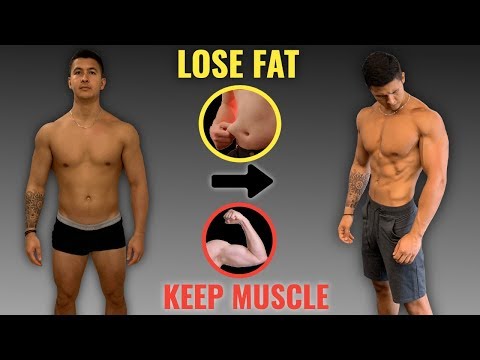
Jeremy Ethier says the wrong dieting approach can cost muscle, so implementation matters.

Click any timestamp to jump directly

30-Second Quick Reference · Verified Takeaways

6 acts · 5 citations · Last Verified Nov 21, 2026
  • 01Jeremy Ethier frames dieting as a method problem: the wrong approach can cost muscle, so implementation matters as much as the calorie deficit.
  • 02The Infographics Show argues that resistance training should be chosen for muscle building, not for calories burned, when the goal is retention.
  • 03Dr. Kevin Joseph says the best way to preserve muscle while eating in a calorie deficit is a central question for weight loss.
  • 04Dr. Eric Berg notes that leucine and protein needs rise with age, especially for older adults trying to maintain and preserve muscle.
“Dieting can remove fat and muscle at the same time, and the difference is in how the deficit is built.”

Core Synthesis

Jeremy Ethier and The Infographics Show treat muscle retention as a dieting design problem: pick resistance training for strength, not calorie burn, and build the deficit deliberately. Dr. Kevin Joseph and Dr. Eric Berg add the clinical stakes, especially around protein and age. The 2017 Advances in Nutrition review and 2020 Nutrients sarcopenia paper support their emphasis on protein and exercise during weight loss.

01

Deficit Design and Training

Jeremy Ethier opens with a warning about how people implement dieting, not whether they diet. The Infographics Show makes the training choice concrete: select a resistance program for muscle building, not calorie burn. The 2017 Advances in Nutrition review on preserving healthy muscle during weight loss gives this editorial spine: deficits need deliberate protein and exercise planning, because weight loss alone does not protect lean tissue.

Weight loss does not choose between fat and muscle; the plan does.
02

Protein Needs With Age

Dr. Eric Berg puts age at the center: leucine and protein requirements increase as people get older, especially when they try to maintain muscle. Dr. Rangan Chatterjee speaks to people with more time or existing activity, a useful reminder that guidance lands differently across ages and schedules. The 2020 Nutrients review on nutrition and sarcopenia supports the shift: older adults face distinct protein and muscle maintenance challenges.

Protein targets rise with age, but access and routine shape who meets them.
03

Brain, Muscle, and Adherence

Doctor Alex describes a virtuous cycle: muscle supports the brain, and a functioning brain supports behaviors that preserve muscle. Dr. Kevin Joseph returns the conversation to the calorie deficit, where preserving muscle becomes a practical weight loss question. Dr. Rangan Chatterjee's comment about time and activity adds a real world filter: adherence depends on schedule, not just physiology.

Muscle preservation is behavioral as well as biological; schedules decide follow through.

Where Voices Converge

  • • Calorie deficits alone do not protect lean mass; protein intake and resistance training are treated as core levers.
  • • Age raises protein and leucine needs, especially for older adults trying to maintain muscle.

Nuance & Unresolved Tension

  • • Jeremy Ethier and The Infographics Show emphasize training design, while Dr. Eric Berg emphasizes age related protein needs, leaving the best sequence for beginners unclear.
  • • Dr. Kevin Joseph centers the calorie deficit; Dr. Rangan Chatterjee notes time and activity constraints, a reminder that clinical advice may not fit busy or inactive patients.

Explore Related Questions

Complete Timestamped Bilingual Transcript

Full 6-Act Spoken Transcript Archive

Click any timestamp to jump
ACT I · Jeremy Ethier · 00:00 - 00:46

The Diet Mistakes That Eat Your Muscle

ACT II · Dr Rangan Chatterjee · 00:00 - 00:43

Walking Is Not Enough as You Age

ACT III · The Infographics Show · 25:04 - 25:53

Pick Weights to Build Muscle, Not Burn Calories

ACT IV · Doctor Alex · 16:22 - 17:18

Muscle and Brain Protect Each Other

ACT V · Dr. Kevin Joseph, DO · 05:10 - 05:58

Protein Alone Won't Save Muscle in a Deficit

ACT VI · Dr. Eric Berg DC · 01:31 - 02:11

After Menopause, Hormones Sabotage Muscle

Want sentence-level movie clips, connected-speech breakdowns, or daily spoken English drills instead of long-form interviews? Our sister tool WinkLingo is purpose-built for that workflow.

Key Questions & Reference Guide

Frequently Asked Questions

What are the core takeaways on Preserve Muscle While Dieting?

Jeremy Ethier and The Infographics Show treat muscle retention as a dieting design problem: pick resistance training for strength, not calorie burn, and build the deficit deliberately. Dr. Kevin Joseph and Dr. Eric Berg add the clinical stakes, especially around protein and age. The 2017 Advances in Nutrition review and 2020 Nutrients sarcopenia paper support their emphasis on protein and exercise during weight loss. Key insights include: Jeremy Ethier frames dieting as a method problem: the wrong approach can cost muscle, so implementation matters as much as the calorie deficit. The Infographics Show argues that resistance training should be chosen for muscle building, not for calories burned, when the goal is retention.

Which primary podcasts, lectures, and speakers are featured in this Preserve Muscle While Dieting screening?

This screening stitches 6 continuous acts featuring voices from Jeremy Ethier, Dr Rangan Chatterjee, The Infographics Show, Doctor Alex , Dr. Kevin Joseph, DO. Every act separates primary voices from commentary and links directly to the original timestamp.

Where do experts agree and disagree on Preserve Muscle While Dieting?

Convergence: Calorie deficits alone do not protect lean mass; protein intake and resistance training are treated as core levers. Open tension: Jeremy Ethier and The Infographics Show emphasize training design, while Dr. Eric Berg emphasizes age related protein needs, leaving the best sequence for beginners unclear.

Does this Preserve Muscle While Dieting page include a searchable timestamped transcript and citations?

Yes. Open the Interactive Transcript tab to click any sentence and jump directly to that exact second in the video, export Obsidian/Notion reading notes, and verify 5 cross-referenced scholarly or encyclopedic citations including "Dieting".

More Documentaries in This Topic

Health & Biology →
The Muscle Rules That Decide How You Age
Health & Biology5m 54s

The Muscle Rules That Decide How You Age

Across these interviews, Andy Galpin treats muscle fiber training as practical biology: heavy, difficult work recruits fibers, fasted exercise can be tolerated, and strength protects ordinary movement. Radák's fiber-type physiology and Kupchak's flight-plus-workout damage data frame the claims. The speakers disagree less about biology than about how much mileage ordinary trainees can safely extract from it.

6 acts3 primary2 citations
Why the Clock Change Is a Health Event
Health & Biology6m 56s

Why the Clock Change Is a Health Event

Dan Pardi and Christine Blume describe sleep as daylight anchored: cellular clocks need one central body clock and consistent light. CBS, FOX 13, and KXAN clinicians call clock changes jarring for sleep and health, while Bloomberg treats standard time as policy. A 2025 systematic review and the American Academy of Sleep Medicine statement make clock transitions a public-health question.

6 acts2 primary4 citations
The Longevity Gap: What Peter Attia Really Believes
Health & Biology6m 05s

The Longevity Gap: What Peter Attia Really Believes

Across these recordings, Peter Attia appears as clinician, podcast guest, and returning subject, while David Sinclair supplies the molecule frame and Tim Ferriss supplies the personal interview. The verified Outlive citations anchor Attia's longevity book, but metformin remains mostly implicit, so viewers hear evidence being assembled around a drug the clips seldom examine.

5 acts5 primary2 citations
The Brain Needs a Body in Motion: How Exercise and Food Rewire Health
Health & Biology4m 42s

The Brain Needs a Body in Motion: How Exercise and Food Rewire Health

Tommy Wood says exercise types affect the brain differently, and The Knowledge Project links daytime exercise to nighttime lymphatic clearance. Yale frames nutrition as global health, Stanford cites a 41 percent breast-health disparity among Black women, and Chris Palmer targets glucose and insulin by removing sweets. Neuroscience reviews on mitochondria, inflammation, and sleep support these metabolic and clearance pathways, while the misconceptions list warns against overreading single mechanisms.

6 acts5 primary5 citations
Your Body Has a Clock. Your Late Snack Is Fighting It.
Health & Biology4m 09s

Your Body Has a Clock. Your Late Snack Is Fighting It.

Panda's lab work and the podcast excerpts converge on a practical point: when people eat can matter alongside what they eat. The FoundMyFitness and Chatterjee conversations press on implementation, especially morning timing and shift work, while Lex Fridman's guests speak from athletic practice and DeLauer's clip places time-restricted eating among calorie counting, fasting, and pharmacology.

4 acts2 primary3 citations
Your Brain Fog May Not Start in Your Brain
Health & Biology4m 06s

Your Brain Fog May Not Start in Your Brain

The six clips circle one claim: chronic inflammation may cloud cognition, and diet, sedentary behavior, mineral status, and ketosis are offered as levers. The evidence is strongest for long COVID, where brain barrier disruption and systemic inflammation track cognitive impairment. Yet brain fog remains a subjective symptom, so creators sell certainty faster than researchers can measure it.

6 acts2 primary5 citations