PastNoise
Health & Biology·6 acts·5m 58s·1/6 primary·5 citations·Cut from 318 live hits · 3 ads stripped

Stiffness Is Trainable: What Your Joints Need Beyond StretchingTendon Stiffness Mobility Training · Primary Podcast Clips & Verified Transcript

From upper neck pain and shoulder tightness to pregnancy hormones and Pilates, six clips show why mobility depends on strength, consistency, and the r

Neck Stiffness Moves for Wraparound Headaches

ACT I · Rehab Science · 5m 58s

Neck Stiffness Moves for Wraparound Headaches

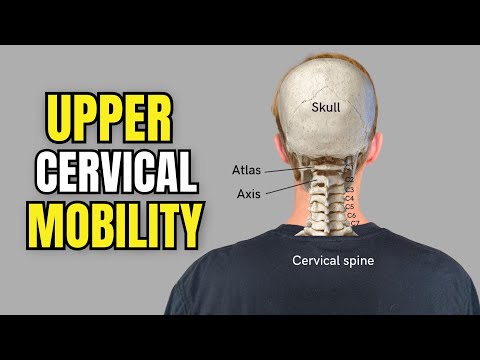
In today's video, we'll be looking at mobility exercises

00:00 / 05:58
0%
Highlights:
ACT ICOMMENTARYRehab Science · Mar 25, 2026

Neck Stiffness Moves for Wraparound Headaches

Rehab Science promises upper cervical mobility exercises for neck stiffness and pain.

Click any timestamp to jump directly

30-Second Quick Reference · Verified Takeaways

6 acts · 5 citations · Last Verified Nov 21, 2026
  • 01Baar says relaxin lowers tendon and ligament stiffness late in pregnancy, showing stiffness is a regulated tissue property.
  • 02The shoulder mobility series treats stiffness as a lack of joint mobility, then prescribes three exercises across a mini series.
  • 03Schoenfeld advises lighter weights and more frequent sessions when joint mobility issues restrict standard resistance training.
  • 04The Infographics Show ties strength training to fuller function and joint mobility, framing muscle as practical daily capacity.
“Dr. Keith Baar links tendon stiffness to hormones and loading, while mobility coaches target stiff joints.”

Core Synthesis

Across six clips, neck and shoulder mobility drills meet Keith Baar's account of relaxin lowering tendon and ligament stiffness. Tim Ferriss frames tendon repair through loading, while Pilates and strength coaches sell joint mobility as daily practice. The literature adds caveats: acute stretching can affect range of motion and performance, long term static stretching may reduce muscle stiffness, and eccentric work and proprioception shape how tendons and joints tolerate load.

01

Neck Stiffness and Cervical Drills

Rehab Science opens with a direct promise: mobility exercises for the upper cervical spine, aimed at neck pain and stiffness. Baar shifts the frame from local drills to tissue regulation, naming relaxin as a hormone that lowers tendon and ligament stiffness late in pregnancy. The two claims sit on different levels: symptom relief through movement, and systemic chemistry changing how tissue behaves.

Local drills and hormonal shifts answer two different stiffness questions.
02

Shoulder Mobility and Pilates Burn

Exercise For Health calls stiffness a feeling caused by lack of joint mobility, then starts a three part shoulder series. Marie Steffen keeps the register practical: mobility and flexibility training, no equipment, and a burn she refuses to soften. Neither clip defines stiffness precisely. Proprioception research helps here, because joint position sense and controlled movement can change how stiffness feels and how mobility is learned.

Proprioception can change how joint stiffness feels during controlled movement.
03

Strength, Aging, and Tendon Load

Schoenfeld keeps resistance training available to people with joint mobility issues by reducing load and increasing frequency. The Infographics Show goes broader, linking strong muscles to function and joint mobility. Tendon evidence adds mechanical detail: eccentric training controls downward motion, long term static stretching can decrease muscle stiffness, and Achilles tendon stiffness is measured alongside plantarflexion torque and muscle architecture. These are adjacent claims, with different tissues and timelines.

Tendon load, muscle stiffness, and joint mobility follow separate timelines.

Where Voices Converge

  • • Stiffness has multiple causes, including joint mobility limits, tissue hormones, and loading history.
  • • Controlled movement and resistance training can be adapted for people with mobility restrictions.

Nuance & Unresolved Tension

  • • Mobility clips imply local drills solve stiffness, while Baar describes hormonal and tissue level regulation.
  • • Long term static stretching may reduce muscle stiffness, yet acute stretching can alter performance and range of motion in ways coaches rarely separate.

Explore Related Questions

Complete Timestamped Bilingual Transcript

Full 6-Act Spoken Transcript Archive

Click any timestamp to jump
ACT I · Rehab Science · 00:00 - 00:45

Neck Stiffness Moves for Wraparound Headaches

ACT II · Tim Ferriss · 1:28:00 - 1:28:52

Pregnancy Hormone Relaxin Loosens Tendons for Birth

ACT III · Exercise For Health · 00:25 - 01:06

Shoulder Mobility Drills That Also Build Strength

ACT IV · Marie Steffen - The Art of Health · 00:34 - 01:40

Pilates Builds Mobility With Low-Impact Strength

ACT V · ZOE · 46:35 - 47:34

Can Lighter Weights More Often Protect Stiff Joints?

ACT VI · The Infographics Show · 05:15 - 06:50

Strong Muscles Protect Joint Mobility as You Age

Want sentence-level movie clips, connected-speech breakdowns, or daily spoken English drills instead of long-form interviews? Our sister tool WinkLingo is purpose-built for that workflow.

Key Questions & Reference Guide

Frequently Asked Questions

What are the core takeaways on Tendon Stiffness Mobility Training?

Across six clips, neck and shoulder mobility drills meet Keith Baar's account of relaxin lowering tendon and ligament stiffness. Tim Ferriss frames tendon repair through loading, while Pilates and strength coaches sell joint mobility as daily practice. The literature adds caveats: acute stretching can affect range of motion and performance, long term static stretching may reduce muscle stiffness, and eccentric work and proprioception shape how tendons and joints tolerate load. Key insights include: Baar says relaxin lowers tendon and ligament stiffness late in pregnancy, showing stiffness is a regulated tissue property. The shoulder mobility series treats stiffness as a lack of joint mobility, then prescribes three exercises across a mini series.

Which primary podcasts, lectures, and speakers are featured in this Tendon Stiffness Mobility Training screening?

This screening stitches 6 continuous acts featuring voices from Rehab Science, Tim Ferriss, Exercise For Health, Marie Steffen - The Art of Health, ZOE. Every act separates primary voices from commentary and links directly to the original timestamp.

Where do experts agree and disagree on Tendon Stiffness Mobility Training?

Convergence: Stiffness has multiple causes, including joint mobility limits, tissue hormones, and loading history. Open tension: Mobility clips imply local drills solve stiffness, while Baar describes hormonal and tissue level regulation.

Does this Tendon Stiffness Mobility Training page include a searchable timestamped transcript and citations?

Yes. Open the Interactive Transcript tab to click any sentence and jump directly to that exact second in the video, export Obsidian/Notion reading notes, and verify 5 cross-referenced scholarly or encyclopedic citations including "Eccentric training".

More Documentaries in This Topic

Health & Biology →
The Longevity Gap: What Peter Attia Really Believes
Health & Biology6m 05s

The Longevity Gap: What Peter Attia Really Believes

Across these recordings, Peter Attia appears as clinician, podcast guest, and returning subject, while David Sinclair supplies the molecule frame and Tim Ferriss supplies the personal interview. The verified Outlive citations anchor Attia's longevity book, but metformin remains mostly implicit, so viewers hear evidence being assembled around a drug the clips seldom examine.

5 acts5 primary2 citations
The Muscle Rules That Decide How You Age
Health & Biology5m 54s

The Muscle Rules That Decide How You Age

Across these interviews, Andy Galpin treats muscle fiber training as practical biology: heavy, difficult work recruits fibers, fasted exercise can be tolerated, and strength protects ordinary movement. Radák's fiber-type physiology and Kupchak's flight-plus-workout damage data frame the claims. The speakers disagree less about biology than about how much mileage ordinary trainees can safely extract from it.

6 acts3 primary2 citations
Why the Clock Change Is a Health Event
Health & Biology6m 56s

Why the Clock Change Is a Health Event

Dan Pardi and Christine Blume describe sleep as daylight anchored: cellular clocks need one central body clock and consistent light. CBS, FOX 13, and KXAN clinicians call clock changes jarring for sleep and health, while Bloomberg treats standard time as policy. A 2025 systematic review and the American Academy of Sleep Medicine statement make clock transitions a public-health question.

6 acts2 primary4 citations
The Brain Needs a Body in Motion: How Exercise and Food Rewire Health
Health & Biology4m 42s

The Brain Needs a Body in Motion: How Exercise and Food Rewire Health

Tommy Wood says exercise types affect the brain differently, and The Knowledge Project links daytime exercise to nighttime lymphatic clearance. Yale frames nutrition as global health, Stanford cites a 41 percent breast-health disparity among Black women, and Chris Palmer targets glucose and insulin by removing sweets. Neuroscience reviews on mitochondria, inflammation, and sleep support these metabolic and clearance pathways, while the misconceptions list warns against overreading single mechanisms.

6 acts5 primary5 citations
Your Body Has a Clock. Your Late Snack Is Fighting It.
Health & Biology4m 09s

Your Body Has a Clock. Your Late Snack Is Fighting It.

Panda's lab work and the podcast excerpts converge on a practical point: when people eat can matter alongside what they eat. The FoundMyFitness and Chatterjee conversations press on implementation, especially morning timing and shift work, while Lex Fridman's guests speak from athletic practice and DeLauer's clip places time-restricted eating among calorie counting, fasting, and pharmacology.

4 acts2 primary3 citations
The Sunlight Switch That Sets Your Whole Day
Health & Biology4m 57s

The Sunlight Switch That Sets Your Whole Day

Across six clips, Andrew Huberman describes morning light hitting the eye as a circadian signal, while commentary hosts translate that into cortisol and sleep routines. The written record is narrower: Smith (2005) shows morning light can phase advance young adults, and Sansom's 1972 essay records early sun as ordinary experience. The speakers agree on timing; they differ on how much cortisol language carries.

6 acts3 primary2 citations