PastNoise
Health & Biology·6 acts·4m 56s·1/6 primary·4 citations·Cut from 987 live hits · 1 ads stripped

Your Grip Is a Warning, Not a WorkoutGrip Strength Mortality Longevity Evidence · Primary Podcast Clips & Verified Transcript

Hand strength predicts mortality, but the evidence points to whole body health, not a standalone grip fix.

Grip Is a Proxy, Not a Fix

ACT I · High Intensity Health · 4m 56s

Grip Is a Proxy, Not a Fix

grip strength has come up a lot over the years with associations with mortality Cancer

00:00 / 04:56
0%
Highlights:
ACT ICOMMENTARYHigh Intensity Health · Jun 23, 2024

Grip Is a Proxy, Not a Fix

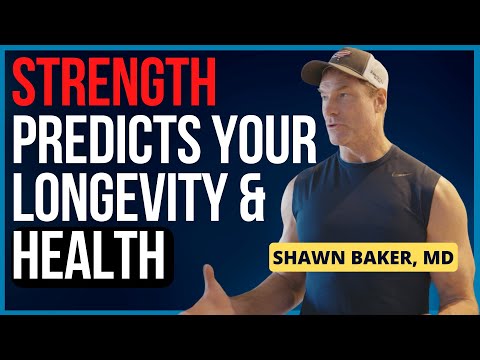
Baker notes grip strength's repeated mortality and cancer associations and asks how to apply it with average clients.

Click any timestamp to jump directly

30-Second Quick Reference · Verified Takeaways

6 acts · 4 citations · Last Verified Nov 21, 2026
  • 01Baker says grip strength has drawn repeated mortality and cancer associations and asks how to approach it with the average person.
  • 02Davis frames the issue as preserving muscle and strength, a claim that aligns with sarcopenia research on age-related mass and quality loss.
  • 03Huberman and McMillan place grip strength inside a broader longevity effort that includes speed work and maintaining physical capacity.
  • 04Health and longevity channels repeat the correlation, while DeLauer notes how often the phrase circulates without close scrutiny of the evidence.
“Grip strength keeps appearing in longevity talk, but what does the mortality evidence actually show?”

Core Synthesis

Shawn Baker, William Davis, Andrew Huberman, and fitness voices treat grip strength as a practical marker of muscle preservation. The literature is more specific: handgrip thresholds track all-cause, cancer, and cardiovascular mortality, while sarcopenia and strength data in older women sharpen the clinical question. The dossier separates correlation, measurement, and training advice. It keeps the speakers' claims audible while marking the evidence's limits.

01

The Repeated Correlation

Health and Longevity says researchers have long noted a correlation between grip strength and longevity, and Huberman clips it as part of maintaining capacity. DeLauer supplies the skeptical counterpoint: the phrase travels easily through podcasts and commentary. The 2022 systematic review gives the correlation a sharper shape by linking handgrip thresholds to all-cause, cancer, and cardiovascular mortality.

The meta-analysis tests mortality thresholds rather than repeating podcast slogans.
02

What the Studies Measure

Davis speaks about preserving muscle and strength, which lands near sarcopenia: age-related loss of skeletal muscle mass, quality, and strength. The evidence distinguishes grip from total strength. A JAMA Network Open study on women aged 63 to 99 found muscular strength and mortality were linked, yet grip is one measurement among several. Speakers often compress that nuance into a single predictor.

Grip is convenient, but it is not equivalent to whole-body strength.
03

Preservation and Practice

Baker asks how to approach grip strength with the average person, and Huberman and McMillan tie it to speed work and longevity at any age. Health and Longevity's personal testimonials make the same pitch through visible fitness. The clinical literature keeps the focus on muscle preservation and mortality risk, leaving training dose, measurement method, and causal direction as open practical questions.

Advice comes faster than proof about how much grip change matters.

Where Voices Converge

  • • Grip strength is repeatedly associated with mortality, and the 2022 review links handgrip thresholds to all-cause, cancer, and cardiovascular outcomes.
  • • Speakers and researchers agree that muscle and strength preservation matter as people age, with sarcopenia and women's strength data supporting the concern.

Nuance & Unresolved Tension

  • • Commentary channels often repeat the grip-longevity correlation as a slogan, while DeLauer flags how easily the claim circulates without close inspection.
  • • Grip is easy to measure but narrow: studies of muscular strength in older women show broader strength matters, and causal training effects remain less clear than associations.

Explore Related Questions

Complete Timestamped Bilingual Transcript

Full 6-Act Spoken Transcript Archive

Click any timestamp to jump
ACT I · High Intensity Health · 00:13 - 01:00

Grip Is a Proxy, Not a Fix

ACT II · William Davis , MD · 00:00 - 00:42

Modern Life Is Eroding Muscle

ACT III · Huberman Lab Clips · 08:16 - 09:01

Jumping and Landing Signal Longevity

ACT IV · Health & Longevity · 03:16 - 04:14

Outdoor Exercise Offers a Different Challenge

ACT V · Thomas DeLauer · 03:46 - 04:36

Grip Strength Is Just a Surrogate

ACT VI · Health & Longevity · 03:40 - 04:34

After 60, Strength Means Still Fighting

Want sentence-level movie clips, connected-speech breakdowns, or daily spoken English drills instead of long-form interviews? Our sister tool WinkLingo is purpose-built for that workflow.

Key Questions & Reference Guide

Frequently Asked Questions

What are the core takeaways on Grip Strength Mortality Longevity Evidence?

Shawn Baker, William Davis, Andrew Huberman, and fitness voices treat grip strength as a practical marker of muscle preservation. The literature is more specific: handgrip thresholds track all-cause, cancer, and cardiovascular mortality, while sarcopenia and strength data in older women sharpen the clinical question. The dossier separates correlation, measurement, and training advice. It keeps the speakers' claims audible while marking the evidence's limits. Key insights include: Baker says grip strength has drawn repeated mortality and cancer associations and asks how to approach it with the average person. Davis frames the issue as preserving muscle and strength, a claim that aligns with sarcopenia research on age-related mass and quality loss.

Which primary podcasts, lectures, and speakers are featured in this Grip Strength Mortality Longevity Evidence screening?

This screening stitches 6 continuous acts featuring voices from High Intensity Health, William Davis , MD, Huberman Lab Clips, Health & Longevity, Thomas DeLauer. Every act separates primary voices from commentary and links directly to the original timestamp.

Where do experts agree and disagree on Grip Strength Mortality Longevity Evidence?

Convergence: Grip strength is repeatedly associated with mortality, and the 2022 review links handgrip thresholds to all-cause, cancer, and cardiovascular outcomes. Open tension: Commentary channels often repeat the grip-longevity correlation as a slogan, while DeLauer flags how easily the claim circulates without close inspection.

Does this Grip Strength Mortality Longevity Evidence page include a searchable timestamped transcript and citations?

Yes. Open the Interactive Transcript tab to click any sentence and jump directly to that exact second in the video, export Obsidian/Notion reading notes, and verify 4 cross-referenced scholarly or encyclopedic citations including "Ageing".

More Documentaries in This Topic

Health & Biology →
The Muscle Rules That Decide How You Age
Health & Biology5m 54s

The Muscle Rules That Decide How You Age

Across these interviews, Andy Galpin treats muscle fiber training as practical biology: heavy, difficult work recruits fibers, fasted exercise can be tolerated, and strength protects ordinary movement. Radák's fiber-type physiology and Kupchak's flight-plus-workout damage data frame the claims. The speakers disagree less about biology than about how much mileage ordinary trainees can safely extract from it.

6 acts3 primary2 citations
Why the Clock Change Is a Health Event
Health & Biology6m 56s

Why the Clock Change Is a Health Event

Dan Pardi and Christine Blume describe sleep as daylight anchored: cellular clocks need one central body clock and consistent light. CBS, FOX 13, and KXAN clinicians call clock changes jarring for sleep and health, while Bloomberg treats standard time as policy. A 2025 systematic review and the American Academy of Sleep Medicine statement make clock transitions a public-health question.

6 acts2 primary4 citations
The Longevity Gap: What Peter Attia Really Believes
Health & Biology6m 05s

The Longevity Gap: What Peter Attia Really Believes

Across these recordings, Peter Attia appears as clinician, podcast guest, and returning subject, while David Sinclair supplies the molecule frame and Tim Ferriss supplies the personal interview. The verified Outlive citations anchor Attia's longevity book, but metformin remains mostly implicit, so viewers hear evidence being assembled around a drug the clips seldom examine.

5 acts5 primary2 citations
The Brain Needs a Body in Motion: How Exercise and Food Rewire Health
Health & Biology4m 42s

The Brain Needs a Body in Motion: How Exercise and Food Rewire Health

Tommy Wood says exercise types affect the brain differently, and The Knowledge Project links daytime exercise to nighttime lymphatic clearance. Yale frames nutrition as global health, Stanford cites a 41 percent breast-health disparity among Black women, and Chris Palmer targets glucose and insulin by removing sweets. Neuroscience reviews on mitochondria, inflammation, and sleep support these metabolic and clearance pathways, while the misconceptions list warns against overreading single mechanisms.

6 acts5 primary5 citations
The Sleep Habit That Rewires Your Metabolism
Health & Biology6m 05s

The Sleep Habit That Rewires Your Metabolism

The speakers treat metabolic health as a daily timing problem: HIIT can improve insulin sensitivity, St-Onge asks how meals shape sleep, and Bikman notes sleep and metabolism are tightly linked. The written record sharpens that claim: circadian rhythms repeat roughly every 24 hours, and a 2024 cohort found sleep regularity predicts mortality better than duration alone. The practical question is what to measure and change first.

6 acts3 primary5 citations
Your Body Has a Clock. Your Late Snack Is Fighting It.
Health & Biology4m 09s

Your Body Has a Clock. Your Late Snack Is Fighting It.

Panda's lab work and the podcast excerpts converge on a practical point: when people eat can matter alongside what they eat. The FoundMyFitness and Chatterjee conversations press on implementation, especially morning timing and shift work, while Lex Fridman's guests speak from athletic practice and DeLauer's clip places time-restricted eating among calorie counting, fasting, and pharmacology.

4 acts2 primary3 citations