Curated Sub-Topic Tag
#Creativity & Art
Verified primary-voice documentaries on Creativity & Art, or enter a sharper question below to cut a new film live from 200M+ spoken records.

What Survives When the Writing Advice Fails
Stephen King's On Writing makes craft advice personal: memoir, rules, and revision. The spoken excerpts show advice in use and in dispute. Anne Lamott reports two new stories; an IELTS teacher separates speech from writing; Gayle King disclaims therapy; Anthony Gramuglia attacks shallow representation. Together they ask which writing rules survive contact with practice, and who gets to enforce them.

The AI That Refused to Be Switched Off
The control problem is a stack of failures: agents that pursue goals, benchmarks that miss intent, and institutions that cannot price catastrophic error. Brian Christian's interviews and Anthropic's panel agree on the technical difficulty. The Information and CNBC show where cost, deployment, and oversight collide before the research is settled.

Will AI Ever Know Who It Is? Five Voices on the Road to AGI
The speakers agree that AGI, machines matching human cognition across tasks, remains hypothetical, yet they differ on timelines and risks. Ben Goertzel stresses its interdisciplinary nature, while Eric Schmidt insists on precise definitions. The written record confirms AGI's definitional ambiguity and ties it to global security concerns, showing that the future of AI is as much about language and governance as about code.

The Greatest Thing Steve Jobs Built Wasn't the iPhone
Peter Thiel's case for startup monopoly is less a celebration of size than a warning about imitation. In Zero to One and in these interviews, he treats business design as the central invention, frames sacrifice and competition as traps, and tells founders to quit safe jobs for asymmetric bets. The Bloomberg and Garry Tan clips show the same doctrine under political and personal pressure.

Your Blood Pressure Is Whispering. Your Heart Hears Everything.
Laukkanen's cohort work and the Mayo review connect frequent sauna bathing with lower cardiovascular mortality, but the evidence is observational and Finnish. Blood pressure is the measurable hinge: clinicians describe severe hypertension and arterial strain, while commentary on potassium and vessel lining explains mechanisms. The dossier keeps the speakers' claims separate from the outcome data. A 2022 Finnish cohort adds systolic pressure as a modifier.
The Atomic Network: Why the Smallest Connections Win
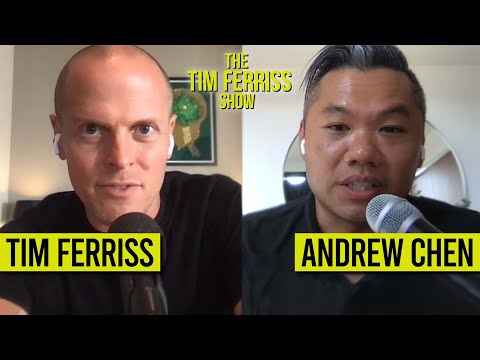
The Andrew Chen tape is fragmentary and image-driven: airports close to you, social networks, games. Hoover's Lanhee Chen supplies policy credentials, @Scale's YuLing Chen ties reliability to revenue, and Pivot makes a blunt institutional-courage claim. External references to atomic layer epitaxy, atomic clocks, AP decomposition, and storm-surge networks show that 'atomic network' is a borrowed technical metaphor, useful only when defined.

Too Late at 40? The Real Midcareer Pivot
The acts treat career change as a design problem, not a revelation. Raj asks whether midlife is too late; Yale's Peter Boyd teaches purpose as a search method; The School of Life admits the social cost of starting near zero. Job crafting research and career counseling literature supply the missing mechanics: small self-initiated job redesign and structured counsel.
The Color You See Is a Story Your Brain Tells
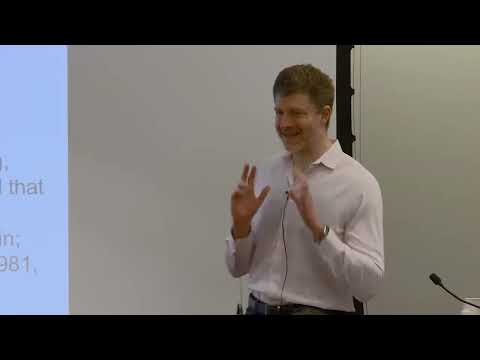
MIT's lecture begins with lightness, then color. Beau Lotto says every behavior reduces uncertainty. Matisse's 1896 table and 1905 window show color shifting with context. Crash Course traces shared motifs across cultures, while Ed Cooke names the phenomenology of shade. Written references confirm color is relational, produced by cone activation, and synesthesia cross-wires senses. Together they argue perception is active, embodied, and historical, not a simple readout of matter.

The Confidence to Start From Zero
Late career change is less a single decision than a negotiation with status, skill, and narrative. The School of Life names the party-talk shame of beginning near zero; Bryan Cranston counters with earned confidence and valuing talent. Career counseling research treats such transitions as story work, while career-error scholarship warns that mishandled change late in a career carries distinct costs.

The Trauma That Words Can't Reach: How Childhood ACEs Rewire the Brain
Maya Panchal says ACEs persist into anxiety, depression, substance abuse, and academic struggle. Dartmouth's front-line panel adds academic pressure, loneliness, bullying, stigma, and trauma. Rob Ager, TopHealth, and HealthyGamerGG widen the frame to mental health work, violence, and complex psychology, while the literature formalizes ACE categories and adult health prediction. The result is a short dossier on risk, care, and prediction.

Why Earth Never Boils Over: The Hidden Machinery That Keeps a Planet Alive
Plate tectonics is a geology lesson with planetary consequences. CrashCourse locates most quakes and eruptions in the Ring of Fire; SciShow links volcanic carbon dioxide to long-term climate stability. The written record places plate motion over 3 to 4 billion years and ties it to Earth system science. Kurzgesagt and Sara Seager widen the frame: planetary stability and independent life depend on conditions we are still learning to read.

Ship It, Then Figure It Out: Paul Graham's Startup Rule
The dossier follows Paul Graham's advice as it travels through Y Combinator: Garry Tan credits Graham for a shipping culture, Naval Ravikant describes habit-building as effort reduction, and Graham's own Turing test aside shows how founder lore mixes with AI ambition. The written record adds scale and caution, not a verdict. It asks which advice changes behavior and which merely selects founders already primed to ship.

Your Back Pain Is Not a Stretching Problem
A Stanford librarian opens the discussion, Tim Ferriss demonstrates hamstring work, and Jeff Cavaliere describes hyperextensions with Andrew Huberman. Jeremy Ethier and Stuart McGill warn that many lower back stretches are short-term fixes. A 2025 scoping review on office workers and a 2021 network meta-analysis of chronic low back pain keep the focus on exercise type and sitting behavior, not posture correctors alone.

Three Hours a Night and a Mattress in the Office
The clips set founder intensity beside health advice and small experiments. Y Combinator notes PhD founders built Google and Anthropic, while Nico Laqua says Corgi has no place for weekend takers. Bryan Johnson argues health and success can align; Maor Shlomo describes stepping back from building the biggest thing. Thrive Global and Nataly Kogan frame recovery as behavior change and emotional fitness, not indulgence.

AI Is Learning to Write Life Itself
Stanford's Evo2 presents a chat GPT-like model for genomes, proposing sequence variations for downstream improvement. Stanford Medicine and Anthropic describe faster systems and broader AI fluency, while Eric Siegel warns of a human capability gap. Protein design firms and closed-loop molecular papers supply the industrial test: de novo enzymes need synthesis, screening, and catalytic proof beyond plausible sequences.

Cold Starts: Why a Little Discomfort Builds Everything
Across six excerpts, Dr. Rhonda Patrick asks whether reducing stress always helps the brain. NutritionFacts counters that cold immersion may undercut muscle. Bloomberg and CNBC show networks and sanctions at scale, while Cold War and Alaska segments reveal infrastructure beneath geopolitics. The Cold Start literature names the launch problem: a network has little value until enough compatible users arrive and justify the build.
Paul Graham on Default Alive, Default Dead, and Runway
Paul Graham's default alive or default dead test reduces startup survival to a runway calculation: will revenue cover costs before cash ends? The selected clips show how loosely alive and dead travel, from AGI benchmarks and Epstein risk to Stoic time and TV publicity. The dossier keeps founder math central and uses other voices as contrast.

Mark Leslie's Startup Learning Curve: The Plan Never Survives the Airport
Mark Leslie's sales learning curve frames early revenue as discovery, not quota coverage. The spoken excerpts echo that discipline: Leslie Kaelbling wants a feasible high-level plan, Mark Rober asks what to make next, Matthias Wandel describes a steep CNC climb, and Mark Zuckerberg defends fast cycles. Academic work on forgetting and outsourcing reinforces the point: curves persist after launch.

The 8:30 Fix: Why Teenagers Are Wired to Sleep Late
Wendy Troxel says the research on later start times is unequivocal. Michael Grandner notes one district pushed to 8:30 and few states followed. Against that policy lag, pediatric meta-analyses and crash data show measurable adolescent sleep and safety gains, while commentary turns to sleep hygiene and practical advice. The dossier keeps the gap between evidence and implementation in view.

Your Phone Is Stealing Flow: How to Take It Back
Arthur Brooks ties phone habits to dopamine and learning, while Sahar Yousef tests screen-time claims with recorded evidence. Creators show digital minimalism, vlog boundaries, and regret, and the literature names doomscrolling and problematic smartphone use. Peer-reviewed work adds context on dependence and whether the phone is the addiction or the channel. The dossier keeps the speakers' words central and asks which fixes change behavior rather than only measuring it.

Sticky or Dead: The Ugly Truth About Growth
Dan Hockenmaier ties retention to solving customer pain. Andrew Chen's Tim Ferriss appearance shows how podcasts lend operator credibility, while Bloomberg's Airbnb segment points to Chinese travel demand. The written record adds growth hacking, unicorn lists, and peer-reviewed work on social and sonic branding. Across these acts, startup branding becomes a sequence of retention, market selection, and disciplined channel choices.

The Hidden Architecture of Everything
Keith Potter's Oxford Music Online entries give minimalism a scholarly frame, but the recorded speakers rarely use the word. They talk instead about green building certification, photographing models, N-tier naming, and TikTok system design. The dossier holds those concrete claims beside the written reference, letting the gap between aesthetic minimalism and architectural constraint stay visible.

Your Heart Risk Score May Be Lying to You
ApoB measures the protein carried on atherogenic particles, and clinical reviews link particle burden to atherosclerotic risk. The recordings resist a single message: Sandra's inherited disease, sauna mortality data, microplastic warnings, diet and memory research, cancer survivorship, and Norwitz's critique of causal claims. The dossier asks when a biomarker should change clinical care.

The Chip Is the Hardest Thing We Make
Jim Keller treats Moore's Law as a working beacon, a design constraint that still organizes microprocessor work. Chris Miller shows that chips are hard to make because supply chains and governments shape access. Together they frame chip design as engineering plus industrial strategy, with AI raising both capability and risk.

Move Fast, Scale Wrong: What Duolingo and Canva Learned Too Late
The dossier follows premature scaling as a practical failure of sequencing. A Yale healthcare lecture puts the core team and customer problem first, while Gina Gotthilf describes Duolingo’s caution about DAU targets and time sinks. Garry Tan’s supply chain segment and Melanie Perkins’s two-step plan show scaling pressure arriving from outside and inside, with Startup CEO and Thiel’s caution as written counterweight.

The Cure for Writer's Block Is the Block Itself
The dossier treats creative block as a practical condition with mixed causes: the definition calls it a non-medical condition, an inability to produce new work or a creative slowdown. Augusten Burroughs names an uneven writerly reality, Sasha Patpatia recommends trial and error, and Samin Nosrat's circle shows creative company. Barbara Hirst's 1992 study and an artist workshop treat block as re-engageable, while Joe Begos's Bliss turns the cure into horror.

Why the Cracked Cup Is More Beautiful
Wabi-sabi begins as a tea-room correction: Sen no Rikyu prefers rustic Japanese cups with little errors to flawless Chinese ware. Contemporary voices stretch that idea into resilience, color psychology, and home design. The written record confirms wabi-sabi's focus on imperfection and transience, while the speakers disagree about whether it is repair, mood, or cultural identity.
The Color of Sound: When Your Senses Start Borrowing
MIT lectures frame lightness and musical notation as perceptual problems. Frank Wilczek treats color mixing as physics, Alex Isley and Corey Crossfield describe synesthetic experience from inside music and daily life, and Alex from Numberphile names grapheme-color associations directly. The written record supports cross-sensory variety but sharply limits any single theory of music-color perception.

The Room Has a Voice: How Space Changes Sound and Survival
The excerpts treat the concert hall as a stage for pedagogy, travel, fashion, tragedy, and local performance, rarely as an acoustic machine. The written record fills that gap: Tokyo Opera City, Boettcher, Anvil, and York Barbican show how named rooms solve specific acoustic and civic problems. Together they ask who gets to hear, and under what conditions.

Churchill's Speeches: Anaphora, Parliament, and Wartime Persuasion
The dossier starts with History Hit's historian on Churchill and the RAF, then widens to auditory scene analysis, sermon rhetoric, and line-by-line speech criticism. Anaphora and Hart's study of Churchill's words supply the written frame. The spoken excerpts disagree on method but agree that delivery, repetition, and context decide whether rhetoric persuades.

The Invisible Advantage: How Network Effects Pick Winners
Network effects are easy to name and hard to measure. Michael Lee treats them as an incumbent asset; Andrew Chen treats them as a site of fascination; MIT links them to cascading financial networks; Freakonomics connects them to brand awareness. Ash Maurya adds a test: sharing must be a natural side effect. The written record offers composite indexes and consultant metrics, not one startup measure.
The Core Stability Trap: Why Strong Glutes Aren't Enough
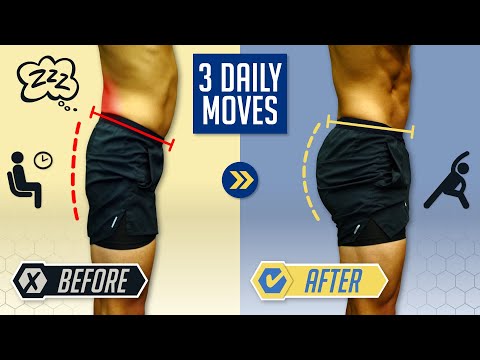
Jeremy Ethier frames the glutes as the body's support system, while Stuart McMillan tells Huberman that changing exercises mid-set helps him build core stability. A poll finds the core is where viewers feel weakest, and biomechanics research ties core stability to knee valgus during single-leg landing and to double-peak muscle activation in elite MMA striking. The finance clip is a terminology detour: it uses core to mean accounting fundamentals, not trunk control.

The Waiter Who Lied to Himself: Sartre's Bad Faith Meets the Accusation Economy
Sartre's 1943 account of mauvaise foi describes self-deception, yet the clips show bad faith as an accusation traded in elections, wars, and online feuds. The School of Life supplies the waiter example; Sly Boy, Bad Faith, Professor Dave, PBS, and The Vanguard show the phrase at work. Being and Nothingness and The Sartre Dictionary anchor the definition while the speakers stretch it toward public blame.

Condemned to Be Free: The Choice That Makes Meaning
Existentialism was a mid twentieth century French and German movement, not a single doctrine. Sartre turns blank-slate freedom into a moral demand: not choosing is still a choice. Camus shares the absurdity problem, while Sartre's biography grounds the argument in Left Bank cafes. The Yale lecture adds the hard rule, and the School of Life portrait adds the body that lived it.

Perimenopause Is a Heart Story, Not Just Hot Flashes
The Huberman Lab Essentials clip introduces Sara Gottfried's hormone expertise, while TopHealth and Stanford Health Care stress doctor conversations, symptom triage, and GLP-1 questions during perimenopause. Dr. Josh Axe and Therapy in a Nutshell widen the frame to gut bacteria and ADHD, sometimes beyond the evidence. Written sources on cardiometabolic health, cardiovascular hormones, and perimenopausal psychopathology anchor the clinical stakes.

Your Body Is Whispering. Are You Listening?
The dossier follows a simple editorial question: which cardiovascular prevention signals are felt, measured, or still being validated? Laukkanen's sauna mortality study and the blood pressure commentary show outcomes are often invisible until harm is advanced. Stanford's dementia biomarkers and the blood-work videos shift attention to predictive tests, while the written evidence reminds viewers that blood pressure and glucose-lowering drugs carry measurable cardiovascular stakes.

Love Is a Skill, Not a Feeling
The dossier follows Erich Fromm's 1956 book through six brief clips. A philosophy recommendation states the title directly; a consumer critique borrows Fromm's automaton; two records and a martial artist circle love as practice rather than possession. The clips do not build a theory; they show a title moving through ordinary talk, where Fromm's vocabulary outlives his book's original context.

The Sonnet in the Boardroom: Why Limits Unleash Creativity
Matt Abrahams treats constraints as communication catalysts, and Tim Ferriss describes creativity inside team and contractor limits. Yale's brainstorming exercise turns constraints into prompts, while Dr. Dicle defines a constraint as a formal limit on acceptable decisions. Combinatory literature shows writers applying outside rules to creative process, which makes the sonnet a working case rather than a metaphor.

Scorsese's Pop Montage Secret: Songs That Hijack Your Mood
Scorsese's pop montages work as emotional engineering: a song can restore a lost feeling, sharpen a scene, or expose a break in taste. The speakers here trace that power from mood adjustment to generational rupture, AI sampling, K-pop grief, and local pop pride. The written record places The Last Waltz and Scorsese's music documentaries inside that longer argument.

Sound Design's Dirty Secret: Your Brain Is Always Listening
Bass in Villeneuve's Dune is treated as structural pressure. The speakers show sound design as practical labor: live plugging, pacing, top-level tool lists, and frame-accurate cues. Hans Zimmer's Dune: Part Two score and bass-building references give the low end a documentary spine. The excerpts seldom name Villeneuve, yet they clarify the craft behind his low-frequency pressure. That is the dossier's through line.

Who Designed Your Life?
The Bauhaus lasted fourteen years, yet its claim that craft and fine art belong together kept moving through furniture, buildings, and homes. These excerpts test that inheritance from the outside: a Black home conference, Mira Nakashima's workshop, and the McKissack family's overlooked record. The school's legacy is less a style than a fight over training, materials, and authorship.

Cormac McCarthy's Darkest Question: Can Empathy Stop Violence?
Hungerford's Yale lecture, Josh Barnett's account of McCarthy's personal influence, and comments on The Road and sexual violence all circle the same problem: violence isolates people, and isolation can make violence legible. Child of God and The Gardener's Son give literary cases, while Evenson's scholarship asks how McCarthy's prose embodies violence in form and plot.

100 Drone Deliveries Later: Amazon's Last-Mile Reality Check
The FAA rules shape who can fly, where, and for whom, while Wing's Astro Teller frames the last mile as friction to remove. YouTube builders treat delivery as a stunt; CNBC finds Walmart and Alphabet outpacing Amazon. Academic work warns that drone zones can patch poor planning rather than fix it, so regulation is also urban policy. That is the regulatory test.

Cold Starts: The First Request Is Never Free
The PyData session and InfoQ talk treat cold start and latency as engineering problems, and the Vinay Raj paper ties microservice migration to efficient cold start latency. AWS Lambda documentation explains the mechanism: code runs without provisioning, so the first request can include container setup and network delay. Other excerpts use cold start for markets, cars, and TV openings, showing the phrase travels beyond serverless.

The Strongest Magic Is Made of Words: Ursula K. Le Guin's Earthsea
Le Guin's own account is specific: Earthsea gave her a working parallel between wizards and artists. Around that primary voice, the dossier gathers claims from Mark Manson and writing instructors about craft, practice, and joy. The written reference fixes the career facts, while the spoken excerpts show how a speculative fiction writer turns invented systems into durable craft lessons.

The Voice That Held Britain: Churchill's Wartime Speeches
The dossier treats Churchill's wartime oratory as a persuasive instrument rather than a natural monument. Speakers circle his famous lines, his concentrated 1940 output, and the long historical frame Andrew Roberts stresses; academic work on propaganda, context, and dysphemism explains how words can alarm and unite. The real disagreement is whether repetition and moral clarity amount to strategy or fortunate timing.

Forget Build It and They Will Come: How Startups Buy Distribution
Raaz Herzberg describes a Wiz that had no settled product when she joined, then pivoted six weeks later. Alex Israel says Metropolis could acquire distribution channels, while Mukhammad Khalil ties channels to capital and global scaling. Jacob Clifford defines distribution simply: any path customers take to buy. The written record, from Cart.com to distribution strategy texts, shows channels are built, bought, and managed.
The Medici Bought the Renaissance. Then Florence Paid the Price.
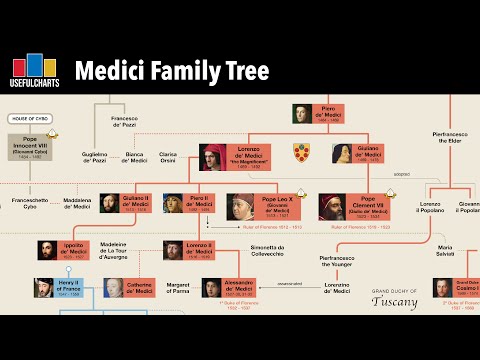
Cosimo de' Medici first made the family Florence's effective rulers; Lorenzo then consolidated Medici power and made the city the Renaissance's center. The same family network married into France and tangled with papal plans for Catherine de' Medici. Beneath the patronage, artists faced censorship and merchants faced instability, showing that Medici art and Medici control arrived together.