Curated Sub-Topic Tag
#脳科学
Verified primary-voice documentaries on 脳科学, or enter a sharper question below to cut a new film live from 200M+ spoken records.

あなたの脳はコンピュータではない:バイオハックの本当の限界
デイヴィッド・イーグルマンは可塑性を脳の決定的な特徴と位置づけるが、単純な自己改善の処方箋には抵抗する。彼の講義は生物学的な脳とコンピュータを対比し、内部の競合する衝動を「ライバルのチーム」と表現する。創造性の本は熱いシャワーやピンクの部屋を約束するが、イーグルマンはより深い制約を指摘する。感覚代替の研究は可塑性の実用的な到達範囲を示し、リチャード・デイヴィッドソンの子どもに関する発言は、回復力が人によって異なることを思い出させる。

脳は動く体を必要とする:運動と食事が健康を書き換える仕組み
トミー・ウッドは運動の種類によって脳への影響が異なると言い、The Knowledge Projectは日中の運動が夜間のリンパ浄化につながると指摘する。イェール大学は栄養を地球規模の健康問題として捉え、スタンフォード大学は黒人女性の乳房健康における41パーセントの格差に言及。クリス・パーマーは甘いものを除くことで血糖とインスリンを標的にする。ミトコンドリア、炎症、睡眠に関する神経科学のレビューはこれらの代謝と浄化の経路を支持する一方、誤解リストは単一のメカニズムを過大解釈することへの警告を発している。

Your Brain Fog May Not Start in Your Brain
The six clips circle one claim: chronic inflammation may cloud cognition, and diet, sedentary behavior, mineral status, and ketosis are offered as levers. The evidence is strongest for long COVID, where brain barrier disruption and systemic inflammation track cognitive impairment. Yet brain fog remains a subjective symptom, so creators sell certainty faster than researchers can measure it.

The Sunlight Switch That Sets Your Whole Day
Across six clips, Andrew Huberman describes morning light hitting the eye as a circadian signal, while commentary hosts translate that into cortisol and sleep routines. The written record is narrower: Smith (2005) shows morning light can phase advance young adults, and Sansom's 1972 essay records early sun as ordinary experience. The speakers agree on timing; they differ on how much cortisol language carries.

The Scars Before Words: How Childhood Trauma Rewires the Brain
The dossier follows a single thread from narrative to biology: Big Think shows children building explanatory stories early, while ACE data and Sergiu Pașca's lab work show how adversity and developmental biology can compound. Ed O'Brien and Paul Conti supply the clinical and human stakes: depression, bodily illness, and the slow work of compassionate curiosity. The evidence does not settle treatment, but it clarifies why early experience matters.
Your Brain Is a Metabolic Monster
The dossier follows a simple question: what did the human brain cost, and who paid? Barrett's conversation, Ganguli's AI comparison, and CARTA's gene-regulation talk frame a brain built by constraint. Cunnane and Kuzawa supply the metabolic accounting: fat, feast-famine cycles, life history, and the body's energy budget. The result is a set of bills, not one origin story.
Your Self Is a Construction: What Meditation Reveals About the Brain
Compassion meditation turns a private practice into a measurable question: what changes in attention, mood, and the sense of a bounded self? Goleman describes beginners meeting loving-kindness; Suzuki reports lower stress and depressive symptoms; Davidson and Huberman frame the research; SciShow Psych links nonduality to weakened network rivalry. The literature on empathy and compassion gives the biological context.
What Actually Puts You to Sleep? A Neuroscientist's Toolkit
Across six clips, Andrew Huberman offers cold water, a low-energy reset, magnesium 382, and AGZ before sleep. Guests drift into GLP drugs and diet. The written record adds Nerina Ramlakhan's Tired But Wired and a 2006 network analyzer toolkit, a reminder that sleep protocols travel far from controlled evidence and into daily improvisation, even as speakers disagree about supplements, cold exposure, and drugs.

The Color You See Is a Story Your Brain Tells
MIT's lecture begins with lightness, then color. Beau Lotto says every behavior reduces uncertainty. Matisse's 1896 table and 1905 window show color shifting with context. Crash Course traces shared motifs across cultures, while Ed Cooke names the phenomenology of shade. Written references confirm color is relational, produced by cone activation, and synesthesia cross-wires senses. Together they argue perception is active, embodied, and historical, not a simple readout of matter.

The Sleep You Skip Is the Memory You Lose
The dossier follows one practical question: when does sleep turn practice into durable memory? Huberman warns that missed sleep washes out learning; Walker probes deprivation after initial acquisition; Pardi and the literature frame consolidation as stabilization, not passive rest. The commentary on chunking and attention marks a boundary: sleep supports memory, but it does not replace noticing and focus.

Your Brain Has a RAM Limit
Cognitive load is the effort working memory spends holding and manipulating information, and the literature treats its capacity as limited. An MIT lecture shows that limit in plain terms; software engineers describe the cost in delays, risk, and recovery. Computer memory offers a vivid contrast in scale, while the human asides keep the subject from becoming only a diagram.
Wide Awake at 3 A.M.? The Fix Isn't More Sleep
The clips treat 3 a.m. waking as a timing problem, a behavior problem, and sometimes a medical one. Huberman offers cold water and light cues; a sleep clinician names the 11-to-3 pattern; a GLP drug tangent shows how quickly sleep talk drifts into metabolism. Indexed sleep-alert and wake-up stroke references keep clinical stakes in view.

Your Body Knows More Than You Think
The dossier follows six conversations that approach the body as an active input to emotion and health. Tor Wager's interview frame, Emily Nagoski's accelerator model, Keith Diaz's fatigue distinction, and warnings about plastics and sweeteners all point to the same question: how do internal signals become feelings and decisions? The literature calls that traffic interoception and links it to constructed emotion.

The Dopamine Detox Backfire: Why Pleasure Is Not Motivation
Tim Ferriss's month without caffeine opens a practical question: what changes when quick rewards disappear? Andrew Huberman and Read Montague locate motivation in effort and expectation, while detox videos sell a reset. Digital detox research and clinical withdrawal studies show breaks can help, but they do not guarantee a clean dopamine repair, and the evidence remains narrower than the promise. That gap matters for viewers.

Lucid Dreams Feel Real: Science Is Still Catching Up
Brain imaging gives dream research a measurable vocabulary, yet the spoken record keeps returning to first-person reports. Big Think describes dreams as representations or reenactments, Thomas Brophy asks what lucid practice can teach, and Stanford Medicine frames imaging through migraine treatment. The written record, from basic dream definitions to LaBerge, confirms that neurology and subjective experience remain separate instruments.

Your Brain Wakes Before Your Body
REM atonia keeps the body still while the mind runs. Huberman describes divorcing emotion from experience; sleep paralysis patients wake conscious but paralyzed, often with hallucinations. Big Think links REM access to human function, while RBD shows what happens when atonia fails. The clinical literature separates isolated paralysis from nightmare disorder, but the first person account remains the evidence.

You Are Not Trapped in Your Brain
Lisa Feldman Barrett frames trauma as a prediction problem that can be interrupted, not a permanent sentence. The surrounding clips widen the frame: memory loss can begin in the late twenties, attention is pulled by scrolling, and brain injury complicates storage and retrieval. Academic references on trauma and memory confirm the stakes without resolving how much change is possible.

The Brain's Secret Clock Runs on Uncertainty
Beau Lotto says every behavior reduces uncertainty. A meditation teacher says separating an urge weakens its hold. A neuroscience explainer says mechanism gives people flexibility over protocols. Dartmouth's panel frames perception as active, not passive. External work on chronoception, Eagleman, fMRI interval timing, and P300 spans adds measurement: the brain's sense of duration depends on attention, prediction, and the evidence it is processing.

The Sleep Debt Delusion: What Creatine Can and Cannot Fix
Rhonda Patrick and Andrew Huberman describe mild sleep restriction as a performance problem. Thomas DeLauer cites pharmacology research linking sleep loss to worse mood and cognition, while Arianna Huffington and Andy Galpin connect the deficit to startup culture and late-night schedules. Recent studies test creatine and exercise as partial countermeasures; the evidence still points back to sleep itself.

Naps Are Not a Cure-All: What Your Body Clock Is Really Saying
Across six recordings, napping appears indirectly, through circadian science, sleep and mental health meta-analyses, and clinical talk about aging and perimenopause. The dossier separates short planned naps from catch-up sleep, notes Lovato's cognitive findings, and keeps claims modest. Power-nap definitions and sleep-quality reviews supply the conservative frame. No speaker here prescribes a universal nap.

Is Depression Really in the Brain? The Inflammation Clue Doctors Missed
The dossier follows cytokines, visceral fat, vitamin D, hyperthermia, mindfulness, and accelerated TMS as competing routes into depression. Raison and Ferriss describe immune and stimulation experiments while Goleman and High Intensity Health offer everyday levers. Dunn's cytokine hypothesis and Nature reviews frame the biology, while the speakers disagree on practical priority and the written record leaves treatment order unresolved.

Your Brain Takes Out the Trash While You Sleep
Matthew Walker and Andrew Huberman frame sleep as a clearance window for the brain, while Max Krummel cautions that fluid on imaging may reflect ordinary lymph movement rather than glymphatic flow. The literature defines the glymphatic pathway as CNS waste removal, and a 2025 Cell paper links norepinephrine-mediated slow vasomotion to clearance during sleep. The speakers agree on sleep's importance but differ on measurement and clinical certainty.

The Estrogen Window: Why Waiting Until 50 May Be Too Late
The clips move from estrogen's circulating years to the menopause transition, where cognition, mood, and supplement claims meet. Dr. Sarah Berry notes years of understudy; Dr. Vonda Wright asks which hormones women should track. The literature on brain fog and cognition supports the clinical concern, but the spoken excerpts show how much practical guidance remains contested.

Is Your Gut Quietly Raising Your Alzheimer's Risk?
The dossier follows David Perlmutter's gut brain question through Tim Spector, Emeran Mayer, John Cryan, and Uma Naidoo. Spector describes microbial signals moving from gut to brain; Mayer calls autism a prototypic brain gut microbiome disorder; Naidoo recalls how recent the field is. Peer reviewed work by Perlmutter and Clarke on tryptophan metabolism supplies provenance, while the speakers disagree about how fast clinical claims should travel.
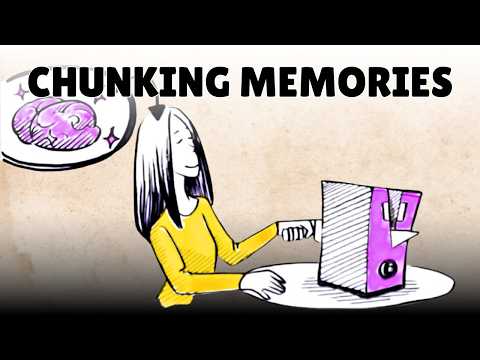
The Chess Memory Illusion: Why Experts Don't Remember More
The dossier follows a simple claim across venues: memory improves when information is cut into meaningful pieces. A memory coach teaches Scripture, Ellen watches cards named before they turn, Jim Kwik and Max Lugavere frame brain care, and Numberphile admits chess expertise is not general. Gobet's chess research supplies the test case: experts hold more than isolated pieces, they recognize larger patterns.
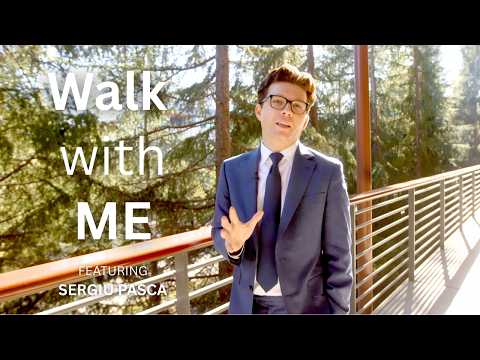
Before Memory: The Hidden Forces Building a Human Brain
The dossier sets Sergiu Pașca's and Paola Arlotta's laboratory views of early brain construction beside BBC reporting on toddler screens and broader claims about diet and cell ratios. The verified literature names infantile amnesia as adults' failure to retrieve episodic memories before age three or four. The speakers describe mechanisms; the record shows how much remains unsettled about which circuits and experiences matter.

Sauna for Your Brain? The Heat Shock Protein Claim
Across five interviews, Huberman, Patrick, Johnson, Ferriss, and Laukkanen describe sauna as a hormetic stressor that activates conserved chaperone proteins. Chatterjee connects that repair language to aging and immunity. The literature on heat shock proteins in brain tumors shows biological relevance, not proof that sauna prevents dementia. The dossier separates mechanism from marketing and keeps clinical caution visible.

The Food That Tricks Your Brain and Body
The dossier follows one question: what do processed food cravings do to the brain? Huberman cites fullness and satiety, Jacka links diet quality to depression, FOX 9 reports stroke and memory risks, and NutritionFacts asks why a new term is needed. The literature adds hyperpalatability, reward pathway addiction claims, and drugs like semaglutide, leaving causation and daily advice unresolved.

Your 4 P.M. Coffee Is Still Working at 10 P.M.
Tim Ferriss and Matthew Walker treat caffeine as a timing problem, not a moral one. Huberman and Bryan Johnson cite a roughly six-hour half-life; Walker adds a 20 percent deep-sleep penalty from evening coffee. The 1995 Brain Research trial supports night-time EEG effects after 200 mg, while adenosine research explains why sleep pressure returns.
Your Brain Works the Night Shift: The Strange Power of REM Sleep
REM sleep is not one phenomenon but several: rapid eye movements and low muscle tone, vivid dreams, memory replay, and, in disorders, intrusion into waking life. The acts move from Walker on sex and sleep to Mignot on narcolepsy and RBD, while lucid-dreaming claims need clinical restraint.

Your Risk Is Not Your Fate: The Levers You Can Still Pull
The dossier treats Alzheimer's prevention as a set of modifiable risks rather than one habit. Jonathan Marsh cites 14 lifestyle factors, while exercise and diet researchers show how behavior intersects with genetics, cancer risk, and screening. The Lancet's 2021 review and 2025 Protein & Cell paper frame disease mechanisms; the speakers keep the practical question open: which risks can a person actually change?

The Migraine Brain Is Too Excitable. Is Magnesium the Missing Brake?
Across six clips, a small sleep study, a clinician's account of migraine's devastation, and magnesium's role in hundreds of enzyme reactions converge on one question: what makes the migraine brain excitable? The literature supports magnesium as essential biology and migraine as a serious neurological disorder, yet the supplement evidence stays modest and indirect.

The Gland That Builds a Brain: Thyroid Hormones Before Birth
The dossier follows one biological chain: maternal thyroid function, fetal brain development, and the tests meant to catch trouble. FoundMyFitness and NYU Langone describe thyroid hormones as critical in utero. Bikman and Healthy Immune Doc show how TSH sits upstream and how in-range screening can still miss disease. Tim Korevaar's work gives the throughline: maternal thyroid hormone matters for the child's brain.

Can Fish Oil Clear Brain Fog? The Evidence Is Messier Than You Think
The clips disagree about how much fish oil can do for brain fog, and the disagreement is useful. Physionic finds supportive trials, William Davis reports decades of confusion, FoundMyFitness Clips points to inflammation and sedentary life, and Thomas DeLauer follows ketones instead. Menopause, nutritional psychiatry, and aging-brain papers narrow the claims to specific populations and measured outcomes.

あなたの脳は今、予測している:知覚という名の制御された幻覚
このドシエは、脳は受動的な記録装置ではなく予測エンジンだという一つのアイデアを、研究室、ポッドキャスト、哲学の間で追いかける。スタンフォードの7T MRIは神経機能をマッピングし、サム・ハリス、リサ・フェルドマン・バレット、ジョン・ヴァーヴェイク、カール・フリストンはベイズモデル、能動的推論、驚きの低減について語る。予測符号化と自由エネルギーに関する文献が会話の土台となり、予測がどのように意識的経験になるのかという問いは未解決のまま残される。

When the Self Goes Quiet: Psychedelics and the Default Mode Network
Across six clips, Rich Roll, Rick Doblin, Tim Ferriss, Andrew Huberman, and commentators return to one claim: psychedelics alter default mode network activity, and that shift may loosen the ego. The neuroscience literature defines the DMN as a large scale brain network; it does not settle what subjective change follows. The speakers describe possibility more confidently than the evidence allows.
Your Focus Is Going Extinct. Buddhism Saw It Coming
The witnesses split between clinical measurement and contemplative practice. Goleman calls focused attention endangered and says meditation offers answers; Headspace frames mindfulness as an end-to-end mental health platform; Mumford asks where stabilization ends and meditation begins. Buddhist sources describe bhavana and jhana, while clinical literature defines mindfulness as moment-by-moment awareness. The dossier tracks that translation and its costs.

The Mood Molecule: What Exercise Actually Does to Your Brain
Across clips from FoundMyFitness, Huberman Lab, and Tim Ferriss, researchers describe exercise raising BDNF and lactate reaching the brain. SciShow Psych and Jim Kwik translate that mechanism for general audiences. Reviews on physical activity and depression support the link, while the 2024 BDNF paper and 2026 adolescent study show the clinical picture remains multimodal and unresolved.

Pressing Save: How Your Brain Writes, Loses, and Finds Memories
Memory is treated here as both a biological trace and a social practice. Huberman offers tools, Kwik calls recall a save button, and Hayes cites a 47% verbal memory gain, while Yale and Afghanistan archives show recall shaped by history and testimony. The engram literature adds cells, astrocytes, and dendritic excitability, so recall is physical without being simple. Consolidation stabilizes traces over time.

Your Phone Is Eating Your Attention
Groh describes thought as a ball bearing on a flat surface, implying attention has a mechanical baseline. Munoz supplies the counterexample: five hours of scrolling and a thirty-minute work ceiling. Newport cites a Financial Times article on overstimulation, while Reiter and Nature find notifications affect focus even when the phone is merely nearby.

Loved but Never Sure: Inside the Anxious Attachment Loop
Across six clips, anxious attachment appears less as a diagnosis than as a rehearsal: the mind anticipates rejection, then recruits logic to explain away fear. The speakers show rumination in text threads, trauma bonds, and self-worth math, while anxiety research and attachment studies give the pattern a wider frame. Neuroscience enters obliquely, as threat anticipation and self-monitoring, but the lived detail remains the text message.

Grief Is Not a Five-Step Program
Sprouts presents the five stages as a common path from loss to acceptance. Huberman Lab Essentials promises a revisit of actionable science, without naming stages in the supplied clip. Grief counseling literature defines grief as a response to loss and lists emotional, social, spiritual, and cognitive reactions. CNBC, 30 Rock, and Colbert show the stage model spreading into retail, satire, and politics.

Your Brain Sees First, Asks Later
Amy Herman's four A's train explicit observation: assess, analyze, articulate, then act. MIT's V1 lecture asks what visual effects reveal about the brain, while commentary warns that faces and images invite shortcuts. Blindsight complicates all of it: people with striate cortex lesions can respond to stimuli they do not consciously see. The dossier keeps conscious awareness and measurable visual response in separate columns.

The Brain Is Stranger Than You Think
The dossier places split-brain syndrome beside broader claims about consciousness. Bill Nye points to species differences in calculation, while a French case and brain-wave models press the same question from other angles. The written record defines callosal disconnection and the hard problem, and speakers disagree over whether brain tissue, synchrony, or materialism explains subjective experience.

Your ADHD Brain Isn't Lazy. It's Chasing the Next Hit
Huberman frames attention as a reward loop, while Hamdani describes nightly reflection as a way to study her own ADHD mind. Ong Mian Li reframes ADHD as more than attention deficit, and the pharmacology literature ties stimulants to norepinephrine and dopamine signaling. The dossier keeps those claims in view without settling every clinical question.

The Wanting Trap: Why Dopamine Chases What It Doesn't Enjoy
Kent Berridge frames reward as pleasure and incentive salience, a split that later speakers translate into everyday warnings about scrolling, cheap dopamine, and discipline. The cited neuroscience places these claims in the mesolimbic pathway and reward circuitry. The useful tension is between mechanistic caution and the self-help promise of rewiring.
Deja Vu Is a Glitch in Your Story
Corey Fernandez studies learning and memory; Big Think describes a narrator that makes experience coherent; Patrick McNamara ties self models to normal brain function. Deja vu is defined as strong recollection without matching time, place, and context; jamais vu is recognition that still feels unfamiliar. The dossier contrasts those memory signals with broader claims about change, cancer, and religion, keeping causal explanations provisional.

The Hand That Isn't There: Why Amputees Still Feel Pain
Lisa Feldman Barrett frames phantom limb pain around a brain that requires a body it once had. The Infographics Show adds the clinical timeline for chronic pain, while verified literature puts phantom limb prevalence at 50% to 80% after amputation. Dave Asprey's binaural beat and Smarter While You Sleep's paradox push the same question: how much of what we feel is signal, and how much is prediction?