Curated Sub-Topic Tag
#推薦図書リスト
Verified primary-voice documentaries on 推薦図書リスト, or enter a sharper question below to cut a new film live from 200M+ spoken records.

Your Back Pain Is Not a Stretching Problem
A Stanford librarian opens the discussion, Tim Ferriss demonstrates hamstring work, and Jeff Cavaliere describes hyperextensions with Andrew Huberman. Jeremy Ethier and Stuart McGill warn that many lower back stretches are short-term fixes. A 2025 scoping review on office workers and a 2021 network meta-analysis of chronic low back pain keep the focus on exercise type and sitting behavior, not posture correctors alone.

Sleep Less, Live More? The Real Cost of Polyphasic Sleep
Polyphasic sleep is easy to sell as a productivity hack, yet the clips show a messier reality. Serena Chen hears praise for late work, Ginny measures 21 hours awake, and Dakota Johnson makes 14 hours of sleep viral. Stanford Health Care and Andrew Huberman cite household support and dysregulated schedules, while recent studies ask whether fragmented sleep reduces need or adds endocrine and cognitive costs.

Midway: The Battle That Broke Japan's Navy
The excerpts move from aircraft counts and counterfactual speculation to Roosevelt's infamy line and a stray Stalingrad anecdote; Mark Felton's prisoner testimony and SLICE's carrier assembly return the story to Midway. John Ford's 1942 short documentary and the verified June 4-7 date remind viewers that images and chronology were already being shaped. The dossier keeps speakers' verbatim claims in front and separates operational detail from archival drift.

Tesla's Two-Hour Sleep Myth: Genius or Slow Collapse?
Vanessa Hill and Matt Walker trace the Uberman schedule to Tesla lore and nap routines, while Russell Foster describes older segmented sleep. Stampi's encyclopedia entry and Rosenblum's SLEEP review separate historical polyphasic patterns from extreme nap restriction. The speakers' warnings about apnea, dementia risk, and long-term health sharpen the central question: adaptation claims versus documented sleep loss.
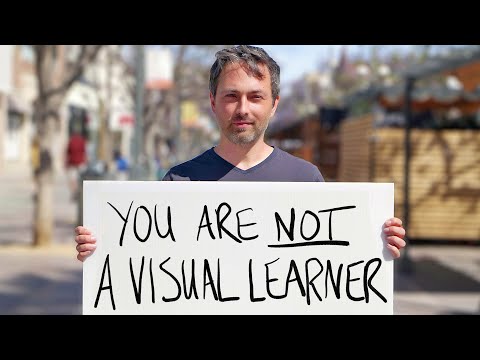
The Learning Styles Myth: Why the Evidence Never Caught On
Veritasium punctures the matching idea with perfect pitch and map learning. Classroom vendors and English teachers still repeat three main styles, while Zoho describes thirty students with different learning styles. Newton and Blasie document why the myth survives despite weak evidence. The dossier contrasts cheerful taxonomy with experimental findings, showing how terminology circulates faster than proof and how multisensory teaching gets confused with individual matching.

Borges: The Labyrinth Where Every Book Exists
Across six recorded moments, Jorge Luis Borges appears as a live reference: a TED speaker uses him to challenge political deference, a language commentator fixes his name, Tim Ferriss asks where to begin, Lex Fridman notes a poem, Ido Portal calls the reading difficult, and Josh Waitzkin recalls a story. The written record supplies the Library of Babel and the labyrinth as recurring structures.

Cheap Books Broke the World: The Gutenberg Warning for AI
Six commentators use Gutenberg as shorthand for sudden reproduction shocks. Business Motiversity cites roughly 10 million books before cheap printing; Hoover Institution says regulators should relax because this movie has played before. The written record supplies the mechanism: movable type, pressure and ink, and the social transformations that followed. The dossier separates historical evidence from analogy, asking where printing's consequences actually fit AI.

You're Not Multitasking. You're Paying a Brain Tax.
Four commentators introduce task switching cost as settled fact: Kim Foster names it, Wanderloots links it to scrolling, English Avenue calls it a brain tax, and Evan Carmichael cites Earl Miller. The peer-reviewed review on task repetition and switching suggests the cost is real but conditional, shaped by practice and task structure. The dossier separates useful shorthand from overclaim.

What Borges Knew About Memory Before AI Did
In five commentary clips, engineers describe memory as a library they build, sample, compress, and hand to agents. Borges supplies the counter-image: a blind librarian facing all possible books. The dossier asks whether machine memory is storage, tested tooling, or a human attempt to keep what blindness and forgetting threaten. The evidence connects software samples to a literary warning about scale and retrieval.