PastNoise
History & World·6 acts·6m 26s·1/6 primary·4 citations·Cut from 371 live hits

Lenin's Revolution Was Never InevitableLenin Bolshevik Revolution Tactics · Primary Podcast Clips & Verified Transcript

War, betrayal, and a tram ticket: how the Bolsheviks turned collapse into power in 1917

A Theory Before the Revolution

ACT I · YaleCourses · 6m 26s

A Theory Before the Revolution

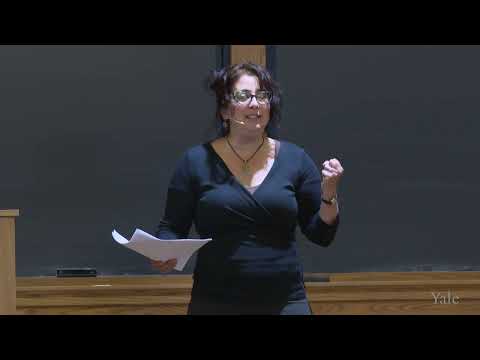
- Today is the day we go into the Bolshevik Revolution.

00:00 / 06:26
0%
Highlights:
ACT IPRIMARYYaleCourses · Aug 5, 2026

A Theory Before the Revolution

YaleCourses places the Bolshevik Revolution inside a lecture sequence on Leninism and World War I.

Click any timestamp to jump directly

30-Second Quick Reference · Verified Takeaways

6 acts · 4 citations · Last Verified Nov 21, 2026
  • 01YaleCourses frames the Bolshevik Revolution inside a lecture sequence on Leninism and World War I, not as an isolated event.
  • 02The Great War locates the opening in early 1917 Petrograd, where the Tsar's opponents ended the 300-year Romanov dynasty.
  • 03John Doyle contrasts the American Revolution with the French and Bolshevik revolutions, treating the comparison as a judgment on political character.
  • 04Matt Walsh argues that the 1905 revolution taught Lenin how national humiliations could be turned into a political program.
“Early 1917: the Russian Empire was in chaos, the Romanov dynasty ended, and Lenin read defeat as opportunity.”

Core Synthesis

The dossier sets Yale's lecture on Leninism beside documentary accounts of 1917, John Doyle's comparison of revolutions, Matt Walsh's claim about 1905, and Banijay's view of Lenin after defeat. Written references establish Lenin's founding role and the Bolshevik Party's formation. The speakers agree on chronology and Lenin's centrality, then split over whether 1905 taught strategy, humiliation, or organizational survival.

01

Petrograd, 1917, and Lenin

YaleCourses treats the Bolshevik Revolution as a lecture topic inside European intellectual history, while The Great War opens with the street-level collapse: Petrograd, the Tsar's opponents, the Romanov dynasty gone. The written reference confirms 1917 as the period when Russia abolished monarchy and adopted socialist government. The lecture's broader frame and the documentary's immediate scene agree on sequence, not on emphasis.

Yale gives the lecture frame; The Great War gives the street-level collapse.
02

1905 as Lenin's Teacher

Matt Walsh says 1905 showed Lenin how national humiliation could become a political program, while Banijay History reports Lenin thought the party had lost the revolution and kept it semi-underground. The Bolshevik Party's formation reference supports the organizational story. The speakers differ less on facts than on what 1905 taught: humiliation as fuel, or defeat as discipline.

Walsh stresses humiliation as fuel; Banijay stresses defeat as organizational discipline.
03

Comparing Three Revolutions

John Doyle compares the American Revolution with the French and Bolshevik revolutions, using the comparison to separate liberating from destructive upheaval. InfoQ, in an unexpected compliance lecture, identifies Lenin simply as the Soviet revolution's leader. YaleCourses keeps Lenin inside intellectual history; Doyle makes a political judgment; InfoQ supplies a plain biographical anchor. The written Lenin reference confirms his founding role in Soviet Russia, but not the moral verdict.

Doyle turns comparison into moral judgment; InfoQ supplies a plain biographical anchor.

Where Voices Converge

  • • Lenin led the Bolshevik and Soviet revolution and became Soviet Russia's founding head of government.
  • • The 1917 revolution followed earlier upheaval, including 1905, and ended the Romanov monarchy.

Nuance & Unresolved Tension

  • • YaleCourses treats Lenin as intellectual history; Doyle treats the Bolshevik Revolution as a moral comparison, so the same event carries different analytical weight.
  • • Walsh emphasizes 1905 national humiliation as a political lesson; Banijay History emphasizes defeat and underground survival, suggesting different causal lessons.

Explore Related Questions

Complete Timestamped Bilingual Transcript

Full 6-Act Spoken Transcript Archive

Click any timestamp to jump
ACT I · YaleCourses · 00:13 - 01:43

A Theory Before the Revolution

ACT II · The Great War · 00:00 - 01:35

1917 Was Not Over for Lenin

ACT III · John Doyle · 10:18 - 10:58

Revolutionary Violence Against Religious Believers

ACT IV · Matt Walsh · 15:01 - 15:51

Lenin's Wager: Lose War, Seize Power

ACT V · Banijay History · 30:07 - 31:02

Kerensky's Crisis: Kornilov Sends Troops

ACT VI · InfoQ · 04:38 - 05:34

Lenin Took the Tram to Revolution

Want sentence-level movie clips, connected-speech breakdowns, or daily spoken English drills instead of long-form interviews? Our sister tool WinkLingo is purpose-built for that workflow.

Key Questions & Reference Guide

Frequently Asked Questions

What are the core takeaways on Lenin Bolshevik Revolution Tactics?

The dossier sets Yale's lecture on Leninism beside documentary accounts of 1917, John Doyle's comparison of revolutions, Matt Walsh's claim about 1905, and Banijay's view of Lenin after defeat. Written references establish Lenin's founding role and the Bolshevik Party's formation. The speakers agree on chronology and Lenin's centrality, then split over whether 1905 taught strategy, humiliation, or organizational survival. Key insights include: YaleCourses frames the Bolshevik Revolution inside a lecture sequence on Leninism and World War I, not as an isolated event. The Great War locates the opening in early 1917 Petrograd, where the Tsar's opponents ended the 300-year Romanov dynasty.

Which primary podcasts, lectures, and speakers are featured in this Lenin Bolshevik Revolution Tactics screening?

This screening stitches 6 continuous acts featuring voices from YaleCourses, The Great War, John Doyle, Matt Walsh, Banijay History. Every act separates primary voices from commentary and links directly to the original timestamp.

Where do experts agree and disagree on Lenin Bolshevik Revolution Tactics?

Convergence: Lenin led the Bolshevik and Soviet revolution and became Soviet Russia's founding head of government. Open tension: YaleCourses treats Lenin as intellectual history; Doyle treats the Bolshevik Revolution as a moral comparison, so the same event carries different analytical weight.

Does this Lenin Bolshevik Revolution Tactics page include a searchable timestamped transcript and citations?

Yes. Open the Interactive Transcript tab to click any sentence and jump directly to that exact second in the video, export Obsidian/Notion reading notes, and verify 4 cross-referenced scholarly or encyclopedic citations including "Vladimir Lenin".

More Documentaries in This Topic

History & World →
Did We Really Land on the Moon? Skeptics Face the Evidence
History & World6m 16s

Did We Really Land on the Moon? Skeptics Face the Evidence

The dossier pairs Apollo 11's official record with suspicions about its press conferences, later lunar absence, and televised images. Dr. G reads anxiety in body language; Tom Lehrer sings of Wernher von Braun's expedience; National Geographic describes a ghostly broadcast; Shawn Ryan asks why nobody has returned. The record confirms the 1969 landing and shows broadcasters planned for an unpredictable event.

6 acts2 primary5 citations
The Spy Feud That Paralyzed the CIA
History & World6m 41s

The Spy Feud That Paralyzed the CIA

The dossier tracks Cold War espionage through competing defector testimony, Berlin covert operations, ballistic missile submarine reconnaissance, and East German dissent. Speakers show intelligence work as bureaucratic, personal, politically explosive, and morally compromised. The written record frames espionage as a missing dimension of Cold War history, while the acts reveal how sources, institutions, and public memory collide under pressure.

6 acts3 primary4 citations
Rome Didn't Fall Overnight: The Empire That Broke Itself
History & World8m 40s

Rome Didn't Fall Overnight: The Empire That Broke Itself

The fall of Rome is less a single event than a centuries-long transformation, a process of political fragmentation, religious realignment, and economic contraction that reshaped the Mediterranean world. The sources reveal a tension between dramatic narratives of collapse and the quieter, systemic changes that historians now emphasize. From shrinking animals to shifting dioceses, the evidence points to a gradual unraveling that challenges our appetite for clean endings.

6 acts3 primary5 citations
Vietnam: The War That Refused to Stay Forgotten
History & World5m 57s

Vietnam: The War That Refused to Stay Forgotten

The excerpts move from the war's scope to its human cost: a Marine recalls checking bodies, reporters describe brutality, and McNamara's Fog of War frames retrospective lessons. The written record adds antiwar demonstrations and the First Indochina War's origins. Together they show how documentary evidence shifts between strategy, witness, and public dissent.

6 acts3 primary2 citations
Lincoln's Darkest Decisions: What Saving the Union Really Cost
History & World5m 58s

Lincoln's Darkest Decisions: What Saving the Union Really Cost

The dossier places Gallagher's lecture series at the center, then lets other speakers press Lincoln on emergency powers and racial politics. One clip notes his suspension of habeas corpus; another says he was anti-slavery but no abolitionist before the war. Comments on Grant, the penny, and western troops show how command and memory keep shifting.

6 acts2 primary2 citations
1940: Britain's Last Line Was the Sky
History & World7m 42s

1940: Britain's Last Line Was the Sky

The Battle of Britain was decided by an integrated air defense system: radar, command and control, and fighter squadrons. Imperial War Museums dates the campaign July to October 1940; History Hit frames it as a clash whose result was decided in the air. Modern commentary on Ukraine and air-defense technology shows the same contest between interception and civilian terror, not just aircraft counts.

6 acts2 primary4 citations