Curated Sub-Topic Tag
#Mathematics & Logic
Verified primary-voice documentaries on Mathematics & Logic, or enter a sharper question below to cut a new film live from 200M+ spoken records.

The Infinite Loop That Makes Cooperation Possible
MIT's lecture treats common knowledge as an assumption that needs precise definition, while Steven Pinker supplies the recursive test: I know that you know, and so on. Freakonomics adds evolutionary coordination, and Diamandis and Graylin call a US China race a stag hunt. The written record links these claims to coordination games, higher order beliefs, and trust.

The Prisoner's Dilemma Has a Loophole: Play Again
The prisoner's dilemma is a compact machine for showing how rational self-interest can produce mutual loss. YaleCourses notes that prior communication often fails to secure cooperation, while Carnegie Mellon's interrogation example and Vsauce2's snitching analysis make betrayal dominant. Diamandis counters that the world is multi-turn, and repeated-game research asks whether uncertainty, asymmetry, and reputation can make cooperation rational.

Personal Brands Are Broken: What Actually Cuts Through
Personal branding is less a polish problem than a proof problem. Sunny Lenarduzzi notes AI and faceless channels flooding feeds, Omar Eltakrori keeps returning to vertical clips, Joanna Wiebe stresses content psychology, and Barbra Gago ties brand to analyst-validated categories. The literature agrees on differentiation and perception, but the acts disagree about whether reach or category authority comes first.
The Math You Can See, and the Pictures That Fool You
Sanderson treats visual intuition as a working tool: he rewrites bases, draws derivatives, and moves between algebra and geometry. Lex Fridman frames the same habit through meme review, while Eugenia Cheng warns that intuition can be manipulated. Berkley Hudson's 2013 article and a PULSCAR visualization paper show the method circulating beyond YouTube.

Your Gut Is a Bad Statistician
Bayes theorem gives a rule for inverting conditional probabilities, and the speakers treat it as practical belief updating. 3Blue1Brown anchors the idea in Kahneman and Tversky; Steven Pinker calls for calibrated confidence; Yale and MIT frame priors, evidence, and strategic equilibrium. Armstrong's 2023 study documents deviations in younger and older adults, while coding and statistics segments show the rule moving into classrooms and software.

Terence Tao's Gut Check: Why Great Proofs Start Before Logic
The dossier follows a practical thread: intuition is built through practice, interviews, and explicit checks. 3Blue1Brown describes programmatic gut checks; Utsav ties technique to interview drills; Kwik notes stress closes access to executive problem solving. Tao's 2006 work on solving mathematical problems and mathematical maturity supplies the written spine, while AI proof progress raises the stakes for judgment.

The Creator Economy's Hard Math: Who Actually Gets Paid?
The creator economy looks like a ladder of tiers: subscriptions, sponsorships, and platform cuts. Camille Hearst's Jobs anecdote makes the stakes concrete, because every monetization tier asks creators to explain what they actually do. Reporting from VidCon, Fortune, TBPN, Edwards Economics, and Vogue Business shows the same pressure across markets, while academic work on relational labor and sustainable monetization supplies the missing structure.

Your Vote Is Secret. Can Math Prove It Was Counted?
MIT's lecture names homomorphic encryption as a mathematical idea; Numberphile turns it into a voter's verification problem. MongoDB's Joel Odum and AES commentary separate product practice from bulk encryption. Samantha Lowrimore warns that faster machines change the security assumptions, while references on AES, RSA, lattice, and elliptic curve methods mark the technical ground.

Five Paradoxes That Still Break Common Sense
The Yale lecture names the Condorcet voting paradox, while Kenneth Arrow's impossibility theorem explains why ranked collective choice can fail basic fairness axioms. Minutephysics and Lex Fridman show adjacent paradoxes of measurement and self-reference; Smarter Every Day and the Zeno narration show arrows literal and temporal. Black's median voter theorem marks a narrow, one-dimensional route to stable outcomes.

AI Is Writing Math Proofs No Human Can Check. Now What?
Tudor Achim says AI will write Lean proofs for computers to check while TBPN and a16z describe rapid progress and a high difficulty ceiling. All-In and TWiT keep human implications and skepticism in view and New Scientist notes structured data behind the work. Zero-knowledge proofs and Terence Tao help separate formal verification from mathematical depth and public trust and that gap frames the difficulty debate.

23 Strangers, One Shared Birthday: The Odds That Break Your Brain
The birthday problem asks for the probability that at least two people in a random group share a birthday. Numberphile frames the math through logarithms, converting products into sums, while Vsauce2 starts with 23 babies and Computerphile connects the same counting to hash collisions. SLICE Science marks the gap between 70 people and 366 possible dates, and the verified reference confirms the counterintuitive definition.
Four Colors Are Enough. Can Humans Prove It?
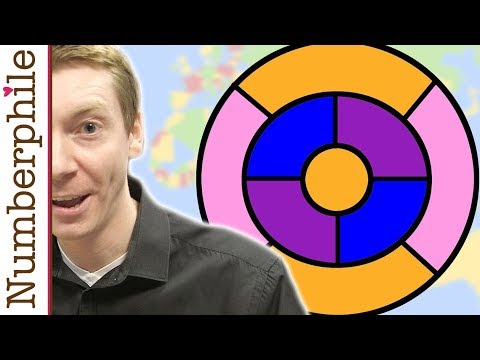
Numberphile states the four color theorem as a simple map-coloring claim. MIT OpenCourseWare places map coloring inside graph theory. Oxford's Jason Lotay raises the computer proof and proposals to avoid computers. The written record confirms the theorem, the easier five color result, and recent peer-reviewed attempts at computer-free proofs. The dispute concerns what counts as a satisfying proof.
Reality Is Mathematics in Motion: Who Is the Observer?
Mathematics works, but the voices disagree about why. Frenkel’s Einstein anecdote shows thought as embodied routine; Wolfram and the Beeyond Ideas narrator treat observers and brains as mathematical processes; the gravity clock makes abstraction physical. Morrison’s work on materiality warns that models do not exhaust reality, so description succeeds without closing the question.

Storks Don't Deliver Babies: How Clever Data Lies to You
The dossier sets Numberphile's stork-and-baby story beside Study Hall's land records, Udacity's tool-shift argument, and the verified definition of Simpson's paradox. The clips do not all address aggregation directly, yet they show why recording, grouping, and computing choices matter when a trend is read. The paradox is a warning about which table you trust and which comparison you make.

The Conversation You Can't Stop Replaying
The dossier listens for the gap between anticipatory worry and post-event replay. One speaker describes days of pre-event dread; another describes a shift toward going with the flow. Psychological literature defines rumination as sustained repetition of negative thoughts, while the remaining acts show public events where panic is managed or shattered by violence. That contrast matters for anyone who replays a social failure.

Keep More, Leave Sooner: The Savings Rate That Buys Your Freedom
Savings rate turns income into a kept number: Humble Penny asks how much you kept, Asian Dad Energy credits 50% for cushioning a layoff, and Gabrielle reads 28% from a budget. Nick Invests points to calculators; PensionCraft finds the Bank of England's savings-rate box. Summers on tax policy and returns, plus Japan's household data, show the rate is policy-sensitive, not just personal.

The 99% AGI Illusion: What a Benchmark Can't Prove
The clips treat ARC AGI as a North Star and a scoreboard: 99% AGI, 84% on Gemini 3 Deep Think, Grok 4 reasoning claims. Written references define GPT and AGI broadly while an AGI benchmark paper stresses measurement limits. Alex Ratner's red team line points to the institutional work behind evaluation.