Curated Sub-Topic Tag
#Deep Tech & Biotech
Verified primary-voice documentaries on Deep Tech & Biotech, or enter a sharper question below to cut a new film live from 200M+ spoken records.

CRISPR's Risky Revolution: From He Jiankui to the First Approved Cure
The dossier follows CRISPR from CASGEVY's FDA approval to the Asilomar guidelines and the He Jiankui affair. CNBC reports a therapy for two inherited blood disorders; Bloomberg recalls scientists writing ethical rules after 1975. Isaacson and Big Think put DNA at the center of identity, while Ferriss and CrashCourse show public conversation drifting into sponsorship and jokes. Patent disputes shadow the Nobel technique.

Leonard Susskind: The Universe Isn't Made of Points
MIT's lecture frames QFT as an interpretive problem before it is a formalism. Susskind talks about programming a quantum field theory, Ash distinguishes point particles from strings, and Jaimungal points to foundations. The written record names the next step: extend QFT from Minkowski spacetime to curved spacetime, while quantum gravity remains unresolved.

Sean Carroll: Why Quantum Weirdness Refuses to Stay Small
Lex Fridman asks Sean Carroll to define entanglement as a foundational quantum idea. PBS Space Time reaches back to Schrödinger, while a 2025 Nobel report and Arvin Ash trace tunneling and classical failure. Jim Al-Khalili tests duration through attention, and Aperture asks viewers to imagine nothing. The written record supplies definitions, teleportation context, and Scarani's first-encounter account for simple explanations.

Carlo Rovelli Says Space Is Not There
Rovelli's name now travels through podcasts, lectures, and devotional YouTube as shorthand for one branch of quantum gravity. The excerpts show the theory as a set of tools applied to general relativity, a relational account of quantum properties, and a competitor to string theory. The written record keeps that competition precise: loop quantum gravity is one quantum gravity program among others, not the only one.

The Fusion Breakthrough Was Real. The Hard Part Starts Now
The dossier separates a laboratory first from an energy system. Ziroth and TED-Ed frame fusion as a star on Earth, while MIT cost lectures and Ziroth's SMR survey keep attention on construction economics. Kirtley's deep space remark adds a practical constraint: compact systems cannot waste mass or heat. The written references confirm fusion's potential while leaving engineering and market questions open.
Nuclear Waste Will Outlive Every Government
Nuclear waste planning is a physics problem and an institutional one. Wendover's fallen civilizations and School of Life's chronic condition frame a 10,000 year maintenance task, while MIT's uranium cost question and corrosion studies show the bill arriving through rock, steel, and changed supply chains. Stanford's Medicare aside marks a familiar design flaw: the long-term option often carries the disadvantage.

Decoherence: Why Quantum Weirdness Vanishes the Moment We Look
PBS Space Time frames decoherence as the reason quantum effects do not show up at familiar scales. Brian Cox treats quantum mechanics as the root description of reality, while Steve Girvin's course foregrounds errors and correction. The written references sharpen the point: decoherence is information loss to an environment, and many worlds keeps the wave function without collapse.

Time Crystals Are Real, But What Can They Actually Do?
Time crystals are a real phase of quantum matter, not a movie device for rewinding events. The spoken clips show how popular culture primes the imagination while Yale's lecture, PBS Space Time, and Al-Khalili frame the actual quantum rules. Peer-reviewed work on Floquet and tesseract time crystals ties the idea to laboratory and quantum-computer experiments.

The Encryption Deadline Nobody Owns
Post-quantum cryptography is no longer theoretical: NIST ran a public competition and standardized algorithms, and Google has urged migration. Yet the speakers describe a gap between standards and deployment. Aaronson frames the competition as a design problem; Savill and ExplainingComputers frame the deadline as organizational. Barker's adoption research and Alkhatib's performance benchmarks show the costs that follow.

Should We Rewrite Life? Inside CRISPR's Astonishing Power
Jennifer Doudna describes CRISPR as a way to edit the instructions inside cells. She also admits that being the face of a scientific revolution is a lot of pressure. The He Jiankui affair and Doudna's published responses turn that pressure into a governance problem: who reviews edits, who reports failures, and who enforces limits across borders.

The Cold War Race for Space Never Really Ended
The dossier tracks how Cold War space achievements became state messaging. Jensen Huang links the race to earlier technology contests; BBC reporting notes the Outer Space Treaty kept orbit peaceful for decades; Soviet and space propaganda scholarship shows governments converted launches into claims of superiority. Credibility, deterrence, and public belief sit beside engineering, and the speakers disagree about whether law or rivalry sets the tempo.

Fusion Needs Materials That Don't Exist Yet
Liam Fedus describes AI for atoms at Periodic Labs, David Kirtley traces Helion's roots through advanced materials and rocket work, and Tony Fadell frames product engineering as a chain of concrete challenges. The written record narrows fusion's materials problem to activated components, nuclear science facility testing, and shipboard cost constraints. The shared claim: progress depends on qualification and systems integration as much as plasma physics.

SpaceX Has More Buyers Than Shares: Why It Can Afford to Say No
SpaceX's president sits where Starship engineering meets capital markets, and the excerpts show Shotwell weighing vehicle mass and landing systems against investor demand and public disclosure. The written record confirms her role as president and COO, while the interviews show how operational choices become public arguments. The result is a dossier about operations as a public act, with hardware, shareholders, and press access treated as connected problems.

The Engine That Ate SpaceX
Tim Dodd finds a forest of Raptor 2 engines. Founders Podcast says Raptor production became the Starship bottleneck that drew disproportionate resources. Ellie in Space links future Starship fixes to Raptor 3, while NASASpaceflight watches health markers during a single sea level Raptor burn. Flight records show 15 Starship launches by November 14, 2026, with 10 successes and 5 failures, keeping engine reliability central.

Spaced Repetition: Does the Memory Hack Really Work?
Spaced repetition is older than the apps: flashcards, review intervals, and retrieval practice. Tim Ferriss points to SuperMemo; Wanderloots describes AI scheduling by error rate; Liam Porritt and Erin McGurk translate the method into study routines. The peer-reviewed record supports interval scheduling while separating it from simple rote repetition.
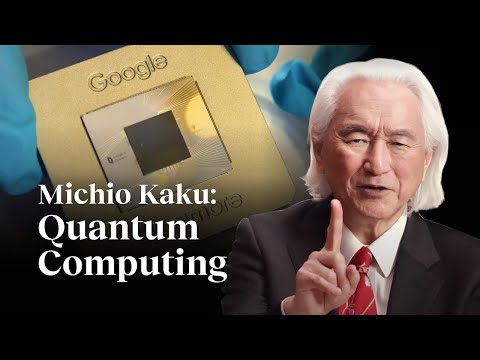
Feynman's Atomic Bet: Build a Computer Out of Quantum Weirdness
Quantum electrodynamics describes how light and matter interact, and Feynman's diagrams made that theory usable. The speakers disagree less about the physics than about intuition: Yale's lecture calls it hard to follow, while Kaku and Wolfram extend Feynman's vision toward quantum computing. The archival voice keeps the motive simple: fun, even when the result wins a Nobel Prize.

Your Mind Is a Theater: Bernard Baars and the Global Workspace
Global workspace theory, introduced by Bernard Baars in 1988, treats consciousness as information broadcast across a cognitive architecture. Philip Goff places it beside IIT under specific philosophical assumptions. Arvin Ash notes that researchers still lack a settled definition of consciousness. Alex Gómez-Marín values multiple theories while a peer-reviewed critique asks whether GWT's workspace really explains experience.

The Book Has No Color Until You Look: Rovelli's Relational Universe
The dossier follows Rovelli's claim that quantum properties are not intrinsic or absolute but relational. Theodore Spyropoulos states the position plainly; Michel Bitbol and Chiara Marletto place it among rival interpretations; Curt Jaimungal and Alex O'Connor test what shared scientific reality can mean if states depend on relations. The written record anchors the 1996 paper and later indexed work.

The Doomsday Paradox: Why Nuclear Deterrence Holds and How It Could Unravel
Annie Jacobsen calls nuclear war's absence an absurd paradox under mutual assured destruction. BBC reporting treats MAD as a shared Cold War vocabulary; CNBC finds the live tension in adversaries not knowing whether a U.S. president would strike first. Historical work on ABMs shows that defenses can destabilize the doctrine by blurring retaliation and first use.
Quantum Computers Are Coming for Your Secrets
PBS Space Time links useful quantum computing to a quantum internet, Jim Al-Khalili cautions that entanglement speculation outruns expertise, and Cool Worlds explains ensemble superpositions. ByteMonk and Unveiled describe early gains and classical limits, while written sources add Q-Day's theoretical timing and post-quantum cryptography's unproven status. The dossier keeps speakers' claims central and separates demonstrated limits from projected threats, including Waterloo's error mitigation work.

The Catholic Priest Who Predicted the Big Bang
Cosmic inflation describes an early exponential expansion, not the Big Bang's origin story. Primordial fluctuations, density variations in that early universe, are the leading explanation for structure. The speakers split between textbook caution, cosmological evidence, and popular narration: Arvin Ash separates expansion from origins, Cool Worlds and Sleepy Science trace quantum seeds, and Perlmutter asks how strong the evidence really is.
The Longevity Evidence Gap: Why the Best Advice Is Still a Guess
Peter Attia says the best diet for aging is not definitively known. Ben Bikman treats human longevity correlations cautiously, while BioViva and summit entrepreneurs push gene therapy and rapamycin claims into commercial view. The written record, including dietary restriction studies and Long Life in a Pill?, shows plausible mechanisms but sparse clinical proof.

Mamba's Long Game: Can State Space Models Outrun Attention?
The documentary cuts between public conference language and technical evidence: Mamba, developed by Albert Gu and Tri Dao, treats sequence modeling as a state space problem, while speakers at Harvard Law, a16z, NVIDIA, and Oxford Mathematics describe models, blueprints, and promises. Verified literature clarifies selective SSMs and parallel scan; spoken excerpts show how broadly the word model travels.

There Is No Best Investment: What Fusion and Fission Teach Us About Risk
The dossier tracks a practical problem: fusion power may promise clean energy, but its fuel supply, capital costs, and policy case remain tied to fission and investor mandates. Ian Hutchinson and Kyle Hill draw the physics distinction; CNBC shows China's building race; Dennis Whyte imagines Mars fuel; Ziroth notes tritium's fission dependence. Dr. Dicle supplies the investment policy test: no technology is best without a defined investor.
CRISPR Can Edit the Wrong Gene: The Off-Target Problem
The dossier follows off-target risk from computational prediction to delivery. One speaker frames drug discovery as many-to-many matching; another raises titer to increase penetrance; a clinician warns that public-health measures carry off-target effects. CRISPR researchers describe unintended edits as a central safety problem, while clinical reporting pushes toward detection and measurement. The speakers do not agree on controls, but they converge on the need to name and quantify unintended change.
Memory Is a Place You Build, Not a File You Save
The dossier gathers six spoken clips about memory techniques, from Liam Porritt's Cambridge study advice to Bruce Hornsby's song title. The through line is practical: build a place, test recall, schedule returns, and accept forgetting as data. The written record adds schedulers and decay models, which sharpen the trade-off between vivid encoding and disciplined review.

Fusion Finally Broke Even. So Where's My Power?
ColdFusion opens with energy as the resource that moves everything, while David Kirtley adds a deep-space rule: waste nothing. CNBC ties fusion research to bomb history, Ziroth marks the 2022 laser ignition result, Ben Miles describes microwave drilling for geothermal heat, and Google Research explains quantum resource estimation. Together they show why tokamak net energy is a systems claim spanning reactors, lasers, history, and heat.

Your 3 A.M. Demon Is Probably a Sleep Disorder
These six acts show parasomnias crossing clinical and popular ground. Mayo Clinic's clinician questions clonazepam; Therapy in a Nutshell cites 1 to 3 percent adult night terrors and trauma-driven nightmares; Because Science turns sleep paralysis into a demon visit. Written references place night terrors in early NREM sleep and sleepwalking in the parasomnia family, while one comic and one ghost-hosting turn fear into performance.

Is Spooky Action Real? The Experiment That Tests Quantum Entanglement
Quantum entanglement means a group's joint state resists independent description, and nonlocality means measurement statistics resist local hidden variables. David Kaiser's cosmic Bell test, Oxford gravity proposals, and cavity feedback experiments turn that claim into hardware. Duarte's Fundamentals of Quantum Entanglement indexes the experiments; the speakers show why correlations count as evidence.

Can This Machine Finally Bottle a Star?
Fusion reactor assembly is a stack of engineering problems: plasma confinement, magnets, vacuum vessels, robots, software, and logistics. ITER's multinational construction gives the public test case, while CAD and CNC clips show the unglamorous reverse-engineering work behind hardware. The written record adds assembly logistics and robot control, and speakers split on whether fusion is imminent, commercially viable, or weaponizable.
Why You Forget 80% of What You Read
Across six clips, creators explain the Ebbinghaus curve with unusual consistency: memory drops fast, review slows the drop, and tools now automate the schedule. The written record adds nuance. A 2025 peer-reviewed paper treats the curve as nonlinear, while Hacker News practitioners and a 2026 education study push spaced repetition toward email prompts, adaptive tutoring, and AI-generated cards.

Your Anxious Mind Is a Storyteller: How to Stop Believing Every Word
The clips mix CBT's reframing, ACT's defusion, yoga, and safety cues as anxiety tools. Peer-reviewed work ties defusion to body-image anxiety and psychological inflexibility, while ACT and CBT-I show broader evidence. The speakers keep technique and context separate: method matters, but dosage and setting decide what helps.