Curated Sub-Topic Tag
#戦争と転換点
Verified primary-voice documentaries on 戦争と転換点, or enter a sharper question below to cut a new film live from 200M+ spoken records.

CIAを麻痺させたスパイ同士の確執
この資料は、冷戦期のスパイ活動を、相反する亡命者の証言、ベルリンの秘密作戦、弾道ミサイル潜水艦の偵察、東ドイツの反体制運動を通して追う。登場する証言者は、諜報活動が官僚的で個人的であり、政治的爆発力をはらみ、道義的に妥協を伴うことを示す。記録はスパイ活動を冷戦史の欠落した次元として位置づける一方、実際の行動は、情報源、制度、公的記憶が圧力下で衝突する様相を明らかにする。

Lincoln's Darkest Decisions: What Saving the Union Really Cost
The dossier places Gallagher's lecture series at the center, then lets other speakers press Lincoln on emergency powers and racial politics. One clip notes his suspension of habeas corpus; another says he was anti-slavery but no abolitionist before the war. Comments on Grant, the penny, and western troops show how command and memory keep shifting.

1940: Britain's Last Line Was the Sky
The Battle of Britain was decided by an integrated air defense system: radar, command and control, and fighter squadrons. Imperial War Museums dates the campaign July to October 1940; History Hit frames it as a clash whose result was decided in the air. Modern commentary on Ukraine and air-defense technology shows the same contest between interception and civilian terror, not just aircraft counts.

Cold Starts: Why a Little Discomfort Builds Everything
Across six excerpts, Dr. Rhonda Patrick asks whether reducing stress always helps the brain. NutritionFacts counters that cold immersion may undercut muscle. Bloomberg and CNBC show networks and sanctions at scale, while Cold War and Alaska segments reveal infrastructure beneath geopolitics. The Cold Start literature names the launch problem: a network has little value until enough compatible users arrive and justify the build.

Same Targets, Different War: The Middle East's Century of Fire
Mark Felton shows that WWII bombing linked Tel Aviv, Bahrain, and Dhahran before today's headlines. Kings and Generals and Nada Majdalani frame Gaza as a new ignition point, while Johnny Harris notes that Middle East is an arbitrary European label. Written histories of civilization and Jordanian border law show borders as layered institutions, not fixed lines.

The Cold War Race for Space Never Really Ended
The dossier tracks how Cold War space achievements became state messaging. Jensen Huang links the race to earlier technology contests; BBC reporting notes the Outer Space Treaty kept orbit peaceful for decades; Soviet and space propaganda scholarship shows governments converted launches into claims of superiority. Credibility, deterrence, and public belief sit beside engineering, and the speakers disagree about whether law or rivalry sets the tempo.

Who Gets to Decide How You Think?
This dossier tracks six speakers testing what critical thinking means when an argument fails. Peterson returns to the Communist Manifesto; Krauss calls faith the enemy of science; Sarkar admits using AI to think about thinking. Written references define formal fallacy as invalid structure and false dilemma as a premise that limits options. The speakers agree on scrutiny but split over doctrine, conformity, tools, or trust.

The First Shot Is Never the Beginning
The dossier treats civil war as a recurring technical problem: how a political dispute becomes organized violence. A Yale lecture promises the outbreak of warfare; Epic History marks 1918 as a new conflict; OverSimplified cites territorial votes; Sam Harris names a factional split; Sudanese and Chinese cases show suffering and victory. Caesar's Rubicon supplies the written hinge: a commander's irreversible move.
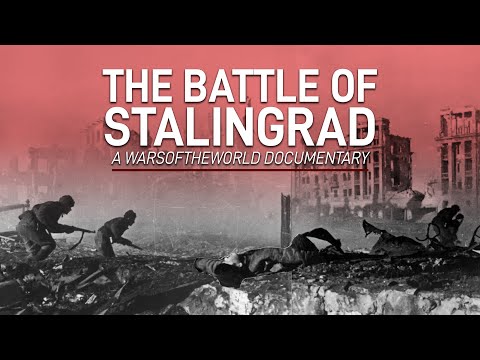
Stalingrad: The Last Stand That Broke an Army
These six excerpts move from Barbarossa's scale to the Sixth Army's encirclement and the sniper duel, with one Viking raid clip breaking the frame. The written record confirms Stalingrad as an Eastern Front turning point and places Soviet films such as the 1949 two-part Battle of Stalingrad in a longer cinematic memory. The dossier keeps the speakers' claims and the gaps between them in view.

Midway: The Battle That Broke Japan's Navy
The excerpts move from aircraft counts and counterfactual speculation to Roosevelt's infamy line and a stray Stalingrad anecdote; Mark Felton's prisoner testimony and SLICE's carrier assembly return the story to Midway. John Ford's 1942 short documentary and the verified June 4-7 date remind viewers that images and chronology were already being shaped. The dossier keeps speakers' verbatim claims in front and separates operational detail from archival drift.

Berlin Was Starving. The West Sent Planes.
The dossier follows the Berlin blockade from postwar occupation to airlift logistics. Fox's account of occupation violence sits beside Felton's road and rail cutoff, GeneralEnglishHelp's currency trigger, and WarsofTheWorld's reversal from bombing to supply. The RAAF squadron and blockade records show a corridor becoming a Cold War test. The speakers do not agree on tone, but they converge on pressure, access, and supply.

Who Decides When the Drone Is Already Moving?
The excerpts describe autonomy as a bundle of sensing, planning, and action, not a single switch. Kai-Fu Lee names the control problem in weapons; McKinsey names novel risk; drone research and LAWS definitions show how quickly those abstractions meet battlefield hardware. Helsing and academic drone papers supply the concrete setting: perception, navigation, and strike choices compressed into milliseconds.

Stalingrad: The City That Eats Armies Street by Street
The excerpts treat urban combat as a problem of exposure, entry, and superior force. Drew Durnil warns that a street can become a kill zone in seconds. Garand Thumb frames city fighting as survival against a stronger enemy. John Spencer and WarsofTheWorld return to Stalingrad, Grozny, and Ukraine, while the written record, from Concrete Hell to Stalingrad Lives, shows logistics and room clearing shaping the battle.