PastNoise
Business & Wealth·6 acts·6m 14s·1/6 primary·4 citations·Cut from 1,538 live hits

The Liquidity Grab: Who Really Wins When Money TightensQuantitative Tightening Market Liquidity · Primary Podcast Clips & Verified Transcript

From stop-loss hunting to the Fed's tightening retreat, six acts on who captures cash when markets squeeze.

Strong Hands Are Forced to Grab Liquidity

ACT I · Words of Rizdom · 6m 14s

Strong Hands Are Forced to Grab Liquidity

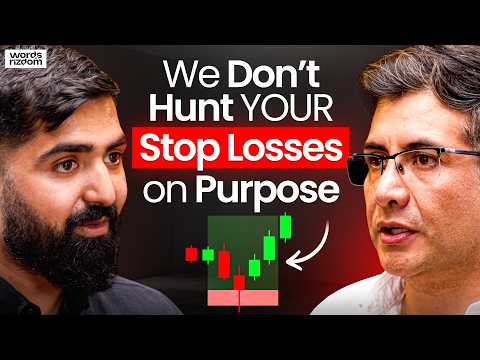
own institutions, they grab liquidity, they take the stop- losses of the retails, they

00:00 / 06:14
0%
Highlights:
ACT ICOMMENTARYWords of Rizdom · Sep 17, 2026

Strong Hands Are Forced to Grab Liquidity

An ex-market maker says institutions grab liquidity and take retail stop-losses.

Click any timestamp to jump directly

30-Second Quick Reference · Verified Takeaways

6 acts · 4 citations · Last Verified Nov 21, 2026
  • 01An ex-market maker says institutions grab liquidity and trigger retail stop-losses, describing market making as a forced hunt for counterparties.
  • 02CNBC reports currency-adjusted Treasury buying costs rose meaningfully in six months, as the Fed shifted from QE buyer to balance-sheet retreat.
  • 03Professor G quotes the Fed chair ending quantitative tightening, linking easier borrowing and spending to the policy pivot markets are watching.
  • 04Brian Jung says global liquidity tightened in Q4 2024, and crypto felt it, tying balance-sheet policy to speculative asset funding.
“An ex-market maker says institutions grab liquidity and retail stops. Fed calls balance-sheet retreat tightening.”

Core Synthesis

Quantitative tightening drains reserves and money supply, but the interviews show liquidity is also taken through market structure: stop runs, Treasury demand shifts, and crypto funding. An ex-market maker describes institutional grabs, while CNBC and academic studies trace higher currency-adjusted Treasury costs and funding gaps. The real disagreement concerns who absorbs the bite. That question runs through every clip.

01

The Market Maker's Stop Hunt

Rizdom's ex-market maker describes liquidity as something institutions seize: they take retail stop-losses and, in his words, manipulate the market. That claim is vivid but unverified by the other clips. The written evidence defines tightening more clinically, as central banks shrinking money supply. The contrast matters because both describe the same pressure from opposite ends: one market participant's tactic, one policy tool.

Speaker alleges stop runs; policy definitions describe reserve drains without proof.
02

Treasury Buyers Step Back

CNBC focuses on price and demand, not conspiracy. Currency-adjusted costs for foreign Treasury buyers rose meaningfully over six months, while the Fed moved from quantitative easing to retreat. That shift removes a price-insensitive buyer and raises funding costs for governments and firms. Academic work on India's NIFTY and real estate developers shows similar transmission: dollar tightening and NBFC liquidity stress create funding gaps far from Washington.

Foreign demand and Fed demand both shape Treasury liquidity now.
03

Crypto Feels the Drain

Brian Jung says global liquidity tightened in Q4 2024, and Bitcoin and crypto responded. His clip is short on mechanics but clear on sequence: balance-sheet policy changes reach speculative markets through funding and risk appetite. Professor G and Akshat Shrivastava supply the textbook labels, QE and QT, while 20VC notes weird liquidity and a 40 percent drawdown. The through-line is transmission, not a single villain.

QT reaches crypto through funding costs and shifting risk appetite.

Where Voices Converge

  • • Quantitative tightening reduces liquidity and money supply, and speakers describe tighter conditions across Treasuries and crypto.
  • • Market structure matters: stop runs, foreign Treasury demand, and funding gaps transmit policy pressure unevenly.

Nuance & Unresolved Tension

  • • The ex-market maker alleges deliberate manipulation, while CNBC and definitions emphasize prices, demand, and policy mechanics.
  • • Ending QT may ease borrowing, but speakers disagree on whether that restores liquidity or only slows the drain.

Explore Related Questions

Complete Timestamped Bilingual Transcript

Full 6-Act Spoken Transcript Archive

Click any timestamp to jump
ACT I · Words of Rizdom · 00:00 - 01:35

Strong Hands Are Forced to Grab Liquidity

ACT II · CNBC · 06:14 - 07:49

Treasury Demand Shrinks as the Fed Exits

ACT III · Investing Simplified - Professor G · 03:09 - 03:55

The Fed Signals the Tightening Is Ending

ACT IV · Akshat Shrivastava · 05:14 - 05:54

QT Does Not Mean Money Vanishes

ACT V · 20VC with Harry Stebbings · 21:50 - 22:35

DeepSeek's Record Round Defies Tight Liquidity

ACT VI · Brian Jung · 06:26 - 07:19

Bitcoin Tracks Global Liquidity, Not Fed Talk

Want sentence-level movie clips, connected-speech breakdowns, or daily spoken English drills instead of long-form interviews? Our sister tool WinkLingo is purpose-built for that workflow.

Key Questions & Reference Guide

Frequently Asked Questions

What are the core takeaways on Quantitative Tightening Market Liquidity?

Quantitative tightening drains reserves and money supply, but the interviews show liquidity is also taken through market structure: stop runs, Treasury demand shifts, and crypto funding. An ex-market maker describes institutional grabs, while CNBC and academic studies trace higher currency-adjusted Treasury costs and funding gaps. The real disagreement concerns who absorbs the bite. That question runs through every clip. Key insights include: An ex-market maker says institutions grab liquidity and trigger retail stop-losses, describing market making as a forced hunt for counterparties. CNBC reports currency-adjusted Treasury buying costs rose meaningfully in six months, as the Fed shifted from QE buyer to balance-sheet retreat.

Which primary podcasts, lectures, and speakers are featured in this Quantitative Tightening Market Liquidity screening?

This screening stitches 6 continuous acts featuring voices from Words of Rizdom, CNBC, Investing Simplified - Professor G, Akshat Shrivastava, 20VC with Harry Stebbings. Every act separates primary voices from commentary and links directly to the original timestamp.

Where do experts agree and disagree on Quantitative Tightening Market Liquidity?

Convergence: Quantitative tightening reduces liquidity and money supply, and speakers describe tighter conditions across Treasuries and crypto. Open tension: The ex-market maker alleges deliberate manipulation, while CNBC and definitions emphasize prices, demand, and policy mechanics.

Does this Quantitative Tightening Market Liquidity page include a searchable timestamped transcript and citations?

Yes. Open the Interactive Transcript tab to click any sentence and jump directly to that exact second in the video, export Obsidian/Notion reading notes, and verify 4 cross-referenced scholarly or encyclopedic citations including "Quantitative tightening".

More Documentaries in This Topic

Business & Wealth →
Money Is Not Math: It's Psychology
Business & Wealth5m 29s

Money Is Not Math: It's Psychology

Across six interviews, Morgan Housel separates building wealth from keeping it: optimism and risk make money, while conservatism protects it. He flags envy, leverage, and luck as forces that shape decisions more than spreadsheets do. The written record for The Psychology of Money carries indexed academic provenance, but the spoken excerpts carry the practical argument.

6 acts2 primary2 citations
The Greatest Thing Steve Jobs Built Wasn't the iPhone
Business & Wealth5m 53s

The Greatest Thing Steve Jobs Built Wasn't the iPhone

Peter Thiel's case for startup monopoly is less a celebration of size than a warning about imitation. In Zero to One and in these interviews, he treats business design as the central invention, frames sacrifice and competition as traps, and tells founders to quit safe jobs for asymmetric bets. The Bloomberg and Garry Tan clips show the same doctrine under political and personal pressure.

6 acts4 primary4 citations
The Culture That Made Apple Feel Inevitable
Business & Wealth5m 07s

The Culture That Made Apple Feel Inevitable

The dossier follows product culture through first-hand testimony: Fadell on working with Jobs, ColdFusion on Pixar's rescue, and Founders on Jobs's own Macintosh language. External references on Jobs and the 2015 film supply context, not proof. The through-line is less genius myth than operating discipline: tight reviews, launch pressure, and arguments over credit.

6 acts5 primary4 citations
You Only Get So Many Tries
Business & Wealth5m 20s

You Only Get So Many Tries

Product-market fit is the inflection point where a product finally satisfies a real market, but the path there is less about genius than about disciplined iteration. Garry Tan's timeboxing turns finite tries into a numbers game, while Ash Maurya warns that founders often distort reality to avoid the truth. The literature confirms that fit is a milestone, not a finish line, and that hypergrowth without unit economics can be a trap. The real work is to shorten the loop between honest feedback and the next experiment.

6 acts2 primary4 citations
Trust Is the Crisis Nobody Budgets For
Business & Wealth6m 23s

Trust Is the Crisis Nobody Budgets For

The Stanford forum begins with a blunt premise: trust in American society is under strain. Cambridge's moral leadership podcast asks what leaders owe in a crisis, while Zoom's CMO names empathy and transparency as practical repair tools. The research on crisis communication and organizational trust supports that claim, but the speakers disagree about how quickly words can rebuild credibility.

5 acts2 primary4 citations
The Fit Before Product-Market Fit
Business & Wealth6m 41s

The Fit Before Product-Market Fit

Paul Graham says two startup questions share an answer. Roelof Botha calls founder-market fit a key starting condition, while Eoghan McCabe describes rebuilding Intercom by hiring people with fresh ambition. Reddit's rejection by YC and later reversal show judgment is revisable. Against YC's 5,000-company record, the dossier treats fit as a working test with real limits.

6 acts4 primary4 citations