Curated Sub-Topic Tag
#ドーパミン・集中力
Verified primary-voice documentaries on ドーパミン・集中力, or enter a sharper question below to cut a new film live from 200M+ spoken records.

The Focus Premium: Why Deep Work Is the Rarest Advantage
Newport treats deep work as a trainable practice, then tests it against office habits that reward visible activity. A peer reviewed review and a timeblocking definition ground his attention-management claims in written evidence, while collaborators note how self-help and social media reshape the conversation. The speakers disagree less about focus than about how to make it durable.

Your Phone Is a Dopamine Slot Machine
Across six excerpts, Lembke and Huberman describe dopamine as a basic learning and motivation chemical; Kotler and Brooks trace how on-demand media and phones can pull attention into compulsive loops. Raza proposes curiosity as a practical exit, while Yousef challenges screen-time myths. Peer-reviewed work on behavioral and mobile phone addiction supports treating these habits as real, measurable patterns rather than private failures.

Why You Feel Behind: The Hidden Cost of Waiting to Be Perfect
Perfectionism often looks like high standards, but the clips show it working as avoidance, negotiation, and identity protection. Jon Youshaei uses Mozart's output to challenge the myth that quality requires endless delay; Huberman's guests track how self-worth gets fused to achievement; Tristan Harris describes platforms that reward comparison. Psychology research links perfectionism, self-esteem, and procrastination, while replication work tests whether self-efficacy mediates the damage.

Your Phone Is Stealing Flow: How to Take It Back
Arthur Brooks ties phone habits to dopamine and learning, while Sahar Yousef tests screen-time claims with recorded evidence. Creators show digital minimalism, vlog boundaries, and regret, and the literature names doomscrolling and problematic smartphone use. Peer-reviewed work adds context on dependence and whether the phone is the addiction or the channel. The dossier keeps the speakers' words central and asks which fixes change behavior rather than only measuring it.

The Brain's Secret Clock Runs on Uncertainty
Beau Lotto says every behavior reduces uncertainty. A meditation teacher says separating an urge weakens its hold. A neuroscience explainer says mechanism gives people flexibility over protocols. Dartmouth's panel frames perception as active, not passive. External work on chronoception, Eagleman, fMRI interval timing, and P300 spans adds measurement: the brain's sense of duration depends on attention, prediction, and the evidence it is processing.

The Dopamine Detox Backfire: Why Pleasure Is Not Motivation
Tim Ferriss's month without caffeine opens a practical question: what changes when quick rewards disappear? Andrew Huberman and Read Montague locate motivation in effort and expectation, while detox videos sell a reset. Digital detox research and clinical withdrawal studies show breaks can help, but they do not guarantee a clean dopamine repair, and the evidence remains narrower than the promise. That gap matters for viewers.

Jumping Into Ice Water: What Cold Plunges Really Do to Your Mood
Cold water has become a consumer ritual, with Tim Ferriss showing an affordable setup while Bill Burr treats the trend as a punchline. FoundMyFitness and High Intensity Health discuss resilience, mood, and mitochondrial claims, but NutritionFacts warns of conflicting information and the dopamine promise remains shakier than the referral codes suggest. The result is a dossier of claims, commerce, and evidence around a simple bucket of cold water.

The Dopamine Motivation Gap: What the Evidence Misses
Across six clips, Andrew Huberman, Read Montague, and Anna Lembke describe dopamine as central to motivation, expectation, and reward. Commentary clips turn that science into warnings about habits and dopamine debt. The written references support dopamine's role in reward and motivation-enhancing drugs, yet none of the excerpts supplies direct evidence that vitamin D changes human motivation.

Nature Might Restore Attention. Proving It Is the Hard Part.
Across six clips, attention and nature appear as technical, animal, physical, financial, theoretical, and philosophical problems. The written record narrows the issue: ART links natural scenes to recovery from directed attention fatigue, while Hadi Dillman-Hasso asks whether nature is defined consistently. Gavarkovs shows how easily ART becomes an advertising rationale. The dossier keeps those claims separate from measured attention outcomes.

Where Hours Vanish: The Real Psychology of Flow
In these clips, Csikszentmihalyi defines flow as a scientific state, while Brooks and Kotler extend the argument into boredom, attention, and historical language. The written record confirms his role in positive psychology, yet the commentary often turns flow into a productivity promise. The dossier keeps the speakers' claims visible and separates research from motivational shorthand.

Why You Keep Postponing What Matters Most
Short rules promise a clean start: Tim Ferriss asks what is essential, Dan Zakaria times the phone slip, and Mike Dee describes deadline panic. The written record is blunter. Procrastination is avoidance coping with known costs, writer's block is non-medical, and academic interventions target last-minute rescue cycles. The two-minute rule is less a cure than a test of where attention actually goes.
Your Focus Is Going Extinct. Buddhism Saw It Coming
The witnesses split between clinical measurement and contemplative practice. Goleman calls focused attention endangered and says meditation offers answers; Headspace frames mindfulness as an end-to-end mental health platform; Mumford asks where stabilization ends and meditation begins. Buddhist sources describe bhavana and jhana, while clinical literature defines mindfulness as moment-by-moment awareness. The dossier tracks that translation and its costs.

Dopamine Isn't Pleasure: Your Brain Is Betting on What Comes Next
Schultz's experiments gave dopamine a job beyond pleasure: coding reward prediction error, the gap between expected and actual outcomes. Huberman and Montague stress that the signal tracks surprise, while commentary channels turn it into advice about uncertainty and effort. The written record anchors the claim in Cambridge neurophysiology and two 2016 reviews, with a 2024 peer-reviewed paper extending it.

The Dopamine Trap: Why You Chase What Leaves You Empty
The dossier sets clinical evidence on dopamine's role in reward learning beside creators who promise detoxes, happiness hacks, and productivity fixes. Cortese's JAMA review ties adult ADHD to reward pathway differences, while Huberman and Montague emphasize learning. The ADHD diarist's daily overwhelm and Axe's medicalization warning expose a gap between mechanism and ordinary advice, especially when clinical terms become consumer protocols.
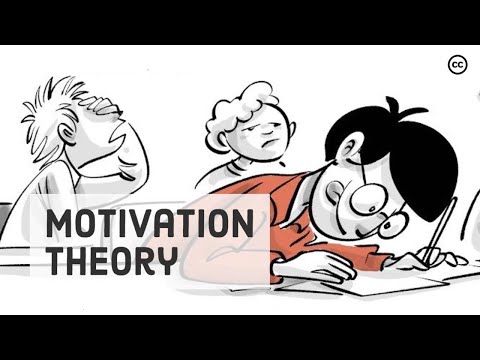
When Cash Makes People Stop Helping
Sprouts opens with a volunteer payment puzzle: cash can reduce helping. Huberman describes self-analytical intrinsic motivation, while Zimmer and Coleman treat self-determination theory as a durable model of autonomy, competence, and relatedness. The written record backs their confidence with American Psychologist and Psychological Inquiry papers on needs and goal pursuits, each cited tens of thousands of times.

Your Phone Is Eating Your Attention
Groh describes thought as a ball bearing on a flat surface, implying attention has a mechanical baseline. Munoz supplies the counterexample: five hours of scrolling and a thirty-minute work ceiling. Newport cites a Financial Times article on overstimulation, while Reiter and Nature find notifications affect focus even when the phone is merely nearby.

Why ADHD Brains Need Someone in the Room
Body doubling is a practical ADHD strategy: another person's physical or virtual presence helps initiate and finish tasks. The excerpts widen that frame, from nicotine's stimulant effect to trauma and anxiety fragmenting focus, and from a cleaning vlog to clinical warnings that ADHD is not simply a focus deficit. The EEG study suggests the mechanism is measurable, not merely motivational.

The Wanting Trap: Why Dopamine Chases What It Doesn't Enjoy
Kent Berridge frames reward as pleasure and incentive salience, a split that later speakers translate into everyday warnings about scrolling, cheap dopamine, and discipline. The cited neuroscience places these claims in the mesolimbic pathway and reward circuitry. The useful tension is between mechanistic caution and the self-help promise of rewiring.

Your ADHD Brain Isn't Lazy. It's Chasing the Next Hit
Huberman frames attention as a reward loop, while Hamdani describes nightly reflection as a way to study her own ADHD mind. Ong Mian Li reframes ADHD as more than attention deficit, and the pharmacology literature ties stimulants to norepinephrine and dopamine signaling. The dossier keeps those claims in view without settling every clinical question.

Is Low Iron Quietly Dimming Your Dopamine? The ADHD Ferritin Clue
Sasha Hamdani says iron is a cofactor for dopamine synthesis and that low ferritin can impair production. Andrew Huberman acknowledges ADHD medications help many people, yet the supplement conversation often runs ahead of the evidence. Barnard and Weiss explain ferritin as stored iron while NutritionFacts.org warns iron is also a pro-oxidant. Meta-analyses find altered iron status in ADHD, but causal and dosing questions remain open.
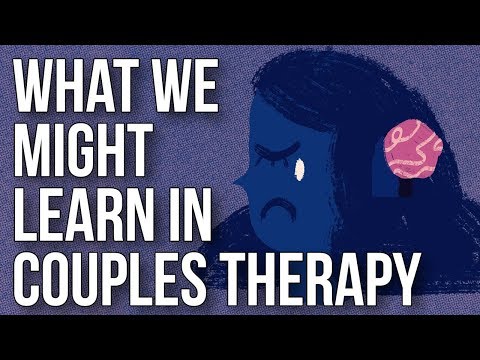
Your Feelings Are Lying: What Couples Therapy Really Fixes
Emotionally focused therapy treats couples conflict as an attachment problem, not a debate to win. The School of Life notes therapy forces private matters into a room with a trained stranger; WIRED, Call Her Daddy, and parody clips test how easily that work becomes a joke. Guillory's DOI-indexed work and Hacker News discussion place the method in a longer conversation about love and repair.

The New Cigarette? How Ultra-Processed Food Hijacks Your Reward Loop
The speakers describe ultra-processed food as engineered for repeat consumption: salt, sugar, fat, and additives tuned to reward without lasting satiety. Neal Barnard and Melissa Hemsley show the practical end of that loop, while Alex and San Francisco's lawsuit draw the smoking comparison. The research literature frames the same tension as hyperpalatability, reward hijack, and contested addiction.
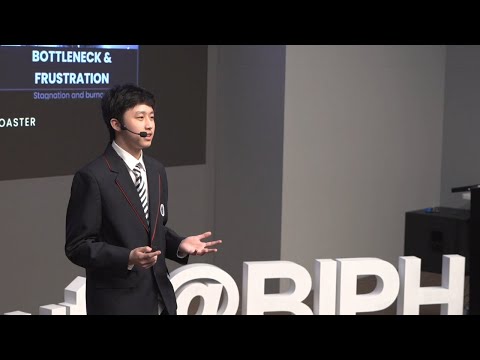
The Letdown Machine: Schopenhauer and the Dopamine Gap
Owen Shi and Andrew Huberman describe dopamine as a prediction error signal, while Read Montague corrects the shorthand and Cal Newport links it to immediacy. Schopenhauer's will frames desire as recurring expectation, yet the clips show a narrower mechanism: surprise drives learning and attention. The evidence from Schultz and Burrell keeps the claim measurable, including effort as negative value.

ADHD Isn't a Time Problem: It's a Threat Response
Sasha Hamdani calls ADHD procrastination a threat response, while Max Lugavere and NYU Langone describe executive function as the skills that carry a brain from point A to point B. Bill Dodson challenges executive function deficit theory outright. The literature supports both the avoidance pattern and the neurodevelopmental frame, leaving diagnosis and treatment to sort mechanism from coping.