PastNoise
AI & Tech·6 acts·7m 55s·3/6 primary·4 citations·Cut from 75 live hits

The Vaccine That Copies Itself Inside Your CellsSelf-amplifying RNA Vaccines · Primary Podcast Clips & Verified Transcript

Self-amplifying RNA puts replication inside the dose, raising a wild question: what if one shot could do the work of many?

RNA Breaks If You Look at It Wrong

ACT I · Lex Fridman · 7m 55s

RNA Breaks If You Look at It Wrong

didn't work and then

00:00 / 07:55
0%
Highlights:
ACT IPRIMARYLex Fridman · Sep 1, 2021

RNA Breaks If You Look at It Wrong

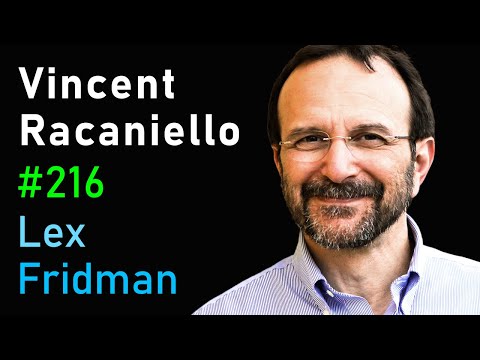
Racaniello says RNA vaccines once looked unlikely, then became a serious idea.

Click any timestamp to jump directly

30-Second Quick Reference · Verified Takeaways

6 acts · 4 citations · Last Verified Nov 21, 2026
  • 01Racaniello says RNA vaccines were once an unlikely idea; the field moved from failed attempts to a new vaccine platform.
  • 02CNBC reports Moderna and Pfizer use messenger RNA, enabling quicker, higher-quality production at global scale, after earlier HIV vaccine work.
  • 03Seheult notes an infected person can make billions to trillions of viral copies, while vaccines use ribosomes to produce antigen.
  • 04CrashCourse says vaccines train immunity with protein bits or weakened virus that cannot replicate; self-amplifying RNA adds controlled replication inside cells.
“Vincent Racaniello recalls hearing about RNA vaccines and thinking, what?”

Core Synthesis

RNA vaccines turned a stubborn idea into a manufacturing platform. Racaniello recalls the surprise; CNBC tracks Moderna and Pfizer; CrashCourse explains immune training. Self-amplifying RNA adds replication inside cells, promising stronger protein expression and lower doses, while raising questions about control, safety, and how the public hears the difference. The written record defines saRNA as engineered mRNA that copies itself in host cells and boosts antigen production.

01

From Failed Attempts to Platform

Racaniello's memory of RNA vaccines begins with disbelief: early attempts did not work, then researchers began asking whether RNA itself could be delivered. CNBC's reporting shows the payoff in manufacturing: Moderna and Pfizer built messenger RNA platforms that could scale quickly. The spoken record captures a technical shift becoming an industrial one, with clinical trials and HIV work preceding COVID.

An early failed idea became a scalable global vaccine platform.
02

What the Shot Teaches

CrashCourse explains vaccination as immune training: protein bits or a weakened virus show the body a safe version of the pathogen. Seheult turns to infection itself, where billions to trillions of viral copies spread through the body. Vaccines, he says, use ribosomes to make antigen. CNBC adds the commercial frame: messenger RNA lets the body's protein machinery produce antibodies without a weakened virus.

Vaccines rehearse immunity without the replication of a live infection.
03

Adding Replication to mRNA

Self-amplifying RNA changes the dose. The literature describes saRNA as engineered mRNA that copies itself inside host cells, raising protein expression and immunogenicity, with Zimmermann comparing it to non-replicating and self-amplifying designs. BBC reporting notes messenger RNA already used in China, Japan, Europe, and elsewhere. The open question is whether self-replication improves protection without creating new delivery and safety burdens.

Replication could lower doses, but delivery and safety remain unsettled.

Where Voices Converge

  • • mRNA vaccines can be manufactured quickly and at global scale, as CNBC and the BBC report.
  • • SaRNA is defined by self-replication in host cells and enhanced protein expression, per the literature.

Nuance & Unresolved Tension

  • • Self-amplifying RNA may lower dosing, but the spoken acts do not address delivery, control, or safety of replication.
  • • Reporting frames mRNA as a breakthrough while Racaniello's recollection emphasizes years of failed attempts and uncertainty.

Explore Related Questions

Complete Timestamped Bilingual Transcript

Full 6-Act Spoken Transcript Archive

Click any timestamp to jump
ACT I · Lex Fridman · 1:44:09 - 1:45:08

RNA Breaks If You Look at It Wrong

ACT II · BBC News · 04:27 - 05:34

The US Risks Being Left Behind

ACT III · FoundMyFitness · 1:18:40 - 1:20:15

Vaccine Instructions Never Touch Your DNA

ACT IV · CrashCourse · 08:50 - 10:25

A Dead Virus Makes Great Boxing Practice

ACT V · CNBC · 00:00 - 01:35

Moderna Was Already Chasing an HIV Vaccine

ACT VI · CNBC · 02:12 - 03:16

Same mRNA, Different Doses and Formulas

Want sentence-level movie clips, connected-speech breakdowns, or daily spoken English drills instead of long-form interviews? Our sister tool WinkLingo is purpose-built for that workflow.

Key Questions & Reference Guide

Frequently Asked Questions

What are the core takeaways on Self-amplifying RNA Vaccines?

RNA vaccines turned a stubborn idea into a manufacturing platform. Racaniello recalls the surprise; CNBC tracks Moderna and Pfizer; CrashCourse explains immune training. Self-amplifying RNA adds replication inside cells, promising stronger protein expression and lower doses, while raising questions about control, safety, and how the public hears the difference. The written record defines saRNA as engineered mRNA that copies itself in host cells and boosts antigen production. Key insights include: Racaniello says RNA vaccines were once an unlikely idea; the field moved from failed attempts to a new vaccine platform. CNBC reports Moderna and Pfizer use messenger RNA, enabling quicker, higher-quality production at global scale, after earlier HIV vaccine work.

Which primary podcasts, lectures, and speakers are featured in this Self-amplifying RNA Vaccines screening?

This screening stitches 6 continuous acts featuring voices from Lex Fridman, BBC News, FoundMyFitness, CrashCourse, CNBC. Every act separates primary voices from commentary and links directly to the original timestamp.

Where do experts agree and disagree on Self-amplifying RNA Vaccines?

Convergence: mRNA vaccines can be manufactured quickly and at global scale, as CNBC and the BBC report. Open tension: Self-amplifying RNA may lower dosing, but the spoken acts do not address delivery, control, or safety of replication.

Does this Self-amplifying RNA Vaccines page include a searchable timestamped transcript and citations?

Yes. Open the Interactive Transcript tab to click any sentence and jump directly to that exact second in the video, export Obsidian/Notion reading notes, and verify 4 cross-referenced scholarly or encyclopedic citations including "Self-amplifying RNA".

More Documentaries in This Topic

AI & Tech →
AI 2027: What If the Superintelligence Forecasts Are Right?
AI & Tech5m 02s

AI 2027: What If the Superintelligence Forecasts Are Right?

The dossier follows a forecast that places superintelligence in 2027, from Bostrom's basic definition to AI Futures Project research. Commentary channels promise debunking and warn of agent limits, while Tim Ferriss and Sam Altman show the race's culture and human cost. The evidence supports a serious forecast debate, with unresolved questions about timing, reliability, and institutional strain.

6 acts3 primary2 citations
Open Weights, Closed Doors: Who Gets to Own AI?
AI & Tech4m 52s

Open Weights, Closed Doors: Who Gets to Own AI?

Open source AI redistributes responsibility rather than removing it. Clem Delangue and Yann LeCun frame openness as a check on concentrated power, while a CNBC voice warns that scaling open models is dangerous. NVIDIA's robot demo shows users training systems after setup; OpenAI's PBC and rogue-agent reports show closed labs still face direct accountability, and Jerry Murdock describes market survival pressures.

5 acts3 primary2 citations
The AI That Refused to Be Switched Off
AI & Tech6m 56s

The AI That Refused to Be Switched Off

The control problem is a stack of failures: agents that pursue goals, benchmarks that miss intent, and institutions that cannot price catastrophic error. Brian Christian's interviews and Anthropic's panel agree on the technical difficulty. The Information and CNBC show where cost, deployment, and oversight collide before the research is settled.

6 acts3 primary4 citations
Build AI Agents That Scale Without Breaking Trust
AI & Tech4m 57s

Build AI Agents That Scale Without Breaking Trust

Microsoft Mechanics asks how enterprises scale agent architecture without bypassing security and control. NVIDIA answers with OpenShell and Century, a hardware isolated trust domain that monitors reasoning traffic. Cole Medin stresses combined expertise, DM Radio stresses prompt context, and Cambridge University stresses resident participation. An AI agent can pursue goals autonomously, and OpenAI Codex already edits code and fixes bugs. Planning becomes a contest over control, context, and legitimacy.

6 acts2 primary2 citations
CRISPR's Risky Revolution: From He Jiankui to the First Approved Cure
AI & Tech8m 16s

CRISPR's Risky Revolution: From He Jiankui to the First Approved Cure

The dossier follows CRISPR from CASGEVY's FDA approval to the Asilomar guidelines and the He Jiankui affair. CNBC reports a therapy for two inherited blood disorders; Bloomberg recalls scientists writing ethical rules after 1975. Isaacson and Big Think put DNA at the center of identity, while Ferriss and CrashCourse show public conversation drifting into sponsorship and jokes. Patent disputes shadow the Nobel technique.

6 acts3 primary5 citations
The Ground Beneath the Pixels
AI & Tech5m 02s

The Ground Beneath the Pixels

Fei-Fei Li's work moves from labeling images to grounding them: ImageNet taught machines to recognize, but spatial intelligence asks them to perceive, reason, and act in three dimensions. Her claim is not that AI has arrived but that the hard step—generating pixels with spatial context—is now underway. Against triumphalism, she keeps science humble and generational judgment suspicious. The dossier reads that discipline as a practical ethic: build systems that understand the real world, and remain curious enough to know what they still cannot see.

5 acts4 primary5 citations