PastNoise
Health & Biology·5 acts·4m 43s·2/5 primary·5 citations·Cut from 1,811 live hits

Sweat More, Live Longer? What Sauna Frequency Does to Your HeartSauna Cardiovascular Mortality Benefits · Primary Podcast Clips & Verified Transcript

Two decades of cohort data link regular sauna use to fewer fatal heart events, plus a surprising twist about the cardiologists doing the research. Wha

The JAMA Study Linking Sauna Frequency to Death

ACT I · FoundMyFitness · 4m 43s

The JAMA Study Linking Sauna Frequency to Death

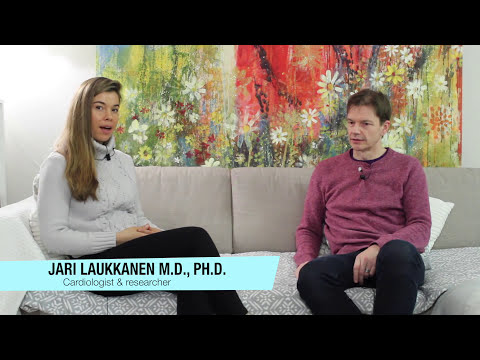
Maybe we can start off by talking about this study that you did and published about a year ago,

00:00 / 04:43
0%
Highlights:
ACT IPRIMARYFoundMyFitness · Jun 15, 2017

The JAMA Study Linking Sauna Frequency to Death

Laukkanen's JAMA study examined sauna frequency against cardiovascular and overall mortality.

Click any timestamp to jump directly

30-Second Quick Reference · Verified Takeaways

5 acts · 5 citations · Last Verified Nov 21, 2026
  • 01Laukkanen frames his JAMA study around sauna frequency and cardiovascular-related mortality, plus overall mortality, not merely relaxation or performance.
  • 02Huberman says the related studies matter because they concern stroke and other events that can kill us.
  • 03DeLauer reports that the literature now supports strong cardiovascular benefits from sauna use, while noting his protocol advice has changed.
  • 04Søberg describes sauna as a cardiovascular intervention with an additional or additive effect when combined with cold exposure.
“In Finland, sauna bathing is routine, and a JAMA cohort tied frequent sessions to lower cardiovascular mortality.”

Core Synthesis

Laukkanen describes a JAMA cohort linking sauna frequency to cardiovascular and overall mortality. Huberman extends the discussion to stroke and other lethal events, while DeLauer and Søberg frame sauna as a cardiovascular adjunct. The Mayo Clinic review and 2021 Experimental Gerontology paper support plausible mortality and healthspan benefits, but causality, protocols, and at-risk safety remain unsettled.

01

The JAMA Mortality Cohort

Laukkanen and his interviewer begin with his JAMA study on sauna frequency, cardiovascular mortality, and overall mortality. That framing is concrete: sessions per week and specific health endpoints. The Mayo Clinic review and the 2021 Experimental Gerontology paper later corroborate associations, though observational designs cannot prove that sauna itself extends life. The mortality signal is consistent across several cohorts, but the protocol details vary.

Observational cohorts show associations, but they cannot prove sauna causes longer life.
02

Stroke and Lethal Events

Huberman picks up the mortality thread by naming stroke and other events that can kill us. His point is sauna as heat exposure with systemic cardiovascular consequences. DeLauer echoes the literature, saying cardiovascular benefits are great with sauna use. Neither speaker supplies dose-response certainty, so the 2025 Finnish review's mechanistic and safety discussion matters. That review adds mechanisms and cautions, not proof of benefit.

Mechanisms are plausible, but dose, population, and safety still matter.
03

Additive Cold and Heat

Søberg says combining sauna and cold plunge may produce an additional or additive effect, and she calls sauna a cardiovascular practice. That is a protocol claim, not a mortality claim. The written evidence supports sauna bathing as a lifestyle practice with healthspan and cardiovascular associations, while the exact contrast with cold exposure remains less settled than sauna alone.

Combination protocols are promising, but direct mortality evidence remains thinner.

Where Voices Converge

  • • Speakers agree sauna use is linked to cardiovascular benefits, with Laukkanen and DeLauer naming mortality and benefit outcomes directly.
  • • Written reviews support associations between frequent sauna bathing and cardiovascular health, including Mayo Clinic Proceedings and Experimental Gerontology.

Nuance & Unresolved Tension

  • • Observational cohorts and mechanistic reviews cannot establish that sauna itself causes lower mortality; confounding and protocol differences remain.
  • • Combination with cold plunge and use by at-risk populations outpace direct mortality evidence and safety certainty.

Explore Related Questions

Complete Timestamped Bilingual Transcript

Full 5-Act Spoken Transcript Archive

Click any timestamp to jump
ACT I · FoundMyFitness · 00:37 - 02:12

The JAMA Study Linking Sauna Frequency to Death

ACT II · Andrew Huberman · 06:17 - 07:06

1,688 People, Average Age 63, Tracked for Years

ACT III · Thomas DeLauer · 01:06 - 01:53

Your Heartbeat Is Shaping Your Dementia Risk

ACT IV · The Real Truth About Health · 1:17:22 - 1:18:10

What Cardiologists Eat: The Uncomfortable Audit

ACT V · ZOE · 06:05 - 06:49

Sauna as Cardio: Why Your Heart Pumps Harder

Want sentence-level movie clips, connected-speech breakdowns, or daily spoken English drills instead of long-form interviews? Our sister tool WinkLingo is purpose-built for that workflow.

Key Questions & Reference Guide

Frequently Asked Questions

What are the core takeaways on Sauna Cardiovascular Mortality Benefits?

Laukkanen describes a JAMA cohort linking sauna frequency to cardiovascular and overall mortality. Huberman extends the discussion to stroke and other lethal events, while DeLauer and Søberg frame sauna as a cardiovascular adjunct. The Mayo Clinic review and 2021 Experimental Gerontology paper support plausible mortality and healthspan benefits, but causality, protocols, and at-risk safety remain unsettled. Key insights include: Laukkanen frames his JAMA study around sauna frequency and cardiovascular-related mortality, plus overall mortality, not merely relaxation or performance. Huberman says the related studies matter because they concern stroke and other events that can kill us.

Which primary podcasts, lectures, and speakers are featured in this Sauna Cardiovascular Mortality Benefits screening?

This screening stitches 5 continuous acts featuring voices from FoundMyFitness, Andrew Huberman, Thomas DeLauer, The Real Truth About Health, ZOE. Every act separates primary voices from commentary and links directly to the original timestamp.

Where do experts agree and disagree on Sauna Cardiovascular Mortality Benefits?

Convergence: Speakers agree sauna use is linked to cardiovascular benefits, with Laukkanen and DeLauer naming mortality and benefit outcomes directly. Open tension: Observational cohorts and mechanistic reviews cannot establish that sauna itself causes lower mortality; confounding and protocol differences remain.

Does this Sauna Cardiovascular Mortality Benefits page include a searchable timestamped transcript and citations?

Yes. Open the Interactive Transcript tab to click any sentence and jump directly to that exact second in the video, export Obsidian/Notion reading notes, and verify 5 cross-referenced scholarly or encyclopedic citations including "Heat therapy".

More Documentaries in This Topic

Health & Biology →
The Brain Needs a Body in Motion: How Exercise and Food Rewire Health
Health & Biology4m 42s

The Brain Needs a Body in Motion: How Exercise and Food Rewire Health

Tommy Wood says exercise types affect the brain differently, and The Knowledge Project links daytime exercise to nighttime lymphatic clearance. Yale frames nutrition as global health, Stanford cites a 41 percent breast-health disparity among Black women, and Chris Palmer targets glucose and insulin by removing sweets. Neuroscience reviews on mitochondria, inflammation, and sleep support these metabolic and clearance pathways, while the misconceptions list warns against overreading single mechanisms.

6 acts5 primary5 citations
Why the Clock Change Is a Health Event
Health & Biology6m 56s

Why the Clock Change Is a Health Event

Dan Pardi and Christine Blume describe sleep as daylight anchored: cellular clocks need one central body clock and consistent light. CBS, FOX 13, and KXAN clinicians call clock changes jarring for sleep and health, while Bloomberg treats standard time as policy. A 2025 systematic review and the American Academy of Sleep Medicine statement make clock transitions a public-health question.

6 acts2 primary4 citations
The Longevity Gap: What Peter Attia Really Believes
Health & Biology6m 05s

The Longevity Gap: What Peter Attia Really Believes

Across these recordings, Peter Attia appears as clinician, podcast guest, and returning subject, while David Sinclair supplies the molecule frame and Tim Ferriss supplies the personal interview. The verified Outlive citations anchor Attia's longevity book, but metformin remains mostly implicit, so viewers hear evidence being assembled around a drug the clips seldom examine.

5 acts5 primary2 citations
The Muscle Rules That Decide How You Age
Health & Biology5m 54s

The Muscle Rules That Decide How You Age

Across these interviews, Andy Galpin treats muscle fiber training as practical biology: heavy, difficult work recruits fibers, fasted exercise can be tolerated, and strength protects ordinary movement. Radák's fiber-type physiology and Kupchak's flight-plus-workout damage data frame the claims. The speakers disagree less about biology than about how much mileage ordinary trainees can safely extract from it.

6 acts3 primary2 citations
Your Brain Fog May Not Start in Your Brain
Health & Biology4m 06s

Your Brain Fog May Not Start in Your Brain

The six clips circle one claim: chronic inflammation may cloud cognition, and diet, sedentary behavior, mineral status, and ketosis are offered as levers. The evidence is strongest for long COVID, where brain barrier disruption and systemic inflammation track cognitive impairment. Yet brain fog remains a subjective symptom, so creators sell certainty faster than researchers can measure it.

6 acts2 primary5 citations
Your Body Has a Clock. Your Late Snack Is Fighting It.
Health & Biology4m 09s

Your Body Has a Clock. Your Late Snack Is Fighting It.

Panda's lab work and the podcast excerpts converge on a practical point: when people eat can matter alongside what they eat. The FoundMyFitness and Chatterjee conversations press on implementation, especially morning timing and shift work, while Lex Fridman's guests speak from athletic practice and DeLauer's clip places time-restricted eating among calorie counting, fasting, and pharmacology.

4 acts2 primary3 citations