PastNoise
Science & Cosmos·6 acts·7m 32s·2/6 primary·2 citations·Cut from 10,000 live hits

The Extinction Mirror: What Neanderthals Reveal About Our FutureNeanderthal Extinction Human Competition · Primary Podcast Clips & Verified Transcript

A strange splash 50,000 years ago, a 19 percent risk by 2100, and the buried clues to who survives next

A Strange Splash in the Bay

ACT I · NORTH 02 · 7m 32s

A Strange Splash in the Bay

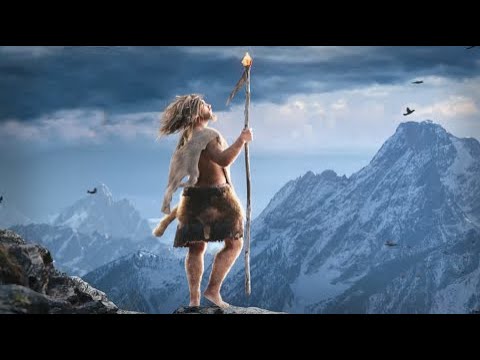
The coast of Spain

00:00 / 07:32
0%
Highlights:
ACT ICOMMENTARYNORTH 02 · Sep 23, 2021

A Strange Splash in the Bay

North 02 sets Neanderthal life on a productive Spanish coast before discussing extinction.

Click any timestamp to jump directly

30-Second Quick Reference · Verified Takeaways

6 acts · 2 citations · Last Verified Nov 21, 2026
  • 01North 02 places Neanderthals on a Spanish coast 50,000 years ago, where a sea rich with life prospered in warm summer months.
  • 02BBC Timestamp calls Neanderthal ancestry a scandal in many family trees, tying extinction to ancestors who still live in modern genomes.
  • 03Pete Kelly says separate burials in a small Shanidar area may be coincidence, though their sheer number suggests importance.
  • 04Stephen Luby calls the threat of human extinction genuine, while Michael Vassar warns unchecked greater-than-human AI could end the species quickly.
“Neanderthals vanished around 40,000 years ago, after sharing parts of Europe and Asia with modern humans.”

Core Synthesis

The dossier sets cave life and burial evidence beside modern warnings about human extinction. Neanderthals disappeared around 40,000 years ago, and hypotheses include violence, disease, and competition with modern humans. The speakers do not settle the cause; they show how extinction stories mix evidence, inference, and present-day anxiety.

01

The Spanish Coast

North 02 opens on a Spanish coast 50,000 years ago, where warm summer months made the sea rich with life. That shoreline image gives Neanderthals a concrete setting before extinction enters the frame. The written record places their disappearance around 40,000 years ago, so the scene is not a prelude to savagery alone. It is a reminder that competition unfolded inside ordinary, productive coastal settings.

Cave life was ordinary before it became extinction evidence for us.
02

Burials at Shanidar

Pete Kelly treats the Shanidar burials as suggestive, not conclusive: separate graves in a small area may be coincidence, though their number implies importance. BBC Timestamp shifts from graves to genomes, calling Neanderthal ancestry a scandal in many family trees. Both speakers keep evidence and inference apart. The burial question is archaeological; the ancestry claim is genetic; neither alone explains why Neanderthals disappeared.

Burials suggest care; genomes prove contact; neither proves extinction cause.
03

Extinction Warnings Now

Stephen Luby says the threat of human extinction is genuine, and Michael Vassar warns that unchecked greater-than-human AI could end the species quickly. Vsauce frames extinction as possibly anthropogenic, the result of human action. Elizabeth Kolbert's The Sixth Extinction places such warnings in a longer record of human-driven loss. These modern claims leave the Neanderthal case unresolved; they reveal how quickly extinction talk becomes a story about responsibility.

Modern warnings clarify present motive, not the Neanderthal extinction cause.

Where Voices Converge

  • • Neanderthals disappeared around 40,000 years ago, and modern humans overlapped with them in Europe and Asia.
  • • The speakers agree that extinction claims require caution: burials, genomes, and AI warnings each mix evidence with inference.

Nuance & Unresolved Tension

  • • Competition, violence, and disease are all plausible, but the acts never establish which pressure drove Neanderthal extinction.
  • • Modern extinction warnings can sharpen urgency while distorting how viewers read 40,000-year-old archaeological evidence.

Explore Related Questions

Complete Timestamped Bilingual Transcript

Full 6-Act Spoken Transcript Archive

Click any timestamp to jump
ACT I · NORTH 02 · 00:06 - 01:13

A Strange Splash in the Bay

ACT II · Vsauce · 00:40 - 02:15

Oxford Puts Extinction Risk at 19 Percent

ACT III · Stanford Alumni · 00:00 - 01:35

Twelve of Thirteen Human Species Are Gone

ACT IV · Big Think · 00:00 - 01:35

A Careless AGI Could End Humanity

ACT V · BBC Timestamp · 00:00 - 00:49

Your Family Tree Has a Neanderthal Scandal

ACT VI · Pete Kelly · 08:12 - 09:03

Shanidar Z Hints at Symbolic Thought

Want sentence-level movie clips, connected-speech breakdowns, or daily spoken English drills instead of long-form interviews? Our sister tool WinkLingo is purpose-built for that workflow.

Key Questions & Reference Guide

Frequently Asked Questions

What are the core takeaways on Neanderthal Extinction Human Competition?

The dossier sets cave life and burial evidence beside modern warnings about human extinction. Neanderthals disappeared around 40,000 years ago, and hypotheses include violence, disease, and competition with modern humans. The speakers do not settle the cause; they show how extinction stories mix evidence, inference, and present-day anxiety. Key insights include: North 02 places Neanderthals on a Spanish coast 50,000 years ago, where a sea rich with life prospered in warm summer months. BBC Timestamp calls Neanderthal ancestry a scandal in many family trees, tying extinction to ancestors who still live in modern genomes.

Which primary podcasts, lectures, and speakers are featured in this Neanderthal Extinction Human Competition screening?

This screening stitches 6 continuous acts featuring voices from NORTH 02, Vsauce, Stanford Alumni, Big Think, BBC Timestamp. Every act separates primary voices from commentary and links directly to the original timestamp.

Where do experts agree and disagree on Neanderthal Extinction Human Competition?

Convergence: Neanderthals disappeared around 40,000 years ago, and modern humans overlapped with them in Europe and Asia. Open tension: Competition, violence, and disease are all plausible, but the acts never establish which pressure drove Neanderthal extinction.

Does this Neanderthal Extinction Human Competition page include a searchable timestamped transcript and citations?

Yes. Open the Interactive Transcript tab to click any sentence and jump directly to that exact second in the video, export Obsidian/Notion reading notes, and verify 2 cross-referenced scholarly or encyclopedic citations including "Neanderthal extinction".

More Documentaries in This Topic

Science & Cosmos →
Where Does Information Go When It Falls Into a Black Hole?
Science & Cosmos6m 48s

Where Does Information Go When It Falls Into a Black Hole?

Brian Cox treats the smallest sensible distance as a practical limit, then ties it to information stored on a surface. Avi Loeb names the Schwarzschild radius; Crash Course and Kurzgesagt describe the horizon as a boundary hiding a singularity. PBS Space Time and BBC Earth Science frame the same edge as a contested site of gravity research.

6 acts4 primary2 citations
The 85 Percent Problem: Dark Matter or Broken Gravity?
Science & Cosmos8m 03s

The 85 Percent Problem: Dark Matter or Broken Gravity?

Neil deGrasse Tyson frames the problem as measurement of collective gravity, not a verdict on dark matter. PBS Space Time and Don Lincoln stress that dark matter is inferred only through gravity and that galactic details matter. MOND and dark energy references widen the dispute: either add unseen mass, revise gravity, or confront acceleration on cosmic scales.

6 acts4 primary2 citations
Leonard Susskind: The Universe Isn't Made of Points
Science & Cosmos5m 46s

Leonard Susskind: The Universe Isn't Made of Points

MIT's lecture frames QFT as an interpretive problem before it is a formalism. Susskind talks about programming a quantum field theory, Ash distinguishes point particles from strings, and Jaimungal points to foundations. The written record names the next step: extend QFT from Minkowski spacetime to curved spacetime, while quantum gravity remains unresolved.

6 acts2 primary4 citations
The Universe Is Speeding Up: How Astronomers Found Dark Energy
Science & Cosmos6m 57s

The Universe Is Speeding Up: How Astronomers Found Dark Energy

Charles Bailyn confirms logarithmic magnitudes while Alex Filippenko's supernova teams turn expansion history into data. Katie Mack links E=mc2 to cosmic energy budgets, Daniel Whiteson explains redshift, and the literature states that dark energy drives accelerating expansion. Two clean-energy acts use the word acceleration for terrestrial transitions, exposing a category drift in the dossier.

6 acts5 primary4 citations
The Particle Hiding Under a Mine
Science & Cosmos7m 17s

The Particle Hiding Under a Mine

The axion was proposed to solve a subtle inconsistency in fundamental forces, then became a dark matter candidate. Underground labs suppress cosmic noise, but uranium and thorium decay into radon and complicate the search, while ADMX tunes a radio-like cavity and hybrid magnonics and neutron-star research widen the field. The 2019 signal remains interesting, not definitive.

6 acts2 primary4 citations
The Big Bang Wasn't the Beginning. Here's What the Evidence Says
Science & Cosmos6m 31s

The Big Bang Wasn't the Beginning. Here's What the Evidence Says

The dossier tracks how cosmic inflation moved from a fix for Big Bang puzzles to a probe of evidence. MIT lecture material, Lawrence Krauss on impossible accelerators, and Ethan Siegel on a pre Big Bang epoch sit beside Arvin Ash's caution that the Big Bang model leaves origins unexplained. The literature confirms inflation as exponential early expansion while leaving cause and testability open.

5 acts3 primary4 citations