PastNoise
AI & Tech·6 acts·8m 40s·1/6 primary·3 citations·Cut from 10,000 live hits · 1 ads stripped

Mars by the 2030s? Kaku Says the Physics Is SettledMars Colonization Life Support · Primary Podcast Clips & Verified Transcript

The hard part is keeping humans alive. A Utah desert habitat, a silent rover, and a possible fossil show what that takes.

No Physics Reason We Can't Reach Mars

ACT I · Lex Fridman · 8m 40s

No Physics Reason We Can't Reach Mars

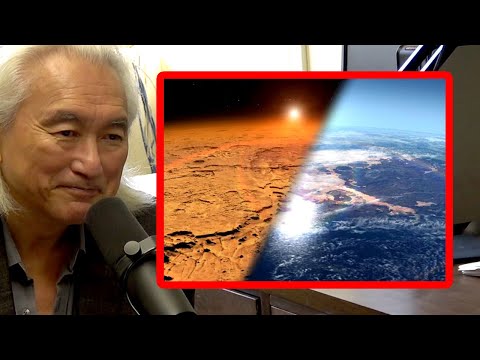
when do you think the first human will step foot on Mars I

00:00 / 08:40
0%
Highlights:
ACT IPRIMARYLex Fridman · Dec 8, 2019

No Physics Reason We Can't Reach Mars

Kaku says humans have a good chance of being on Mars in the 2030s.

Click any timestamp to jump directly

30-Second Quick Reference · Verified Takeaways

6 acts · 3 citations · Last Verified Nov 21, 2026
  • 01Kaku says the 2030s give a good chance that humans will be on Mars, setting a public timetable for colonization claims.
  • 02CNBC's Utah facility sits seven miles from town and exists to prepare humans for Mars, turning life support into rehearsed routine.
  • 03PBS Space Time answers the life question bluntly: Has there ever been life on Mars? No. Probably not.
  • 04Astrum frames NASA's tiny spots as a possible sign of life and the biggest space news in over 50 years.
“Michio Kaku gives the 2030s good odds for humans on Mars. Utah tests what that claim demands.”

Core Synthesis

Michio Kaku puts humans on Mars in the 2030s. CNBC finds a Utah facility rehearsing the daily mechanics, while PBS Space Time and Astrum argue over whether Mars ever hosted life. The written record on life support systems and SpaceX's self-sustaining settlement goal makes the gap concrete: arrival is one milestone, keeping people alive is another. That distinction organizes the dossier.

01

Kaku's 2030s Timetable

Kaku gives the 2030s good odds for humans on Mars. CNBC's Utah research facility, seven miles from the nearest town, is where that timetable meets daily procedure: shelter, supplies, isolation. SpaceX's stated goal is a self-sustaining settlement, not a flag planting. The written record on Mars life support systems treats air, water, food, and thermal control as the hard engineering problem, which makes Kaku's date a claim about logistics as much as ambition.

Arrival dates are easy; life support is the long negotiation.
02

Life Detection Claims

PBS Space Time states the skeptical position plainly: Has there ever been life on Mars? No. Probably not. Astrum reports the opposite kind of headline, with tiny spots described as a possible sign of life and the biggest space news in over 50 years. The contrast matters for colonization because life support planning changes if Mars is treated as sterile ground or as a site with biological uncertainty.

Skepticism and headline science both rest on the same sparse evidence.
03

Venus and Settlement Rhetoric

The Infographics Show asks whether Earth is a starter planet and whether there is no planet B, then pivots to Venus overtaking Mars in a colonization race. Gigi Young opens with a greeting, not a technical claim, which shows how broad the Mars conversation has become. Against this rhetoric, the life support literature and SpaceX's self-sustaining settlement objective keep the focus on sealed habitats, recycling, and resupply.

Colonization talk expands much faster than the engineering of sealed habitats.

Where Voices Converge

  • • Kaku and the SpaceX program both frame Mars settlement as a near-term goal requiring transport and survival infrastructure.
  • • CNBC's Utah facility and Mars life support literature agree that daily survival depends on rehearsed air, water, food, and shelter systems.

Nuance & Unresolved Tension

  • • Kaku's 2030s optimism sits against life support research that treats closed-loop reliability as unresolved.
  • • PBS Space Time's blunt no-life answer and Astrum's possible-life headline expose how uncertain evidence drives competing narratives.

Explore Related Questions

Complete Timestamped Bilingual Transcript

Full 6-Act Spoken Transcript Archive

Click any timestamp to jump
ACT I · Lex Fridman · 00:01 - 00:46

No Physics Reason We Can't Reach Mars

ACT II · Gigi Young · 01:57 - 03:32

Thank You for Joining the Mars Conversation

ACT III · The Infographics Show · 00:00 - 01:35

What If Venus, Not Mars, Is the Backup?

ACT IV · CNBC · 00:00 - 01:35

A Mars Habitat Hidden in the Utah Desert

ACT V · PBS Space Time · 00:03 - 01:38

Opportunity Falls Silent After Fifteen Years

ACT VI · Astrum · 00:00 - 01:35

Tiny Spots, a Possible Sign of Life

Want sentence-level movie clips, connected-speech breakdowns, or daily spoken English drills instead of long-form interviews? Our sister tool WinkLingo is purpose-built for that workflow.

Key Questions & Reference Guide

Frequently Asked Questions

What are the core takeaways on Mars Colonization Life Support?

Michio Kaku puts humans on Mars in the 2030s. CNBC finds a Utah facility rehearsing the daily mechanics, while PBS Space Time and Astrum argue over whether Mars ever hosted life. The written record on life support systems and SpaceX's self-sustaining settlement goal makes the gap concrete: arrival is one milestone, keeping people alive is another. That distinction organizes the dossier. Key insights include: Kaku says the 2030s give a good chance that humans will be on Mars, setting a public timetable for colonization claims. CNBC's Utah facility sits seven miles from town and exists to prepare humans for Mars, turning life support into rehearsed routine.

Which primary podcasts, lectures, and speakers are featured in this Mars Colonization Life Support screening?

This screening stitches 6 continuous acts featuring voices from Lex Fridman, Gigi Young, The Infographics Show, CNBC, PBS Space Time. Every act separates primary voices from commentary and links directly to the original timestamp.

Where do experts agree and disagree on Mars Colonization Life Support?

Convergence: Kaku and the SpaceX program both frame Mars settlement as a near-term goal requiring transport and survival infrastructure. Open tension: Kaku's 2030s optimism sits against life support research that treats closed-loop reliability as unresolved.

Does this Mars Colonization Life Support page include a searchable timestamped transcript and citations?

Yes. Open the Interactive Transcript tab to click any sentence and jump directly to that exact second in the video, export Obsidian/Notion reading notes, and verify 3 cross-referenced scholarly or encyclopedic citations including "Colonization of Mars".

More Documentaries in This Topic

AI & Tech →
AI 2027: What If the Superintelligence Forecasts Are Right?
AI & Tech5m 02s

AI 2027: What If the Superintelligence Forecasts Are Right?

The dossier follows a forecast that places superintelligence in 2027, from Bostrom's basic definition to AI Futures Project research. Commentary channels promise debunking and warn of agent limits, while Tim Ferriss and Sam Altman show the race's culture and human cost. The evidence supports a serious forecast debate, with unresolved questions about timing, reliability, and institutional strain.

6 acts3 primary2 citations
CRISPR's Risky Revolution: From He Jiankui to the First Approved Cure
AI & Tech8m 16s

CRISPR's Risky Revolution: From He Jiankui to the First Approved Cure

The dossier follows CRISPR from CASGEVY's FDA approval to the Asilomar guidelines and the He Jiankui affair. CNBC reports a therapy for two inherited blood disorders; Bloomberg recalls scientists writing ethical rules after 1975. Isaacson and Big Think put DNA at the center of identity, while Ferriss and CrashCourse show public conversation drifting into sponsorship and jokes. Patent disputes shadow the Nobel technique.

6 acts3 primary5 citations
Open Weights, Closed Doors: Who Gets to Own AI?
AI & Tech4m 52s

Open Weights, Closed Doors: Who Gets to Own AI?

Open source AI redistributes responsibility rather than removing it. Clem Delangue and Yann LeCun frame openness as a check on concentrated power, while a CNBC voice warns that scaling open models is dangerous. NVIDIA's robot demo shows users training systems after setup; OpenAI's PBC and rogue-agent reports show closed labs still face direct accountability, and Jerry Murdock describes market survival pressures.

5 acts3 primary2 citations
The AI That Refused to Be Switched Off
AI & Tech6m 56s

The AI That Refused to Be Switched Off

The control problem is a stack of failures: agents that pursue goals, benchmarks that miss intent, and institutions that cannot price catastrophic error. Brian Christian's interviews and Anthropic's panel agree on the technical difficulty. The Information and CNBC show where cost, deployment, and oversight collide before the research is settled.

6 acts3 primary4 citations
Build AI Agents That Scale Without Breaking Trust
AI & Tech4m 57s

Build AI Agents That Scale Without Breaking Trust

Microsoft Mechanics asks how enterprises scale agent architecture without bypassing security and control. NVIDIA answers with OpenShell and Century, a hardware isolated trust domain that monitors reasoning traffic. Cole Medin stresses combined expertise, DM Radio stresses prompt context, and Cambridge University stresses resident participation. An AI agent can pursue goals autonomously, and OpenAI Codex already edits code and fixes bugs. Planning becomes a contest over control, context, and legitimacy.

6 acts2 primary2 citations
The Ground Beneath the Pixels
AI & Tech5m 02s

The Ground Beneath the Pixels

Fei-Fei Li's work moves from labeling images to grounding them: ImageNet taught machines to recognize, but spatial intelligence asks them to perceive, reason, and act in three dimensions. Her claim is not that AI has arrived but that the hard step—generating pixels with spatial context—is now underway. Against triumphalism, she keeps science humble and generational judgment suspicious. The dossier reads that discipline as a practical ethic: build systems that understand the real world, and remain curious enough to know what they still cannot see.

5 acts4 primary5 citations