PastNoise
Science & Cosmos·6 acts·6m 29s·2/6 primary·4 citations·Cut from 4,069 live hits

Before Memory: The Hidden Forces Building a Human BrainInfantile Amnesia Brain Development · Primary Podcast Clips & Verified Transcript

From lab-grown brain cells to toddler screens, gut microbes, and evolutionary diets, scientists trace the hidden forces shaping early development.

What Makes the Human Brain Unique

ACT I · Stanford Medicine · 6m 29s

What Makes the Human Brain Unique

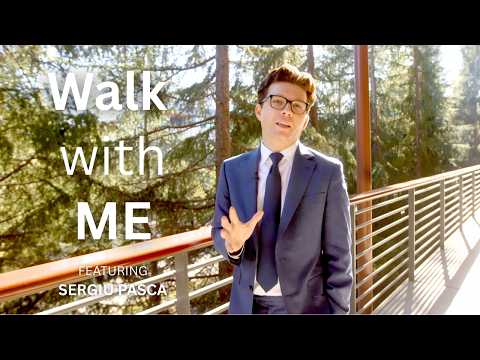
- I'm Sergio Pasca.

00:00 / 06:29
0%
Highlights:
ACT IPRIMARYStanford Medicine · Feb 26, 2026

What Makes the Human Brain Unique

Pașca says his lab studies the biology behind autism and other brain disorders.

Click any timestamp to jump directly

30-Second Quick Reference · Verified Takeaways

6 acts · 4 citations · Last Verified Nov 21, 2026
  • 01Pașca says his Stanford lab studies the biological basis of disorders such as autism, placing early brain development inside psychiatric research.
  • 02Arlotta is introduced as a Harvard professor of stem cell and regenerative biology, a credential framing her work on brain development.
  • 03BBC reporting asks how much screen time is too much and describes UK scientists studying toddlers exposed to fast-paced content.
  • 04Konopka says brain atlases will test whether cellular ratios hold across regions and change dynamically, a direct caution against fixed models.
“Adults rarely recall events before age three or four, yet the brain is building memory circuits throughout infancy.”

Core Synthesis

The dossier sets Sergiu Pașca's and Paola Arlotta's laboratory views of early brain construction beside BBC reporting on toddler screens and broader claims about diet and cell ratios. The verified literature names infantile amnesia as adults' failure to retrieve episodic memories before age three or four. The speakers describe mechanisms; the record shows how much remains unsettled about which circuits and experiences matter.

01

Laboratory Models of Infancy

Pașca describes a Stanford psychiatry lab organized around the biology of autism and related brain disorders. Arlotta arrives through stem cell and regenerative biology at Harvard. Together the two primary interviews place infancy inside cellular and developmental research, not retrospective memory tests. The amnesia references explain a behavioral endpoint, the adult failure to retrieve early episodic memories, while these scientists describe the construction work that precedes it.

Cellular development is the backdrop; infantile amnesia is the adult recall failure.
02

Toddler Screens and Timing

BBC News shifts the dossier from cells to household routines. Its correspondent asks how much screen time is too much and reports that UK scientists have studied toddlers watching fast-paced content. The question is developmental timing: what exposure does to a brain still assembling circuits. The amnesia literature does not measure screens, and the BBC segment does not claim to explain preverbal memory loss. The pairing is useful precisely because it separates a public worry from a proven mechanism.

Screen timing is a live question, not a settled cause of forgetting.
03

Unsettled Circuits and Claims

Mills and Schindler broaden the conversation to diet and gut biology, yet their excerpts do not address infantile amnesia directly. Mills speaks of bacteria, inflammation, and toxic bile in tumor progression. Schindler argues that animals are adapted to their diets through enzymes and organs. Konopka supplies the sharper caution: brain atlases may show cellular ratios that differ by region or change over time. The amnesia record is behavioral; these claims are mechanistic and often adjacent, so causal links remain unproven.

Adjacent mechanisms are not evidence that diet explains early forgetting.

Where Voices Converge

  • • Early brain development involves cellular and genetic processes that researchers model with stem cells and brain atlases.
  • • Adults typically cannot retrieve episodic memories from before age three or four, a pattern the references call infantile amnesia.

Nuance & Unresolved Tension

  • • No excerpt directly measures infantile amnesia; the connection to laboratory development is inferential.
  • • BBC screen reporting and diet commentary raise causal questions that the cited amnesia literature does not test.

Explore Related Questions

Complete Timestamped Bilingual Transcript

Full 6-Act Spoken Transcript Archive

Click any timestamp to jump
ACT I · Stanford Medicine · 00:00 - 01:15

What Makes the Human Brain Unique

ACT II · Lex Fridman · 00:00 - 00:48

The Molecular Rules That Assemble a Cortex

ACT III · BBC News · 00:00 - 00:46

Toddler Screen Time Triggers Fight or Flight

ACT IV · The Real Truth About Health · 00:00 - 01:05

Antibiotics, Inflammation, and Cancer's Fuel

ACT V · High Intensity Health · 00:00 - 01:00

Why Animals Eat Better Than We Do

ACT VI · University of California Television (UCTV) · 17:31 - 19:06

Mapping How Brain Ratios Shift in Development

Want sentence-level movie clips, connected-speech breakdowns, or daily spoken English drills instead of long-form interviews? Our sister tool WinkLingo is purpose-built for that workflow.

Key Questions & Reference Guide

Frequently Asked Questions

What are the core takeaways on Infantile Amnesia Brain Development?

The dossier sets Sergiu Pașca's and Paola Arlotta's laboratory views of early brain construction beside BBC reporting on toddler screens and broader claims about diet and cell ratios. The verified literature names infantile amnesia as adults' failure to retrieve episodic memories before age three or four. The speakers describe mechanisms; the record shows how much remains unsettled about which circuits and experiences matter. Key insights include: Pașca says his Stanford lab studies the biological basis of disorders such as autism, placing early brain development inside psychiatric research. Arlotta is introduced as a Harvard professor of stem cell and regenerative biology, a credential framing her work on brain development.

Which primary podcasts, lectures, and speakers are featured in this Infantile Amnesia Brain Development screening?

This screening stitches 6 continuous acts featuring voices from Stanford Medicine, Lex Fridman, BBC News, The Real Truth About Health, High Intensity Health. Every act separates primary voices from commentary and links directly to the original timestamp.

Where do experts agree and disagree on Infantile Amnesia Brain Development?

Convergence: Early brain development involves cellular and genetic processes that researchers model with stem cells and brain atlases. Open tension: No excerpt directly measures infantile amnesia; the connection to laboratory development is inferential.

Does this Infantile Amnesia Brain Development page include a searchable timestamped transcript and citations?

Yes. Open the Interactive Transcript tab to click any sentence and jump directly to that exact second in the video, export Obsidian/Notion reading notes, and verify 4 cross-referenced scholarly or encyclopedic citations including "Childhood amnesia".

More Documentaries in This Topic

Science & Cosmos →
Where Does Information Go When It Falls Into a Black Hole?
Science & Cosmos6m 48s

Where Does Information Go When It Falls Into a Black Hole?

Brian Cox treats the smallest sensible distance as a practical limit, then ties it to information stored on a surface. Avi Loeb names the Schwarzschild radius; Crash Course and Kurzgesagt describe the horizon as a boundary hiding a singularity. PBS Space Time and BBC Earth Science frame the same edge as a contested site of gravity research.

6 acts4 primary2 citations
The Big Bang Wasn't the Beginning. Here's What the Evidence Says
Science & Cosmos6m 31s

The Big Bang Wasn't the Beginning. Here's What the Evidence Says

The dossier tracks how cosmic inflation moved from a fix for Big Bang puzzles to a probe of evidence. MIT lecture material, Lawrence Krauss on impossible accelerators, and Ethan Siegel on a pre Big Bang epoch sit beside Arvin Ash's caution that the Big Bang model leaves origins unexplained. The literature confirms inflation as exponential early expansion while leaving cause and testability open.

5 acts3 primary4 citations
Leonard Susskind: The Universe Isn't Made of Points
Science & Cosmos5m 46s

Leonard Susskind: The Universe Isn't Made of Points

MIT's lecture frames QFT as an interpretive problem before it is a formalism. Susskind talks about programming a quantum field theory, Ash distinguishes point particles from strings, and Jaimungal points to foundations. The written record names the next step: extend QFT from Minkowski spacetime to curved spacetime, while quantum gravity remains unresolved.

6 acts2 primary4 citations
The Universe Is Speeding Up: How Astronomers Found Dark Energy
Science & Cosmos6m 57s

The Universe Is Speeding Up: How Astronomers Found Dark Energy

Charles Bailyn confirms logarithmic magnitudes while Alex Filippenko's supernova teams turn expansion history into data. Katie Mack links E=mc2 to cosmic energy budgets, Daniel Whiteson explains redshift, and the literature states that dark energy drives accelerating expansion. Two clean-energy acts use the word acceleration for terrestrial transitions, exposing a category drift in the dossier.

6 acts5 primary4 citations
The Particle Hiding Under a Mine
Science & Cosmos7m 17s

The Particle Hiding Under a Mine

The axion was proposed to solve a subtle inconsistency in fundamental forces, then became a dark matter candidate. Underground labs suppress cosmic noise, but uranium and thorium decay into radon and complicate the search, while ADMX tunes a radio-like cavity and hybrid magnonics and neutron-star research widen the field. The 2019 signal remains interesting, not definitive.

6 acts2 primary4 citations
Your Brain Is Not a Computer: The Real Limits of Biohacks
Science & Cosmos5m 21s

Your Brain Is Not a Computer: The Real Limits of Biohacks

David Eagleman frames plasticity as the brain's defining feature, yet he resists simple self-improvement scripts. His lectures contrast biological brains with computers and describe competing internal drives as a team of rivals. Creativity books promise hot showers and pink rooms; Eagleman points to deeper constraints. Sensory substitution research shows plasticity's practical reach, while Richard Davidson's remarks on children remind us that resilience varies.

5 acts4 primary2 citations