PastNoise
AI & Tech·5 acts·5m 21s·1/5 primary·2 citations·Cut from 5,592 live hits

How Machines Learn: The Hidden Lineage Behind ChatGPTBackpropagation History Hinton · Primary Podcast Clips & Verified Transcript

From a 1943 paper to a 22-word warning, five stories trace the idea that taught machines to learn.

Backpropagation Without a Single Formula

ACT I · 3Blue1Brown · 5m 21s

Backpropagation Without a Single Formula

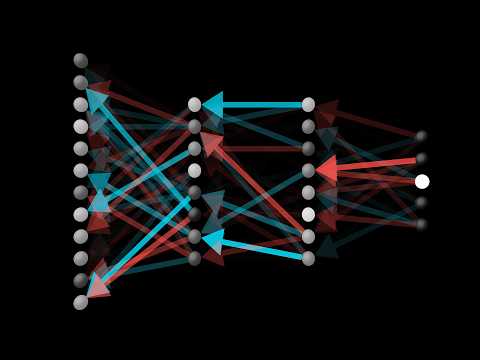
Here, we tackle backpropagation, the core algorithm behind how neural networks learn.

00:00 / 05:21
0%
Highlights:
ACT IPRIMARY3Blue1Brown · Nov 3, 2017

Backpropagation Without a Single Formula

3Blue1Brown promises an intuitive walkthrough of backpropagation before any formulas.

Click any timestamp to jump directly

30-Second Quick Reference · Verified Takeaways

5 acts · 2 citations · Last Verified Nov 21, 2026
  • 013Blue1Brown promises an intuitive walkthrough of backpropagation before formulas, framing the algorithm as the core mechanism by which neural networks learn.
  • 02StatQuest describes adding blue and orange curves, then a final bias b3, showing backpropagation as incremental parameter adjustment rather than abstract math.
  • 03Louisa Nicola traces ChatGPT, Claude, and Gemini to 1943, challenging the habit of crediting Hinton alone for every modern breakthrough.
  • 04The Times interviews Hinton as an AI pioneer, while AI Explained reports a 22-word statement making AI safety a global priority.
“Backpropagation is a gradient method, but the public story often starts with Hinton and ends with today's chatbots.”

Core Synthesis

3Blue1Brown strips backpropagation of formulas, while StatQuest walks through curves and biases. Louisa Nicola points to 1943, the Times interviews Hinton, and AI Explained tracks a 22-word safety statement. Together they show a lineage: gradient computation, neural network training, and a public argument about risk that now surrounds the people who made the field legible.

01

The Intuition Before Formulas

3Blue1Brown opens by promising a walkthrough without formulas, then StatQuest supplies the curve-by-curve mechanics: add the blue and orange curves, add bias b3, adjust. The written reference is plainer: backpropagation is a gradient computation method for training a neural network. The speakers differ in register, not in target. One builds intuition first; the other narrates the arithmetic of parameter updates.

Both explainers treat backpropagation as the core update rule for learning.
02

Hinton and the Historical Claim

The Times introduces Geoffrey Hinton as an A.I. pioneer, and the interview format lets him speak from that position. Louisa Nicola pushes back on the 'Godfather' label: ChatGPT, Claude, Gemini, every breakthrough traces back to 1943. The external record confirms Hinton's neural network work and Nobel recognition, but it does not erase earlier mathematicians. The dispute is about lineage and credit, not whether backpropagation trains networks.

Credit Hinton for neural networks; do not collapse all history into one name.
03

Safety Statement and Public Risk

AI Explained reports that industry leaders, experts, and academics released a 22-word statement on making AI safety a global priority. Hinton appears in that public conversation alongside Sutskever and others. The shift is stark: an algorithm taught through curves and biases becomes a policy subject. Michael Crist's PyData talk, meanwhile, treats backpropagation-based systems as a model of human cognition, a separate claim that complicates any simple safety consensus.

The same algorithm moves from tutorial diagrams to extinction-risk language.

Where Voices Converge

  • • Backpropagation is a gradient computation method used to train neural networks.
  • • Hinton is a central figure in neural network history and public AI safety debates.

Nuance & Unresolved Tension

  • • Louisa Nicola's 1943 lineage challenges the Godfather framing while the Times interview centers Hinton as pioneer.
  • • Intuition-first teaching and formal gradient computation emphasize different audiences and omit different caveats.

Explore Related Questions

Complete Timestamped Bilingual Transcript

Full 5-Act Spoken Transcript Archive

Click any timestamp to jump
ACT I · 3Blue1Brown · 00:04 - 01:39

Backpropagation Without a Single Formula

ACT II · StatQuest with Josh Starmer · 05:21 - 06:56

Why We Initialize Bias to Zero

ACT III · TNE with Louisa Nicola · 00:00 - 00:40

A 12-Year-Old's Letter That Changed AI

ACT IV · PyData · 02:15 - 03:01

Inside the Black Box Full of Numbers

ACT V · AI Explained · 00:00 - 00:45

22 Words That United AI Leaders

Want sentence-level movie clips, connected-speech breakdowns, or daily spoken English drills instead of long-form interviews? Our sister tool WinkLingo is purpose-built for that workflow.

Key Questions & Reference Guide

Frequently Asked Questions

What are the core takeaways on Backpropagation History Hinton?

3Blue1Brown strips backpropagation of formulas, while StatQuest walks through curves and biases. Louisa Nicola points to 1943, the Times interviews Hinton, and AI Explained tracks a 22-word safety statement. Together they show a lineage: gradient computation, neural network training, and a public argument about risk that now surrounds the people who made the field legible. Key insights include: 3Blue1Brown promises an intuitive walkthrough of backpropagation before formulas, framing the algorithm as the core mechanism by which neural networks learn. StatQuest describes adding blue and orange curves, then a final bias b3, showing backpropagation as incremental parameter adjustment rather than abstract math.

Which primary podcasts, lectures, and speakers are featured in this Backpropagation History Hinton screening?

This screening stitches 5 continuous acts featuring voices from 3Blue1Brown, StatQuest with Josh Starmer, TNE with Louisa Nicola, PyData, AI Explained. Every act separates primary voices from commentary and links directly to the original timestamp.

Where do experts agree and disagree on Backpropagation History Hinton?

Convergence: Backpropagation is a gradient computation method used to train neural networks. Open tension: Louisa Nicola's 1943 lineage challenges the Godfather framing while the Times interview centers Hinton as pioneer.

Does this Backpropagation History Hinton page include a searchable timestamped transcript and citations?

Yes. Open the Interactive Transcript tab to click any sentence and jump directly to that exact second in the video, export Obsidian/Notion reading notes, and verify 2 cross-referenced scholarly or encyclopedic citations including "Backpropagation".

More Documentaries in This Topic

AI & Tech →
Open Weights, Closed Doors: Who Gets to Own AI?
AI & Tech4m 52s

Open Weights, Closed Doors: Who Gets to Own AI?

Open source AI redistributes responsibility rather than removing it. Clem Delangue and Yann LeCun frame openness as a check on concentrated power, while a CNBC voice warns that scaling open models is dangerous. NVIDIA's robot demo shows users training systems after setup; OpenAI's PBC and rogue-agent reports show closed labs still face direct accountability, and Jerry Murdock describes market survival pressures.

5 acts3 primary2 citations
Build AI Agents That Scale Without Breaking Trust
AI & Tech4m 57s

Build AI Agents That Scale Without Breaking Trust

Microsoft Mechanics asks how enterprises scale agent architecture without bypassing security and control. NVIDIA answers with OpenShell and Century, a hardware isolated trust domain that monitors reasoning traffic. Cole Medin stresses combined expertise, DM Radio stresses prompt context, and Cambridge University stresses resident participation. An AI agent can pursue goals autonomously, and OpenAI Codex already edits code and fixes bugs. Planning becomes a contest over control, context, and legitimacy.

6 acts2 primary2 citations
CRISPR's Risky Revolution: From He Jiankui to the First Approved Cure
AI & Tech8m 16s

CRISPR's Risky Revolution: From He Jiankui to the First Approved Cure

The dossier follows CRISPR from CASGEVY's FDA approval to the Asilomar guidelines and the He Jiankui affair. CNBC reports a therapy for two inherited blood disorders; Bloomberg recalls scientists writing ethical rules after 1975. Isaacson and Big Think put DNA at the center of identity, while Ferriss and CrashCourse show public conversation drifting into sponsorship and jokes. Patent disputes shadow the Nobel technique.

6 acts3 primary5 citations
AI 2027: What If the Superintelligence Forecasts Are Right?
AI & Tech5m 02s

AI 2027: What If the Superintelligence Forecasts Are Right?

The dossier follows a forecast that places superintelligence in 2027, from Bostrom's basic definition to AI Futures Project research. Commentary channels promise debunking and warn of agent limits, while Tim Ferriss and Sam Altman show the race's culture and human cost. The evidence supports a serious forecast debate, with unresolved questions about timing, reliability, and institutional strain.

6 acts3 primary2 citations
The AI That Refused to Be Switched Off
AI & Tech6m 56s

The AI That Refused to Be Switched Off

The control problem is a stack of failures: agents that pursue goals, benchmarks that miss intent, and institutions that cannot price catastrophic error. Brian Christian's interviews and Anthropic's panel agree on the technical difficulty. The Information and CNBC show where cost, deployment, and oversight collide before the research is settled.

6 acts3 primary4 citations
The Ground Beneath the Pixels
AI & Tech5m 02s

The Ground Beneath the Pixels

Fei-Fei Li's work moves from labeling images to grounding them: ImageNet taught machines to recognize, but spatial intelligence asks them to perceive, reason, and act in three dimensions. Her claim is not that AI has arrived but that the hard step—generating pixels with spatial context—is now underway. Against triumphalism, she keeps science humble and generational judgment suspicious. The dossier reads that discipline as a practical ethic: build systems that understand the real world, and remain curious enough to know what they still cannot see.

5 acts4 primary5 citations