PastNoise vs AI Summary Tools
Best Podcast & Long-Form Video Study Tools for Deep Thinkers (2026)
Generic YouTube AI summarizers flatten a 3-hour conversation into 5 bland bullet points, losing nuance, speaker tone, and factual verification. Here is how PastNoise compares across the modern deep-study stack.
| Dimension | PastNoise | AI Summary Tools |
|---|---|---|
| Voice Fidelity | Watch & hear the actual speaker at exact timestamps | Lossy LLM paraphrase without original cadence |
| Hallucination Defense | Grounded in verbatim transcripts + Wikipedia/PubMed/Crossref | Relies on single-video auto-captions |
| Multi-Voice Synthesis | 5–8 distinct channels + 8–10 extended archive voices | One video at a time |
When PastNoise is the stronger choice
- You want to compare multiple independent thinkers on one deep question without algorithmic rabbit holes.
- You want verifiable original quotes, bilingual subtitles, and exportable research dossiers.
When AI Summary Tools fits better
- You only need a quick one-off summary of a single YouTube link you already opened.
See the Difference: Live Sample Screenings
The Caveat and the Compass
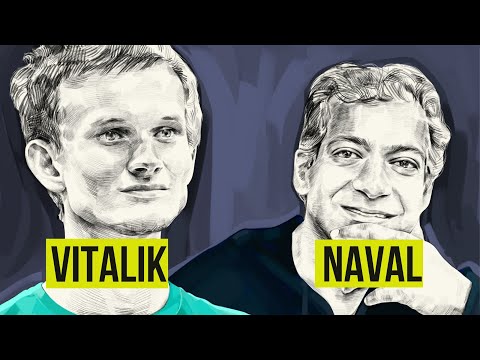
Naval Ravikant’s documentary presence is less a sermon than a caution: begin with a disclaimer, distrust the clean ending, and notice how wishful thinking spends your hours. Across the Ferriss caveat, the Knowledge Project’s cosmic dead end, and the motivational clip’s warning about time, he keeps returning agency to the reader. The written record—AngelList’s startup ecology, the Thiel Fellowship’s early bet, Scott Adams’s self-improvement commentary—frames that agency as institutional and personal: build leverage, choose your games, and inspect the spectacle.

The Clock We Carry
Sleep is not an isolated collapse but a timed negotiation: a circadian oscillation near twenty-four hours, a sleep drive that accumulates, and the day's light, meals, movement, and stress pressing upon both. The speakers converge on a practical claim—regularity is physiology, not moral decoration—while the literature names what happens when timing fails: circadian rhythm sleep-wake disorders, misalignment, and metabolic cost. The documentary's deeper argument is humane: to sleep well is to live in better time with the world, and to treat rhythm as a form of care rather than a personal virtue.

The Truth Against the World
Orwell's Nineteen Eighty-Four endures not as a prophecy of a single regime but as a grammar of totalitarianism: the systematic assault on truth, memory, and private life. The spoken excerpts trace this grammar from Fridman's solitary truth-teller to Carlson's warning of creeping cults, from Gillette's failed propaganda to Orwell's own Spanish Civil War witness. Together they reveal that totalitarianism is less a party than a method—one that begins when language is severed from reality and ends when the individual doubts their own sanity.
Frequently Asked Questions
Why not just paste a YouTube URL into ChatGPT?
Pasting one URL only gives you one speaker's perspective in flat text. PastNoise searches across 200M+ indexed lines to assemble 5 to 8 independent voices, plays the original video clips continuously with bilingual captions, and cross-checks claims against external literature.